Veracity upscaled revised

A Guide to Choosing Healthcare Credentialing Vendors

0vP0p1KC6DJ

Navigating the complexities of payer networks is the single most important hurdle for any growing medical practice. When you are looking for what are the top services to credential a provider quickly?, you are essentially searching for a partner who understands that speed and accuracy in enrollment are the lifeblood of your revenue cycle. Identifying who provides provider credentialing services in the US? is the first step toward securing your practice's financial future and ensuring your providers can begin seeing patients without administrative delay. The process of getting a practitioner linked to an insurance carrier: often referred to as provider enrollment: is a high-stakes administrative marathon. If a single application is sidelined due to a minor error, the high cost of delays manifests in thousands of dollars of lost potential revenue. To maintain a healthy bottom line, you must align with healthcare credentialing vendors who treat your enrollment timeline with the urgency it deserves. The Critical Role of Provider Enrollment Provider enrollment is the silent driver of your practice’s cash flow. It is the process of requesting participation in a health insurance network as a participating provider. Without successful enrollment, your claims will be rejected, and your providers will remain out-of-network, placing an unnecessary financial burden on both the practice and the patients. When you find companies offering outsourced provider credentialing services, you are looking for more than just data entry. You are seeking experts who can navigate the labyrinth of Medicare enrollment and private payer requirements across different states. The Veracity Group specializes in this high-level coordination, ensuring that your practice stays ahead of the curve. Alt Text: A professional 3D render of a digital shield and a medical cross, symbolizing the security and compliance of healthcare enrollment systems. Key Qualities of Top-Tier Enrollment Partners Choosing a vendor is not just about checking a box; it is about finding a strategic ally. As you look to find companies specializing in medical provider credentialing, evaluate potential partners based on these non-negotiable criteria: Multi-State Expertise: In an era of telehealth and multi-state medical groups, your vendor must be proficient in the specific regulations of every state where you operate. Mastering multi-state Medicaid provider enrollment requires a level of detail that generic services simply cannot match. Payer Relationship Depth: The best vendors maintain open lines of communication with major payers like UnitedHealthcare, Blue Cross Blue Shield, and Aetna. This insider knowledge allows them to bypass common bottlenecks. Real-Time Transparency: You should never be left wondering about the status of an application. A professional vendor provides a clear portal or regular reporting that shows exactly where each provider stands in the enrollment pipeline. Accuracy Guarantee: A single typo on a NPI or tax ID can reset the 90-day clock for an insurance company. Precision is the backbone of professional credibility in this industry. Why Outsourcing is the Standard for Modern Practices Many practices attempt to handle enrollment in-house, only to find their office managers overwhelmed by the sheer volume of paperwork and follow-up calls required. When you find companies specializing in medical provider credentialing, you reclaim your internal resources. Outsourcing to specialized healthcare credentialing vendors ensures that your enrollment tasks are managed by professionals whose sole focus is getting you paid. These specialists understand the nuances of the CAQH database, which is essential for the majority of commercial insurance enrollments. By leveraging an external team, you move the administrative burden off your desk and into the hands of experts who use proprietary systems to track every application detail. Looking for professional provider credentialing services in the USA? 👉 Check our main service page here: veracityeg.com Alt Text: A professional 3D render of interconnected gears and a stethoscope, representing the seamless integration of medical practice management and administrative support. Identifying Which Companies Specialize in Your Needs Not all vendors are created equal. Some focus on large hospital systems, while others are built for independent clinics or behavioral health groups. To determine which companies specialize in provider credentialing for healthcare professionals that match your specific model, you must ask the right questions: Do you have experience with my specific specialty? For example, behavioral health provider enrollment has unique requirements that differ significantly from orthopedic surgery. What is your average turnaround time? While no vendor can control the speed of an insurance company, they should have data on how quickly they submit clean applications. How do you handle re-enrollment and revalidation? Enrollment is not a one-time event. Payers require periodic revalidation to maintain active status. The Veracity Group excels in helping clinics with fast, accurate multi-state onboarding. Whether you are adding a single physician or launching a new multi-specialty facility, our team ensures the process is handled with surgical precision. The Impact of Efficient Enrollment on Patient Access Efficient enrollment is your passport to success in the modern healthcare market. When a provider is properly enrolled, they appear in the insurance company's directory. This is often the first place a patient looks when searching for a new doctor. If your enrollment is lagging, you are invisible to thousands of potential patients. Furthermore, delays in enrollment can lead to "held claims": services provided to patients that cannot be billed because the provider is not yet active in the system. This creates a massive backlog that can take months to clear, severely impacting your revenue cycle. Strategic Selection: Who Offers Provider Credentialing Services? When asking who offers provider credentialing services, the answer varies from solo consultants to massive tech firms. The "sweet spot" is a dedicated partner like The Veracity Group, which combines personalized service with high-tech efficiency. We understand that behind every application is a provider ready to work and a patient waiting for care. A professional enrollment partner will also assist with contracting, ensuring that once you are enrolled, the rates you receive are fair and reflective of your value in the market. This holistic approach to provider lifecycle management is what separates an average vendor from a top-tier partner. Alt Text: A professional 3D

Strategic Credentialing Support for Your Medical Practice

PfnyWRtoob9

Managing a modern healthcare facility requires extreme precision, yet administrative bottlenecks frequently stall even the most ambitious growth plans. If you are currently asking, "Where can I find credentialing support for my practice?", you likely already recognize that manual processing is a liability. Securing the best services for doctor credentialing is not merely an administrative checkbox; it is a strategic imperative that ensures your revenue remains uninterrupted and your expansion remains viable. At The Veracity Group, we understand that delays are not just an inconvenience: they are a direct threat to your bottom line. The Administrative Backbone of Healthcare In the current healthcare landscape, credentialing is the silent driver of your professional credibility. It serves as the bridge between hiring a top-tier provider and actually generating revenue from their services. Without a robust system in place, your practice faces the high cost of delays, including thousands of dollars in lost billing for every week a provider remains "un-credentialed" with major payers. The process is inherently complex. It involves deep dives into professional history, primary source verification, and the meticulous management of expirations. For many practices, the burden of maintaining this data in-house leads to oversight and errors. This is where professional intervention becomes a necessity. Alt tag: A professional 3D render of a digital shield and medical symbols representing the security and integrity of medical credentialing data. Why Strategic Outsourcing is Essential Many practice managers begin their search by asking, "Where can I find provider credentialing service providers near me?" While local proximity was once a primary concern, the shift toward telehealth and multi-state medical groups has changed the requirements for excellence. You need a partner who understands the nuances of various state boards and insurance carriers across the country. The Veracity Group eliminates delays and supports multi-state growth. By centralizing your credentialing efforts, you gain a high-level view of your entire organization's compliance status. This perspective is vital for surgery centers and medical groups that are navigating complex regulatory environments. For instance, medical group enrollment for surgery centers involves specific compliance risks that a generalist might overlook. Evaluating the Market: What to Look For When you are identifying the top-rated provider credentialing service companies for medical practices?, your criteria must be rigorous. A "low-cost" vendor often results in higher costs later due to rejected applications or missed re-credentialing deadlines. You must prioritize accuracy, speed, and transparency. A high-tier service provider will offer: Primary Source Verification (PSV): Directly contacting institutions to verify credentials, ensuring compliance with National Committee for Quality Assurance (NCQA) standards. Proactive Monitoring: Notifying you months in advance of license or certification expirations. Carrier Relations: Established pathways with major payers to expedite the enrollment process. Multi-State Capability: The ability to move your providers into new markets without restarting the learning curve. Looking for professional provider credentialing services in the USA? 👉 Check our main service page here: veracityeg.com How to Choose a Provider Credentialing Service Provider? The decision-making process should be methodical. How to choose a provider credentialing service provider? Start by assessing their technology stack and their human expertise. While software can track dates, it cannot navigate the bureaucracy of a state Medicaid office or resolve a complex CAQH conflict. You must ask potential vendors about their experience with specialized fields. For example, behavioral health provider enrollment presents unique challenges that differ significantly from orthopedic or general practice requirements. Ensure your partner has a track record in your specific niche to avoid unnecessary delays. Alt tag: A 3D render of interconnected globes and data nodes, illustrating a seamless multi-state healthcare expansion network. The Consequences of Inaction The high cost of administrative stagnation is often felt too late. When a provider's credentials lapse, or an application is delayed by months, the practice must absorb the salary of that provider while being unable to bill for their work. This "credentialing gap" is a primary cause of cash flow instability in growing medical groups. Furthermore, the risk of claim denials increases exponentially without expert oversight. Payers like Medicare and Medicaid have stringent requirements for enrollment updates. If your practice data is out of sync, your claims will be rejected, leading to a massive backlog in your accounts receivable. Moving Beyond "Near Me" to "Best in Class" While the search for "providers near me" is a natural starting point, the most successful practices prioritize expertise over geography. The digital nature of modern healthcare means that the best support can come from a national leader like The Veracity Group. We provide the infrastructure needed to scale your operations from a single location to a multi-state powerhouse. Whether you are dealing with CAQH and Medicare enrollment or managing a rotating staff of gig-economy providers, your credentialing strategy must be dynamic. The "set it and forget it" approach no longer works in a landscape defined by rapid regulatory shifts and increasing payer scrutiny. Alt tag: A professional 3D render of a stylized hourglass filled with medical icons, representing the elimination of time-delays in healthcare administration. A Culture of Compliance and Speed Expert credentialing support transforms your practice from a reactive entity into a proactive one. Instead of scrambling to fix a provider's status after a denial, you operate with the confidence that every practitioner is fully authorized to provide care and receive payment. This level of organization is attractive to both investors and potential new hires, who want to join a practice that values professional standards. To maintain this edge, you must integrate monthly credential monitoring into your standard operating procedures. This ensures that no license expires and no certification goes unverified. It is the only way to safeguard your practice against the 7 common mistakes that frequently cost clinics their revenue. Conclusion The Veracity Group provides the strategic support necessary to navigate the maze of modern healthcare administration. We don't just process paperwork; we build the foundation for your practice’s long-term growth and stability. By eliminating the friction in provider enrollment, we allow you to focus on what truly matters: delivering high-quality

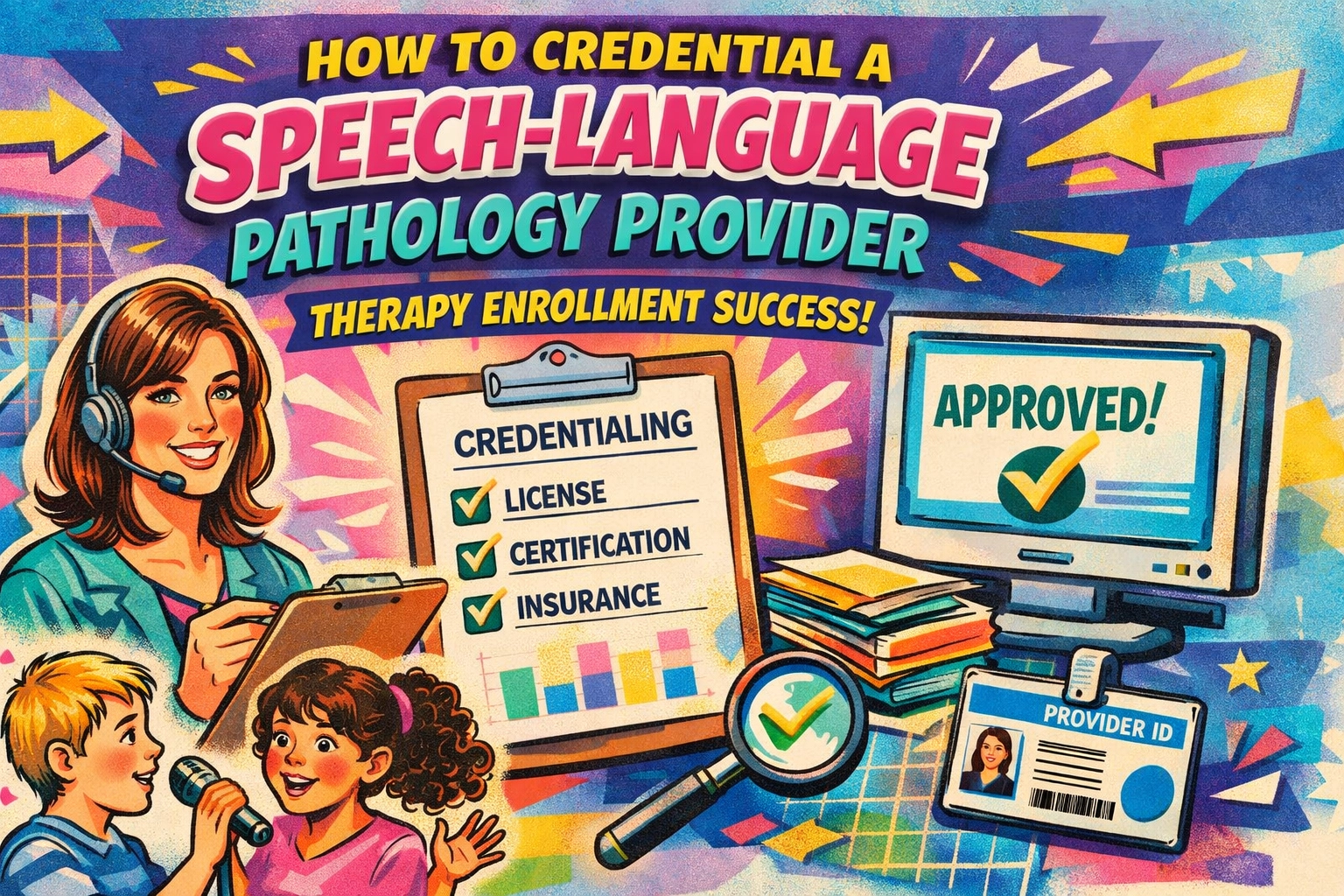
How to Credential a Speech-Language Pathology Provider: Therapy Enrollment Success

ZkDsBOft4vt

Securing a seat at the payer table for a Speech-Language Pathologist (SLP) is a rigorous process that demands precision, clinical documentation, and strict adherence to federal guidelines. When you look at how to credential a speech-language pathology provider, you are not just filling out forms; you are building the financial bridge between life-changing therapy and sustainable practice revenue. In the specialized world of rehabilitative services, a single clerical error or a missed clinical fellowship date can block your ability to collect on claims. As a result, every step in this process matters. The path to successful enrollment runs through specific certifications and state-mandated milestones. Unlike general practitioners, SLPs move through a landscape where both professional associations and state regulatory boards scrutinize their clinical competency. At The Veracity Group, we see every week how the high cost of delays in this sector often comes from a lack of “provider-readiness” before the application ever reaches the payer’s desk. That lack of readiness turns into stalled revenue, frustrated staff, and avoidable rework. The Professional Foundation: ASHA CCC-SLP and State Licensure The primary pillar of SLP enrollment is the Certificate of Clinical Competence in Speech-Language Pathology (CCC-SLP), awarded by the American Association of Speech-Language-Hearing Association (ASHA). Some state Medicaid programs may allow “Clinical Fellows” (those in their post‑graduate supervised year) to enroll under specific modifiers. However, most commercial and federal payers still expect the CCC-SLP designation before they treat the provider as fully credentialed. State licensure nuances add another layer of complexity. For instance, in California, a provider must navigate two distinct pathways depending on the practice environment. A clinical SLP needs a license from the State Speech-Language Pathology and Audiology and Hearing Aid Dispensers Board, which requires 300 hours of supervised clinical practicum and a passing score of 162 on the Praxis exam. By contrast, if that same provider plans to work within the school system, they must secure a Speech-Language Pathology Services Credential through the Commission on Teacher Credentialing. Failure to match the specific license type to the provider’s intended place of service often leads to application rejection. Before you initiate any enrollment, confirm that the provider’s state license is active and shows no disciplinary actions. You can also verify the standing of various state boards through the American Association of Dental Boards (AADB) which offers a framework for multi‑disciplinary regulatory oversight. In practice, this early verification step prevents months of preventable delay. National Registries and the Digital Identity Every successful enrollment journey starts at the National Plan and Provider Enumeration System (NPPES). Obtaining a National Provider Identifier (NPI) is the first mandatory step. At this stage, you must register the SLP as an individual (Type 1 NPI) and select the correct taxonomy code for a Speech-Language Pathologist (235Z00000X). If you choose the wrong taxonomy at the NPPES NPI Registry level, Medicare cross‑checks will fail later and trigger avoidable corrections. Once you secure the NPI, the CAQH ProView Portal becomes the backbone of the provider’s digital identity. Most major commercial payers, including Aetna, UnitedHealthcare, and Anthem, pull their primary source verification data directly from CAQH. Consequently, any gaps or outdated records inside CAQH ripple across every payer panel. Within CAQH, make sure you: Upload a current CV in month/year format. Provide a copy of the ASHA certification. Maintain updated malpractice insurance face sheets. In addition, you must attest to this data on a regular schedule. An expired attestation often becomes the silent driver of sudden network terminations and claim denials. In other words, CAQH is not a one‑time setup; it is an ongoing maintenance obligation. Medicare Part B Enrollment: Private Practice vs. Facility-Based Navigating Medicare (CMS) enrollment for an SLP requires a working knowledge of the CMS‑855I and CMS‑855R forms. The rules shift depending on whether the provider practices in a private setting or a facility‑based environment. Because of that, you cannot treat all SLP enrollments as interchangeable. For private practice SLPs, Medicare Part B enrollment offers the only path to bill for services directly. These providers fall under the “Physicians and Non‑Physician Practitioners” category for billing purposes. You must confirm that the practice location qualifies as a valid, CMS‑approved site and that the tax ID, NPI, and address data match across all systems. Otherwise, you invite development requests and payment holds. Facility‑based SLPs, such as those working in hospitals or Skilled Nursing Facilities, usually have their services bundled into the facility’s Part A billing or specific Part B outpatient schedules. In these cases, the SLP still needs enrollment to “order and refer” or to reassign benefits to the facility’s tax ID. However, they do not bill independently under their own Part B profile. This distinction shapes how you complete the CMS‑855I and CMS‑855R forms and how you track revenue downstream. Just as we discussed in our guide on how to credential an infectious disease provider, the integration of clinical data into the PECOS system is a high‑stakes step. If a provider’s PECOS record does not align with their Social Security records or ASHA profile, Medicare will issue a development request and pause the file. That pause can add months to your timeline and stall every claim tied to that provider. The Complexity of Coding and Reimbursement Standards While many medical specialties rely on a broad range of diagnostic codes, SLPs depend heavily on specific CPT codes for evaluation and treatment. Common examples include 92507 (treatment of speech, language, voice, communication, and/or auditory processing disorder) and 92523 (evaluation of speech sound production). These codes drive both authorization and payment, so accuracy here is non‑negotiable. SLPs do not use dental‑specific codes. Even so, the American Dental Association (ADA) CDT Codes illustrate the level of standardized coding rigor that all healthcare providers must respect. For SLPs, this mindset translates into close monitoring of the former “Therapy Cap,” now managed through the KX modifier threshold. You must link the provider’s enrollment to a practice that understands the Medicare Physician Fee Schedule (MPFS). Otherwise, the team may deliver services that look appropriate clinically but still end up denied