
Payer contracting establishes the agreements that allow healthcare providers to participate in insurance networks and receive reimbursement for covered services. The Veracity Group’s Payer Contracting Program supports healthcare organizations throughout the contracting process, helping manage payer requirements, documentation, and network participation activities. By facilitating these administrative processes, the program helps providers maintain access to reimbursement pathways and insurance networks.



In-network participation is highly dependent on maintaining accurate provider records and meeting recurring credentialing requirements. Administrative oversight in either area can disrupt reimbursement, create compliance concerns, and interrupt patient access.
Payers require complete re-vetting of provider qualifications on recurring schedules. Missing a re-credentialing deadline, allowing a professional license to expire, or failing to maintain required documentation can trigger contract termination.
Address changes, phone number updates, Tax ID modifications, and provider status changes must be communicated across multiple payer systems. Inconsistent directory information creates operational and compliance challenges.
Re-credentialing and demographics maintenance require ongoing monitoring, documentation management, and payer coordination. Our programs are designed to help healthcare organizations maintain compliance, protect reimbursement eligibility, and reduce administrative burden.
We manage the recurring payer timelines, document requirements, and verification activities necessary to maintain active enrollment status.
We help healthcare organizations maintain accurate provider information across payer systems, directories, and regulatory databases.
Answer the questions below to generate a real-time compliance assessment score based on common credentialing, enrollment, and provider data management risk indicators.
Complete the assessment to generate your compliance score.
Request Compliance ReviewHealthcare providers and organizations routinely experience operational, administrative, and organizational changes that must be communicated across payer networks, provider directories, enrollment records, and DataSpring profiles. Maintaining accurate provider information helps support reimbursement eligibility, directory accuracy, network participation, and ongoing compliance requirements.
New offices, relocations, satellite clinics, and location closures typically require updates across participating payer organizations.
Changes involving scheduling lines, provider contacts, administrative offices, and practice communication channels.
Tax Identification Number modifications often require updates with Medicare, Medicaid, and commercial insurance networks.
Legal entity updates, DBA modifications, mergers, acquisitions, and organizational restructuring activities.
New provider onboarding, physician departures, retirements, and provider status changes.
Specialty, subspecialty, service line, and scope-of-practice changes that impact payer records.
New affiliations, privilege changes, and facility participation updates requiring payer notification.
Changes reflected within NPPES and associated provider identification records.
Updates involving licenses, certifications, employment history, and provider demographic information.
Enrollment updates, ownership modifications, location changes, and provider information revisions.
Payer organizations, credentialing entities, provider directories, and healthcare networks rely on accurate provider information throughout the provider lifecycle. Outdated records can contribute to claim denials, reimbursement delays, directory inaccuracies, missed recredentialing activities, and unnecessary administrative burden. Maintaining synchronized provider information across participating organizations helps support operational efficiency, network participation, and ongoing compliance management.

Provider demographic maintenance and recredentialing requirements are driven by federal regulations, accreditation standards, and payer obligations. Healthcare organizations are expected to maintain accurate provider records, promptly report demographic changes, and ensure credentialing files remain current throughout the provider lifecycle.
Under Section 116 of the No Surprises Act, health plans are required to verify and update public provider directories at least every 90 days. Providers are contractually responsible for notifying participating health plans whenever demographic information changes, including practice addresses, phone numbers, provider availability, or panel status.
When provider directory information becomes inaccurate, patients may unknowingly receive care based on incorrect network information. In these situations, health plans may be required to limit the patient's financial responsibility to the in-network cost-sharing amount. Inaccurate provider records can therefore create administrative, financial, and contractual challenges for participating providers and healthcare organizations.
The National Committee for Quality Assurance (NCQA) requires healthcare organizations to maintain current credentialing records and perform ongoing verification activities. Recredentialing cycles must generally be completed within 36 months of the previous credentialing decision, with primary source verification performed through appropriate regulatory and credentialing authorities.
Our workflows align with NCQA credentialing standards by monitoring recredentialing deadlines, verifying provider records, reviewing primary source documentation, and validating information through state licensing boards and the National Practitioner Data Bank (NPDB). Maintaining current credentialing files helps support compliance readiness, provider participation, and organizational quality standards.
Healthcare organizations frequently ask how long demographic updates take to appear within payer systems, enrollment records, and provider directories. Processing times vary based on the payer organization, update type, documentation requirements, and internal review workflows. While some updates may be processed within a few business days, others can require several weeks before becoming fully reflected across payer databases and public provider directories.
| Payer Organization | Typical Processing Range* |
|---|---|
| Blue Cross Blue Shield Plans | 15–45 Business Days |
| UnitedHealthcare | 15–45 Business Days |
| Aetna | 15–45 Business Days |
| Cigna Healthcare | 15–45 Business Days |
| Humana | 15–45 Business Days |
| Molina Healthcare | 20–60 Business Days |
| Elevance Health | 15–45 Business Days |
| Kaiser Permanente | 15–45 Business Days |
| Highmark | 15–45 Business Days |
| WellCare | 20–60 Business Days |
| CareSource | 20–60 Business Days |
| Amerigroup | 20–60 Business Days |
| Oscar Health | 15–45 Business Days |
| Health Care Service Corporation (HCSC) | 15–45 Business Days |
| Regional Health Plans | Varies By Organization |
*Processing timeframes represent general industry observations and may vary based on the type of demographic change, documentation requirements, payer review volume, provider specialty, state-specific enrollment procedures, and internal payer workflows. Actual processing times are determined solely by the payer organization.
Many provider organizations assume an update is complete once submitted. In reality, payer follow-up, directory verification, status monitoring, and record validation are often required before changes appear across participating networks. Active monitoring helps reduce delays and improves provider data accuracy.
Request Demographic Update SupportWhether you’re opening a new practice, expanding locations, renewing provider credentials, or enrolling with Medicare, Medicaid, and commercial payers, The Veracity Group provides reliable nationwide credentialing support.

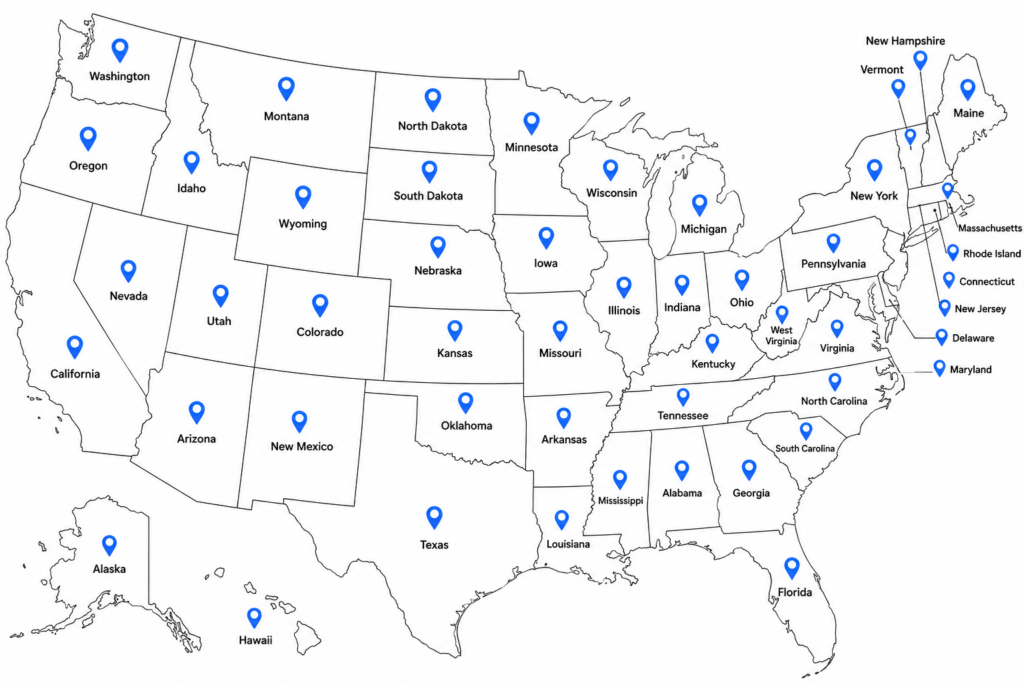
Simplifying provider credentialing, payer enrollment, and compliance management through transparent processes, dedicated support, and industry expertise.
Schedule Consultation© 2026 The Veracity Group. All Rights Reserved.