
Provider credentialing is the foundation of successful healthcare operations, helping verify qualifications, maintain regulatory compliance, and support participation in payer networks. Our streamlined credentialing process reduces administrative burdens, improves accuracy, and helps providers focus on delivering exceptional patient care while supporting long-term practice growth.



Before healthcare providers can participate in insurance networks, receive reimbursement, or practice within many healthcare organizations, their qualifications must undergo extensive verification. Credentialing serves as the foundation of this process by validating education, training, licensure, certifications, and professional history while supporting patient safety, regulatory compliance, and payer participation.
The credentialing process generally consists of primary source verification, credentialing review, privileging, and payer enrollment. Together, these activities help healthcare organizations confirm that providers meet professional standards and eligibility requirements before delivering care or participating in insurance programs.

While every healthcare organization follows its own procedures, most credentialing workflows follow four essential stages. Each step plays a critical role in determining whether providers can participate in healthcare networks and receive reimbursement for patient care.
Providers enroll with Medicare, Medicaid, and commercial insurance carriers to participate in healthcare networks and receive reimbursement for covered services.
Medical education, residency training, state licenses, DEA registrations, board certifications, employment history, and professional references are verified directly with the original issuing organizations.
Healthcare organizations review the provider's qualifications, professional history, malpractice record, and compliance requirements to determine eligibility for participation.
Credentialing influences patient safety, reimbursement eligibility, compliance requirements, and organizational risk management. Delays or deficiencies can affect both provider participation and operational performance.
Verifies provider qualifications, licensure, and professional competency before patient care is delivered.
Supports payer participation and reimbursement eligibility while helping reduce billing interruptions.
Helps organizations reduce exposure to negligent credentialing claims and regulatory scrutiny.
Supports federal, state, payer, and accreditation requirements throughout the provider lifecycle.
Credentialing is required for a wide range of healthcare professionals, facilities, suppliers, and organizations that participate in Medicare, Medicaid, commercial insurance networks, hospital systems, and healthcare programs throughout the United States. While requirements vary by specialty, state, payer, and provider type, credentialing helps verify qualifications, maintain regulatory compliance, support patient safety, and establish eligibility for reimbursement. Healthcare organizations often manage multiple credentialing relationships simultaneously, making ongoing maintenance and compliance a critical operational function.
Organizations seeking reimbursement from Medicare, Medicaid, Medicaid Managed Care Organizations (MCOs), workers' compensation programs, and commercial insurance carriers generally must complete credentialing and maintain accurate provider records. Ongoing monitoring, revalidation, and compliance activities help support continued participation within healthcare networks and reimbursement programs.
While credentialing requirements vary among state licensing boards, healthcare facilities, and insurance organizations, many documentation requirements remain consistent throughout the United States. State medical boards, nursing boards, therapy boards, behavioral health boards, and other regulatory authorities typically require providers to maintain current records that verify professional qualifications, licensure, training, and compliance history. Maintaining accurate documentation helps support credentialing reviews, license renewals, payer enrollment activities, and ongoing participation within healthcare networks.
Current state-issued professional licenses and license verification records are commonly required across healthcare professions, including physicians, nurses, therapists, behavioral health providers, and allied health professionals.
Medical school graduation, degree verification, residency programs, fellowship training, and specialty education records are frequently reviewed during credentialing and licensing activities.
Providers practicing within specialty areas may be required to submit proof of active board certification and certification maintenance records.
Healthcare providers authorized to prescribe controlled substances often maintain active DEA registrations and applicable state-controlled substance permits.
Malpractice insurance certificates and proof of professional liability coverage are commonly required by healthcare facilities and insurance organizations.
Credentialing entities frequently require complete employment history, hospital affiliations, clinical appointments, and explanations for significant gaps in practice.
NPI information is commonly used to validate provider identity and support enrollment activities across healthcare programs and payer networks.
Photo identification documents are often required to verify provider identity and maintain accurate credentialing records.
Providers may be required to disclose malpractice claims, disciplinary actions, sanctions, exclusions, or other reportable events during credentialing reviews.
Many licensing boards require providers to maintain continuing education documentation and demonstrate ongoing compliance with professional standards.
Credentialing timelines are influenced by payer requirements, regulatory reviews, provider documentation, and administrative processing. While some delays remain outside direct control, proactive management, continuous follow-up, and accurate submissions can significantly improve efficiency throughout the enrollment lifecycle.
Every enrollment project is actively managed by experienced specialists who coordinate documentation, submissions, and ongoing payer communication.
Provider records are reviewed for completeness and accuracy before submission, helping reduce avoidable verification issues.
Applications are monitored throughout the review process to identify requests for additional information before they create unnecessary delays.
Licenses, certifications, insurance records, and supporting documentation are tracked to help maintain current provider files.
Ongoing profile updates, document maintenance, attestations, and payer authorizations help keep enrollment records current.
Revalidations, enrollment updates, and regulatory requirements are monitored to support long-term network participation.
Many credentialing delays originate from incomplete documentation, missing signatures, expired licenses, inaccurate provider information, or unresolved payer requests. Maintaining organized records and managing enrollment activities proactively helps reduce administrative disruptions and supports faster processing.
Monitor every credentialing and payer enrollment milestone through a centralized dashboard. Gain complete transparency, faster follow-ups, and improved accountability throughout the process.
Schedule a Discovery Call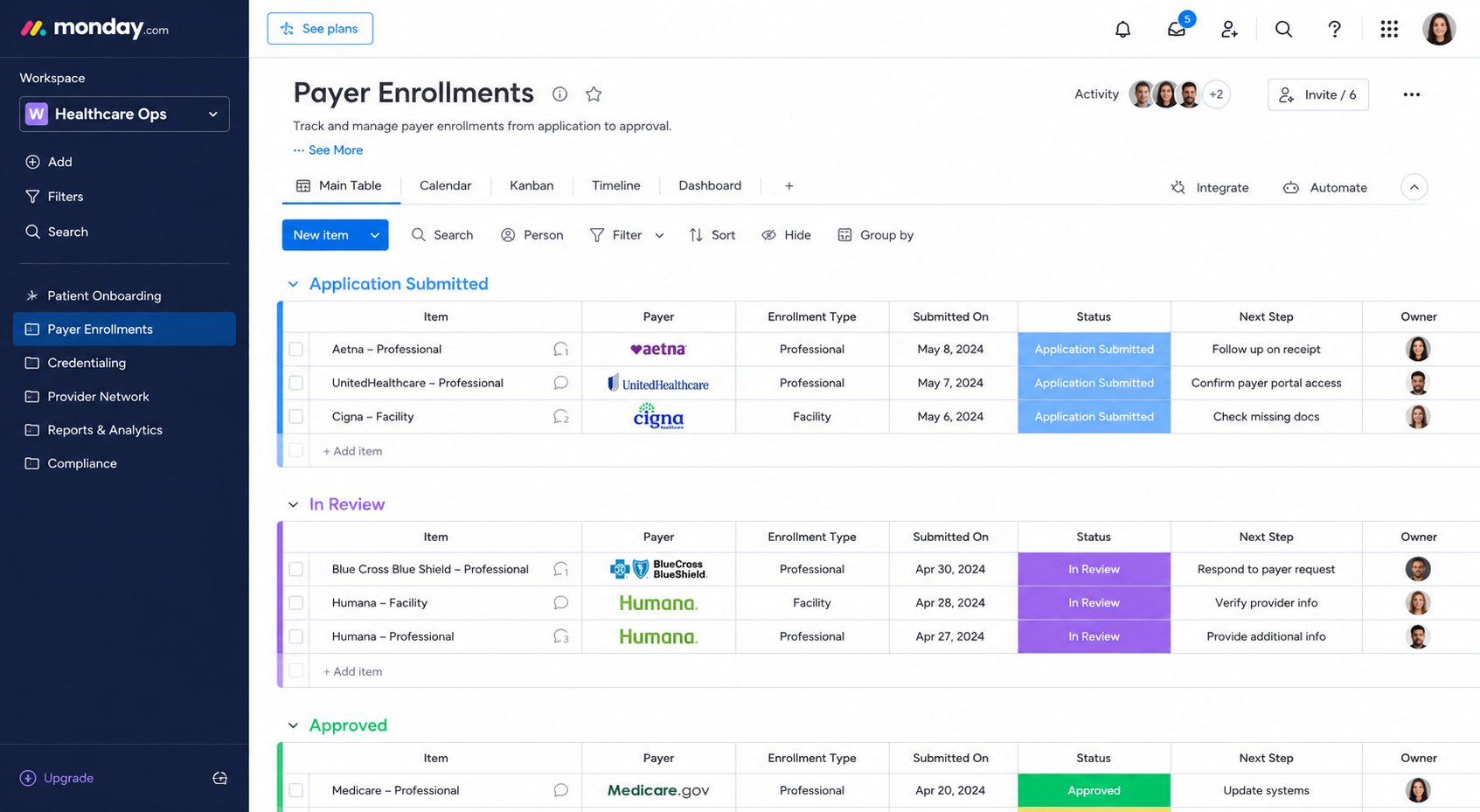
The dashboard gave us complete visibility into every enrollment milestone. We knew exactly where each application stood and could proactively address delays before they impacted revenue.






Whether you’re opening a new practice, expanding locations, renewing provider credentials, or enrolling with Medicare, Medicaid, and commercial payers, The Veracity Group provides reliable nationwide credentialing support.

Simplifying provider credentialing, payer enrollment, and compliance management through transparent processes, dedicated support, and industry expertise.
Schedule Consultation© 2026 The Veracity Group. All Rights Reserved.