
NATIONAL CREDENTIALING & ENROLLMENT EXPERTS

Credentialing.
Enrollment.
Without Delays.

Helping healthcare providers get credentialed, enrolled and contracted with commercial payers, Medicare, Medicaid and more — nationwide.

Application Status In Progress
Payer Enrollment Approved
Dedicated Manager Assigned
Real-Time Updates via monday.com
50
STATES NATIONWIDE
Dedicated Manager One point of contact
Real-Time Updates Know where things stand
Local USA-Based Team Real people, responsive support
$1.2M+ Contract Impact Average increase in annual reimbursements

What Is Medicaid?

Medicaid is a joint federal and state health insurance program that provides medical coverage for eligible low-income individuals, families, seniors, and people with disabilities. Healthcare providers must complete Medicaid enrollment and credentialing before they can bill for covered services.

What Is Medicare?

Medicare is a federal health insurance program primarily serving people aged 65 and older, along with certain younger individuals with disabilities. Providers must enroll through Medicare and complete credentialing requirements to receive reimbursement for patient care.

What Is Medical Credentialing?

Medical credentialing is the process of verifying a healthcare provider's education, training, licenses, certifications, work history, and professional qualifications. It is required before providers can participate with Medicare, Medicaid, and commercial insurance networks.

```
WHAT WE DO

Credentialing, Enrollment & Revenue — Handled.

We manage the administrative work that keeps providers credentialed, enrolled, contracted, and ready to bill.

01

Provider Credentialing

Primary source verification, credentialing applications, documentation, and payer follow-up.

02

Payer Enrollment

Commercial, Medicare, and payer enrollment support from application through participation.

03

CAQH Management

Profile setup, updates, attestations, monitoring, and ongoing DataSpring by CAQH maintenance.

04

Medical Licensing

Support for medical licensing, CSR, DEA, and related provider enrollment requirements.

05

Contracting & Negotiation

Payer contract analysis, negotiation support, and reimbursement discussions.

06

Demographic Updates

Provider information updates that help keep payer records accurate and current.

07

Re-Credentialing

Ongoing monitoring, renewal management, and follow-up to help maintain payer participation.

08

Revenue Management

Administrative support designed to protect payer participation and support revenue continuity.

ONE TEAM. ONE PROCESS. From credentialing to ongoing payer management.
Talk to Our Team
```
ChatGPT Image Jun 4 2026 10 09 54 PM.png
THE CHALLENGE

Credentialing Delays
Cost More Than Time

Payer backlogs, complex requirements, and communication gaps slow down provider enrollment—impacting your revenue, growth, and ability to deliver care.

Delayed Provider Activation

Long credentialing timelines mean providers cannot begin billing, creating unnecessary delays in revenue generation.

Lost Revenue

Every day a provider remains unenrolled is another day of missed reimbursements and lost opportunities.

Administrative Overload

Teams spend valuable time chasing paperwork, responding to payers, and managing manual follow-ups.

Credentialing Timeline

How Long Does Provider Credentialing Take?

Every payer follows its own review process. Complete applications, accurate provider data, and proactive follow-up help reduce delays while ensuring compliance throughout the credentialing journey.

01

Application Submitted

Your enrollment application and supporting documents are prepared and submitted to the appropriate payer.

02

Primary Source Verification

Licenses, certifications, education, work history, and professional credentials are verified for accuracy.

03

Payer Review

Insurance companies review your application, documentation, and compliance requirements.

04

Approval Decision

Once approved, the payer issues participation confirmation and final credentialing approval.

05

Network Activation

Your provider profile becomes active within the insurance network and is ready for billing.

06

Claims Submission

Patient claims can now be submitted for reimbursement through participating insurance plans.

Typical Processing Times

Expected Credentialing Timeframes

Processing times vary by payer and provider type. Our team actively manages every application to help minimize unnecessary delays while maintaining compliance.

Service
Industry Average
Veracity
Medicare Enrollment
45–60 Days
≈45 Days
Commercial Credentialing
90–120 Days
90–120 Days
DataSpring by CAQH
10–15 Days
≈1 Day
NPI Registration
7–15 Days
≈1 Day
Recredentialing
60–90 Days
≈60 Days
Why Delays Happen

Common Causes of Credentialing Delays

Many credentialing delays can be avoided with accurate documentation, timely follow-ups, and complete provider information from the beginning.

Incomplete applications
Missing documentation
Payer processing backlogs
Outdated DataSpring by CAQH profiles
Provider data discrepancies
Insufficient payer follow-up

Ready to Simplify Your Credentialing Process?

Let our specialists handle provider enrollment, payer follow-ups, and compliance so you can focus on patient care.

Schedule a Discovery Call

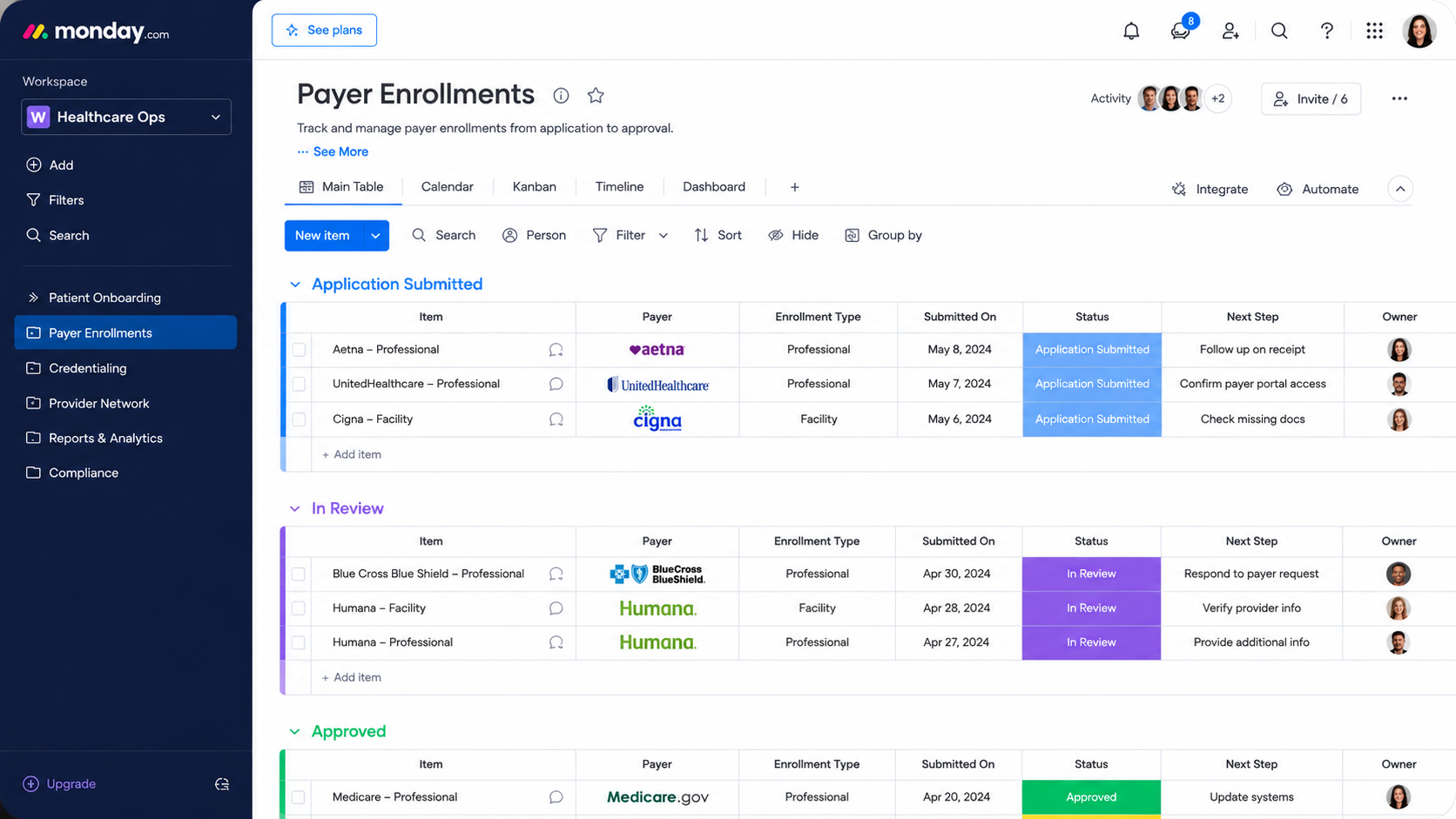
Real-Time Tracking. Real-Time Visibility.

Monitor every credentialing and payer enrollment milestone through a centralized dashboard. Gain complete transparency, faster follow-ups, and improved accountability throughout the enrollment lifecycle.
50 States
98% Approval Rate
80 Avg Days
office@veracityeg.com
Credentialing Dashboard
"

The dashboard gave us complete visibility into every enrollment milestone. We knew exactly where each application stood and could proactively address delays before they impacted revenue.

Dr. Emily Stanton, Gastroenterology
PAYER NETWORK EXPERIENCE

One Partner.
Multiple Insurance Networks.

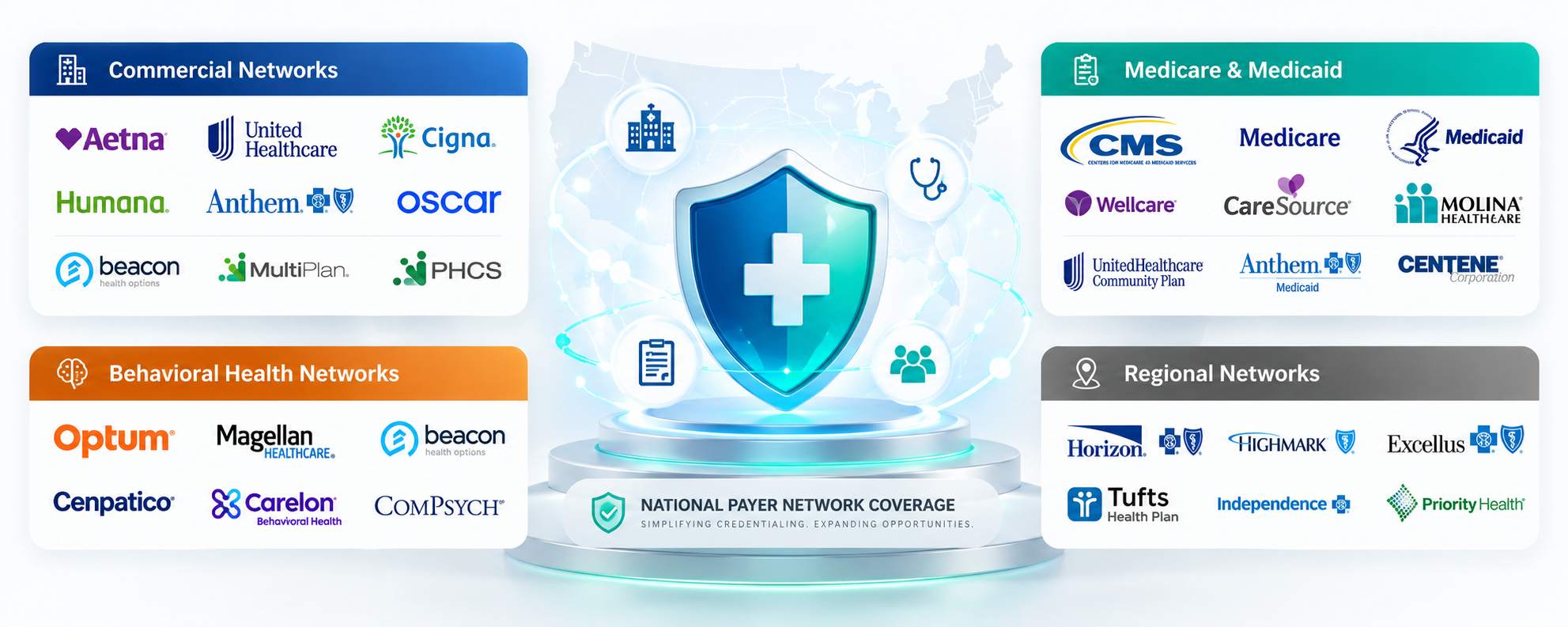
Veracity supports provider enrollment, credentialing, re-credentialing, and participation management across commercial insurance carriers, Medicare programs, Medicaid plans, and specialty healthcare networks.
Healthcare provider credentialing and insurance network services
NATIONAL PAYER NETWORK EXPERIENCE
50+ Enrollment projects supported
90–120 Commercial panel timelines
45 Days Average Medicare PECOS processing
Multi-payer Credentialing experience
OUR NETWORK COVERAGE

Networks we work with

01 — 04
01

Commercial Insurance

32 NETWORKS
Aetna Cigna UnitedHealthcare Humana Blue Cross Blue Shield Anthem Elevance Health Molina Healthcare Centene Wellcare AmeriHealth AmeriHealth Caritas MultiPlan First Health Health Net Kaiser Permanente Oscar Health Ambetter Bright Health Friday Health Plans CareSource Community Health Choice Priority Health Independence Blue Cross Highmark Premera Blue Cross Florida Blue Horizon Blue Cross Blue Shield Capital Blue Cross Regence BlueShield Blue Shield of California Blue Cross Blue Shield of Texas
02

Medicare & Medicaid

07 PROGRAMS
Medicare (PECOS) Medicare Advantage Medicaid Managed Medicaid Plans Dual Eligible Plans TRICARE VA Community Care
03

Behavioral Health

07 NETWORKS
Carelon Behavioral Health Magellan Healthcare Optum Behavioral Health Quest Behavioral Health Lucet Alliance Health Beacon Health Options
04

Regional & Specialty Networks

13 NETWORKS


Independent Physician Networks Regional Blue Cross Organizations Local HMO Networks State Medicaid MCOs Employer Health Plans PHCS Network Coventry Health Care GEHA Meritain Health HealthSmart Imagine Health Three Rivers Provider Network Zelis Network Solutions
```

Testimonials

FREQUENTLY ASKED QUESTIONS

Provider Enrollment & Credentialing FAQs

Explore answers to common questions regarding provider enrollment, credentialing, Medicare participation, Medicaid enrollment, CAQH management, recredentialing requirements, and insurance network participation.

What is provider credentialing?
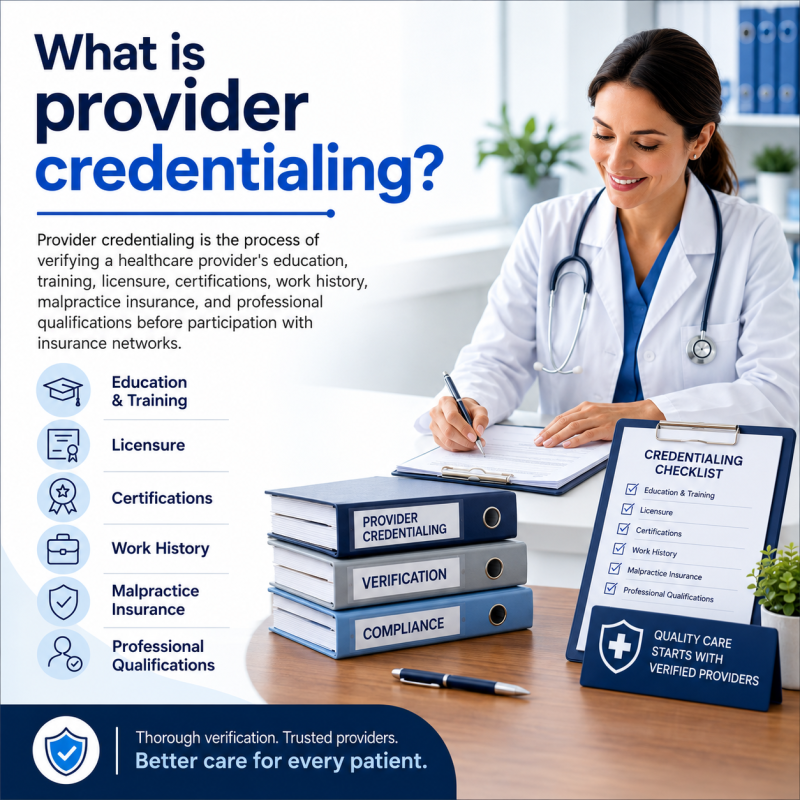
Provider credentialing is the process of verifying a healthcare provider's education, training, licensure, certifications, work history, malpractice insurance, and professional qualifications before participation with insurance networks.
How long does provider credentialing take?
Credentialing timelines vary by payer. Most commercial insurance carriers require between 60 and 180 days, while Medicare and Medicaid enrollment timelines depend on program requirements and application completeness.
What documents are required for credentialing?
Common requirements include professional licenses, malpractice insurance certificates, curriculum vitae, NPI registration, educational diplomas, board certifications, government-issued identification, and enrollment applications.
What is DataSpring by CAQH and why is it important?
CAQH ProView is a centralized provider database used by many insurance carriers during credentialing and recredentialing. Maintaining an accurate and attested profile helps streamline enrollment processes.
Do all healthcare providers need an NPI number?
Most healthcare providers require an NPI Type I (Individual). Healthcare organizations and group practices generally require an NPI Type II (Organizational) for billing and contracting purposes.
What is the difference between credentialing and provider enrollment?
Credentialing verifies provider qualifications. Provider enrollment is the process of becoming approved to participate with Medicare, Medicaid, and commercial insurance networks after credentialing requirements have been satisfied.
How often does recredentialing occur?
Most insurance carriers require providers to complete recredentialing every two to three years to confirm ongoing compliance with participation requirements and professional standards.
Can Veracity Group assist with multi-state provider enrollment?
Yes. Veracity Group supports healthcare organizations operating across multiple states, helping coordinate credentialing, enrollment, CAQH maintenance, Medicare participation, Medicaid enrollment, and commercial payer participation.