Veracity upscaled revised

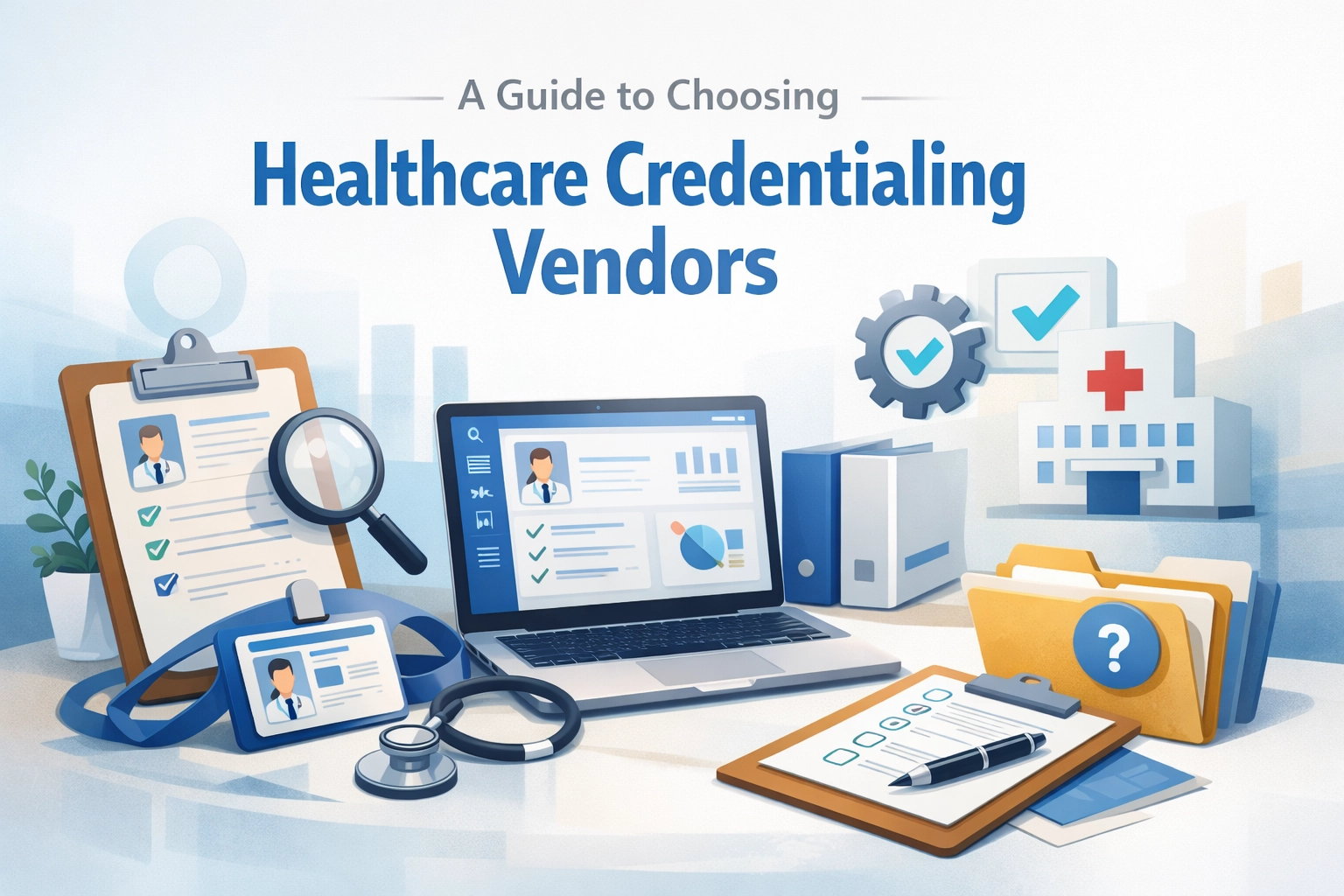
A Guide to Choosing Healthcare Credentialing Vendors

0vP0p1KC6DJ

Navigating the complexities of payer networks is the single most important hurdle for any growing medical practice. When you are looking for what are the top services to credential a provider quickly?, you are essentially searching for a partner who understands that speed and accuracy in enrollment are the lifeblood of your revenue cycle. Identifying who provides provider credentialing services in the US? is the first step toward securing your practice's financial future and ensuring your providers can begin seeing patients without administrative delay. The process of getting a practitioner linked to an insurance carrier: often referred to as provider enrollment: is a high-stakes administrative marathon. If a single application is sidelined due to a minor error, the high cost of delays manifests in thousands of dollars of lost potential revenue. To maintain a healthy bottom line, you must align with healthcare credentialing vendors who treat your enrollment timeline with the urgency it deserves. The Critical Role of Provider Enrollment Provider enrollment is the silent driver of your practice’s cash flow. It is the process of requesting participation in a health insurance network as a participating provider. Without successful enrollment, your claims will be rejected, and your providers will remain out-of-network, placing an unnecessary financial burden on both the practice and the patients. When you find companies offering outsourced provider credentialing services, you are looking for more than just data entry. You are seeking experts who can navigate the labyrinth of Medicare enrollment and private payer requirements across different states. The Veracity Group specializes in this high-level coordination, ensuring that your practice stays ahead of the curve. Alt Text: A professional 3D render of a digital shield and a medical cross, symbolizing the security and compliance of healthcare enrollment systems. Key Qualities of Top-Tier Enrollment Partners Choosing a vendor is not just about checking a box; it is about finding a strategic ally. As you look to find companies specializing in medical provider credentialing, evaluate potential partners based on these non-negotiable criteria: Multi-State Expertise: In an era of telehealth and multi-state medical groups, your vendor must be proficient in the specific regulations of every state where you operate. Mastering multi-state Medicaid provider enrollment requires a level of detail that generic services simply cannot match. Payer Relationship Depth: The best vendors maintain open lines of communication with major payers like UnitedHealthcare, Blue Cross Blue Shield, and Aetna. This insider knowledge allows them to bypass common bottlenecks. Real-Time Transparency: You should never be left wondering about the status of an application. A professional vendor provides a clear portal or regular reporting that shows exactly where each provider stands in the enrollment pipeline. Accuracy Guarantee: A single typo on a NPI or tax ID can reset the 90-day clock for an insurance company. Precision is the backbone of professional credibility in this industry. Why Outsourcing is the Standard for Modern Practices Many practices attempt to handle enrollment in-house, only to find their office managers overwhelmed by the sheer volume of paperwork and follow-up calls required. When you find companies specializing in medical provider credentialing, you reclaim your internal resources. Outsourcing to specialized healthcare credentialing vendors ensures that your enrollment tasks are managed by professionals whose sole focus is getting you paid. These specialists understand the nuances of the CAQH database, which is essential for the majority of commercial insurance enrollments. By leveraging an external team, you move the administrative burden off your desk and into the hands of experts who use proprietary systems to track every application detail. Looking for professional provider credentialing services in the USA? 👉 Check our main service page here: veracityeg.com Alt Text: A professional 3D render of interconnected gears and a stethoscope, representing the seamless integration of medical practice management and administrative support. Identifying Which Companies Specialize in Your Needs Not all vendors are created equal. Some focus on large hospital systems, while others are built for independent clinics or behavioral health groups. To determine which companies specialize in provider credentialing for healthcare professionals that match your specific model, you must ask the right questions: Do you have experience with my specific specialty? For example, behavioral health provider enrollment has unique requirements that differ significantly from orthopedic surgery. What is your average turnaround time? While no vendor can control the speed of an insurance company, they should have data on how quickly they submit clean applications. How do you handle re-enrollment and revalidation? Enrollment is not a one-time event. Payers require periodic revalidation to maintain active status. The Veracity Group excels in helping clinics with fast, accurate multi-state onboarding. Whether you are adding a single physician or launching a new multi-specialty facility, our team ensures the process is handled with surgical precision. The Impact of Efficient Enrollment on Patient Access Efficient enrollment is your passport to success in the modern healthcare market. When a provider is properly enrolled, they appear in the insurance company's directory. This is often the first place a patient looks when searching for a new doctor. If your enrollment is lagging, you are invisible to thousands of potential patients. Furthermore, delays in enrollment can lead to "held claims": services provided to patients that cannot be billed because the provider is not yet active in the system. This creates a massive backlog that can take months to clear, severely impacting your revenue cycle. Strategic Selection: Who Offers Provider Credentialing Services? When asking who offers provider credentialing services, the answer varies from solo consultants to massive tech firms. The "sweet spot" is a dedicated partner like The Veracity Group, which combines personalized service with high-tech efficiency. We understand that behind every application is a provider ready to work and a patient waiting for care. A professional enrollment partner will also assist with contracting, ensuring that once you are enrolled, the rates you receive are fair and reflective of your value in the market. This holistic approach to provider lifecycle management is what separates an average vendor from a top-tier partner. Alt Text: A professional 3D

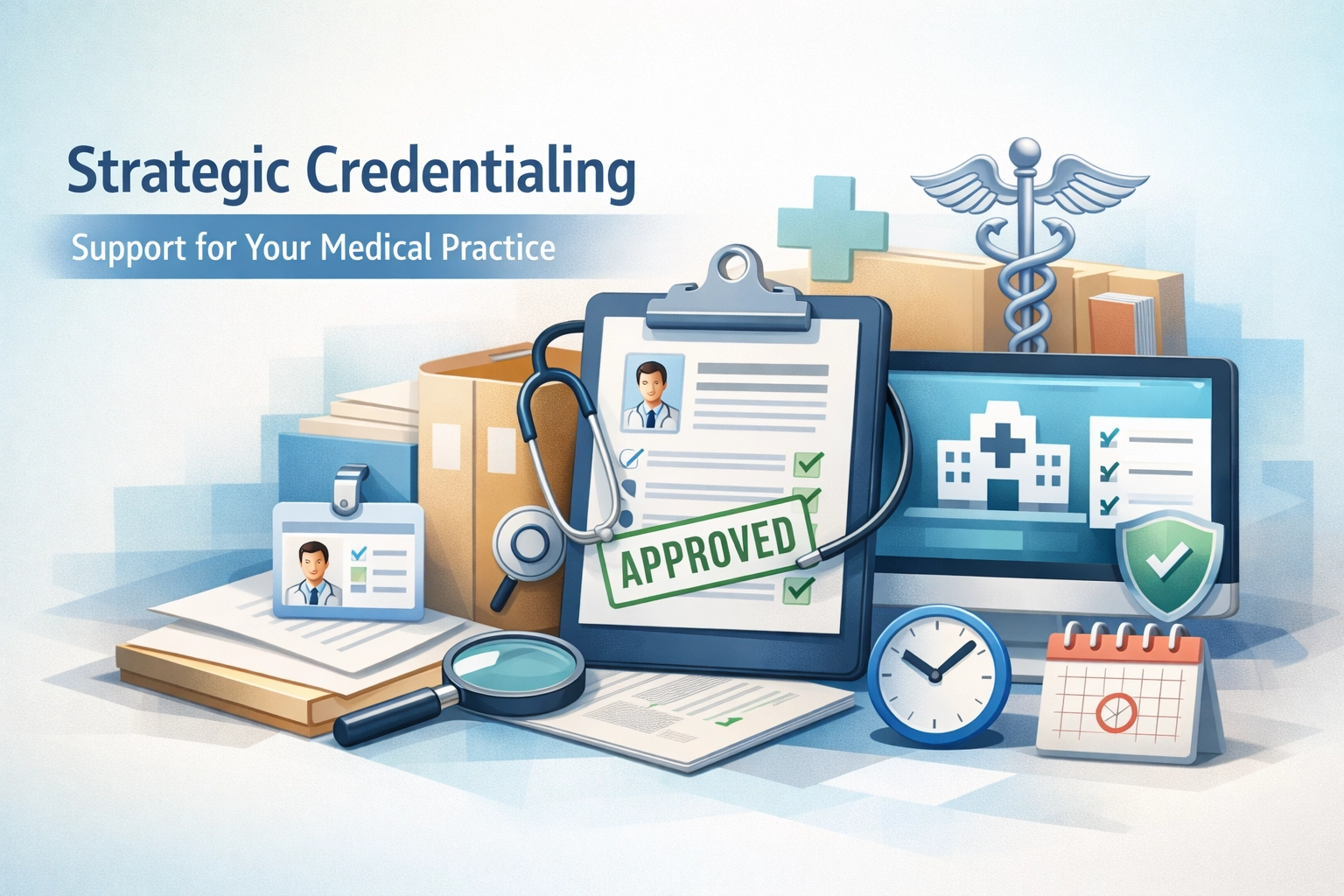
Strategic Credentialing Support for Your Medical Practice

PfnyWRtoob9

Managing a modern healthcare facility requires extreme precision, yet administrative bottlenecks frequently stall even the most ambitious growth plans. If you are currently asking, "Where can I find credentialing support for my practice?", you likely already recognize that manual processing is a liability. Securing the best services for doctor credentialing is not merely an administrative checkbox; it is a strategic imperative that ensures your revenue remains uninterrupted and your expansion remains viable. At The Veracity Group, we understand that delays are not just an inconvenience: they are a direct threat to your bottom line. The Administrative Backbone of Healthcare In the current healthcare landscape, credentialing is the silent driver of your professional credibility. It serves as the bridge between hiring a top-tier provider and actually generating revenue from their services. Without a robust system in place, your practice faces the high cost of delays, including thousands of dollars in lost billing for every week a provider remains "un-credentialed" with major payers. The process is inherently complex. It involves deep dives into professional history, primary source verification, and the meticulous management of expirations. For many practices, the burden of maintaining this data in-house leads to oversight and errors. This is where professional intervention becomes a necessity. Alt tag: A professional 3D render of a digital shield and medical symbols representing the security and integrity of medical credentialing data. Why Strategic Outsourcing is Essential Many practice managers begin their search by asking, "Where can I find provider credentialing service providers near me?" While local proximity was once a primary concern, the shift toward telehealth and multi-state medical groups has changed the requirements for excellence. You need a partner who understands the nuances of various state boards and insurance carriers across the country. The Veracity Group eliminates delays and supports multi-state growth. By centralizing your credentialing efforts, you gain a high-level view of your entire organization's compliance status. This perspective is vital for surgery centers and medical groups that are navigating complex regulatory environments. For instance, medical group enrollment for surgery centers involves specific compliance risks that a generalist might overlook. Evaluating the Market: What to Look For When you are identifying the top-rated provider credentialing service companies for medical practices?, your criteria must be rigorous. A "low-cost" vendor often results in higher costs later due to rejected applications or missed re-credentialing deadlines. You must prioritize accuracy, speed, and transparency. A high-tier service provider will offer: Primary Source Verification (PSV): Directly contacting institutions to verify credentials, ensuring compliance with National Committee for Quality Assurance (NCQA) standards. Proactive Monitoring: Notifying you months in advance of license or certification expirations. Carrier Relations: Established pathways with major payers to expedite the enrollment process. Multi-State Capability: The ability to move your providers into new markets without restarting the learning curve. Looking for professional provider credentialing services in the USA? 👉 Check our main service page here: veracityeg.com How to Choose a Provider Credentialing Service Provider? The decision-making process should be methodical. How to choose a provider credentialing service provider? Start by assessing their technology stack and their human expertise. While software can track dates, it cannot navigate the bureaucracy of a state Medicaid office or resolve a complex CAQH conflict. You must ask potential vendors about their experience with specialized fields. For example, behavioral health provider enrollment presents unique challenges that differ significantly from orthopedic or general practice requirements. Ensure your partner has a track record in your specific niche to avoid unnecessary delays. Alt tag: A 3D render of interconnected globes and data nodes, illustrating a seamless multi-state healthcare expansion network. The Consequences of Inaction The high cost of administrative stagnation is often felt too late. When a provider's credentials lapse, or an application is delayed by months, the practice must absorb the salary of that provider while being unable to bill for their work. This "credentialing gap" is a primary cause of cash flow instability in growing medical groups. Furthermore, the risk of claim denials increases exponentially without expert oversight. Payers like Medicare and Medicaid have stringent requirements for enrollment updates. If your practice data is out of sync, your claims will be rejected, leading to a massive backlog in your accounts receivable. Moving Beyond "Near Me" to "Best in Class" While the search for "providers near me" is a natural starting point, the most successful practices prioritize expertise over geography. The digital nature of modern healthcare means that the best support can come from a national leader like The Veracity Group. We provide the infrastructure needed to scale your operations from a single location to a multi-state powerhouse. Whether you are dealing with CAQH and Medicare enrollment or managing a rotating staff of gig-economy providers, your credentialing strategy must be dynamic. The "set it and forget it" approach no longer works in a landscape defined by rapid regulatory shifts and increasing payer scrutiny. Alt tag: A professional 3D render of a stylized hourglass filled with medical icons, representing the elimination of time-delays in healthcare administration. A Culture of Compliance and Speed Expert credentialing support transforms your practice from a reactive entity into a proactive one. Instead of scrambling to fix a provider's status after a denial, you operate with the confidence that every practitioner is fully authorized to provide care and receive payment. This level of organization is attractive to both investors and potential new hires, who want to join a practice that values professional standards. To maintain this edge, you must integrate monthly credential monitoring into your standard operating procedures. This ensures that no license expires and no certification goes unverified. It is the only way to safeguard your practice against the 7 common mistakes that frequently cost clinics their revenue. Conclusion The Veracity Group provides the strategic support necessary to navigate the maze of modern healthcare administration. We don't just process paperwork; we build the foundation for your practice’s long-term growth and stability. By eliminating the friction in provider enrollment, we allow you to focus on what truly matters: delivering high-quality

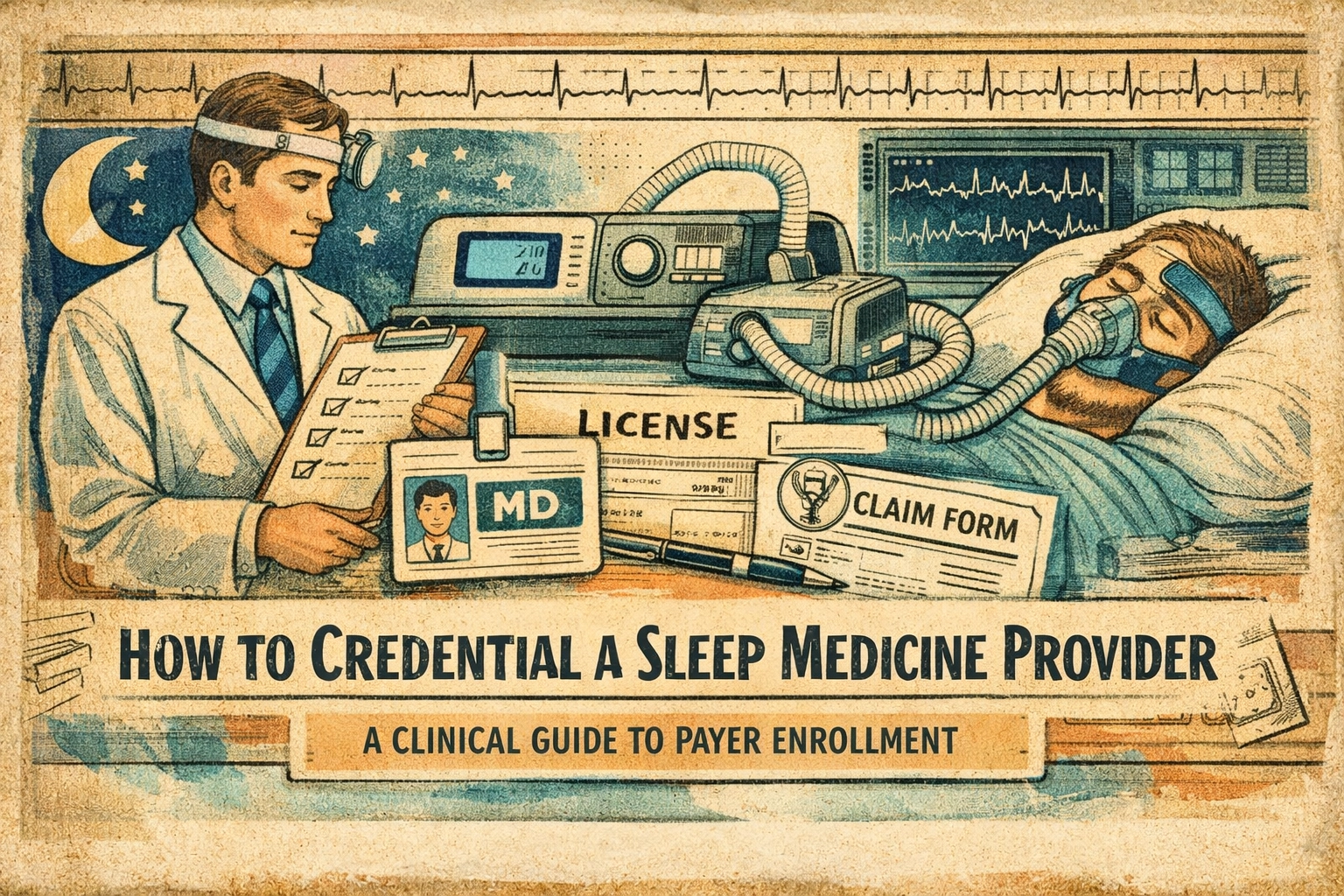
How to Credential a Sleep Medicine Provider: A Clinical Guide to Payer Enrollment

O6pLc6fEKy9

The landscape of Sleep Medicine is a complex intersection of multi-disciplinary expertise and rigorous facility standards. For practice managers and healthcare executives, the process of bringing a new sleep specialist into a network is not a routine administrative task; it is a high-stakes clinical and financial necessity. When you fail to navigate the specific nuances of this specialty, you risk months of denied claims and a complete halt to your sleep lab’s revenue cycle. Understanding how to credential a sleep medicine provider requires more than a basic knowledge of NPI numbers and CAQH profiles. Because sleep medicine providers often transition from different primary boards: such as Internal Medicine, Psychiatry, or Neurology: the documentation requirements are uniquely stratified. If your enrollment strategy does not account for these specific pathways, your provider will remain “out of network” long after they have started seeing patients. The Multi-Disciplinary Credentialing Landscape Sleep medicine is unique because it is not a standalone residency. Instead, it is a sub-specialty that requires a foundation in another medical field. Payers are hyper-vigilant about verifying the underlying board certification before they will even consider the sleep medicine designation. The Dual Board Paths To successfully enroll a provider, you must provide proof of a valid certificate from a member board of the American Board of Medical Specialties (ABMS). Most sleep specialists follow one of three primary tracks: Internal Medicine: These providers must maintain their ABIM certification while demonstrating the completion of a formal sleep fellowship. Psychiatry and Neurology: Providers coming from this background must show a valid ABPN certificate. Family Medicine: While less common, these providers must complete at least 12 months of ACGME-accredited fellowship training. You must ensure that the provider’s American Board of Sleep Medicine (ABSM) certification is active and correctly mapped to their primary specialty in the payer’s database. A mismatch here is the silent driver of thousands of dollars in “provider not found” denials. The Facility Hurdle: AASM Accreditation Requirements One of the most significant roadblocks in learning how to credential a sleep medicine provider is the inextricable link between the physician and the facility. Unlike a general practitioner who can be credentialed to any office, most major payers (including Medicare and large commercial carriers like Aetna and UnitedHealthcare) require the facility itself to be accredited for the provider to bill for technical components of sleep studies. The American Academy of Sleep Medicine (AASM) sets the gold standard for these facilities. To bill for CPT codes like 95810 (Polysomnography) or 95811 (Polysomnography with CPAP), the facility must often prove it meets AASM standards for inpatient or outpatient care. The Veracity Take: If your provider is ready to work but your sleep lab’s accreditation has lapsed, you cannot bill for the services they perform. You must manage facility accreditation and provider enrollment as parallel, interdependent tracks. Similar to the rigorous requirements found when you credential an allergy provider, the documentation must be airtight and specialty-specific. Strategic Steps: How to Credential a Sleep Medicine Provider To avoid the high cost of delays, you must follow a disciplined, consequence-driven roadmap. Every day your provider is not correctly enrolled is a day of lost revenue that you can never recover. 1. Verify the Primary and Sub-Specialty Boards Before submitting a single application, confirm the provider holds an active board certification in sleep medicine from the ABSM or a relevant ABMS member board. If the provider is “Board Eligible” but not yet “Board Certified,” many payers will either reject the application or place them in a lower-tier reimbursement bracket. 2. Standardize the CAQH Profile The CAQH ProView portal is the backbone of professional credibility in the enrollment world. For a sleep medicine provider, you must: Upload the fellowship completion certificate. List the sleep medicine board certification under the “Specialty” section. Ensure the work history explicitly includes time spent in sleep labs or accredited centers. 3. Address the Medical Director Requirements If the provider will serve as the Medical Director of your sleep facility, you must submit additional documentation. AASM-accredited facilities require the Medical Director to participate in at least 10 AMA PRA Category 1 CME credits per year in sleep medicine. Payers often request proof of these credits during the initial enrollment or during periodic audits. Billing and Coverage Codes: The Sleep Medicine Specifics Credentialing is the passport to success, but your enrollment must be structured to allow for specific billing codes. If the payer does not recognize the provider as a specialist in sleep medicine, they will likely deny claims for advanced diagnostics. Key codes that require specific enrollment status include: 95800 & 95806: Home Sleep Apnea Testing (HSAT). 95807: Sleep study with recorded simultaneous ventilation and heart rate. 94660: CPAP management and initiation. Without the proper specialty designation in the payer’s system, these codes are frequently flagged as “not medically necessary” or “outside of provider’s scope of practice.” This is why a generic enrollment approach fails: you need a team that understands the full scope of professional services and how they relate to specific diagnostic tests. Consequences of Incomplete Enrollment The risks of an improper enrollment strategy are severe and immediate: Revenue Leakage: Claims for sleep studies are high-dollar items. A single week of denials can result in five-figure losses. Patient Frustration: When a patient is told their sleep study is not covered because the provider was not properly credentialed, your practice’s reputation takes a hit. Audit Vulnerability: If you bill for sleep studies without the required AASM accreditation or ABSM certification on file, you are a prime target for a retrospective audit. Payers will not hesitate to recoup payments made to “unqualified” providers. Navigating the 12-Month Compliance Window For new sleep labs, Medicare provides a specific timeline that you must follow to stay compliant. You must submit your credentialing application within 90 days of the organization’s deadline and achieve final status within 12 months. Failure to meet these windows will result in a forced cessation of all sleep-related billing. The process of how to credential a sleep medicine