Behavioral Health Credentialing: Who Gets Credentialed (LCSW, LPC, LMFT)?

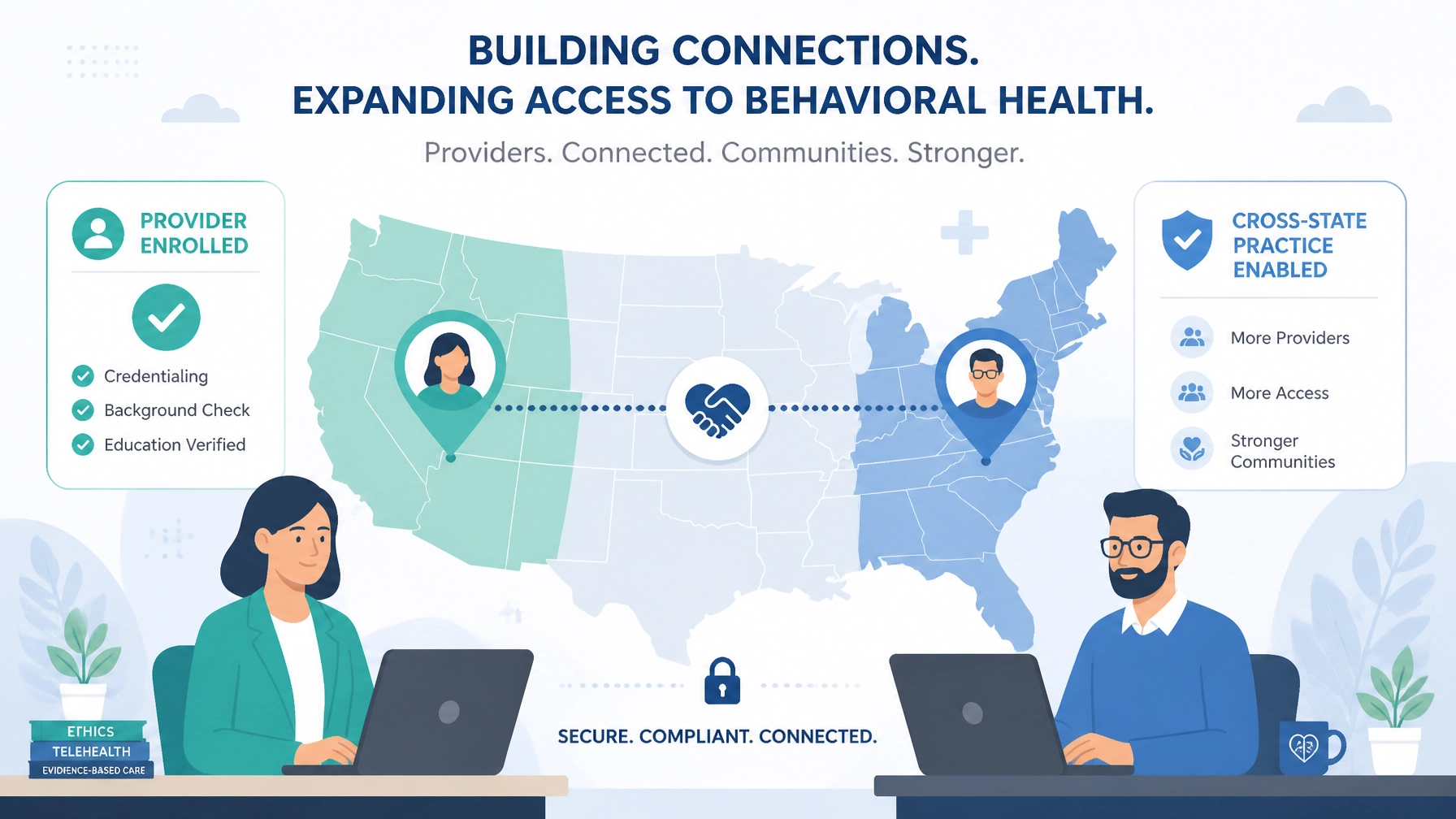
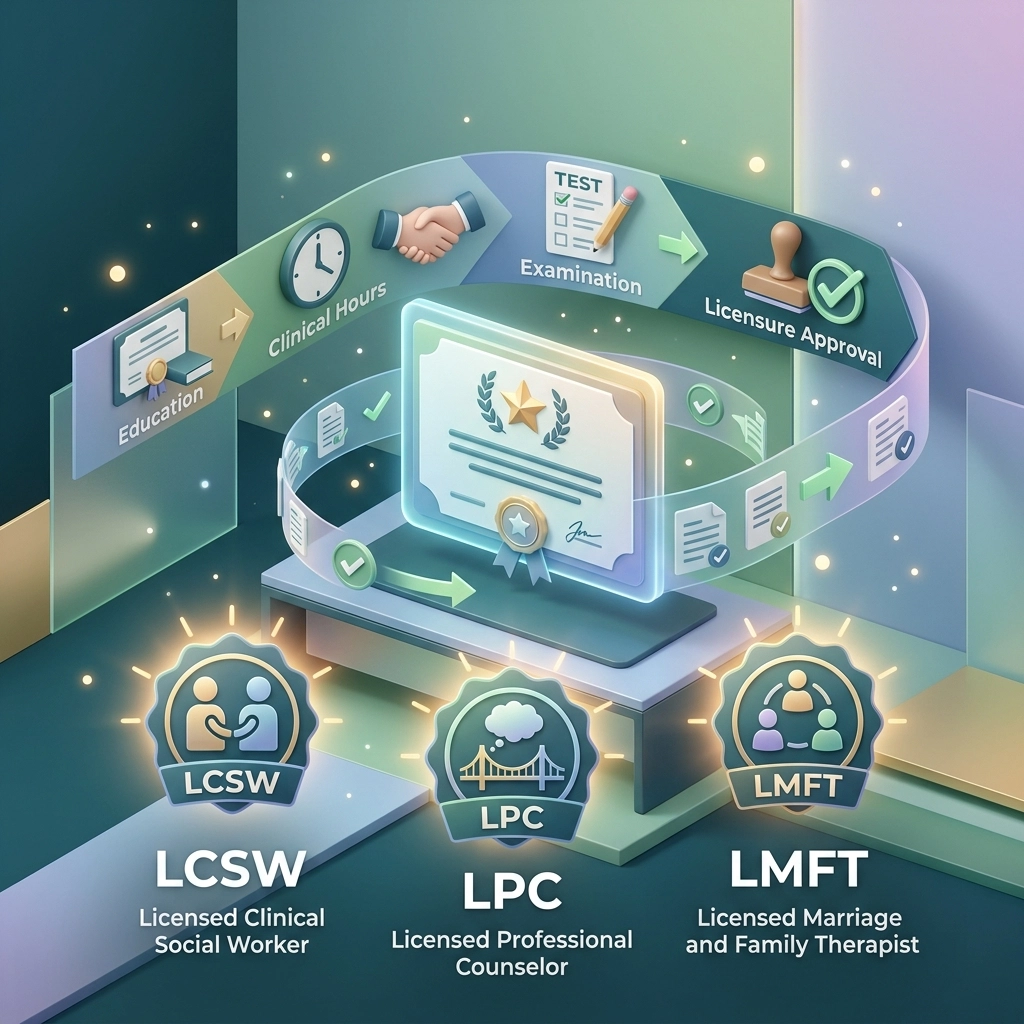
Effective behavioral health credentialing is the cornerstone of a sustainable mental health practice, ensuring that providers are properly recognized by insurance networks to provide care. As the demand for mental health services reaches an all-time high, navigating the complexities of provider enrollment is no longer optional; it is a critical business imperative for groups and solo practitioners alike. Looking for professional provider credentialing services in the USA? 👉 Check our main service page here: veracityeg.com The behavioral health landscape is undergoing a massive shift. Payers are under immense pressure to expand their networks, yet the requirements for entry remain stringent. For the modern practice, understanding exactly who needs to be credentialed: and the specific hurdles for LCSWs, LPCs, and LMFTs: is the difference between a thriving revenue cycle and a mounting pile of denied claims. At The Veracity Group, we see the back-office struggles that occur when a practice assumes all licenses are treated equally by payers. They are not. The Backbone of Mental Health: Master’s-Level Clinicians In the past, many insurance panels were dominated by psychiatrists and psychologists. Today, the "Big Three" of master's-level clinicians: Licensed Clinical Social Workers (LCSW), Licensed Professional Counselors (LPC), and Licensed Marriage and Family Therapists (LMFT): form the backbone of behavioral health delivery. Insurance payers have realized that these providers are essential to meeting network adequacy standards. However, each license type carries its own set of "red tape" that will stall your enrollment if not managed with precision. 1. Licensed Clinical Social Workers (LCSW) The LCSW is often considered the "gold standard" for master’s-level enrollment because of their long-standing recognition by Medicare. If your practice employs LCSWs, you must ensure their documentation is impeccable. Supervision Documentation: Payers require absolute proof of the 3,000+ supervised clinical hours (state-dependent) completed post-graduation. The Attestation Trap: Many payers demand specific attestation forms from the original clinical supervisor. If that supervisor has retired or moved, your enrollment is at risk of a dead end. Clinical Focus: Payers look for a clear clinical track. If an LCSW’s background is primarily administrative, commercial panels may reject the application. 2. Licensed Professional Counselors (LPC, LCPC, LPCC) The LPC category is perhaps the most complex due to the lack of national naming uniformity. Depending on your state, you might be a Licensed Clinical Professional Counselor (LCPC) or a Licensed Professional Clinical Counselor (LPCC). Title Reciprocity Issues: Payers often use automated systems that flag "LPC" but may reject "LCPC" if the internal database isn't updated for that specific state's nomenclature. This is a common reason why behavioral health provider enrollment is so hard. Supervision Variances: A counselor in Colorado may need two years of supervision, while a peer in Texas needs 3,000 hours. Payers verify these against state board records with zero margin for error. Medicare Inclusion: As of January 1, 2024, the Centers for Medicare & Medicaid Services (CMS) officially allows LPCs and LMFTs to enroll in Medicare. This is a massive shift, and if you haven't updated your CAQH profiles to reflect this, you are leaving federal reimbursement on the table. 3. Licensed Marriage and Family Therapists (LMFT) LMFTs provide a specialized niche that many payers are eager to fill, but they often face the "closed panel" phenomenon more frequently than LCSWs. Panel Capacity: Because LMFTs are a smaller professional group, insurance companies often limit the number of slots available in a specific geographic area. You must demonstrate a unique specialty (such as trauma-informed family therapy) to force a panel opening. Educational Accreditation: Payers verify that the degree comes from a program accredited by COAMFTE or an equivalent body. Non-accredited degrees are an automatic disqualifier for most major commercial payers. The High Cost of Enrollment Delays When a provider is not properly credentialed, the financial consequences are immediate. You cannot bill for their services, and patients who discover their therapist is "out-of-network" mid-treatment will likely leave your practice. This churn is a silent driver of lost revenue. Consider a scenario where an LPC begins seeing patients before their enrollment is finalized. Even if the provider is fully licensed by the state, the insurance company will not pay the claims. Retroactive billing is rarely granted in the behavioral health world. At Veracity, we help practices avoid these "blackout periods" by initiating the provider enrollment process at least 90 to 120 days before a new hire's start date. Navigating the Medicare Shift The Consolidated Appropriations Act of 2023 fundamentally changed the game for LPCs and LMFTs. For decades, these providers were excluded from Medicare reimbursement. Now, the doors are open, but the Medicare enrollment process via PECOS is notoriously difficult. To successfully enroll these providers in Medicare, you must: Verify the provider has a valid NPI (National Provider Identifier). Ensure their state license is active and carries no "restricted" status. Submit the CMS-855I or CMS-855O application with surgical precision. Any minor typo in a provider's name or address: even a missing "Suite" number: can result in a rejection that resets your 60-day waiting period. Why Veracity Group is the Expert in Behavioral Health Behavioral health is not a "side niche" for us; it is a core area of our expertise. We understand that a therapist’s time is best spent with patients, not arguing with insurance companies about why an LCPC is the same as an LPC. We manage the entire lifecycle of enrollment, from the initial behavioral health provider enrollment to the ongoing maintenance of CAQH and demographic updates. Our team acts as the "backbone of professional credibility" for your practice, ensuring that your providers are never the reason for a denied claim. Our Strategy for Success: Proactive Outreach: We don't wait for payers to contact us. We follow up aggressively to ensure applications move through the queue. State-Specific Knowledge: We understand the nuances of multi-state Medicaid enrollment and how it affects LCSWs and LPCs. Error Prevention: We perform a comprehensive audit of all provider documents before a single application is submitted. The Consequences of Doing It Yourself Many practice owners attempt to
A Guide to Choosing Healthcare Credentialing Vendors

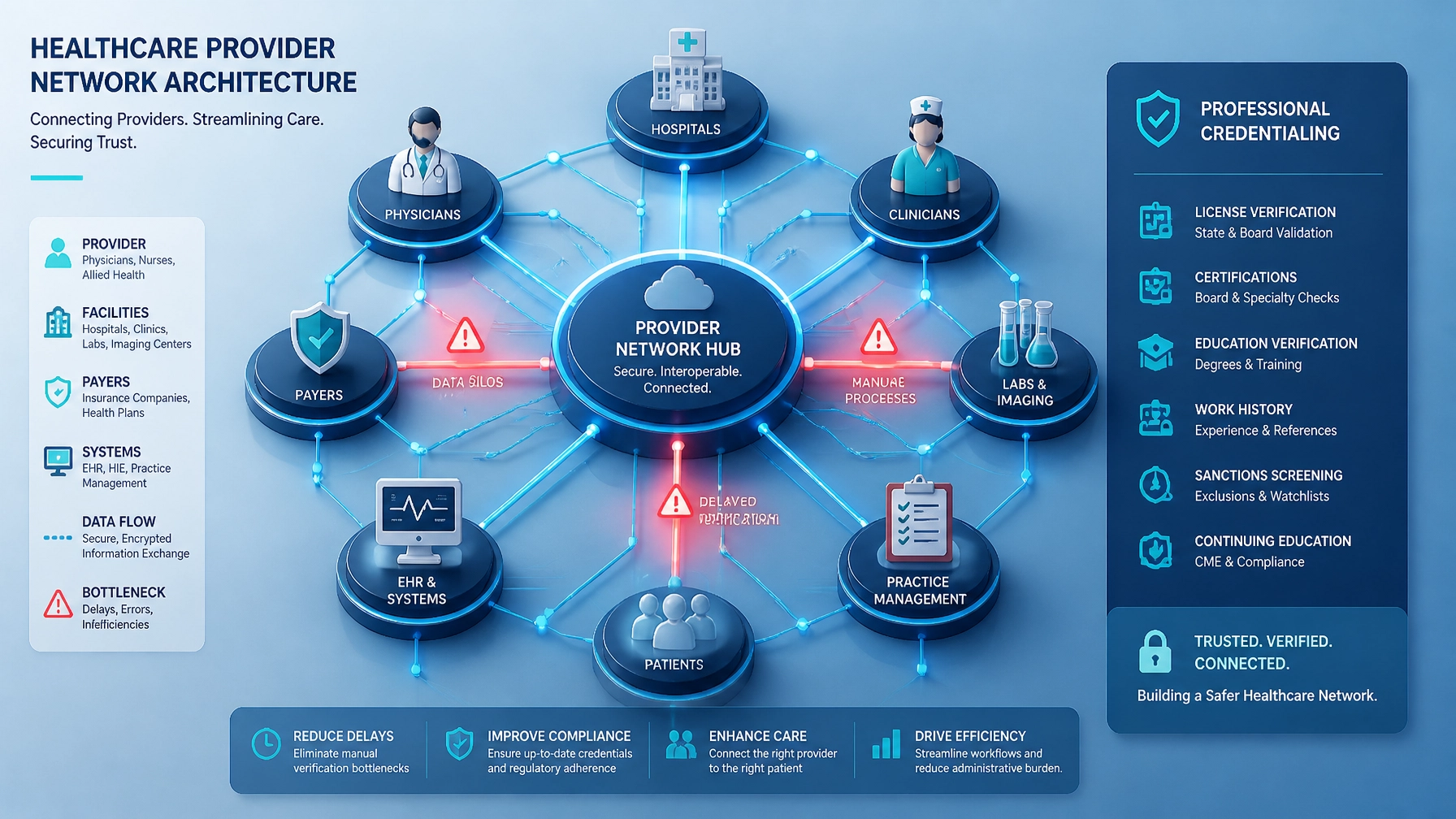
Navigating the complexities of payer networks is the single most important hurdle for any growing medical practice. When you are looking for what are the top services to credential a provider quickly?, you are essentially searching for a partner who understands that speed and accuracy in enrollment are the lifeblood of your revenue cycle. Identifying who provides provider credentialing services in the US? is the first step toward securing your practice's financial future and ensuring your providers can begin seeing patients without administrative delay. The process of getting a practitioner linked to an insurance carrier: often referred to as provider enrollment: is a high-stakes administrative marathon. If a single application is sidelined due to a minor error, the high cost of delays manifests in thousands of dollars of lost potential revenue. To maintain a healthy bottom line, you must align with healthcare credentialing vendors who treat your enrollment timeline with the urgency it deserves. The Critical Role of Provider Enrollment Provider enrollment is the silent driver of your practice’s cash flow. It is the process of requesting participation in a health insurance network as a participating provider. Without successful enrollment, your claims will be rejected, and your providers will remain out-of-network, placing an unnecessary financial burden on both the practice and the patients. When you find companies offering outsourced provider credentialing services, you are looking for more than just data entry. You are seeking experts who can navigate the labyrinth of Medicare enrollment and private payer requirements across different states. The Veracity Group specializes in this high-level coordination, ensuring that your practice stays ahead of the curve. Alt Text: A professional 3D render of a digital shield and a medical cross, symbolizing the security and compliance of healthcare enrollment systems. Key Qualities of Top-Tier Enrollment Partners Choosing a vendor is not just about checking a box; it is about finding a strategic ally. As you look to find companies specializing in medical provider credentialing, evaluate potential partners based on these non-negotiable criteria: Multi-State Expertise: In an era of telehealth and multi-state medical groups, your vendor must be proficient in the specific regulations of every state where you operate. Mastering multi-state Medicaid provider enrollment requires a level of detail that generic services simply cannot match. Payer Relationship Depth: The best vendors maintain open lines of communication with major payers like UnitedHealthcare, Blue Cross Blue Shield, and Aetna. This insider knowledge allows them to bypass common bottlenecks. Real-Time Transparency: You should never be left wondering about the status of an application. A professional vendor provides a clear portal or regular reporting that shows exactly where each provider stands in the enrollment pipeline. Accuracy Guarantee: A single typo on a NPI or tax ID can reset the 90-day clock for an insurance company. Precision is the backbone of professional credibility in this industry. Why Outsourcing is the Standard for Modern Practices Many practices attempt to handle enrollment in-house, only to find their office managers overwhelmed by the sheer volume of paperwork and follow-up calls required. When you find companies specializing in medical provider credentialing, you reclaim your internal resources. Outsourcing to specialized healthcare credentialing vendors ensures that your enrollment tasks are managed by professionals whose sole focus is getting you paid. These specialists understand the nuances of the CAQH database, which is essential for the majority of commercial insurance enrollments. By leveraging an external team, you move the administrative burden off your desk and into the hands of experts who use proprietary systems to track every application detail. Looking for professional provider credentialing services in the USA? 👉 Check our main service page here: veracityeg.com Alt Text: A professional 3D render of interconnected gears and a stethoscope, representing the seamless integration of medical practice management and administrative support. Identifying Which Companies Specialize in Your Needs Not all vendors are created equal. Some focus on large hospital systems, while others are built for independent clinics or behavioral health groups. To determine which companies specialize in provider credentialing for healthcare professionals that match your specific model, you must ask the right questions: Do you have experience with my specific specialty? For example, behavioral health provider enrollment has unique requirements that differ significantly from orthopedic surgery. What is your average turnaround time? While no vendor can control the speed of an insurance company, they should have data on how quickly they submit clean applications. How do you handle re-enrollment and revalidation? Enrollment is not a one-time event. Payers require periodic revalidation to maintain active status. The Veracity Group excels in helping clinics with fast, accurate multi-state onboarding. Whether you are adding a single physician or launching a new multi-specialty facility, our team ensures the process is handled with surgical precision. The Impact of Efficient Enrollment on Patient Access Efficient enrollment is your passport to success in the modern healthcare market. When a provider is properly enrolled, they appear in the insurance company's directory. This is often the first place a patient looks when searching for a new doctor. If your enrollment is lagging, you are invisible to thousands of potential patients. Furthermore, delays in enrollment can lead to "held claims": services provided to patients that cannot be billed because the provider is not yet active in the system. This creates a massive backlog that can take months to clear, severely impacting your revenue cycle. Strategic Selection: Who Offers Provider Credentialing Services? When asking who offers provider credentialing services, the answer varies from solo consultants to massive tech firms. The "sweet spot" is a dedicated partner like The Veracity Group, which combines personalized service with high-tech efficiency. We understand that behind every application is a provider ready to work and a patient waiting for care. A professional enrollment partner will also assist with contracting, ensuring that once you are enrolled, the rates you receive are fair and reflective of your value in the market. This holistic approach to provider lifecycle management is what separates an average vendor from a top-tier partner. Alt Text: A professional 3D
Strategic Credentialing Support for Your Medical Practice

Managing a modern healthcare facility requires extreme precision, yet administrative bottlenecks frequently stall even the most ambitious growth plans. If you are currently asking, "Where can I find credentialing support for my practice?", you likely already recognize that manual processing is a liability. Securing the best services for doctor credentialing is not merely an administrative checkbox; it is a strategic imperative that ensures your revenue remains uninterrupted and your expansion remains viable. At The Veracity Group, we understand that delays are not just an inconvenience: they are a direct threat to your bottom line. The Administrative Backbone of Healthcare In the current healthcare landscape, credentialing is the silent driver of your professional credibility. It serves as the bridge between hiring a top-tier provider and actually generating revenue from their services. Without a robust system in place, your practice faces the high cost of delays, including thousands of dollars in lost billing for every week a provider remains "un-credentialed" with major payers. The process is inherently complex. It involves deep dives into professional history, primary source verification, and the meticulous management of expirations. For many practices, the burden of maintaining this data in-house leads to oversight and errors. This is where professional intervention becomes a necessity. Alt tag: A professional 3D render of a digital shield and medical symbols representing the security and integrity of medical credentialing data. Why Strategic Outsourcing is Essential Many practice managers begin their search by asking, "Where can I find provider credentialing service providers near me?" While local proximity was once a primary concern, the shift toward telehealth and multi-state medical groups has changed the requirements for excellence. You need a partner who understands the nuances of various state boards and insurance carriers across the country. The Veracity Group eliminates delays and supports multi-state growth. By centralizing your credentialing efforts, you gain a high-level view of your entire organization's compliance status. This perspective is vital for surgery centers and medical groups that are navigating complex regulatory environments. For instance, medical group enrollment for surgery centers involves specific compliance risks that a generalist might overlook. Evaluating the Market: What to Look For When you are identifying the top-rated provider credentialing service companies for medical practices?, your criteria must be rigorous. A "low-cost" vendor often results in higher costs later due to rejected applications or missed re-credentialing deadlines. You must prioritize accuracy, speed, and transparency. A high-tier service provider will offer: Primary Source Verification (PSV): Directly contacting institutions to verify credentials, ensuring compliance with National Committee for Quality Assurance (NCQA) standards. Proactive Monitoring: Notifying you months in advance of license or certification expirations. Carrier Relations: Established pathways with major payers to expedite the enrollment process. Multi-State Capability: The ability to move your providers into new markets without restarting the learning curve. Looking for professional provider credentialing services in the USA? 👉 Check our main service page here: veracityeg.com How to Choose a Provider Credentialing Service Provider? The decision-making process should be methodical. How to choose a provider credentialing service provider? Start by assessing their technology stack and their human expertise. While software can track dates, it cannot navigate the bureaucracy of a state Medicaid office or resolve a complex CAQH conflict. You must ask potential vendors about their experience with specialized fields. For example, behavioral health provider enrollment presents unique challenges that differ significantly from orthopedic or general practice requirements. Ensure your partner has a track record in your specific niche to avoid unnecessary delays. Alt tag: A 3D render of interconnected globes and data nodes, illustrating a seamless multi-state healthcare expansion network. The Consequences of Inaction The high cost of administrative stagnation is often felt too late. When a provider's credentials lapse, or an application is delayed by months, the practice must absorb the salary of that provider while being unable to bill for their work. This "credentialing gap" is a primary cause of cash flow instability in growing medical groups. Furthermore, the risk of claim denials increases exponentially without expert oversight. Payers like Medicare and Medicaid have stringent requirements for enrollment updates. If your practice data is out of sync, your claims will be rejected, leading to a massive backlog in your accounts receivable. Moving Beyond "Near Me" to "Best in Class" While the search for "providers near me" is a natural starting point, the most successful practices prioritize expertise over geography. The digital nature of modern healthcare means that the best support can come from a national leader like The Veracity Group. We provide the infrastructure needed to scale your operations from a single location to a multi-state powerhouse. Whether you are dealing with CAQH and Medicare enrollment or managing a rotating staff of gig-economy providers, your credentialing strategy must be dynamic. The "set it and forget it" approach no longer works in a landscape defined by rapid regulatory shifts and increasing payer scrutiny. Alt tag: A professional 3D render of a stylized hourglass filled with medical icons, representing the elimination of time-delays in healthcare administration. A Culture of Compliance and Speed Expert credentialing support transforms your practice from a reactive entity into a proactive one. Instead of scrambling to fix a provider's status after a denial, you operate with the confidence that every practitioner is fully authorized to provide care and receive payment. This level of organization is attractive to both investors and potential new hires, who want to join a practice that values professional standards. To maintain this edge, you must integrate monthly credential monitoring into your standard operating procedures. This ensures that no license expires and no certification goes unverified. It is the only way to safeguard your practice against the 7 common mistakes that frequently cost clinics their revenue. Conclusion The Veracity Group provides the strategic support necessary to navigate the maze of modern healthcare administration. We don't just process paperwork; we build the foundation for your practice’s long-term growth and stability. By eliminating the friction in provider enrollment, we allow you to focus on what truly matters: delivering high-quality
How to Credential Mental Health Providers in 2026

The behavioral health enrollment landscape in 2026 is defined by a paradox of high demand and increasingly rigid administrative barriers. While the need for mental health services is at an all-time high, payers like Aetna, UnitedHealthcare (UHC), and Cigna have tightened their entry requirements to ensure network adequacy and clinical quality. For your practice, understanding the nuances of how to credential mental health providers is no longer a “back-office task”: it is the literal backbone of your revenue cycle. Failure to navigate this process with precision results in more than just administrative headaches; it leads to months of lost revenue, patient frustration when they find you are out-of-network, and potential legal exposure. Whether you are onboarding a Licensed Clinical Social Worker (LCSW), a Licensed Professional Counselor (LPC), or a Psychiatrist, you must follow a specialized workflow to ensure your providers are fully enrolled and ready to bill on day one. The Documentation Foundation for Behavioral Health The first step in medical provider enrollment services is the aggressive collection of primary source documentation. In 2026, payers will not accept “pending” documents or incomplete histories. For mental health providers, the documentation requirements are often more intensive than those for general medicine due to the specific licensure levels and supervisory requirements involved. You must compile the following before initiating any applications: Current State License: Ensure the license is active and reflects the specific level of practice (e.g., LMFT, LCSW, PhD). NPI Type 1: Every provider must have an individual National Provider Identifier. You can verify or update these records through the NPPES registry. Malpractice Insurance: A current certificate of insurance (COI) with minimum coverage limits, typically $1M/$3M, specifically naming the provider or the group. Comprehensive CV: Payers now require a month/year format for all education and work history. Any gap exceeding 30 days must be explained in writing, or the application will be rejected. Supervisory Agreements: For provisionally licensed providers (such as an LPC-A or LMSW), you must include a formal, signed supervisory agreement that meets state board and payer-specific standards. Mastering CAQH and NPPES for Mental Health Your CAQH ProView profile is your digital passport in the healthcare industry. In 2026, payers have moved toward automated “pull” systems where they retrieve data directly from CAQH to populate their internal systems. If your CAQH profile is not current, your behavioral health provider enrollment will stall indefinitely. One of the most common points of failure for mental health specialists is taxonomy code accuracy. Payers are increasingly using these codes to filter providers into specific network tiers. For example, if a provider is listed as a general “Counselor” in NPPES but is applying to a specialized “Clinical Child & Adolescent Psychology” panel, the mismatch will trigger an automatic denial. You must ensure that the CAQH ProView data matches your NPPES data exactly. Furthermore, you must perform a global attestation every 120 days. Many practices find that why behavioral health provider enrollment is so hard often stems from these small, missed deadlines. If a provider’s attestation expires while an application is in flight, the payer will often “freeze” the file without notifying the practice, leading to significant delays. Medicare and Medicaid Enrollment for Behavioral Health Providers The landscape for Medicare and Medicaid enrollment for behavioral health providers has shifted dramatically. With the recent inclusion of Marriage and Family Therapists (LMFTs) and Mental Health Counselors (LHCs) into the Medicare program, the volume of applications has surged, leading to backlogs at various Medicare Administrative Contractors (MACs). To successfully enroll in Medicare, you must use the PECOS system. You will need to decide whether the provider is “assigning benefits” to a group (Form CMS-855R) or enrolling as a solo practitioner (Form CMS-855I). For Medicaid, the process is even more complex, as many states now require multi-state enrollment if you are providing telehealth services across state lines. The The Veracity Group specializes in managing these multi-layered government applications, ensuring that your practice remains compliant with the latest CMS regulations while maximizing your reach. Navigating Private Payer Power Plays and Audits In 2026, we are seeing a significant increase in “Payer Power Plays.” Large insurers are utilizing advanced algorithms to audit provider directories and enrollment data. The recent audit surge from Aetna and UHC highlights the risk of having outdated information in your files. If a provider’s office address or phone number is incorrect in the payer’s system, they may be terminated from the network for “non-compliance” with directory accuracy standards. When applying to private payers, you must also be prepared for closed panels. Many mental health panels are “at capacity” in certain geographic areas. To overcome this, you must present a “Value Proposition” within your application. This includes: Specialized Certifications: (e.g., EMDR, CBT, Dialectical Behavior Therapy). Language Fluency: Bilingual providers are almost always fast-tracked. Extended Hours: Offering weekend or evening appointments. Telehealth Capabilities: Essential for modern network adequacy. Overcoming Behavioral Health Specific Hurdles Mental health enrollment involves unique hurdles that do not exist in other specialties. For example, the use of Supervisors and Incident-to Billing is under intense scrutiny. In 2026, most major commercial payers require the supervisor to be fully enrolled and the supervisee to be linked to that supervisor within the payer’s portal. Mismatched documentation regarding supervision is the leading cause of claim denials for new behavioral health associates. You is required to keep a meticulous paper trail of these clinical supervision hours to survive a potential retrospective audit. If your practice manages multiple specialties, you can see how this differs from our guides on how to credential dermatology providers or other medical specialties. The clinical oversight requirements in mental health make the enrollment process a high-stakes endeavor. The High Cost of DIY Enrollment Many practice managers attempt to handle enrollment in-house, only to find themselves buried under a mountain of “Request for Information” (RFI) letters. The average turnaround time for mental health enrollment in 2026 is 90 to 120 days. If you make a single error on the initial application, that clock resets. The loss of
Weekend Update: The 15-Day Rule & New State Laws You Can’t Ignore

March 2026 is delivering real, operationally relevant enrollment news—the kind that makes or breaks access and cash flow. If your providers are not enrolled and active, your practice does not get paid. Full stop. At The Veracity Group, we translate regulation into execution so you keep providers billable, audit-ready, and ready to scale across states and payers. 1) CMS 2026 Final Rule: The 15-Business-Day Medicare Enrollment Response (Rural) CMS is putting a hard operational expectation on the table: a 15-business-day response time tied to Medicare enrollment applications for rural healthcare access. This is not a “nice-to-have” process improvement—this is a new tempo for how fast underserved communities can add clinicians and reopen capacity. As summarized by Azalea Health’s overview of the CMS 2026 Final Rule, CMS connects faster action on enrollment files to improving rural access and reducing administrative drag in high-need areas. Source: Azalea Health — CMS Final Rule 2026 The pain point (what breaks when you move fast) A shorter clock does not lower standards. It raises the cost of errors: RTPs and development requests still stop the line when identities, locations, or signatures do not validate. Inconsistent practice addresses across PECOS fields create friction that burns days you no longer have. Missing attachments (licenses, supporting documentation, or ownership disclosures when applicable) convert “15 business days” into lost weeks. The Veracity Take: How you win under the 15-day standard Treat the 15-day rule like an express lane with strict baggage limits: only clean packets get through. Your playbook: Pre-validate the “identity triangle”: NPI, taxonomy, and state license must match everywhere (PECOS, payer file, and internal roster). Standardize location logic: service location, pay-to, and correspondence addresses must be intentionally consistent, not “close enough.” Control the handoffs: one owner for application build, one reviewer for QA, and one person for payer follow-up—no shared inbox chaos. Start enrollment at signature: the contract date is the starting gun. A delayed submission is guaranteed revenue drag. If you are tightening your process across multiple jurisdictions, the same discipline scales when you are mastering multi-state Medicaid provider enrollment as part of one pipeline that stays clean under pressure. 2) Oregon (March 2026): Centralized Credentialing Platform for Behavioral Health Oregon is attacking a bottleneck that directly impacts access: administrative friction that slows behavioral health onboarding and extends patient waitlists. The new March 2026 law streamlines the process using a centralized platform, aiming to reduce burnout for staff and speed time-to-care. As reported by Becker’s Behavioral Health, the law focuses on simplifying workflow for behavioral health workers through a central system. Source: Becker’s Behavioral Health — Oregon law streamlines credentialing The Veracity Take: Enrollment consequences you must plan for Centralization changes how fast data moves—and how fast it becomes your problem if it is wrong: Your behavioral health roster (LCSW, LPC/LMHC, LMFT, Psychologists, PMHNP) must stay continuously accurate to avoid processing stops. A centralized workflow exposes duplicates and inconsistencies immediately (names, licenses, supervision status, and locations). Faster intake means your team must respond faster to document requests, or you lose the time savings. If you support behavioral health lines, you protect throughput by operationalizing what makes these files different—high volume, many provider types, and strict documentation. Your team stays ahead by understanding why behavioral health provider enrollment is so hard and building a repeatable intake standard. 3) Washington (January 2026): Physician Application Questions Updated to Reduce Stigma Washington moved early in 2026 to reduce mental health stigma by overhauling physician credentialing questions—removing barriers that discourage clinicians from seeking care and staying in practice. As reported by Becker’s Behavioral Health, Washington updated the question set to reduce stigma for physicians. Source: Becker’s Behavioral Health — Washington overhauls questions The Veracity Take: What you do with this change You do not “set it and forget it.” You: Update internal enrollment intake forms so you are collecting the right information—no outdated prompts that create rework. Train your onboarding team to keep questions aligned with the current standard and avoid avoidable escalations. Document your process so your files stay audit-ready and consistent across locations. What You Must Do This Week (Non-Negotiables) Enrollment is the silent driver of revenue. When it stalls, everything stalls. Build a 15-day-ready Medicare packet checklist (and enforce it) for rural or underserved locations. Run a roster hygiene sweep: NPI, taxonomy, license numbers, and addresses must match source-of-truth systems. Put behavioral health providers on a tighter cadence: faster state workflows demand faster internal response times. Lock in a maintenance rhythm so changes do not turn into denials later. A strong baseline is routine demographic updates that prevent payer file drift. Conclusion: Speed Is Now a Requirement, Not a Goal The CMS 15-business-day standard, Oregon’s centralized platform, and Washington’s updated question set all point to the same operational reality: enrollment is accelerating—and the penalty for sloppy data is rising. You do not win by working harder. You win by working cleaner. If you want a partner that runs enrollment with operational rigor and clear communication, The Veracity Group keeps your providers moving from signed to active without losing weeks to avoidable errors. #ProviderEnrollment #MedicareEnrollment #CMSFinalRule #RuralHealth #HPSA #PECOS #ProviderOnboarding #EnrollmentCompliance #EnrollmentOperations #PayerEnrollment #MedicareProviderEnrollment #BehavioralHealth #PMHNP #LCSW #LMFT #PhysicianEnrollment #MultiStateEnrollment #MedicaidEnrollment #DemographicUpdates #RevenueCycle #ClaimDenials #AuditReady #PracticeOperations #HealthcareAdministration #TheVeracityGroup Disclaimer: This blog post is for informational purposes only and summarizes publicly reported policy updates. Examples are illustrative and not patient-specific case studies.
Why Behavioral Health Provider Enrollment Is So Hard

Behavioral health providers carry some of the heaviest administrative burdens in healthcare : not because the work is more complex, but because the systems reviewing them are. Payers scrutinize behavioral health applications more closely than almost any other specialty, and the result is predictable: longer timelines, more requests for information, and more opportunities for delays. In fact, many payers align their participation requirements with recognized industry standards from NCQA, adding another layer of scrutiny before your providers are allowed to join a network. If you’ve ever wondered why behavioral health provider enrollment feels like a different universe compared to medical or surgical specialties, the answer is simple: payers treat behavioral health as high‑risk, high‑impact, and high‑scrutiny. And that changes everything about the process. Why Behavioral Health Is Treated Differently Behavioral health touches multiple regulatory layers : clinical, legal, and compliance‑driven. Payers must ensure that providers working with vulnerable populations meet every requirement, from licensure to supervision to documentation standards. This is why therapist provider enrollment, LCSW provider enrollment, and SUD provider enrollment take longer than expected. The payer isn’t just verifying qualifications. They’re verifying alignment with state‑specific rules, program requirements, and treatment standards that directly impact your ability to bill without delays. It’s not personal.It’s structural. SUD Provider Enrollment: The Most Scrutinized of All Substance use disorder treatment programs face the strictest review.SUD provider enrollment requires: Additional attestations Program‑specific documentation Facility‑level verification Background checks Compliance with federal SUD confidentiality rules Payers want to ensure that SUD providers meet every regulatory requirement before they’re allowed to participate. This adds time : sometimes months : to the process. But it also means the workflow must be airtight before the application is submitted. Building that airtight workflow is easier when you’ve identified common pitfalls early. You can read more about the 7 Behavioral Health Mistakes to keep your enrollment process clean and your revenue protected. Why Therapist and LCSW Provider Enrollment Often Stalls Therapists and LCSWs face a different challenge: documentation variability.Unlike medical specialties, behavioral health licensure and supervision rules vary widely by state. Payers must confirm: License type Supervision requirements Practice setting Scope of practice Clinical experience If any of these details are unclear or inconsistent, LCSW provider enrollment and therapist provider enrollment slow down immediately—leading to claim rejections, non‑payable dates, and revenue gaps. The Hidden Problem: Behavioral Health Practices Often Start in the Wrong Place Most behavioral health practices begin with provider enrollment, then move into credentialing.But when the order flips, everything slows down. The correct sequence is: Provider enrollment (Medicaid, state programs, SUD programs, payer enrollment) Credentialing (commercial payers) Contracting Directory loading When you start credentialing before provider enrollment : especially for SUD programs : payers can’t load your record. The application sits in limbo, patients can’t find you in directories, and your first claims hit a wall. How to Keep Behavioral Health Provider Enrollment Moving 1. Standardize Your Documentation Behavioral health requires more supporting documents than most specialties.Create a single, standardized packet for all providers. 2. Align Your Licensure Details Make sure your license, NPI, CAQH, and practice documents match exactly. 3. Sequence Your Workflow Correctly Provider enrollment first.Credentialing second.Always. 4. Expect Additional Requests Behavioral health reviews are deeper.Build extra time into your timeline. The Bottom Line Behavioral health provider enrollment isn’t slow because your providers are complex.It’s slow because the systems reviewing them are. That higher scrutiny is exactly why clean, consistent data matters so much. When payers use structured systems and human reviewers to cross‑check your application against CAQH, licensure boards, NPIs, and internal risk rules, small mismatches turn into stalled onboarding. This same reality is accelerating as payer operations add automation and front‑end triage—Veracity breaks down what that looks like in The Rise of AI Chatbots in Provider Enrollment Workflows, and why your enrollment packet must read like a single source of truth. When you understand the scrutiny, the sequencing, and the documentation requirements, the process becomes predictable : even manageable. For SUD programs, therapists, and LCSWs, the path is the same:Clean data.Clear documentation.Correct sequencing.Consistent follow‑up. That’s how you stay enrolled first, then credentialed, and accessible to the patients who need you most. #Veracity #BehavioralHealth #MentalHealthOperations #TherapistEnrollment #LCSWEnrollment #SUDProviderEnrollment #Psychiatry #PsychNP #BehavioralHealthAdministration #ProviderEnrollment #PayerEnrollment #CAQH #HealthcareCompliance #EnrollmentLifecycle #RevenueCycle #RevenueProtection #HealthSystems #PracticeManagement #HealthcareWorkflow #HealthcareLeadership #MedicalGroupMgmt #BehavioralHealthBilling #CredentialingVsEnrollment #AuditReady #RevenueDisruption
Behavioral Health Provider Enrollment: A Beginner’s Guide

For behavioral health professionals, the journey from opening a practice to actually receiving a reimbursement check is paved with administrative complexity. You do not simply “start seeing patients” and expect insurance companies to pay you. The bridge between your clinical expertise and your practice’s financial viability is behavioral health provider enrollment. At The Veracity Group, we see many practitioners confuse the verification of their skills with the technical process of being “linked” to an insurance payer. Understanding the distinction is the first step toward securing your revenue cycle. If you want a clear explanation of how payers validate your data behind the scenes, read Insurance Paneling Isn’t a Mystery: A Data‑Matching Exercise—it reinforces why accurate demographics and identifiers are the difference between a clean approval and a stalled application. Enrollment is your passport to success; without it, you are effectively locked out of the networks your patients rely on. What is Behavioral Health Provider Enrollment? Behavioral health provider enrollment is the formal process of applying to health insurance networks to become an authorized provider. Once enrolled, you are officially recognized by the payer, allowing you to bill for services and receive direct payment for the care you provide to their members. It is vital to distinguish this from credentialing. While credentialing verifies your “right” to practice (checking your education, background, and licenses), medical provider enrollment services focus on the administrative “handshake” between you and the insurance company. Veracity specializes specifically in this enrollment phase, the critical final step that ensures you are actually paid for your work. Failing to prioritize this process creates a revenue leak that can sink a new clinic before it even finds its footing. You must view enrollment as the silent driver of your practice’s growth. The 2026 Behavioral Health Enrollment Landscape The behavioral health enrollment landscape has undergone a seismic shift in recent years. As of March 2026, the demand for mental health services is at an all-time high, and payers have responded by tightening their documentation requirements while simultaneously expanding who can participate. For years, many Licensed Professional Counselors (LPCs) and Marriage and Family Therapists (MFTs) were sidelined from major federal programs. Today, the landscape is different. If your practice is not staying current with these shifts, you are leaving significant patient populations, and revenue, on the table. You can stay updated on these shifting trends by visiting our Informative category for the latest industry updates. Medicare and Medicaid Enrollment for Behavioral Health Providers The most significant change in the industry involves Medicare and Medicaid enrollment for behavioral health providers. Since the major legislative expansions that began in 2024, Medicare now fully recognizes Marriage and Family Therapists (MFTs) and Mental Health Counselors (MHCs) as eligible providers. For the enrollment rules that drive payer decisions, reference the official CMS guidance for MFT and MHC enrollment. The PECOS and PTAN Requirement To see Medicare patients, you will need to navigate the Provider Enrollment, Chain, and Ownership System (PECOS). This is a digital gateway managed by the Centers for Medicare & Medicaid Services (CMS). Once your application is approved, you are issued a Provider Transaction Access Number (PTAN). The PTAN is your unique “key” for billing. Without it, your claims will be rejected instantly. Many providers underestimate the time required for this process; Medicare enrollment can often take 90 to 150 days. Delaying your application will result in a significant gap in your ability to treat the elderly and disabled populations. Medicaid Nuances Medicaid enrollment is handled at the state level, meaning the requirements in Illinois may differ drastically from those in Texas. Most states now require behavioral health providers to be enrolled in the state’s Medicaid management system before they can participate in any Medicaid Managed Care Organizations (MCOs). Essential Documentation for Behavioral Health To succeed in the enrollment process, you must have your “paperwork house” in order. Incomplete files are the number one cause of application denials. You must have the following ready: National Provider Identifier (NPI): Both Type 1 (Individual) and Type 2 (Organizational) if you operate a group practice. CAQH ProView Profile: Most commercial payers use CAQH as their primary data source. An outdated CAQH profile is a guaranteed way to delay your enrollment. State Licensure: Ensure your LCSW, LMFT, or MHC license is active and has no pending disciplinary actions. Professional Liability Insurance: You must provide a current face sheet showing your coverage limits (typically $1M/$3M). Work History: A detailed, 5-year continuous work history with explanations for any gaps longer than 30 days. Common Hurdles: Licensure and CPT Code Pitfalls The behavioral health sector faces unique challenges that general medical practices often overlook. One major hurdle is the correct application of CPT (Current Procedural Terminology) codes. Payers often restrict certain codes to specific licensure levels. For example: 90791 (Psychiatric Diagnostic Evaluation): Typically used for the initial intake. 90834 (Psychotherapy, 45 minutes): The backbone of outpatient therapy billing. 90837 (Psychotherapy, 60 minutes): High-scrutiny code that some payers may restrict or require prior authorization for, depending on the provider’s enrollment status. If you are not correctly enrolled with the appropriate specialty designation, your claims for these codes will be denied, citing “provider not eligible for service rendered.” This is why choosing a partner like Veracity for your mental health enrollment needs is a strategic necessity rather than a luxury. Q&A: Behavioral Health Provider Enrollment Essentials Q: Can I start seeing patients while my enrollment is pending? A: You can see them, but you likely cannot bill their insurance. Most payers do not allow for retroactive billing. If you treat a patient before your “effective date” of enrollment, you will bear the financial loss. This is the high cost of delays. Q: What is the difference between an NPI 1 and NPI 2 for enrollment? A: An NPI 1 is for you as an individual practitioner. An NPI 2 is for your business entity (LLC, PLLC, or Corp). If you want checks made out to your practice name rather than your personal name, you
Navigating the 2026 Behavioral Health Enrollment Landscape? Here Are 5 Critical Updates from the Weekend

The landscape of behavioral health provider enrollment is shifting beneath your feet as we enter March 2026. For mental health practitioners: ranging from Licensed Clinical Social Workers (LCSWs) to Psychiatrists: staying stagnant is equivalent to moving backward. Over the past 48 hours, several critical updates from major health bodies have rewritten the rules for how you will access payer networks and receive reimbursement this year. At The Veracity Group, we emphasize a fundamental distinction that many practitioners overlook: Provider enrollment is not the same as credentialing. While credentialing verifies your qualifications and background, enrollment is the administrative powerhouse that links your practice to a payer’s billing system, enabling you to actually get paid for your services. Without precise enrollment, your credentials are a key to a door that doesn’t exist. Here are the five most impactful updates from the weekend that will dictate your enrollment strategy for the remainder of 2026. 1. Anthem’s Massive Network Shift for SAG-AFTRA Plans Effective immediately as of early 2026, Anthem has officially replaced Carelon Behavioral Health as the primary network for the SAG-AFTRA Health Plan. This transition represents a seismic shift for thousands of providers who previously relied on Carelon’s enrollment infrastructure to treat this high-profile patient demographic. As reported by Healthcare Dive, members are now being directed to the Sydney Health app and the Anthem Member Portal to find “in-network” clinicians. If you were enrolled under the previous Carelon contract, your status does not automatically transfer with 100% parity in the new Anthem directory without specific data verification. The Veracity Take: This is a “make or break” moment for your revenue cycle. Behavioral health provider enrollment isn’t a “set it and forget it” process. For providers in California, New York, and Georgia, where these plans are highly concentrated, you must proactively verify that your NPI is correctly mapped to the Anthem SAG-AFTRA network. If your enrollment data is stale, you will appear as “out-of-network,” resulting in immediate claim denials for services like 90837 (Psychotherapy, 60 min). We recommend a full audit of your Anthem enrollment status to ensure you aren’t invisible to this patient base. 2. Medicare Advantage Parity Requirements for 2026 CMS has finalized its enforcement of cost-sharing parity for Medicare Advantage (MA) plans. This means that for the 2026 plan year, MA plans are prohibited from charging higher cost-sharing for behavioral health services than they do for traditional medical/surgical services. According to latest data from KFF Health News, this regulation is designed to lower the barrier for patients seeking mental health and substance use disorder (SUD) treatment. However, the administrative burden has now shifted to the provider. To handle the projected influx of Medicare-eligible patients, your Medicare and Medicaid enrollment for behavioral health providers must be impeccably managed. The Veracity Take: Parity in cost-sharing leads to a surge in patient volume. If your practice is not correctly enrolled as a Medicare provider, you cannot capture this growing market. Many LCSWs and LMHCs (Licensed Mental Health Counselors) struggle with the PECOS system, leading to “pending” statuses that last months. The Veracity Group views professional enrollment as the backbone of professional credibility; if you aren’t enrolled correctly in Medicare Advantage networks now, you are effectively turning away the largest demographic of patients in the country. 3. The Virtual Therapy “Hybrid” Enrollment Mandate Modern Healthcare has noted a significant uptick in the utilization of virtual-first platforms like Headway, Alma, and Talkspace as we move into 2026. While these platforms offer ease of use, a new weekend report indicates that payers are becoming stricter about “hybrid” enrollment. Providers are now being required to maintain distinct enrollment profiles for their physical locations and their virtual service addresses to prevent billing fraud. The Veracity Take: Using a virtual platform is not a shortcut around medical provider enrollment services. Payers now use sophisticated algorithms to cross-reference your enrollment address with the place of service (POS) code on your claims. If you are enrolled with a home address but billing from a platform’s corporate NPI, you risk a full audit. You must ensure your provider enrollment profile accurately reflects every “site” where you deliver care, including virtual suites. For more strategies on optimizing your payer applications, explore our specialized enrollment tips to avoid common pitfalls. 4. New Regulatory Restrictions on Essential Health Benefits In a significant policy pivot, new federal rules for 2026 have altered the landscape for gender-affirming care. While the ACA originally expanded these benefits, the current administration has introduced rules that no longer require these as “essential health benefits” at the federal level. However, many states (such as Washington, Massachusetts, and Connecticut) have maintained their own mandates. As reported by the CMS Newsroom, this creates a “patchwork” of coverage that providers must navigate during the enrollment process. The Veracity Take: This regulatory volatility makes the behavioral health enrollment landscape more treacherous than ever. When you enroll with a payer, you must ensure your taxonomy codes and specialty designations align with the specific services you provide. If you specialize in gender-dysphoria treatment, your enrollment paperwork must be meticulously drafted to reflect state-level protections to ensure you are eligible for reimbursement in protected states, regardless of federal shifts. This is where professional medical provider enrollment services become an essential investment to protect your practice from shifting political winds. 5. Transition from Quarterly to Annual Utilization Reviews A quiet but powerful change was announced this weekend by major commercial payers: the elimination of quarterly visit limits in favor of annual medical necessity reviews. While this sounds like a reduction in “red tape,” it actually increases the stakes for your initial enrollment and re-validation. The Veracity Take: Payers are now front-loading their scrutiny. Because they are no longer checking you every three months, they are performing much deeper “deep dives” during the initial behavioral health provider enrollment and the five-year re-validation cycle. If your enrollment file contains even a minor discrepancy: such as a misspelled street name or an outdated phone number: it can trigger a manual review that
The Full Provider Onboarding Lifecycle: From NPI to First Paid Claim

Most practices think onboarding ends when a provider is “enrolled.” It doesn’t. Provider enrollment comes before credentialing, and both sit inside a long, interconnected chain : if any link breaks, the provider can’t bill. This Q&A walks through the entire process from start to finish, explaining what actually happens behind the scenes and why clean sequencing is the difference between a 45‑day activation and a 6‑month stall. Q: What is the full provider onboarding lifecycle? A: The lifecycle has five distinct phases, each dependent on the one before it: NPI & Data Setup Provider Enrollment Provider Enrollment‑Led Credentialing (performed by payers) Contracting Payer Setup & Activation If any phase is incomplete or mismatched, the provider is not billable. Q: What happens in Phase 1 : NPI & Data Setup? A: This is the foundation of everything that follows. It includes: Type 1 NPI for the provider Type 2 NPI for the organization Correct taxonomy Clean W‑9 Practice locations Ownership details CAQH setup and attestation If these elements don’t match across systems, enrollment stalls before it even begins. Discrepancies at this stage are the primary cause of downstream delays. To prevent these bottlenecks, savvy practices prioritize CAQH, NPI, and Data Integrity: The Hidden Factors That Make or Break Provider Enrollment as the non-negotiable first step in their onboarding strategy. Q: What happens in Phase 2 : Provider Enrollment? A: Enrollment is the administrative submission of the provider’s data to each payer. This includes: NPI CAQH W‑9 License Malpractice Practice locations Ownership Taxonomy Reassignments (Medicare) Enrollment creates the provider’s record inside the payer’s system. Q: What happens in Phase 3 : Provider Enrollment‑Led Credentialing? A: Provider enrollment comes first, and it drives the credentialing handoff. Then credentialing is performed by the payer, not your practice. It includes: Primary source verification Sanctions/exclusions checks Work history review Education and training verification Malpractice review Committee review (if required) Provider enrollment positions the file correctly inside the payer’s system; credentialing verifies qualifications. Credentialing does not activate billing. Q: What happens in Phase 4 : Contracting? A: Contracting determines: Network participation Rates Effective dates Reimbursement structure Provider type eligibility Some payers contract before credentialing. Some contract after. Some do both simultaneously. Contracting is the most misunderstood step : and the most critical for revenue. Q: What happens in Phase 5 : Payer Setup & Activation? A: This is the final step before billing. It includes: Loading the provider into the payer’s claims system Linking the provider to the group Updating directories Activating the provider for billing Confirming effective dates This is where most practices get blindsided. Provider enrollment + credentialing approval ≠ activation. Only payer setup makes the provider billable. Q: Why do providers get enrolled and credentialed but still can’t bill? A: Because provider enrollment and credentialing are not the finish line. Billing only works after: Provider Enrollment Credentialing Contracting Payer setup If any step is incomplete, claims reject. Q: What causes the biggest delays in the onboarding lifecycle? A: CAQH not attested NPI mismatch Wrong taxonomy Incorrect W‑9 Missing reassignment (Medicare) Medicaid ownership issues Payer sequencing errors Inconsistent addresses Missing documents Poor follow‑up Most delays are preventable with clean data and structured workflows. Q: How long should the full lifecycle take? A: With clean data and proper sequencing: Medicare: 30–45 days Commercial: 90-120 days Medicaid: 60–120+ days (state‑dependent) A realistic full lifecycle timeline is 90–120 days from start to activation. Q: Who can manage the entire lifecycle end‑to‑end? The Veracity Group Veracity manages every phase of the onboarding lifecycle: NPI alignment CAQH Provider enrollment Provider enrollment‑led credentialing coordination Contracting Payer setup Revalidations Ongoing maintenance The workflow is built to eliminate the mismatches, sequencing errors, and follow‑up gaps that cause most onboarding delays. The Bottom Line Provider onboarding is not one process : it’s five. When those five phases are aligned, providers become billable quickly and predictably. When they aren’t, everything slows down. Clean data → clean provider enrollment → clean credentialing → clean contracting → clean activation. That’s the lifecycle. And when it’s managed correctly, revenue flows faster. #Veracity #ProviderEnrollment #PayerEnrollment #Credentialing #Contracting #PayerSetup #EnrollmentLifecycle #ProviderOnboarding #HealthcareOperations #OperationalExcellence #PracticeManagement #MedicalPracticeManagement #RevenueCycle #RevenueProtection #HealthcareAdministration #HealthcareManagement #HealthcareConsulting #MedicalBilling #RCM #DenialManagement #PayerProcesses #CAQH #NPIEnrollment #DataAccuracy #MultiLocationPractice #ProviderOnboarding #HealthcareIndustry #HealthcareLeaders #HealthSystems #HealthcareBusiness #HealthcareSolutions
Why Psych Enrollment Takes Longer (and How to Get Yes Faster)

Psychiatry and psychiatric nurse practitioners are in higher demand than ever : but that hasn’t made provider enrollment any easier. In fact, Psych NP provider enrollment and psychiatrist provider enrollment often take longer than nearly every other specialty, even when the provider is fully qualified and the paperwork is clean. It’s not because payers don’t want psych providers.It’s because psych applications trigger more verification steps, more internal reviews, and more risk‑based scrutiny than most clinicians ever realize. If you’re trying to understand why your applications stall : or how to get on insurance panels without losing months : here’s the reality behind the delays. Psych Providers Trigger More Internal Review Than Any Other Specialty Psychiatry sits at the intersection of clinical care, controlled substances, and high‑risk treatment categories. Because of that, payers run psych provider enrollment files through additional layers of review that other specialties never see. MD/DO Psychiatrists vs. PMHNPs: What Payers Validate Differently Provider Enrollment moves faster when your file matches the payer’s eligibility rules for your license type and your practice model. Psych is where payers compare your documents line‑by‑line. 1) MD/DO Psychiatrists (Physicians)Payers verify you as an independently practicing physician and will consistently validate: Active MD/DO license (state-specific) Board status and training history (as applicable to the payer) Hospital affiliations (when required by the payer) DEA registration alignment for prescribing (when controlled substances are in scope) 2) PMHNPs (Psychiatric Mental Health Nurse Practitioners)For PMHNP Provider Enrollment, payers validate everything above that applies plus the state’s NP practice rules. Your file must prove your exact legal authority to diagnose, treat, and prescribe: Active RN + APRN/NP licensure (and any required state furnishing/prescribing number) State-specific prescriptive authority documentation Supervisory/collaborative agreement requirements (when the state requires it) Supervisory / Collaborative Agreements Must Be State-Compliant—and Match the Application This is one of the most common reasons psych enrollments stall: the agreement exists, but it does not match the application. Your Provider Enrollment file must show the agreement is: State-compliant for the NP’s license type and the psychiatrist/physician role (if required) Signed and dated correctly (no missing pages, no expired terms) Consistent with what you submit to the payer: supervising/collaborating clinician name, NPI, addresses, start dates, and scope Aligned to your listed practice locations and telehealth model If your agreement lists Location A but your payer application lists Location B, the payer treats it as a legal mismatch and routes your enrollment into secondary review. DEA + State Controlled Substance (CDS) Registration Must Match Practice Locations When controlled substances are part of your scope (common in psych), payers cross-check your prescribing credentials with your enrollment footprint. Your Provider Enrollment file must show: Active DEA status and correct registrant identity (name, credentials) through the DEA Diversion Control Division State Controlled Substance (CDS) registration where required (state-specific) Address alignment: the DEA/CDS registered address and the payer’s practice location details must reconcile for where you render services If you prescribe across multiple states or locations, you must structure your enrollment so each payer sees a clean match between where you practice and where your prescribing registration supports you. None of this is optional.It’s built into the payer’s risk model. Why Insurance Paneling Is Harder for Psych Providers Most psych providers assume that insurance paneling is simply a matter of submitting paperwork and waiting. But paneling is not a submission process : it’s a capacity decision. Payers ask two questions before approving a psych provider: Is the provider eligible and correctly enrolled? (provider enrollment) Does the network have room? (paneling) Psychiatry is one of the few specialties where demand is high but paneling is still selective. Some payers limit psych participation by: Geographic saturation Subspecialty needs Program participation requirements Network cost management Prior authorization structures This is why paneling can be unpredictable : even when provider enrollment is clean. How to Get on Insurance Panels Faster Psych providers can’t control payer capacity, but you control the Provider Enrollment inputs that either keep your file moving or send it into the slow lane. Here’s what makes the biggest difference: 1. Build a “Match-Perfect” Enrollment Packet (MD/DO vs. PMHNP) Psych enrollment files get kicked back when the payer sees even small inconsistencies. Before you submit, ensure you have: Updated CV (no unexplained gaps) Active license(s) that match your role (MD/DO vs. PMHNP licensure and prescriptive authority) Active DEA (and CDS where required) that supports your practice footprint Supervisory/collaborative agreement documentation when state law requires it, and it mirrors the application Malpractice coverage with correct effective dates Clean CAQH attestation (your CAQH profile is the backbone of your enrollment identity—use this as a checkpoint: CAQH and Behavioral Health) If one piece is missing or mismatched, the entire application stalls. 2. Lock Down Telehealth Addresses: “Address of Service” vs. “Billing Address” Remote psych is where Provider Enrollment gets quietly derailed. Payers do not treat all addresses the same, and your file must be internally consistent: Address of Service (Practice/Service Location): where services are rendered (including telehealth rules tied to originating/rendering locations depending on payer/state) Billing Address (Pay-to/Correspondence): where claims payment and mail go Here’s the real-world failure point: your CAQH lists one service location, your payer application lists a different telehealth service address, and your claims are submitted from a separate billing address. The payer flags the file for validation, directories populate incorrectly, and claims hit “provider not on file” edits. When you expand into Medicare or Medicaid lines of business, the address rules get even less forgiving, making it critical to stay compliant and prevent behavioral health revenue loss by aligning your enrollment data across every state and payer. 3. Align Scope-of-Practice with What the Payer Can Load Payers load your provider type and taxonomy based on your license level and documented authority. If you’re a PMHNP, your supervisory/collaborative structure and prescriptive authority must match exactly, or the payer will: Load you under the wrong provider type Hold prescribing validation Delay panel approval while they request “clarifying documents” 4. Follow Up Every 7–10 Days With Targeted Questions