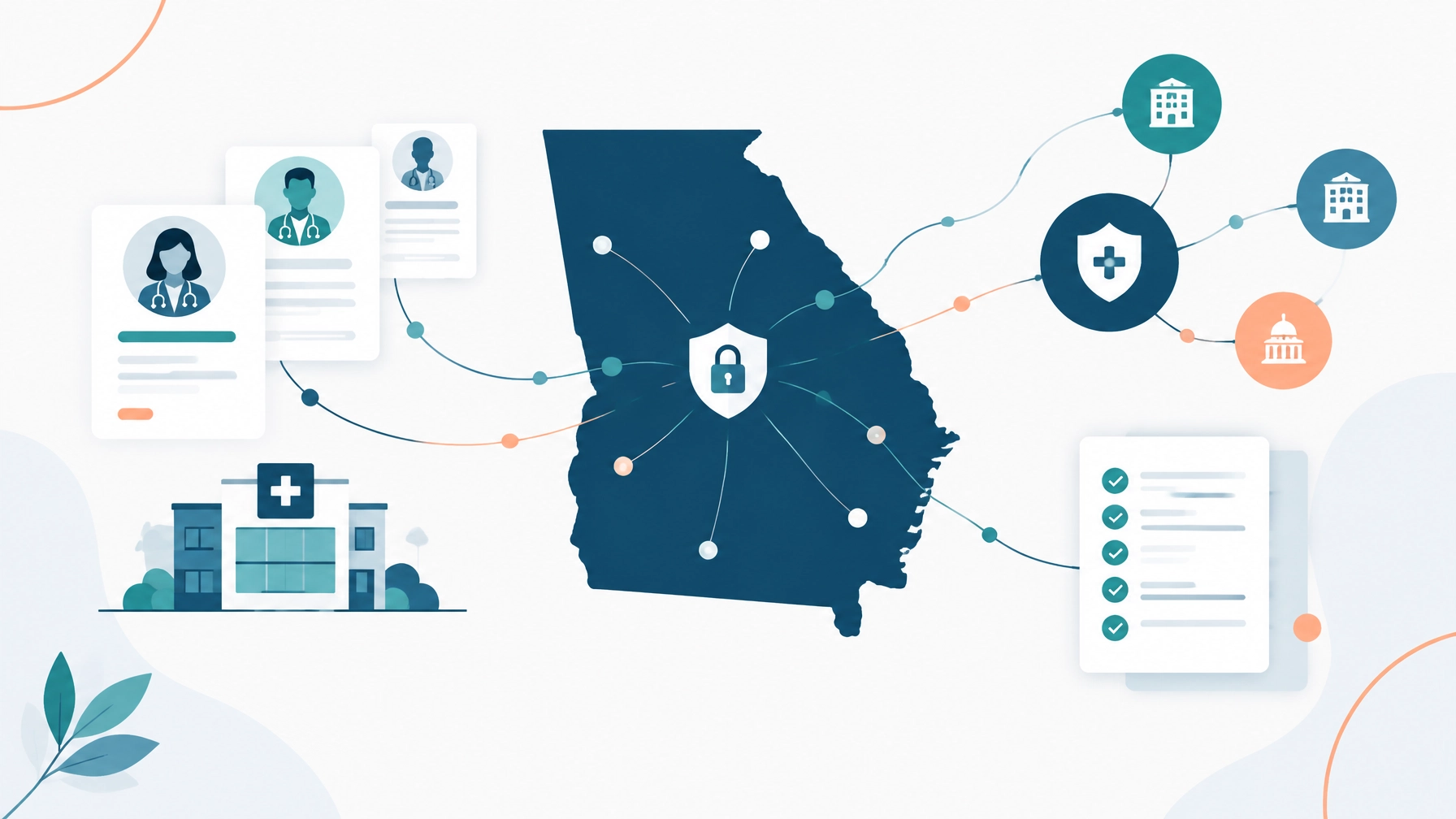
Veracity upscaled revised

How to Credential a Provider in Georgia: Breaking Through the Payer Gridlock

TRFWlc9iiz2

Georgia is a high-volume healthcare hub with fast clinic growth and a well-earned reputation for payer bottlenecks. Navigating medical provider enrollment services in the Peach State now requires more than persistence; it requires tight control of Georgia’s evolving Medicaid rules and a working command of the behavioral health enrollment landscape. For practices looking to scale, the real bottleneck is not provider recruiting. It is the enrollment machinery that stalls activation, delays billing, and chokes cash flow across Medicaid, Medicare Advantage, and commercial plans. If you are expanding a multi-site group or launching a specialized clinic in Georgia, you are operating in one of the most administratively dense markets in the Southeast. The cost of delay is immediate. Every day a provider stays off the roster is a day of lost visits, denied claims, and revenue that does not come back. In 2026, Georgia demands closer attention than ever because Group/Billing enrollment through GAMMIS is mandatory by January 1, 2026 for organizations billing through a central group structure, and CMS continues pushing tighter digital enrollment expectations and faster turnaround standards. If you do not adapt your process, Georgia will punish the gap. Looking for professional provider credentialing services in the USA? 👉 Check our main service page here: veracityeg.com 1. The Georgia Medicaid Backbone: Centralized Review Plus GAMMIS Group/Billing Rules Georgia is unique in its Medicaid structure because the state uses a centralized review model tied to the Department of Community Health (DCH) and the GAMMIS portal as the operating backbone for enrollment activity. That centralized setup is meant to reduce duplicate work across managed Medicaid, but in practice it only works when your file is complete, current, and aligned at both the individual and organizational levels. The biggest 2026 fact-check item is not optional: Group/Billing Enrollment through GAMMIS is mandatory by January 1, 2026 for organizations billing Medicaid claims through a group or billing entity. Georgia requires organizations to link rendering NPIs to a central group NPI inside the state’s enrollment structure. If your organization still relies on a loose payee setup or inconsistent NPI relationships, you are sitting on a denial trigger. That means your Georgia playbook must include these non-negotiables: Enroll the organization correctly in GAMMIS as the billing/group entity. Link all rendering providers to the correct central group NPI. Validate that practice addresses, tax IDs, ownership details, and rosters match across GAMMIS, NPPES, and payer files. Correct mismatches before claims start flowing. However, centralized does not mean fast. Georgia still rewards precision and punishes stale documentation. If licensure, insurance, or certifications are out of date, the file stops moving. For groups handling Medicare and Medicaid enrollment for behavioral health providers, this matters even more because roster errors cascade across Georgia Families and Georgia Families 360° participation and can interrupt billing across multiple locations at once. Alt text: A clean, high-white-space Scandinavian minimal editorial photograph of a modern, organized medical office workspace with natural light. 2. Navigating GAMMIS Without Getting Buried The Georgia Medicaid Management Information System is the digital gate for enrollment, maintenance, status checks, and organizational updates. Whether you are adding a rendering provider, enrolling a new location, or cleaning up an ownership file, GAMMIS is where the battle is won or lost. In plain English: if your group file is messy, GAMMIS exposes it fast. The most common Georgia breakdowns show up in four places: Rendering NPIs not properly tied to the billing/group NPI Address mismatches between GAMMIS, NPPES, and payer records Ownership or legal-entity records that do not match Secretary of State documents Missed revalidation or maintenance updates that freeze claims This is the operational trap for large groups, behavioral health platforms, and multisite organizations. One disconnected provider record can hold up clean billing across the full entity. That is why groups expanding into Georgia need a disciplined enrollment map, not a pile of PDFs and email chains. If your organization is scaling service lines or locations, the same discipline outlined in our guide on medical group enrollment for surgery centers applies here too: the larger the roster, the harsher the consequences of one weak link. 3. The Medicare Advantage Gridlock and the New Network Pressure Georgia has heavy Medicare Advantage penetration. Payers such as Anthem Blue Cross and Blue Shield of Georgia, UnitedHealthcare, and Humana dominate major markets. Traditional Medicare follows a more standardized path, but Medicare Advantage in Georgia is where provider onboarding often hits a concrete wall. These plans routinely operate with restricted networks, especially in dense markets like Atlanta, Savannah, and Augusta. Submitting an application is not enough. You must show network value, specialty access, geographic fit, and roster readiness. That work now sits against a tougher backdrop because Georgia’s CATCH Act network reporting standards tightened in March 2025. Under updated reporting requirements issued through the Georgia Office of Commissioner of Insurance, carriers face more scrutiny around network adequacy, time-and-distance access, appointment wait times, and the completeness of provider reporting. You can review the state directive directly through the Georgia OCI CATCH Act materials. Fact Check: HB 1354 Puts a 45-Day Clock on Commercial Enrollment Here is the legal shift too many Georgia writeups miss: the Insurer Credentialing Reform Act (HB 1354) requires commercial health insurers to complete provider credentialing within 45 days after receiving a complete application. As outlined by Georgians for a Healthy Future, the law also pushes a standardized credentialing form aligned with Georgia Medicaid. In plain English, commercial plans now face the same 45-day standard that Georgia Medicaid already uses. That is not a small cleanup item. That is the state admitting the old commercial timeline was a traffic jam with a necktie on. Why this matters: Georgia lawmakers and advocates pushed this reform hard to address the behavioral health enrollment bottleneck and improve network adequacy, especially where patients wait too long because providers sit in payer limbo instead of seeing patients. If your practice operates in psychiatry, counseling, addiction medicine, or multi-site behavioral health, this is the kind of statutory change that deserves a