How to Credential a Provider in Utah: Fast-Growth Market and CHIP/Medicaid Rules

Utah is currently witnessing a healthcare metamorphosis that most expansion leads only dream of. Navigating provider enrollment in the Beehive State requires a sophisticated understanding of a market where a significant share of Utah’s population—around 1 in 6—relies on Medicaid or CHIP. For any organization looking to scale, efficient medical group enrollment is the primary lever for capturing this expanding patient base. At The Veracity Group, we see Utah as a blueprint for the future of healthcare administration: a state that has traded 40-year-old legacy systems for a modernized, high-velocity infrastructure. Looking for professional provider credentialing services in the USA? 👉 Check our main service page here: veracityeg.com The PRISM Advantage: Speed as a Competitive Weapon For decades, the administrative burden of Medicaid enrollment was a primary bottleneck for practice growth. In Utah, that bottleneck has been shattered by the PRISM (Provider Enrollment, Registries, and Individualized Support Management) system. This isn't just a minor software update; it is a total overhaul of the state's healthcare data architecture. The most striking feature of PRISM is its speed. Under the old legacy framework, simple demographic updates or enrollment changes could languish for weeks or months. Today, in our experience, PRISM processes many enrollment changes in just a few days. This rapid turnaround is a massive win for practice speed and revenue cycle stability. When your medical group adds a new provider, you are no longer waiting for a black box to eventually spit out an approval. You are engaging with a system designed for high stability and low downtime, ensuring that your applications move through the pipeline without the technical glitches that plague other state portals. Alt text: A digital dashboard representing Utah's PRISM system showing rapid provider processing times and high system stability. This transition away from 40-year-old legacy systems is not just about convenience; it is about operational agility. If your credentialing manager is still treating Utah like a slow-moving bureaucracy, you are leaving revenue on the table. The efficiency of PRISM means you can move from hiring to billing in a fraction of the time required in neighboring states. Navigating Fast-Growth Dynamics in the Utah Market Utah’s population is growing at a rate that consistently outpaces the national average. This demographic shift is accompanied by a significant expansion in the Medicaid and CHIP (Children’s Health Insurance Program) populations. As a medical group expansion lead, you must recognize that 1 in 6 Utahns are on Medicaid. This is no longer a niche payer segment; it is a core pillar of a sustainable patient volume strategy. The demand for services is surging, but the supply of providers must be onboarded with equal speed. Agility is the new currency in the Utah market. If your provider enrollment process is sluggish, you are effectively turning away a massive portion of the market. To succeed here, your organization must adopt an agile onboarding strategy that leverages Utah’s modernized tools to keep pace with the state's growth. Why Agile Onboarding Matters Market Capture: In a fast-growing environment, the first group to provide access wins the patient loyalty. Revenue Realization: Faster enrollment means shorter "lag time" between a provider's start date and their first reimbursable claim. Recruitment Advantage: Providers want to work for groups that have their administrative act together. A seamless enrollment experience is a powerful recruiting tool. CHIP and Medicaid Rules: The Continuous Coverage Shift One of the most critical nuances in Utah's current landscape is the shift toward continuous coverage. Historically, Medicaid and CHIP beneficiaries faced frequent "churn," where small fluctuations in income or administrative hurdles led to temporary losses in coverage. This was a nightmare for providers, leading to denied claims and interrupted care. Utah has moved toward smoother transitions between Medicaid, CHIP, and Marketplace coverage, aiming to reduce churn. This policy shift ensures that patients remain covered even as their eligibility status fluctuates. For your practice, this means more consistent reimbursement and fewer billing "surprises." You can learn more about how these shifts affect broader strategies in our Mastering Multi-State Medicaid Provider Enrollment guide. Understanding CHIP Continuity The Children’s Health Insurance Program in Utah is tightly integrated with the Medicaid infrastructure. When credentialing a provider, you are not just enrolling them in a plan; you are placing them into an ecosystem designed for patient retention. The Utah Department of Health and Human Services emphasizes that maintaining a provider’s active status in PRISM is essential to treating this population without interruption. If a provider's enrollment lapses, the "continuous" nature of the coverage doesn't help you: the claim will still be rejected. Alt text: A flowchart illustrating the seamless transition of a patient between Utah Medicaid and CHIP coverage, highlighting the importance of continuous provider enrollment. The Strategic Advantage Utah’s modern infrastructure makes it easier for the state to align provider data with broader access and outcome goals. This means the data you provide during the enrollment phase is increasingly used to measure network adequacy and access to care in real-time. By maintaining high standards of data integrity in your services and enrollment submissions, your medical group positions itself as a high-value partner to the state. This is a strategic advantage that goes beyond simple billing. It places your group at the forefront of value-based care initiatives. Tactical Execution: Getting Enrolled in Utah To navigate this market effectively, your team must master the technical requirements of the PRISM portal. This is not a process you can "wing." 1. The Utah-ID Prerequisite Before you even touch PRISM, every provider and administrative user must have a Utah-ID Account. This is the gateway to all state digital services. Security is tight, and the authentication process is rigorous. Do not wait until a provider’s start date to initiate this. 2. The PRISM Portal Submission Once the Utah-ID is active, you enter the PRISM portal. This system requires detailed information regarding provider specialties, locations, and affiliations. Because the system is so stable and modernized, it will flag errors immediately. While this might feel frustrating, it is actually
How to Credential a Provider in Louisiana: LaMPP, Medicaid, and Commercial Payers

Louisiana is a unique beast when it comes to healthcare administration. For medical group administrators and RCM leaders, the Pelican State represents both a massive opportunity for expansion and a legendary administrative swamp. If you are managing a multi-state group, you already know that provider enrollment services in Louisiana require a specific kind of expertise that goes beyond the standard CAQH update. Utilizing professional medical credentialing strategies is the only way to navigate a system that is as complex as the bayous themselves. Looking for professional provider credentialing services in the USA? 👉 Check our main service page here: veracityeg.com The Louisiana Landscape: Why It’s Different Louisiana is a high-demand state, but it is also a high-complexity state. Unlike states that have a "set it and forget it" mentality with Medicaid, Louisiana’s system is a dual-track marathon. You aren't just dealing with a single state agency; you are managing a centralized enrollment portal while simultaneously wrestling with five different Managed Care Organizations (MCOs), each with its own quirks and demands. The pressure is high because the demand for providers in Louisiana is surging, particularly in rural areas and behavioral health. If your providers aren't loaded into the system correctly from day one, your revenue cycle will stall before the first claim is even scrubbed. The Foundation: The Louisiana Medicaid Provider Enrollment Portal (LaMPP) The starting point for any provider looking to treat Medicaid patients in Louisiana is the Louisiana Medicaid Provider Enrollment Portal, often referred to within the industry as LaMPP. This is a centralized, web-based system designed to satisfy federal CMS requirements. Every provider must complete this state-level enrollment. This is not optional. Whether you are a solo practitioner or part of a massive multi-state group, the LaMPP portal is your gateway. You will need: A valid Louisiana Provider ID (if you’re re-enrolling). Your National Provider Identifier (NPI). A signed state provider participation agreement. The state uses this portal to perform its own screening, which occurs at the initial application and at least every five years for revalidation. However, do not fall into the trap of thinking that a "complete" status in the LaMPP portal means you are ready to see patients. It is merely the ticket to enter the stadium; you still have to find your seat with the MCOs. The "Big 5" MCOs: Navigating Healthy Louisiana Once the state-level enrollment is underway, the real work begins with the Managed Care Organizations. In Louisiana, these are collectively known under the "Healthy Louisiana" umbrella. To be fully reimbursed, your providers must be enrolled with the Big 5: Aetna Better Health of Louisiana AmeriHealth Caritas Louisiana Healthy Blue Louisiana Healthcare Connections (LHCC) UnitedHealthcare Community Plan Each of these MCOs operates its own portal and has its own internal timeline. While the state-level LaMPP enrollment is centralized, the MCO enrollment is decentralized. This is where most practices lose their momentum. If you aren't tracking the status of each application across all five entities, you will inevitably end up with a provider who can see United patients but is getting denied by Healthy Blue. For groups expanding into the state, this fragmentation is a primary driver of compliance risks and revenue leakage. You must treat each MCO as a separate project with its own follow-up schedule. The Act 143 (2022) Shortcut: A Game Changer If there is one piece of insider knowledge you need for Louisiana, it is Act 143. Passed in 2022, this legislation was a direct response to the massive backlogs that were preventing providers from seeing patients. Act 143 creates a streamlined path for certain providers. If a provider has active hospital privileges or comes from an FQHC (Federally Qualified Health Center) or RHC (Rural Health Clinic) background, the law requires MCOs to accept eligible hospital or state credentialing to reduce duplicative steps in the enrollment process. That does not erase every administrative hurdle, but it does remove unnecessary repetition for qualifying providers. This is a massive win for surgical groups and hospital-based specialties. If your provider qualifies under Act 143, you must lead with this information. It reduces duplicative steps and gives your practice a cleaner path through enrollment. Not leveraging Act 143 is a failure of strategy that will cost your practice valuable time and billable momentum. Commercial Payers and the Role of CAQH While Medicaid is the most complex part of the Louisiana puzzle, commercial payers like Blue Cross Blue Shield of Louisiana (BCBSLA) and UnitedHealthcare (Commercial) still rule the market. For these payers, the CAQH ProView profile is your best friend. Louisiana commercial payers are generally more aligned with national standards, but they still require primary source verification. You must ensure that your CAQH profile is not just "current" but meticulously detailed. For more on how to optimize this, see our guide on navigating the maze of CAQH and Medicare enrollment. Pro-Tip: Louisiana commercial payers are notoriously slow to update their directories. Even after the enrollment is complete, you must verify that the provider's demographics: address, phone number, and specialty: are appearing correctly in the public-facing directories. If a patient can't find you, the enrollment was for nothing. Why Multi-State Groups Struggle with Louisiana If you manage a medical group that operates in Texas, Mississippi, and Florida, Louisiana will feel like a different planet. The state's insistence on its own specific portal (LaMPP) and the rigid separation between state enrollment and MCO enrollment creates a "black hole" for applications. Administrative leaders often make the mistake of applying their Texas workflow to Louisiana. In Texas, the process is relatively streamlined. In Louisiana, you must be aggressive. You must follow up with the Louisiana Department of Health (LDH) regularly. You can find their official resources and contact information at the Louisiana Department of Health website. The High Cost of Delays The consequences of a botched Louisiana enrollment are severe. We aren't just talking about a few weeks of delay; we are talking about: Total Claim Denials: Medicaid will not pay retroactively for periods where the provider
How to Credential a Provider in Kentucky: The Medicaid Waiver and Payer Landscape

Navigating the healthcare environment in the Bluegrass State requires more than just a map; it requires a deep understanding of a system that is as unique as it is complex. If you are looking to expand your footprint in the region, mastering provider enrollment services is your first hurdle. Kentucky is not a state where you can simply "wing it" when it comes to Medicaid provider enrollment. The state’s history with Medicaid waivers has created a layered administrative landscape that can trip up even the most seasoned practice managers. At The Veracity Group, we see clinics struggle with Kentucky’s practical "enrollment first" reality and the nuances of various 1915(c) waivers daily. This isn't just paperwork; it is the backbone of professional credibility and the primary driver of your revenue cycle. If you don't get the sequence right, your providers will be sitting on the sidelines while your overhead continues to climb. Looking for professional provider credentialing services in the USA? 👉 Check our main service page here: veracityeg.com The "Enrollment First" Reality in Kentucky In many states, you might pursue facility licensure and provider enrollment as parallel tracks. In Kentucky, that is a recipe for a rejection letter. In practice, Kentucky functions as an "enrollment first" state. This means a provider or an entity must be enrolled in the DMS system before they can even apply for specific waiver licensures or certifications. Think of DMS enrollment as your passport to success. Without it, the doors to Kentucky’s lucrative waiver programs remain firmly locked. This rule exists to ensure that every provider operating within the state’s ecosystem meets a baseline of administrative and background standards before they are allowed to touch specialized programs. You must utilize the Kentucky Medicaid Partner Portal Application (MPPA) to begin this journey. This electronic system is the gatekeeper for all things Medicaid in Kentucky, and mastering its interface is non-negotiable. The High Cost of Sequence Errors When a medical group ignores the "Enrollment First" mandate, the consequences are immediate and expensive. We have seen instances where groups spend months preparing waiver applications, only to have them tossed out because the underlying DMS enrollment wasn't active. This results in: Stalled Revenue: You cannot bill for services rendered during the gap. Administrative Redo: You will likely have to resubmit documents that have since expired. Provider Frustration: Your clinical staff wants to work, not wait on red tape. Decoding the 1915(c) Waiver Landscape Kentucky is famous in the healthcare world for its robust use of 1915(c) Home and Community-Based Services (HCBS) waivers. These programs are designed to provide services to individuals who would otherwise require institutional care. However, for waiver participation, Kentucky uses specific provider types (such as the certified waiver provider category often referred to as “Type 09” in enrollment matrices), and that process is a different beast entirely compared to standard physician enrollment. You must understand the distinctions between the primary waivers to ensure you are applying for the correct designations: The Michelle P. Waiver: Named after a prominent advocate, this waiver serves individuals with intellectual or developmental disabilities. It is one of the most common waivers in the state and has very specific requirements for behavioral health and personal care services. Supports for Community Living (SCL): This is geared toward individuals who meet the requirements for care in an Intermediate Care Facility for individuals with an Intellectual Disability (ICF/IID). Home and Community Based (HCB) Waiver: This serves the elderly and those with physical disabilities who would otherwise require nursing facility care. Each waiver requires program-specific certification involving the relevant state agencies. For example, the Home and Community Based (HCB) Waiver involves the Department for Aging and Independent Living (DAIL), while the Michelle P. Waiver and Supports for Community Living (SCL) involve the Department for Behavioral Health, Developmental and Intellectual Disabilities (DBHDID). If you are aiming to be a waiver provider, the required certification documentation is a mandatory part of your MPPA submission. This is another area where mastering multi-state Medicaid provider enrollment strategies becomes vital, as Kentucky’s specific state-level certifications are rarely mirrored exactly in neighboring states like Tennessee or Ohio. The Ghost of the 1115 Waiver: KY HEALTH You cannot talk about Kentucky Medicaid without mentioning the 1115 waiver history, specifically the program known as KY HEALTH. While political shifts eventually led to the termination of the more controversial work-requirement aspects of this waiver, the legacy of KY HEALTH changed the administrative culture in Frankfort. The 1115 waiver era shifted administrative expectations toward higher levels of reporting and stricter compliance monitoring. Even though the program was overhauled, the state's infrastructure for provider enrollment remained rigorous. It taught the state how to implement complex, multi-layered systems, and they haven't looked back. For you, this means that Kentucky's DMS is more "tech-forward" and data-hungry than ever. You must be prepared to provide exhaustive tax information, NPI details, and county-specific service listings with high precision. Navigating the Kentucky MCO Payer Landscape Once you have successfully navigated the state-level DMS enrollment, congratulations, you're halfway there. Now you have to deal with the Managed Care Organizations (MCOs). In Kentucky, getting your Medicaid Provider ID is just the ticket to the dance; you still have to ask the MCOs to dance. Kentucky utilizes several MCOs to manage its Medicaid population, such as Aetna Better Health, Humana Healthy Horizons, Passport Health Plan (by Molina), and UnitedHealthcare Community Plan. Each of these payers has its own internal process, and they do not always play well with each other's timelines. The Veracity Take: Do not wait for your DMS approval to arrive in the mail before looking at your contracting strategy. While you cannot finalize MCO enrollment without that state ID, you should have your CAQH profile updated and your demographic data ready to go. Any lag between state approval and MCO application is literally money left on the table. Common Pitfalls for Kentucky Providers Even the most organized medical groups run into issues when expanding into Kentucky. Here are the "silent drivers"
Credentialing in Missouri: Medicaid Managed Care and Closing Rural Health Gaps

Missouri is currently navigating a pivotal shift in its healthcare landscape. Missouri has been awarded $216M in Year 1 Rural Health Transformation funding as part of a 2026–2030 federal initiative. For clinics and health systems to survive this transition, securing top-tier medical provider enrollment services is no longer optional. As a premier provider of provider credentialing services in the usa, The Veracity Group sees firsthand how administrative readiness dictates financial solvency. This isn't just about paperwork; it's about the survival of rural access points across the Show-Me State. Looking for professional provider credentialing services in the USA? 👉 Check our main service page here: veracityeg.com The $216M Transformation: A New Era for Missouri Health By 2026, Missouri has moved from planning into active rollout of its Rural Health Transformation initiative. This massive investment aims to stabilize a system that has historically struggled with hospital closures and provider shortages. The state has committed to launching 30 community health hubs strategically placed to serve the most vulnerable populations. These hubs are the backbone of professional credibility for the region. However, a hub is only as effective as its enrolled providers. If a clinic is part of this $216M rollout but fails to manage its enrollment, it cannot draw down the federal and state funds allocated for its operation. This creates a "funding ghost" where a facility exists on paper but remains financially paralyzed. For providers operating near our home base in Arkansas, the cross-border implications are significant. Missouri’s reform mimics many of the regional shifts we see in the Ozarks, requiring a sophisticated approach to mastering multi-state medicaid provider enrollment. The ToRCH Model: Transforming Rural Community Health At the center of Missouri’s strategy is the ToRCH (Transformation of Rural Community Health) model. ToRCH moves beyond traditional fee-for-service by emphasizing integrated care and payment reform. It combines primary care, behavioral health, and social determinants of health into a single delivery stream. For a provider to participate in ToRCH, their enrollment status must be impeccable. The model relies on a "hub-and-spoke" architecture. If the primary hub encounters an enrollment lapse, every "spoke" (specialist or satellite clinic) associated with that hub faces reimbursement delays. Key Technical Requirements for ToRCH Participation: NPI Alignment: Ensuring every provider's National Provider Identifier is correctly linked to the specific rural health hub taxonomy. State-Specific Licensure: For behavioral health providers, such as LCSWs and LPCs, Missouri requires strict adherence to MO HealthNet’s specialized enrollment categories. Site Visit Compliance: Rural community hubs often trigger mandatory site visits under Medicaid managed care regulations. Failure to prepare for these is a fast track to application denial. MO HealthNet and the Shift to Outcome-Based Payments Missouri’s Medicaid program, MO HealthNet, is no longer just paying for volume. MO HealthNet is incorporating more outcome-based elements into managed care contracts. This means your reimbursement is tied to patient health metrics and quality of care. However, there is a catch: you cannot report outcomes if you aren't enrolled in the system correctly. Managed Care Organizations (MCOs) like Healthy Blue, Home State Health, and UnitedHealthcare Community Plan use automated systems to filter claims. If a provider's data in the MMAC (Missouri Medicaid Audit & Compliance) system is even slightly outdated, the claim is rejected before the "outcome" is even measured. The high cost of delays in this environment is staggering. In a cut environment, providers with incomplete or inaccurate enrollment are especially vulnerable to revenue loss. They lack the administrative "passport" needed to access the remaining pools of incentive funding. Closing the 'Medical Provider Enrollment Services' Gap The most significant threat to Missouri’s rural health recovery is the administrative gap. While the state is building the buildings and buying the equipment, many clinics are neglecting the "silent driver" of their revenue cycle: the enrollment of their staff. Rural clinics often lack the dedicated HR or credentialing staff found in large urban systems like those in St. Louis or Kansas City. This results in: Expired CAQH Profiles: Which can lead to claim holds, network issues, or de-facto loss of active status with some MCOs. Mismanaged Demographic Updates: If a clinic moves or adds a new telehealth service, failing to update this via demographic updates can stop payments for months. Missed Incentive Programs: Missouri offers specific financial bonuses for providers meeting rural health targets. These are only available to those whose enrollment files are 100% compliant. At The Veracity Group, we advocate for a proactive stance. You must treat your enrollment as a critical asset, not a secondary chore. Navigating Medicaid Managed Care Contracts To participate in the MO HealthNet network, you must navigate periodic re-enrollment and revalidation cycles. According to the Missouri Department of Social Services, failing to respond to a re-validation request within the stated deadline can result in suspension of the provider’s Medicaid ID. For multi-state groups, this is even more complex. A provider practicing in both Arkansas and Missouri must maintain two distinct sets of state-specific enrollment requirements, even if the MCO (like UnitedHealthcare) is the same in both states. Common Pitfalls in Missouri Medicaid Enrollment: Incomplete Disclosure of Ownership: Missouri is aggressive in auditing the ownership interest of medical groups to prevent fraud. Mismatched Taxonomy Codes: A rural health clinic (RHC) must use specific billing codes that differ from standard private practices. Delayed DEA Updates: For providers prescribing controlled substances in rural areas, any delay in linking a new DEA certificate to the MO HealthNet profile will result in rejected pharmacy claims for their patients. Why Accuracy is the Backbone of Rural Health The $216M grant is a ticking clock. These funds are designed to build a self-sustaining system by 2030. If your clinic or practice is not fully enrolled and optimized by then, you will find yourself on the outside of a closed system. Accurate enrollment is the only way to ensure your participation in state provider incentive programs. These programs are designed to reward providers who stay in rural areas, but they require rigorous data validation. If the state cannot verify your hours,
Radiation Oncology Credentialing: Navigating Medicare, Prior Auth, and Payer Panels

Securing your place in the healthcare market requires more than clinical expertise; it demands a flawlessly executed strategy for provider enrollment services. For radiation oncology practices, where the cost of technology and treatment is exceptionally high, the speed and accuracy of your Medicare enrollment determine your practice's financial viability. In an era where a single administrative oversight can lead to months of lost revenue, the "wait and see" approach is no longer an option. You must treat your enrollment and payer panel participation as the backbone of your professional credibility and the primary driver of your cash flow. Radiation oncology is uniquely positioned at the intersection of high-complexity care and high-stakes administrative scrutiny. Because treatments like Intensity-Modulated Radiation Therapy (IMRT) and Stereotactic Body Radiation Therapy (SBRT) involve significant reimbursement amounts, payers: specifically Medicare and private insurers: subject these claims to rigorous verification. If your providers are not correctly enrolled or if your facility’s demographic data is outdated, claims may be rejected at the clearinghouse level before they ever reach a payer reviewer. The Foundation of Revenue: Medicare Enrollment for Radiation Oncology Medicare is the largest payer for most radiation oncology practices, making your Medicare enrollment the most critical step in your setup. Whether you are an independent center or part of a larger hospital group, you must navigate the complexities of the PECOS (Provider Enrollment, Chain, and Ownership System) with absolute precision. For radiation oncologists, the enrollment process involves specific nuances that other specialties rarely encounter. CMS requires detailed information regarding the supervision of diagnostic and therapeutic services. You must clearly define whether your services are provided in a "freestanding" center (Global billing) or a hospital-based environment (Technical and Professional splits). Misclassifying your practice type on the CMS-855B or CMS-855I forms will typically result in claim denials for specialized codes like 77301 (IMRT planning) or 77412 (Radiation treatment delivery). The Veracity Group has a long-standing history of managing these complexities. Our successful track record with radiation oncology clients in Arkansas demonstrates our ability to navigate the specific regional requirements of Medicare Administrative Contractors (MACs). In Arkansas, ensuring that all local coverage determinations (LCDs) are met during the enrollment phase is the difference between a thriving practice and one mired in red tape. The Prior Authorization Barrier: A Growing Challenge Even after successful enrollment, the battle for reimbursement continues in the form of prior authorization (PA). While traditional Medicare often does not require PA for most radiation services, the rise of Medicare Advantage (MA) plans has fundamentally shifted the landscape. These private plans frequently require pre-approval for advanced techniques such as Proton Therapy, SRS/SBRT, and IMRT. UnitedHealthcare has announced ongoing updates to radiation oncology prior authorization requirements, including changes scheduled for 2026. However, simplified does not mean optional. Providers must remain vigilant because: Workflow Disruptions: Each Medicare Advantage plan maintains its own specific workflows and documentation requirements. Turnaround Times: As noted by industry standards, organizations like Blue Cross and Blue Shield typically process Medicare requests within 14 calendar days. If your enrollment isn't current, these 14 days can easily turn into 30 or 60. Clinical Documentation: Payers require exhaustive proof of medical necessity. If your provider’s credentials are not properly linked to the specific location where the service is rendered, the PA will be denied, regardless of the clinical data provided. The high cost of delays in radiation oncology is staggering. A single treatment course can represent tens of thousands of dollars. When your team is forced to delay a cancer patient’s treatment because of a "pending" status on a payer panel, the consequences are both financial and ethical. You must ensure your contracting is finalized well before you schedule your first patient. Navigating Payer Panels and Network Participation Being "on the panel" is your passport to success. For a radiation oncology clinic, the goal is not just to be enrolled, but to be in-network with the payers that dominate your local demographic. If your practice is located in a region where a specific commercial payer holds 40% of the market share, your absence from that panel is a catastrophic financial leak. Joining these panels is not a one-time event; it is a continuous cycle of maintenance. You must keep your CAQH profile updated with the latest board certifications, liability insurance, and hospital affiliations. Any lapse in your CAQH data can trigger suspension or interruption of claims processing, leading to a sudden and unexplained halt in payments. Looking for professional provider credentialing services in the USA? 👉 Check our main service page here: veracityeg.com The Arkansas Advantage: A Case Study in Authority The Veracity Group’s experience in the Arkansas market provides us with a unique perspective on the regional hurdles of radiation oncology. We have mastered the art of balancing national CMS standards with local payer expectations. Arkansas healthcare providers face specific challenges regarding rural access and multi-site billing. If your radiation oncologist travels between multiple clinics, their demographic updates must be handled with surgical precision. Each location must be properly "linked" to the provider’s NPI (National Provider Identifier) to ensure that billing for both the professional and technical components is seamless. Failure to manage this "linkage" is a leading cause of claim "scrubbing" errors in multi-site oncology groups. Consequences of Administrative Neglect What happens when you ignore the complexities of enrollment? The scenario is predictable but avoidable: Revenue Stagnation: Claims are held in "pending" status for months while you scramble to provide "missing" enrollment data. Patient Dissatisfaction: Patients are forced to find other facilities when they discover you are out-of-network, damaging your reputation in the community. Audit Triggers: Frequent billing errors caused by incorrect enrollment data can increase the likelihood of payer audits, leading to potential fines and "takebacks" of previously paid funds. To avoid these pitfalls, you must treat your provider enrollment as a core clinical function, not a back-office afterthought. Strategic Steps for Radiation Oncology Practices To maintain a competitive edge, your practice must implement the following best practices: Start Early: Begin the enrollment process at least
Telehealth Credentialing for Psychologists: The PSYPACT Revolution and Evolving Payer Rules

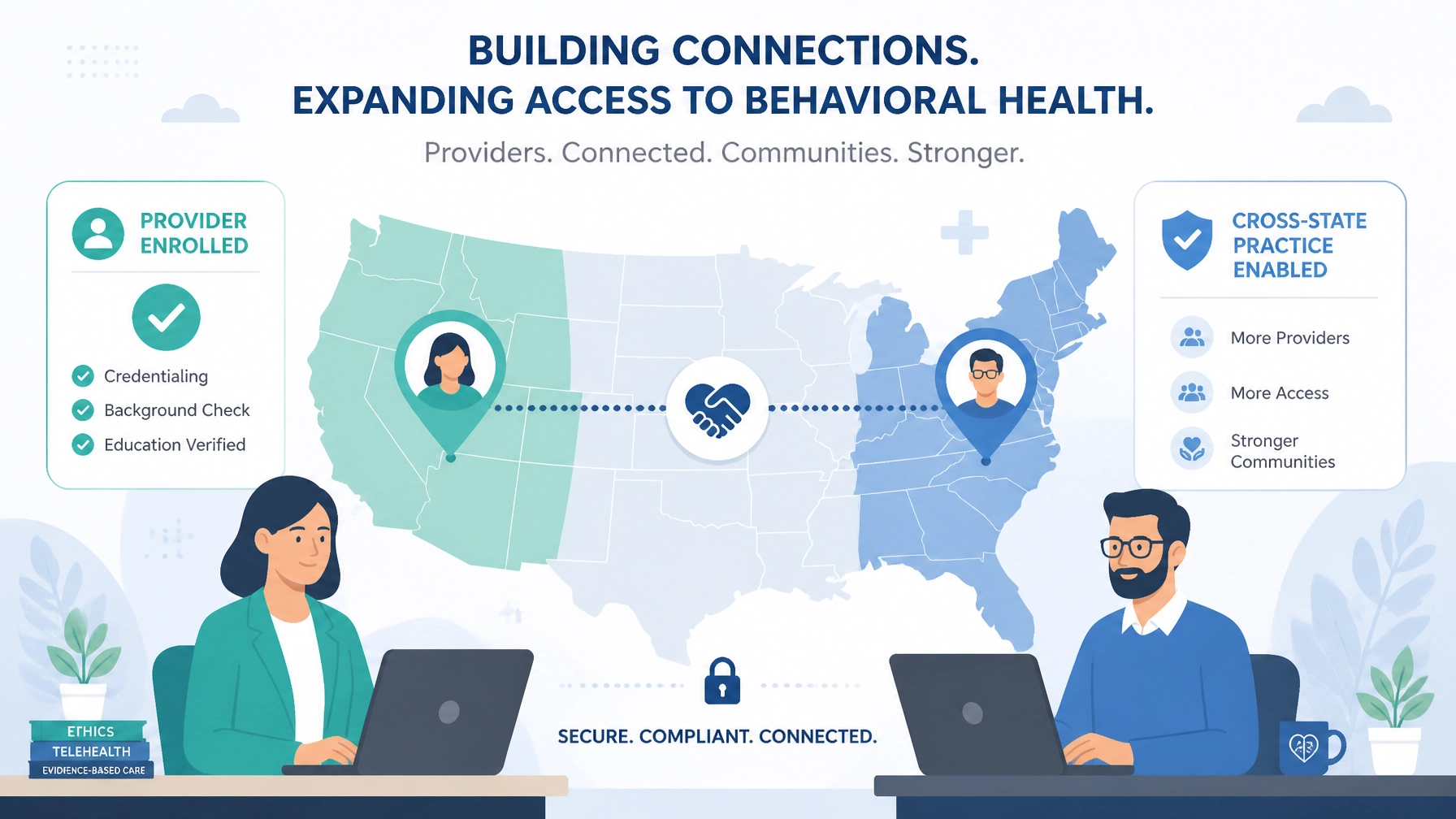
The demand for behavioral health services is at an all-time high, creating a critical need for streamlined provider enrollment and robust medical credentialing systems that allow psychologists to reach patients across state lines. As the mental health crisis intensifies, the traditional barriers to care: primarily state-specific licensure: are being dismantled by the Psychology Interjurisdictional Compact (PSYPACT). For practice owners and healthcare administrators, understanding this revolution is no longer optional; it is the backbone of professional credibility and a mandatory requirement for maintaining a competitive, revenue-generating practice in 2026. The PSYPACT Revolution: A New Era of Mobility The Psychology Interjurisdictional Compact (PSYPACT) is a multi-state agreement designed to facilitate the practice of telepsychology and the temporary in-person, face-to-face practice of psychology across state boundaries. Before the widespread adoption of this compact, a psychologist wishing to treat a patient in another state was forced to navigate a labyrinth of individual state board applications, paying multiple fees and waiting months for approval. Today, PSYPACT provides a passport to success for clinicians. By obtaining the proper credentials through the Association of State and Provincial Psychology Boards (ASPPB), a psychologist licensed in one compact state can legally provide services to patients in any other participating state. This is not a "free pass"; it is a rigorous, standardized verification process that ensures high-level care while eliminating the redundant administrative burden of multiple full state licenses. Looking for professional provider credentialing services in the USA? 👉 Check our main service page here: veracityeg.com The Two-Credential Requirement To leverage the power of PSYPACT, psychologists must secure two specific credentials. Failure to maintain both results in an immediate loss of interjurisdictional authority, which can lead to serious legal and financial consequences for your practice. The E.Passport: Issued by the ASPPB, this certificate confirms your educational background, active licensure status, and adherence to strict conduct standards. You must hold a doctoral degree in psychology from an APA/CPA-accredited program and have passed the EPPP (Examination for Professional Practice in Psychology) with a score that meets the compact's standards. Authority to Practice Interjurisdictional Telepsychology (APIT): Once the E.Passport is secured, the PSYPACT Commission issues the APIT. This is your official authorization to deliver services. Alt Text: Infographic showing the two-step PSYPACT authorization process: E.Passport and APIT certificates. Maintaining these credentials requires more than just a one-time application. You are required to complete three hours of continuing education annually specifically related to the use of technology in psychology. Without these credits, your authorization expires, and any services provided across state lines constitutes practice outside PSYPACT authority and may violate state law: a risk no medical group can afford. The Evolving Payer Landscape Since COVID-19 While PSYPACT simplifies the legal right to practice, the payer rules for psychologists have undergone a massive, often confusing transformation since the COVID-19 pandemic. During the public health emergency, payers relaxed many restrictions on telehealth. However, we are now in a post-emergency era where "temporary" rules have either become permanent or have been replaced by stricter, more complex requirements. Many commercial payers and Medicaid programs require specific modifiers (such as 95 or GT) and place of service (POS) codes (like 02 for telehealth provided outside the home or 10 for telehealth provided in the patient’s home) to process claims correctly. For psychologists, utilizing codes such as 90834 (Psychotherapy, 45 minutes) or 90837 (Psychotherapy, 60 minutes) via telehealth requires precise alignment with the payer’s current policy. The high cost of delays in updating your enrollment files with payers is staggering. If a psychologist is authorized by PSYPACT to treat a patient in a neighboring state but has not updated their provider enrollment profile with that patient's specific insurance plan for that specific jurisdiction, the claim is likely to be denied or underpaid. This is the silent driver of revenue leakage in modern behavioral health practices. Why Enrollment is More Than Just Licensure A common misconception among practice owners is that PSYPACT authorization automatically grants "in-network" status in other states. This is a dangerous assumption. Credentialing and enrollment are two different beasts. While PSYPACT handles the regulatory side, you must still navigate the individual requirements of insurance panels. Alt Text: A psychologist working from a home office using a secure telehealth platform on a laptop. Payer networks are often restricted by geography. Just because you are in-network with Blue Cross Blue Shield in Texas does not mean you are automatically in-network for a patient in Illinois, even if you have PSYPACT authorization. You must often complete additional multi-state Medicaid enrollment or commercial contracting updates to ensure you are reimbursed at the appropriate rate. The behavioral health provider enrollment process is notoriously difficult because of the high volume of providers and the specialized nature of the services. Payers frequently "close" panels to new behavioral health providers, but having a PSYPACT-authorized clinician can sometimes serve as leverage to enter these closed markets, provided the enrollment paperwork is handled with surgical precision. The Strain on Behavioral Health Systems The current strain on our healthcare system is undeniable. Patients are waiting weeks or months for appointments. Telehealth is the primary solution to this bottleneck, but it only works if the providers are properly enrolled. When a practice fails to manage its CAQH profiles or neglects demographic updates, it creates a barrier to care that is just as physical as a locked clinic door. For healthcare administrators, the mission is clear: you must treat your enrollment data as a live, breathing asset. This involves: Regularly auditing CAQH for accuracy. Ensuring the NPI (National Provider Identifier) registry reflects the correct taxonomy and address data for telehealth services. Monitoring the expiration dates of the E.Passport and APIT with the same intensity as a primary state license. The Veracity Group specializes in navigating these complexities. We understand that for a psychologist, the goal is patient care, not paperwork. By leveraging our services, practices can ensure that their clinicians remain compliant across all jurisdictions without the administrative headache. Strategies for Multi-State Success To thrive in the PSYPACT era, your
Behavioral Health Expansion: Why Enrollment is the Real Bottleneck in 2026

The demand for mental health support has reached a fever pitch, forcing health systems to move quickly to scale their outpatient capabilities. However, even aggressive recruitment strategies are hitting a brick wall. As your organization hires more Licensed Clinical Social Workers (LCSWs), Marriage and Family Therapists (MFTs), and Psychiatrists, serious operational pressure builds in the back office. By 2026, behavioral health provider enrollment has become a major bottleneck. It prevents patient access and threatens the financial stability of expansion projects. Working with experienced medical provider enrollment services helps ensure that "hired" actually means "billing." The Eroding Safety Net: A Summary of the Crisis The landscape of American mental healthcare is shifting beneath our feet. As reported by Modern Healthcare, health system leaders fear they cannot move quickly enough to respond to an eroding behavioral health safety net as outpatient services face significant strain. Many traditional "safety net" programs are under pressure from staffing shortages and inadequate funding, leaving hospital Emergency Departments (EDs) as the default—and most expensive—entry point for patients in crisis. The report highlights that while systems are pushing to expand, the infrastructure to support these new providers is often an afterthought. It isn't just about finding the talent anymore; it is about the slow process of getting those professionals into payer networks so they can actually treat the patients waiting in line. The Veracity Take: Why Hiring is Only Half the Battle At The Veracity Group, we see this play out daily. A health system successfully recruits a dozen new therapists to staff a new community clinic, only to realize sixty days later that none of them can see patients because their Medicare or Medicaid applications are still "In Process." This is the Credentialing Trap. When you hire a provider but fail to navigate the behavioral health enrollment landscape with precision, you create a massive revenue leak. Those providers sit on the payroll, unable to generate a single dollar in billable claims. Meanwhile, your ED remains overcrowded with behavioral health patients who could have been seen in an outpatient setting if your enrollment timeline matched your recruitment timeline. In our client work at The Veracity Group, we typically see enrollment delays translate into an estimated $5,000–$15,000 per month in lost revenue per provider. Alt Tag: A busy hospital administrative office focusing on provider enrollment documentation and digital screens showing PECOS and CAQH portals. The 2026 Realities: PECOS Migration and the AWS Factor If you think enrollment was difficult in 2024 or 2025, the 2026 technical landscape has introduced a new layer of complexity. The PECOS migration to AWS introduced scheduled downtime and a defined transition window in 2026, requiring teams to plan around system availability and updated security protocols so applications do not stall. Furthermore, scrutiny remains high regarding behavioral health application data because CMS and payers continue tightening validation and documentation review. That pressure is real, but it is best understood as part of broader data-accuracy and compliance expectations rather than a specialty-specific anomaly unique to 2026. In practical terms, CAQH remains a critical operational profile that must stay complete, current, and aligned with each payer submission. If your LCSWs or MFTs have inconsistent documentation, mismatched practice details, or stale attestations, their applications will be delayed or sent back for correction. Enrollment Purgatory: The Impact on Patient Care When a health system gets stuck in enrollment purgatory, the ripple effects are felt throughout the entire community. Extended ED Stays: Patients in psychiatric crisis often sit in ED beds for days because outpatient clinics cannot "accept" them until the providers are fully enrolled with the patient's specific insurance plan. Provider Burnout: New hires want to work. When they spend their first three months doing "administrative tasks" or shadowing other providers because they can't bill, their engagement drops. Revenue Loss: In the behavioral health world, volume is key. Missing out on billing codes like 90837 (Psychotherapy, 60 min) or 90791 (Psychiatric diagnostic evaluation) for dozens of providers simultaneously creates serious financial pressure. For larger systems or high-volume behavioral health programs, this can lead to a multi-million dollar deficit in a single fiscal year. You can read more about the nuances of this process in our behavioral health provider enrollment beginner’s guide. Strategic Fast-Tracking: How to Deploy Providers Immediately To survive the 2026 expansion boom, health systems must treat enrollment as a frontline clinical priority, not a back-office clerical one. Here is how The Veracity Group helps systems bypass the bottleneck: Pre-Onboarding Enrollment: We don't wait for the provider's first day. We start the CAQH and PECOS process the moment the contract is signed. Multi-State Medicaid Mastery: For systems operating across state lines, we navigate the disparate requirements of multi-state Medicaid provider enrollment, which is notoriously difficult for behavioral health. Payer Relations and Contracting: We don't just submit forms; we follow up. We have the relationships with payer representatives to push applications through the "black hole" of the approval process. Alt Tag: An infographic showing the timeline of provider recruitment vs. the accelerated timeline of professional enrollment services. Preventing Further Strain on the Safety Net As outpatient services continue to face significant strain, the health systems that thrive will be those that adapt their administrative speed to match the clinical need. It is a tragedy when a patient is denied care not because there isn't a doctor available, but because a piece of digital paperwork hasn't been processed. The Veracity Group acts as the bridge between your recruitment efforts and your revenue cycle. By offloading the burden of provider enrollment to experts who understand the 2026 technical landscape, you strengthen your ability to keep behavioral health expansion moving and connect care to the patients who need it most. Looking for professional provider credentialing services in the USA? 👉 Check our main service page here: veracityeg.com Conclusion: Don't Let Paperwork Dictate Your Growth In 2026, expansion is mandatory for health systems looking to address the mental health access crisis, but success is not guaranteed. The technical hurdles of the PECOS
Addiction Medicine Credentialing: DEA X-Waiver Gone, Now What?

The landscape of Medication-Assisted Treatment (MAT) shifted beneath our feet following the elimination of the DATA-Waiver, commonly known as the X-waiver. For years, the X-waiver acted as a regulatory bottleneck, restricting the number of providers who could prescribe buprenorphine and creating a complex layer of medical credentialing that many found prohibitive. Today, in 2026, we are operating in a post-waiver environment where provider enrollment for addiction medicine has been streamlined at the federal level, yet significant administrative hurdles remain at the payer and state levels. The removal of the X-waiver was intended to expand access to life-saving treatment for Opioid Use Disorder (OUD), but simply having the legal authority to prescribe does not automatically translate into a seamless billing experience. If you are launching a new MAT program or adding addiction specialists to your group, you must understand that the "X" may be gone, but the scrutiny from insurance panels has only intensified. The End of the X-Waiver: What Actually Changed? Effective January 12, 2023, the Substance Abuse and Mental Health Services Administration (SAMHSA) and the DEA officially stopped requiring the specialized waiver to prescribe buprenorphine. This change, spurred by the Consolidated Appropriations Act of 2023, removed the cap on the number of patients a single provider can treat and eliminated the need for a separate DEA registration number starting with the letter "X." For your practice, this means: Standard DEA Authority is Sufficient: Any provider with a valid DEA registration that includes Schedule III authority can now prescribe buprenorphine for OUD. No More Patient Caps: The previous 30, 100, and 275-patient limits are a thing of the past. Your capacity is now dictated by your clinical bandwidth, not a federal ceiling. Simplified DEA Forms: You no longer have to submit a Notice of Intent (NOI) to SAMHSA to start treating patients with MAT. While these changes are a massive win for public health, they have created a "Wild West" atmosphere for provider enrollment. Payers are now looking for other ways to verify that a provider is actually qualified to manage these high-risk patients. The Mandatory 8-Hour Training: The New Bar for Enrollment While the X-waiver is dead, its ghost lives on in the form of the MATE (Medication Access and Training Expansion) Act. As of June 2023, all DEA-registered practitioners must complete at least eight hours of training on the treatment and management of patients with opioid or other substance use disorders. This is a one-time requirement tied to the first DEA application or first DEA renewal submitted after June 2023. If a provider completed the training in 2023, that provider does not repeat it for a 2026 renewal. Your job in 2026 is to ensure the documentation remains valid, accessible, and present in the provider’s CAQH profile and payer files. To satisfy this requirement for your next medical credentialing cycle, you must demonstrate one of the following: Board Certification: Being board-certified in addiction medicine or addiction psychiatry from the American Board of Medical Specialties (ABMS) or the American Osteopathic Association (AOA). Recent Graduation: Having graduated in good standing from a medical, dental, PA, or NP school within the last five years, with that five-year window measured specifically from the date of the provider’s DEA application or DEA renewal, and having completed at least eight hours of OUD curriculum. Accredited Training: Completion of eight hours of training from organizations like the American Society of Addiction Medicine (ASAM) or the American Academy of Addiction Psychiatry (AAAP). At the federal level, the DEA uses a self-attestation checkbox during the registration process. That does not satisfy payer operations in 2026. At The Veracity Group, we frequently see enrollment applications stalled because a provider checked "yes" to having the training but failed to upload the actual certificate of completion to their CAQH 2 portal. In 2026, major payers and CAQH treat the physical upload of the training certificate as a mandatory field, and they will not take your word for it; they want the paper trail. The Payer Enrollment Trap: Why Your Taxonomy Code Is Your New X-Number In the absence of the X-waiver, insurance companies are relying heavily on NPI taxonomy codes to identify which providers in a group are eligible to bill for MAT-related services. If your provider is a Family Medicine physician but is providing addiction treatment, their enrollment must reflect the correct sub-specialty or secondary taxonomy. If your taxonomy codes are outdated or generic, you will face: Automatic Claim Denials: Payers may flag MAT services as "outside the scope of practice" for a generalist. Lower Reimbursement Rates: Some contracts offer specific rates for addiction specialists that general practitioners cannot access without the correct enrollment data. Directory Inaccuracies: Patients searching for MAT providers through their insurance portal won't find you, leading to a direct loss in patient volume. We recommend a thorough review of your demographic updates to ensure that every provider offering MAT is correctly identified in the NPPES and payer databases. This is especially vital for behavioral health provider enrollment, which you can learn more about in our beginner’s guide. State Laws vs. Federal Freedom: The Compliance Gap It is a common misconception that federal law supersedes all state-level restrictions regarding MAT. While the DEA removed the X-waiver, roughly 15–18 states still maintain their own "mini-waivers," additional registrations, specific administrative code requirements, or strict collaborative and supervision ratio rules for Nurse Practitioners (NPs) and Physician Assistants (PAs) who prescribe buprenorphine. For example, a state can allow an NP to prescribe buprenorphine federally, but that same state can still require a separate state registration, a physician collaboration document, or a stricter supervision ratio before the mid-level prescriber is treated as fully compliant for Medicaid or commercial panel participation. Failing to have this documentation on file during the contracting phase leads to denials, enrollment holds, or outright rejection from state Medicaid panels. If you are operating in multiple states, you are navigating a minefield of conflicting regulations. We detail these complexities in our post on mastering multi-state Medicaid provider
Credentialing a New Hospitalist Program: Tips for Fast Panel Access

Launching a new hospitalist program is a high-stakes race against the clock where provider enrollment services and efficient medical group enrollment serve as the primary engine for financial viability. In the fast-paced environment of inpatient medicine, every day a physician or advanced practice provider (APP) is unable to bill represents a direct hit to your bottom line. Hospital medicine groups launch frequently to meet the demands of surging patient volumes, yet many find their revenue cycles paralyzed because they underestimated the complexity of securing payer panel access. The reality of 2026 is that payers are more stringent than ever, and administrative bottlenecks are the "silent killers" of new clinical initiatives. To ensure your hospitalist program is a financial success from day one, you must treat the enrollment process with the same clinical urgency as an acute code. This guide provides the blueprint for bypassing common delays and securing the fast panel access your program requires. The High Cost of Onboarding Delays In a hospital setting, the financial impact of a provider who cannot bill is staggering. A single hospitalist can generate significant daily revenue; when that provider is seeing patients but is not yet enrolled with major payers like Medicare, Medicaid, or UnitedHealthcare, your group is essentially providing free labor. These "revenue leaks" are often permanent, as retroactive billing has strict limits and varies wildly by payer. In 2026, 69% of health systems report losses of $1,000 to $5,000 per provider per day due to onboarding delays, and 1 in 5 hospital leaders report annual losses exceeding $1 million. Those numbers make one point clear: delayed enrollment is not an administrative nuisance. It is a direct threat to margin, staffing stability, and launch performance. Alt: A graphical representation of revenue loss due to provider onboarding delays in a hospitalist program. The risk is not just financial: it is operational. If your new hospitalists cannot bill, the burden of "billable" patients falls on a smaller subset of the team, leading to burnout and high turnover in a specialty that is already facing a national shortage. You will face these consequences if you treat enrollment as an afterthought rather than a primary launch requirement. The Pre-Hire Credentialing Strategy: Parallel Processing One of the most frequent mistakes hospitalist groups make is waiting for a signed employment contract before beginning the enrollment process. In the modern healthcare landscape, this sequential approach is obsolete. To achieve fast panel access, you must implement parallel processing. As soon as a candidate reaches the final interview stage or a Letter of Intent (LOI) is issued, the information-gathering phase should begin. Waiting until the provider's first day on the job to start their CAQH profile or NPI updates is a recipe for a 90-day revenue gap. Start Before the "Start Date" Professional hospitalist groups now use "Pre-Application Packets" during the recruitment phase. This allows you to verify that the provider’s data is accurate and that their AMA Physician Profile is up to date before they even step onto the hospital floor. If a provider has a history of malpractice claims or disciplinary actions, you need to know this immediately, as these factors will trigger manual reviews by payers, extending the enrollment timeline by months. Building the Hospitalist Portfolio: The Essential Checklist A "90% complete" application is often treated as "0% complete" by major health plans. Incomplete submissions are discarded or moved to the bottom of the pile, causing preventable delays. Your program needs a standardized digital repository for every provider. Alt: A checklist of required documentation for hospital medicine providers including DEA, NPI, and board certifications. Your documentation suite must include: State-Specific Licensure: Ensure the license is active and reflects the correct practice location. DEA Registration: For hospitalists, the DEA must reflect the state where they are practicing. If they are moving from out of state, this update is a critical path item. Board Certification: Evidence of Internal Medicine, Family Medicine, or Pediatric board eligibility or certification. Complete Peer References: Payers often require three references from the same specialty who have worked with the provider within the last 24 months. Claims History: A full five-to-ten-year malpractice claims history, even if there are zero claims. Work History: A CV that accounts for every month since medical school graduation. Gaps of more than 30 days must be explained. Looking for professional provider credentialing services in the USA? 👉 Check our main service page here: veracityeg.com Navigating the Medicare PECOS and Medicaid Maze For hospitalists, Medicare and Medicaid represent a massive portion of the payer mix. Navigating the Medicare enrollment process requires precision. One of the most common "traps" for new programs is understanding how group enrollment and reassignment now function inside Medicare paperwork. As of 2026, the CMS-855R form has been discontinued, and reassignment of benefits is now merged into the CMS-855I form. That change means your intake workflow, document review, and physician signature process must reflect the updated Medicare structure from the start. If you are launching a brand-new group, you must first secure your group NPI and Medicare group number before you can reassign individual providers to it. This two-step process can take 60 to 120 days. If you haven't accounted for this lead time, your entire team will be seeing Medicare patients with no way to submit a claim. Critical PECOS System Migration Notice Starting April 20, 2026, PECOS is migrating to the CMS AWS Cloud. CMS has also scheduled a system outage on May 2-3, 2026. Your enrollment and IT teams must plan around that blackout window to avoid stalled submissions, missed signatures, and delayed application tracking. IP allowlists must be updated by May 4, 2026 so your organization can maintain access after the migration. If your team ignores this deadline, PECOS access disruptions will slow your Medicare enrollment pipeline at exactly the wrong moment. Multi-State Challenges If your hospitalist group operates near state lines or utilizes telehealth for night coverage, you are likely dealing with multi-state Medicaid enrollment. Each state has different rules regarding site-of-service
Ophthalmology Credentialing vs. Optometry: What’s Different and Why It Matters

Navigating the complexities of medical provider enrollment and healthcare payer enrollment is a full-time job that often leaves administrative staff feeling like they are walking through a fog. One of the most common points of friction we see at The Veracity Group is the confusion between enrolling an ophthalmologist versus an optometrist. To the untrained eye, they both deal with vision, so the paperwork should be the same, right? Wrong. Treating these two distinct professions as identical during the enrollment process is a recipe for immediate claim denials, delayed revenue, and significant compliance risks. Precision in your data entry is the backbone of professional credibility. If your admin team conflates an MD with an OD, you aren't just making a "typo": you are misrepresenting a provider’s scope of practice to a payer. In 2026, where AI-driven payer audits are more aggressive than ever, these mistakes are caught in milliseconds. Understanding the fundamental differences in how these providers are enrolled is not just a "nice to have" skill; it is a vital component of your practice’s financial health. The Core Identity Crisis: MD vs. OD The most significant difference lies in the educational pathway and the resulting legal scope of practice. Ophthalmologists are medical doctors (MDs or DOs) who have completed medical school, a residency, and often a multi-year fellowship. They are surgeons. Optometrists (ODs) are doctors of optometry who provide primary vision care, ranging from sight testing and correction to the diagnosis and management of vision changes. When you begin the enrollment process, the National Provider Identifier (NPI) and the associated Taxonomy Codes act as the digital DNA for these providers. Ophthalmology Taxonomy: 207W00000X Optometry Taxonomy: 152W00000X Using the wrong code will result in an automatic rejection of your healthcare payer enrollment application. Payers use these codes to determine which fee schedules apply and which procedures the provider is authorized to bill. If an optometrist is enrolled under an ophthalmology taxonomy, they may be erroneously cleared to bill for routine cataract surgery (CPT 66984) or even complex cataract surgery (CPT 66982) that they are not licensed to perform. CPT 66984 is the standard routine cataract surgery code, while CPT 66982 is the complex cataract surgery code. When the audit hits: and it will: the financial consequences for the practice will be devastating. Payer Panels: The Vision vs. Medical Divide One of the biggest hurdles in eye care enrollment is the "carve-out" system. Most healthcare providers deal with a single medical panel. Eye care providers, however, live in a dual world of Vision Plans (like VSP, EyeMed, and Davis Vision) and Medical Plans (like BlueCross BlueShield, UnitedHealthcare, and Aetna). For an ophthalmologist, the primary focus is almost always the medical panel. They are treating medical conditions like glaucoma, macular degeneration, and diabetic retinopathy. While some ophthalmologists participate in vision plans for routine exams, many do not. Optometrists, conversely, must be enrolled in both. If an OD is only on the vision panel, they cannot bill for a medical office visit when a patient presents with a "red eye" or a foreign body. This is a common enrollment trap. If your admin staff skips the medical enrollment for your ODs, you are effectively leaving thousands of dollars on the table and forcing patients to pay out-of-pocket for medical eye issues, which damages your patient retention. For more on navigating these complex payer structures, check out our guide on navigating the maze of CAQH and Medicare enrollment. Medicare Enrollment: Specialty 18 vs. Specialty 41 Medicare is the "gold standard" of enrollment, and they do not tolerate ambiguity. When enrolling through PECOS, the specialty designation is the most critical field. Specialty 18: Ophthalmology Specialty 41: Optometry As of 2026, Medicare has updated its reimbursement protocols for certain diagnostic tests. Ophthalmologists, as surgical specialists, often have broader access to "incident to" billing and specific surgical modifiers. Optometrists have high-value roles in Medicare, particularly in post-operative care for cataract patients (using the -55 modifier), but the enrollment must be perfectly synced with their state’s Scope of Practice (SOP) laws. In states like Oklahoma, Kentucky, and Louisiana, optometrists have expanded surgical authority (including certain laser procedures). If your practice is in one of these "expanded scope" states, your enrollment team must ensure that the provider’s CAQH profile and payer contracts reflect these specific competencies. Failure to do so will result in "unauthorized service" denials, even if the state law says they can do it. The High Cost of Administrative Delays Speed is revenue. When a new ophthalmologist joins your group, every day they aren't linked to your Group NPI is a day of lost surgical revenue. Because ophthalmology often involves high-dollar procedures and expensive injectable drugs (like those used for wet AMD), the "hold" on billing while waiting for enrollment can reach six figures in just a few weeks. Administrative staff often underestimate the time required for Ophthalmology enrollment because they assume it’s a standard "physician" application. However, because ophthalmologists are often sub-specialists (Retina, Cornea, Oculoplastics), payers may require additional board certification verification and fellowship documentation. If your staff treats an Oculoplastic Surgeon’s enrollment with the same level of detail as a general OD, the application will be kicked back for "missing sub-specialty credentials." You can learn more about the risks of medical group enrollment and how to mitigate them by reading our article on medical group enrollment for surgery centers. State Licensure and the 2026 Landscape The legislative landscape for eye care is shifting rapidly. In 2026, several more states are expected to join the list of those allowing "Advanced Procedures" for optometrists. This means your enrollment strategy must be proactive. When The Veracity Group manages your enrollment, we don't just look at what your provider can bill today; we look at the legislative trajectory of your state. If your OD is about to be granted laser privileges, their payer contracts need to be updated before the first patient walks through the door. Waiting until after the law changes to update your enrollment is a