Veracity upscaled revised

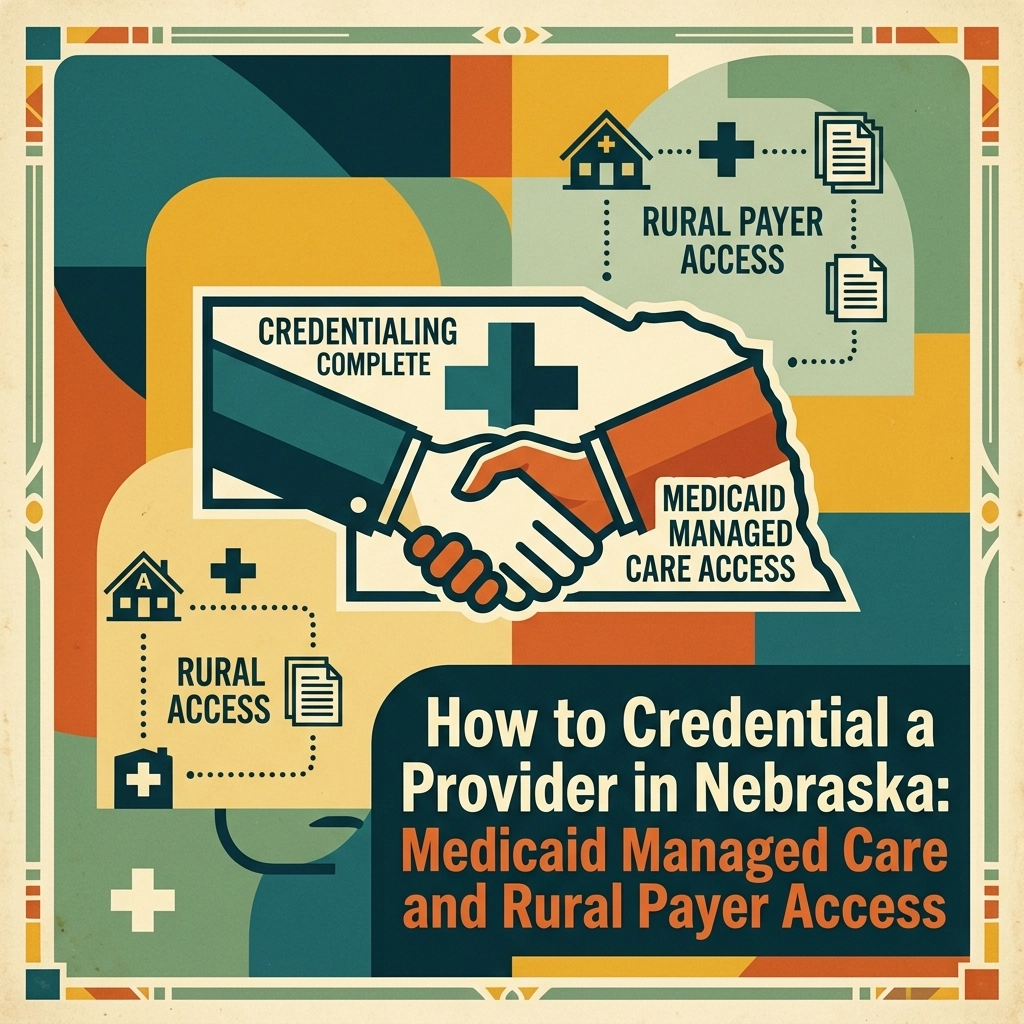
How to Credential a Provider in Arkansas: Rural Health and Payer Access Challenges

AMmEf7AWg4L

In the natural beauty of the Natural State, a quiet crisis is simmering beneath the surface of the healthcare landscape. If you are a practice administrator in Little Rock, Jonesboro, or deep in the Ozarks, you already know the score: Arkansas is a uniquely challenging environment for provider enrollment. Between the vast geographic distances patients must travel and the administrative hurdles required to get a physician into a payer network, the friction is real. Managing credentialing in Arkansas isn’t just about filling out forms; it is about navigating a complex ecosystem where rural health disparities and payer gridlock collide. When a new specialist joins your team, the clock starts ticking. Every day they spend sitting on the sidelines because of a pending enrollment application is a day a rural patient drives 60+ miles for care they should be receiving locally. Looking for professional provider credentialing services in the USA? 👉 Check our main service page here: veracityeg.com The Rural Health Bottleneck: More Than Just Miles Arkansas remains one of the most rural states in the country, with nearly half the population residing outside of major metropolitan hubs. For these residents, specialized care: particularly in fields like oncology or neurology: is often a luxury defined by gas money and time off work. When we look at the Payer Gridlock Report 2026, we see a direct correlation between administrative delays and reduced patient outcomes in the South. The "Retention Gap" is a term we use at The Veracity Group to describe the difficulty of keeping high-tier specialists in rural Arkansas. It’s not just the lure of big-city lights; it’s the reimbursement reality. If a specialist moves to a rural clinic but faces a six-month delay in Medicare or Medicaid enrollment, the financial strain on the practice becomes unsustainable. You must view the enrollment process as a critical component of your recruitment and retention strategy. If you can't get them paid, you can't keep them. Credentialing as a Geographic Barrier In Arkansas, the process is often viewed as a back-office administrative task. In reality, it is a primary gatekeeper to healthcare access. When a provider’s enrollment is delayed, the geographic barrier for the patient grows. Take, for example, a patient in the Delta needing specialized radiation therapy. If the local provider isn't yet fully credentialed with the patient's specific Arkansas Blue Cross Blue Shield plan, that patient is forced to travel to Little Rock or even Memphis. We are talking about a 120-mile round trip for a treatment that might only take 15 minutes. This is the high cost of administrative delay. To mitigate this, savvy administrators utilize provider enrollment services to front-load the process long before the provider’s start date. Waiting until the provider has their white coat on is a recipe for revenue loss and patient frustration. Radiation Oncology: The Gold Standard and the New Frontier Radiation oncology provides a perfect case study for the complexities of Arkansas healthcare. The state has seen significant movement in this space, particularly with the expansion of the UAMS Radiation Oncology Center. This facility, which recently introduced the first proton therapy center in the state, represents a massive leap forward. However, bringing these advanced technologies to the masses requires a highly specific set of standards. The APEx Accreditation For oncology practices, obtaining the American Society for Radiation Oncology (ASTRO) Accreditation Program for Excellence (APEx) is the gold standard. It signals to payers and patients alike that your facility meets the highest safety and quality standards. From an enrollment perspective, APEx accreditation is increasingly recognized by payers as a quality indicator, which can support contracting discussions. You can learn more about these standards directly from ASTRO’s official guidelines. The Shift Toward Value-Based Care We are also seeing a rapid shift toward value-based care models, specifically the former Oncology Care Model (OCM) and its successor, the Enhancing Oncology Model (EOM). These models move away from fee-for-service and toward holistic patient management. For an Arkansas practice, this means your enrollment and contracting strategy must be aligned. You aren't just enrolling a provider to bill a code; you are enrolling them into a framework that measures outcomes and reduces unnecessary costs. Payer Landscape: Hypofractionation and Patient Access One of the most interesting shifts in the Arkansas payer landscape is the adoption of hypofractionation. In layman’s terms, this involves delivering higher doses of radiation over fewer visits. While this is a clinical decision, it has massive administrative and socioeconomic implications. For a rural Arkansas patient, reducing 30 visits to 15 is life-changing. Payers, including some Medicaid programs, are increasingly supportive of hypofractionation because it reduces the overall cost of care and improves compliance. However, ensuring your providers are correctly enrolled to bill for these advanced modalities is a technical hurdle that requires precision. If your CAQH profile isn't meticulously updated with the correct specialty sub-codes, your claims will hit a wall. Overcoming the "Arkansas Delay" Why is Arkansas specifically difficult? It often comes down to the sheer volume of manual verification required by state-specific payers. While many national payers have moved toward automated systems, regional entities in the South still rely heavily on traditional verification methods. To win in this environment, you must adopt an aggressive stance on demographic updates. A single mismatched address between your NPI, CAQH, and state license can trigger a "hard stop" in the enrollment process. Actionable Steps for Arkansas Practice Leaders: Start 120 Days Out: Do not wait for the final contract signature to begin the primary source verification. Audit Your CAQH Weekly: Arkansas payers pull from CAQH frequently; any lapse in re-attestation is a "kill switch" for your revenue cycle. Leverage Multi-State Knowledge: If your provider is coming from Missouri or Tennessee, ensure their multi-state Medicaid enrollment is handled correctly to avoid "cross-border" billing denials. Embrace APEx: If you are in the oncology space, the investment in accreditation pays for itself in payer negotiations and patient trust. The Veracity Take: Why Expertise Matters At The Veracity Group, we don’t just see spreadsheets; we

Credentialing in Missouri: Medicaid Managed Care and Closing Rural Health Gaps

Hqdn5zlFD v

Missouri is currently navigating a pivotal shift in its healthcare landscape. Missouri has been awarded $216M in Year 1 Rural Health Transformation funding as part of a 2026–2030 federal initiative. For clinics and health systems to survive this transition, securing top-tier medical provider enrollment services is no longer optional. As a premier provider of provider credentialing services in the usa, The Veracity Group sees firsthand how administrative readiness dictates financial solvency. This isn't just about paperwork; it's about the survival of rural access points across the Show-Me State. Looking for professional provider credentialing services in the USA? 👉 Check our main service page here: veracityeg.com The $216M Transformation: A New Era for Missouri Health By 2026, Missouri has moved from planning into active rollout of its Rural Health Transformation initiative. This massive investment aims to stabilize a system that has historically struggled with hospital closures and provider shortages. The state has committed to launching 30 community health hubs strategically placed to serve the most vulnerable populations. These hubs are the backbone of professional credibility for the region. However, a hub is only as effective as its enrolled providers. If a clinic is part of this $216M rollout but fails to manage its enrollment, it cannot draw down the federal and state funds allocated for its operation. This creates a "funding ghost" where a facility exists on paper but remains financially paralyzed. For providers operating near our home base in Arkansas, the cross-border implications are significant. Missouri’s reform mimics many of the regional shifts we see in the Ozarks, requiring a sophisticated approach to mastering multi-state medicaid provider enrollment. The ToRCH Model: Transforming Rural Community Health At the center of Missouri’s strategy is the ToRCH (Transformation of Rural Community Health) model. ToRCH moves beyond traditional fee-for-service by emphasizing integrated care and payment reform. It combines primary care, behavioral health, and social determinants of health into a single delivery stream. For a provider to participate in ToRCH, their enrollment status must be impeccable. The model relies on a "hub-and-spoke" architecture. If the primary hub encounters an enrollment lapse, every "spoke" (specialist or satellite clinic) associated with that hub faces reimbursement delays. Key Technical Requirements for ToRCH Participation: NPI Alignment: Ensuring every provider's National Provider Identifier is correctly linked to the specific rural health hub taxonomy. State-Specific Licensure: For behavioral health providers, such as LCSWs and LPCs, Missouri requires strict adherence to MO HealthNet’s specialized enrollment categories. Site Visit Compliance: Rural community hubs often trigger mandatory site visits under Medicaid managed care regulations. Failure to prepare for these is a fast track to application denial. MO HealthNet and the Shift to Outcome-Based Payments Missouri’s Medicaid program, MO HealthNet, is no longer just paying for volume. MO HealthNet is incorporating more outcome-based elements into managed care contracts. This means your reimbursement is tied to patient health metrics and quality of care. However, there is a catch: you cannot report outcomes if you aren't enrolled in the system correctly. Managed Care Organizations (MCOs) like Healthy Blue, Home State Health, and UnitedHealthcare Community Plan use automated systems to filter claims. If a provider's data in the MMAC (Missouri Medicaid Audit & Compliance) system is even slightly outdated, the claim is rejected before the "outcome" is even measured. The high cost of delays in this environment is staggering. In a cut environment, providers with incomplete or inaccurate enrollment are especially vulnerable to revenue loss. They lack the administrative "passport" needed to access the remaining pools of incentive funding. Closing the 'Medical Provider Enrollment Services' Gap The most significant threat to Missouri’s rural health recovery is the administrative gap. While the state is building the buildings and buying the equipment, many clinics are neglecting the "silent driver" of their revenue cycle: the enrollment of their staff. Rural clinics often lack the dedicated HR or credentialing staff found in large urban systems like those in St. Louis or Kansas City. This results in: Expired CAQH Profiles: Which can lead to claim holds, network issues, or de-facto loss of active status with some MCOs. Mismanaged Demographic Updates: If a clinic moves or adds a new telehealth service, failing to update this via demographic updates can stop payments for months. Missed Incentive Programs: Missouri offers specific financial bonuses for providers meeting rural health targets. These are only available to those whose enrollment files are 100% compliant. At The Veracity Group, we advocate for a proactive stance. You must treat your enrollment as a critical asset, not a secondary chore. Navigating Medicaid Managed Care Contracts To participate in the MO HealthNet network, you must navigate periodic re-enrollment and revalidation cycles. According to the Missouri Department of Social Services, failing to respond to a re-validation request within the stated deadline can result in suspension of the provider’s Medicaid ID. For multi-state groups, this is even more complex. A provider practicing in both Arkansas and Missouri must maintain two distinct sets of state-specific enrollment requirements, even if the MCO (like UnitedHealthcare) is the same in both states. Common Pitfalls in Missouri Medicaid Enrollment: Incomplete Disclosure of Ownership: Missouri is aggressive in auditing the ownership interest of medical groups to prevent fraud. Mismatched Taxonomy Codes: A rural health clinic (RHC) must use specific billing codes that differ from standard private practices. Delayed DEA Updates: For providers prescribing controlled substances in rural areas, any delay in linking a new DEA certificate to the MO HealthNet profile will result in rejected pharmacy claims for their patients. Why Accuracy is the Backbone of Rural Health The $216M grant is a ticking clock. These funds are designed to build a self-sustaining system by 2030. If your clinic or practice is not fully enrolled and optimized by then, you will find yourself on the outside of a closed system. Accurate enrollment is the only way to ensure your participation in state provider incentive programs. These programs are designed to reward providers who stay in rural areas, but they require rigorous data validation. If the state cannot verify your hours,

A Guide to Choosing Healthcare Credentialing Vendors

0vP0p1KC6DJ

Navigating the complexities of payer networks is the single most important hurdle for any growing medical practice. When you are looking for what are the top services to credential a provider quickly?, you are essentially searching for a partner who understands that speed and accuracy in enrollment are the lifeblood of your revenue cycle. Identifying who provides provider credentialing services in the US? is the first step toward securing your practice's financial future and ensuring your providers can begin seeing patients without administrative delay. The process of getting a practitioner linked to an insurance carrier: often referred to as provider enrollment: is a high-stakes administrative marathon. If a single application is sidelined due to a minor error, the high cost of delays manifests in thousands of dollars of lost potential revenue. To maintain a healthy bottom line, you must align with healthcare credentialing vendors who treat your enrollment timeline with the urgency it deserves. The Critical Role of Provider Enrollment Provider enrollment is the silent driver of your practice’s cash flow. It is the process of requesting participation in a health insurance network as a participating provider. Without successful enrollment, your claims will be rejected, and your providers will remain out-of-network, placing an unnecessary financial burden on both the practice and the patients. When you find companies offering outsourced provider credentialing services, you are looking for more than just data entry. You are seeking experts who can navigate the labyrinth of Medicare enrollment and private payer requirements across different states. The Veracity Group specializes in this high-level coordination, ensuring that your practice stays ahead of the curve. Alt Text: A professional 3D render of a digital shield and a medical cross, symbolizing the security and compliance of healthcare enrollment systems. Key Qualities of Top-Tier Enrollment Partners Choosing a vendor is not just about checking a box; it is about finding a strategic ally. As you look to find companies specializing in medical provider credentialing, evaluate potential partners based on these non-negotiable criteria: Multi-State Expertise: In an era of telehealth and multi-state medical groups, your vendor must be proficient in the specific regulations of every state where you operate. Mastering multi-state Medicaid provider enrollment requires a level of detail that generic services simply cannot match. Payer Relationship Depth: The best vendors maintain open lines of communication with major payers like UnitedHealthcare, Blue Cross Blue Shield, and Aetna. This insider knowledge allows them to bypass common bottlenecks. Real-Time Transparency: You should never be left wondering about the status of an application. A professional vendor provides a clear portal or regular reporting that shows exactly where each provider stands in the enrollment pipeline. Accuracy Guarantee: A single typo on a NPI or tax ID can reset the 90-day clock for an insurance company. Precision is the backbone of professional credibility in this industry. Why Outsourcing is the Standard for Modern Practices Many practices attempt to handle enrollment in-house, only to find their office managers overwhelmed by the sheer volume of paperwork and follow-up calls required. When you find companies specializing in medical provider credentialing, you reclaim your internal resources. Outsourcing to specialized healthcare credentialing vendors ensures that your enrollment tasks are managed by professionals whose sole focus is getting you paid. These specialists understand the nuances of the CAQH database, which is essential for the majority of commercial insurance enrollments. By leveraging an external team, you move the administrative burden off your desk and into the hands of experts who use proprietary systems to track every application detail. Looking for professional provider credentialing services in the USA? 👉 Check our main service page here: veracityeg.com Alt Text: A professional 3D render of interconnected gears and a stethoscope, representing the seamless integration of medical practice management and administrative support. Identifying Which Companies Specialize in Your Needs Not all vendors are created equal. Some focus on large hospital systems, while others are built for independent clinics or behavioral health groups. To determine which companies specialize in provider credentialing for healthcare professionals that match your specific model, you must ask the right questions: Do you have experience with my specific specialty? For example, behavioral health provider enrollment has unique requirements that differ significantly from orthopedic surgery. What is your average turnaround time? While no vendor can control the speed of an insurance company, they should have data on how quickly they submit clean applications. How do you handle re-enrollment and revalidation? Enrollment is not a one-time event. Payers require periodic revalidation to maintain active status. The Veracity Group excels in helping clinics with fast, accurate multi-state onboarding. Whether you are adding a single physician or launching a new multi-specialty facility, our team ensures the process is handled with surgical precision. The Impact of Efficient Enrollment on Patient Access Efficient enrollment is your passport to success in the modern healthcare market. When a provider is properly enrolled, they appear in the insurance company's directory. This is often the first place a patient looks when searching for a new doctor. If your enrollment is lagging, you are invisible to thousands of potential patients. Furthermore, delays in enrollment can lead to "held claims": services provided to patients that cannot be billed because the provider is not yet active in the system. This creates a massive backlog that can take months to clear, severely impacting your revenue cycle. Strategic Selection: Who Offers Provider Credentialing Services? When asking who offers provider credentialing services, the answer varies from solo consultants to massive tech firms. The "sweet spot" is a dedicated partner like The Veracity Group, which combines personalized service with high-tech efficiency. We understand that behind every application is a provider ready to work and a patient waiting for care. A professional enrollment partner will also assist with contracting, ensuring that once you are enrolled, the rates you receive are fair and reflective of your value in the market. This holistic approach to provider lifecycle management is what separates an average vendor from a top-tier partner. Alt Text: A professional 3D

Strategic Credentialing Support for Your Medical Practice

PfnyWRtoob9

Managing a modern healthcare facility requires extreme precision, yet administrative bottlenecks frequently stall even the most ambitious growth plans. If you are currently asking, "Where can I find credentialing support for my practice?", you likely already recognize that manual processing is a liability. Securing the best services for doctor credentialing is not merely an administrative checkbox; it is a strategic imperative that ensures your revenue remains uninterrupted and your expansion remains viable. At The Veracity Group, we understand that delays are not just an inconvenience: they are a direct threat to your bottom line. The Administrative Backbone of Healthcare In the current healthcare landscape, credentialing is the silent driver of your professional credibility. It serves as the bridge between hiring a top-tier provider and actually generating revenue from their services. Without a robust system in place, your practice faces the high cost of delays, including thousands of dollars in lost billing for every week a provider remains "un-credentialed" with major payers. The process is inherently complex. It involves deep dives into professional history, primary source verification, and the meticulous management of expirations. For many practices, the burden of maintaining this data in-house leads to oversight and errors. This is where professional intervention becomes a necessity. Alt tag: A professional 3D render of a digital shield and medical symbols representing the security and integrity of medical credentialing data. Why Strategic Outsourcing is Essential Many practice managers begin their search by asking, "Where can I find provider credentialing service providers near me?" While local proximity was once a primary concern, the shift toward telehealth and multi-state medical groups has changed the requirements for excellence. You need a partner who understands the nuances of various state boards and insurance carriers across the country. The Veracity Group eliminates delays and supports multi-state growth. By centralizing your credentialing efforts, you gain a high-level view of your entire organization's compliance status. This perspective is vital for surgery centers and medical groups that are navigating complex regulatory environments. For instance, medical group enrollment for surgery centers involves specific compliance risks that a generalist might overlook. Evaluating the Market: What to Look For When you are identifying the top-rated provider credentialing service companies for medical practices?, your criteria must be rigorous. A "low-cost" vendor often results in higher costs later due to rejected applications or missed re-credentialing deadlines. You must prioritize accuracy, speed, and transparency. A high-tier service provider will offer: Primary Source Verification (PSV): Directly contacting institutions to verify credentials, ensuring compliance with National Committee for Quality Assurance (NCQA) standards. Proactive Monitoring: Notifying you months in advance of license or certification expirations. Carrier Relations: Established pathways with major payers to expedite the enrollment process. Multi-State Capability: The ability to move your providers into new markets without restarting the learning curve. Looking for professional provider credentialing services in the USA? 👉 Check our main service page here: veracityeg.com How to Choose a Provider Credentialing Service Provider? The decision-making process should be methodical. How to choose a provider credentialing service provider? Start by assessing their technology stack and their human expertise. While software can track dates, it cannot navigate the bureaucracy of a state Medicaid office or resolve a complex CAQH conflict. You must ask potential vendors about their experience with specialized fields. For example, behavioral health provider enrollment presents unique challenges that differ significantly from orthopedic or general practice requirements. Ensure your partner has a track record in your specific niche to avoid unnecessary delays. Alt tag: A 3D render of interconnected globes and data nodes, illustrating a seamless multi-state healthcare expansion network. The Consequences of Inaction The high cost of administrative stagnation is often felt too late. When a provider's credentials lapse, or an application is delayed by months, the practice must absorb the salary of that provider while being unable to bill for their work. This "credentialing gap" is a primary cause of cash flow instability in growing medical groups. Furthermore, the risk of claim denials increases exponentially without expert oversight. Payers like Medicare and Medicaid have stringent requirements for enrollment updates. If your practice data is out of sync, your claims will be rejected, leading to a massive backlog in your accounts receivable. Moving Beyond "Near Me" to "Best in Class" While the search for "providers near me" is a natural starting point, the most successful practices prioritize expertise over geography. The digital nature of modern healthcare means that the best support can come from a national leader like The Veracity Group. We provide the infrastructure needed to scale your operations from a single location to a multi-state powerhouse. Whether you are dealing with CAQH and Medicare enrollment or managing a rotating staff of gig-economy providers, your credentialing strategy must be dynamic. The "set it and forget it" approach no longer works in a landscape defined by rapid regulatory shifts and increasing payer scrutiny. Alt tag: A professional 3D render of a stylized hourglass filled with medical icons, representing the elimination of time-delays in healthcare administration. A Culture of Compliance and Speed Expert credentialing support transforms your practice from a reactive entity into a proactive one. Instead of scrambling to fix a provider's status after a denial, you operate with the confidence that every practitioner is fully authorized to provide care and receive payment. This level of organization is attractive to both investors and potential new hires, who want to join a practice that values professional standards. To maintain this edge, you must integrate monthly credential monitoring into your standard operating procedures. This ensures that no license expires and no certification goes unverified. It is the only way to safeguard your practice against the 7 common mistakes that frequently cost clinics their revenue. Conclusion The Veracity Group provides the strategic support necessary to navigate the maze of modern healthcare administration. We don't just process paperwork; we build the foundation for your practice’s long-term growth and stability. By eliminating the friction in provider enrollment, we allow you to focus on what truly matters: delivering high-quality

Weekend Update: The 15-Day Rule & New State Laws You Can’t Ignore

Z qMeKs Efj

March 2026 is delivering real, operationally relevant enrollment news—the kind that makes or breaks access and cash flow. If your providers are not enrolled and active, your practice does not get paid. Full stop. At The Veracity Group, we translate regulation into execution so you keep providers billable, audit-ready, and ready to scale across states and payers. 1) CMS 2026 Final Rule: The 15-Business-Day Medicare Enrollment Response (Rural) CMS is putting a hard operational expectation on the table: a 15-business-day response time tied to Medicare enrollment applications for rural healthcare access. This is not a “nice-to-have” process improvement—this is a new tempo for how fast underserved communities can add clinicians and reopen capacity. As summarized by Azalea Health’s overview of the CMS 2026 Final Rule, CMS connects faster action on enrollment files to improving rural access and reducing administrative drag in high-need areas. Source: Azalea Health — CMS Final Rule 2026 The pain point (what breaks when you move fast) A shorter clock does not lower standards. It raises the cost of errors: RTPs and development requests still stop the line when identities, locations, or signatures do not validate. Inconsistent practice addresses across PECOS fields create friction that burns days you no longer have. Missing attachments (licenses, supporting documentation, or ownership disclosures when applicable) convert “15 business days” into lost weeks. The Veracity Take: How you win under the 15-day standard Treat the 15-day rule like an express lane with strict baggage limits: only clean packets get through. Your playbook: Pre-validate the “identity triangle”: NPI, taxonomy, and state license must match everywhere (PECOS, payer file, and internal roster). Standardize location logic: service location, pay-to, and correspondence addresses must be intentionally consistent, not “close enough.” Control the handoffs: one owner for application build, one reviewer for QA, and one person for payer follow-up—no shared inbox chaos. Start enrollment at signature: the contract date is the starting gun. A delayed submission is guaranteed revenue drag. If you are tightening your process across multiple jurisdictions, the same discipline scales when you are mastering multi-state Medicaid provider enrollment as part of one pipeline that stays clean under pressure. 2) Oregon (March 2026): Centralized Credentialing Platform for Behavioral Health Oregon is attacking a bottleneck that directly impacts access: administrative friction that slows behavioral health onboarding and extends patient waitlists. The new March 2026 law streamlines the process using a centralized platform, aiming to reduce burnout for staff and speed time-to-care. As reported by Becker’s Behavioral Health, the law focuses on simplifying workflow for behavioral health workers through a central system. Source: Becker’s Behavioral Health — Oregon law streamlines credentialing The Veracity Take: Enrollment consequences you must plan for Centralization changes how fast data moves—and how fast it becomes your problem if it is wrong: Your behavioral health roster (LCSW, LPC/LMHC, LMFT, Psychologists, PMHNP) must stay continuously accurate to avoid processing stops. A centralized workflow exposes duplicates and inconsistencies immediately (names, licenses, supervision status, and locations). Faster intake means your team must respond faster to document requests, or you lose the time savings. If you support behavioral health lines, you protect throughput by operationalizing what makes these files different—high volume, many provider types, and strict documentation. Your team stays ahead by understanding why behavioral health provider enrollment is so hard and building a repeatable intake standard. 3) Washington (January 2026): Physician Application Questions Updated to Reduce Stigma Washington moved early in 2026 to reduce mental health stigma by overhauling physician credentialing questions—removing barriers that discourage clinicians from seeking care and staying in practice. As reported by Becker’s Behavioral Health, Washington updated the question set to reduce stigma for physicians. Source: Becker’s Behavioral Health — Washington overhauls questions The Veracity Take: What you do with this change You do not “set it and forget it.” You: Update internal enrollment intake forms so you are collecting the right information—no outdated prompts that create rework. Train your onboarding team to keep questions aligned with the current standard and avoid avoidable escalations. Document your process so your files stay audit-ready and consistent across locations. What You Must Do This Week (Non-Negotiables) Enrollment is the silent driver of revenue. When it stalls, everything stalls. Build a 15-day-ready Medicare packet checklist (and enforce it) for rural or underserved locations. Run a roster hygiene sweep: NPI, taxonomy, license numbers, and addresses must match source-of-truth systems. Put behavioral health providers on a tighter cadence: faster state workflows demand faster internal response times. Lock in a maintenance rhythm so changes do not turn into denials later. A strong baseline is routine demographic updates that prevent payer file drift. Conclusion: Speed Is Now a Requirement, Not a Goal The CMS 15-business-day standard, Oregon’s centralized platform, and Washington’s updated question set all point to the same operational reality: enrollment is accelerating—and the penalty for sloppy data is rising. You do not win by working harder. You win by working cleaner. If you want a partner that runs enrollment with operational rigor and clear communication, The Veracity Group keeps your providers moving from signed to active without losing weeks to avoidable errors. #ProviderEnrollment #MedicareEnrollment #CMSFinalRule #RuralHealth #HPSA #PECOS #ProviderOnboarding #EnrollmentCompliance #EnrollmentOperations #PayerEnrollment #MedicareProviderEnrollment #BehavioralHealth #PMHNP #LCSW #LMFT #PhysicianEnrollment #MultiStateEnrollment #MedicaidEnrollment #DemographicUpdates #RevenueCycle #ClaimDenials #AuditReady #PracticeOperations #HealthcareAdministration #TheVeracityGroup Disclaimer: This blog post is for informational purposes only and summarizes publicly reported policy updates. Examples are illustrative and not patient-specific case studies.

Rural Provider Enrollment: Overcome Payer Barriers 2026

7VQmBiRcYkC

Rural healthcare providers face a unique challenge that their urban counterparts rarely encounter: limited access to payer networks that can make or break their practice’s financial viability. In 2026, these barriers have intensified as insurance companies consolidate their provider networks and implement stricter enrollment criteria. Provider enrollment for rural clinics requires a fundamentally different approach than urban practices. The stakes are higher, the timelines longer, and the consequences of delays more severe. Your rural clinic’s survival depends on navigating these complex payer network barriers with precision and strategic planning. Understanding Rural vs. Urban Provider Enrollment Realities The provider enrollment landscape differs dramatically between rural and urban settings. While city practices often have multiple payer options and shorter processing times, rural clinic provider enrollment presents distinct challenges that demand specialized strategies. Geographic limitations create the first barrier. Insurance companies prioritize network adequacy in densely populated areas, often viewing rural regions as secondary markets. This means your rural practice faces: Longer processing times for enrollment applications (often 90-180 days vs. 60-90 days for urban practices) Higher scrutiny of financial stability and patient volume projections Limited payer representation in your service area Increased documentation requirements to prove community need Patient accessibility factors also influence payer decisions. Rural clinics must demonstrate they serve essential community needs, not just provide convenient healthcare options. This requires comprehensive documentation of: Service area demographics and population density Distance to alternative providers within the network Specialized services your clinic offers that others don’t Emergency care capabilities and after-hours availability The Step-by-Step Rural Provider Enrollment Strategy Overcoming payer network barriers requires a systematic approach tailored specifically to rural healthcare realities. Here’s your roadmap to successful enrollment: Step 1: Conduct Comprehensive Market Analysis Before submitting any applications, analyze your local payer landscape thoroughly. Rural markets often have 2-3 dominant insurers rather than the 8-10 options available in urban areas. Identify primary target payers based on: Local employer group contracts Medicare Advantage plan penetration Medicaid managed care organization presence Individual marketplace plan availability Create a priority matrix ranking payers by patient volume potential and enrollment difficulty. Focus your initial efforts on the highest-impact, most achievable targets. Step 2: Build Your Community Need Documentation Rural provider enrollment services success hinges on demonstrating irreplaceable community value. Compile evidence that includes: Population health data showing: Disease prevalence rates in your service area Access barriers faced by local residents Travel distances to nearest in-network alternatives Emergency response times and capabilities Economic impact documentation proving: Local employment provided by your clinic Healthcare dollars retained in the community Reduced emergency department utilization Cost savings from preventive care delivery Step 3: Leverage Rural Health Clinic Status Strategically If your practice qualifies for Rural Health Clinic (RHC) certification, use this designation as leverage in payer negotiations. RHCs receive special consideration under Medicare guidelines, and many commercial payers recognize this enhanced credibility. RHC benefits for payer enrollment include: Demonstrated compliance with federal quality standards Enhanced reimbursement methodology understanding Proven financial sustainability models Established regulatory oversight and accountability Step 4: Develop Relationships with Regional Payer Representatives Rural provider enrollment success often depends on personal relationships more than urban markets. Insurance companies assign specific representatives to rural territories: identify and cultivate these connections. Effective relationship building strategies: Attend regional healthcare association meetings Participate in payer-sponsored educational events Schedule face-to-face meetings when possible Provide regular updates on community health initiatives Overcoming Specific Rural Payer Network Barriers Challenge: Limited Network Slots Rural areas often have predetermined network capacity limits based on population ratios. When slots are full, new providers face lengthy waiting periods. Solution: Position for Priority Consideration Document unique value propositions that justify network expansion: Specialized services not currently available Extended hours or weekend coverage Multilingual staff serving diverse populations Telehealth capabilities expanding access Challenge: Financial Viability Concerns Payers question whether rural clinics can maintain long-term sustainability due to lower patient volumes and higher overhead costs per patient. Solution: Present Comprehensive Financial Projections Provide detailed business plans including: Three-year revenue projections with conservative estimates Diversified payer mix strategies reducing single-source dependence Cost management initiatives demonstrating operational efficiency Community support evidence including local partnerships Challenge: Technology and Infrastructure Requirements Modern payer networks require sophisticated electronic health record systems, claims processing capabilities, and quality reporting mechanisms that may strain rural clinic budgets. Solution: Leverage Rural Healthcare Technology Programs Explore funding and support options: USDA Rural Development grants for technology infrastructure HRSA Rural Health programs providing technical assistance State rural health associations offering shared services Health information exchanges reducing individual system costs 2026 Regulatory Changes Affecting Rural Provider Enrollment The healthcare landscape continues evolving, with several 2026 changes specifically impacting rural healthcare provider enrollment: Enhanced Telehealth Integration Requirements Payers now require demonstrated telehealth capabilities as part of network adequacy planning. Rural clinics must show: Technical infrastructure for virtual care delivery Provider training and certification in telehealth protocols Patient access support including technology assistance Quality metrics tracking for virtual encounters Value-Based Care Contract Preparation Even rural practices face pressure to participate in value-based payment models. Prepare for enrollment requirements including: Risk stratification capabilities for patient populations Care coordination protocols with specialists and hospitals Quality measure reporting systems and processes Population health management tools and strategies Social Determinants of Health Documentation Payers increasingly evaluate providers’ social determinants of health interventions. Rural clinics should document: Community partnership programs Transportation assistance initiatives Food security and housing stability support Mental health and substance abuse resources Advanced Strategies for Rural Provider Enrollment Success Collaborative Network Development Consider joint enrollment strategies with other rural providers in your region. Group applications can demonstrate: Comprehensive service area coverage Coordinated care delivery systems Shared infrastructure and technology investments Enhanced financial stability through collaboration Specialty Service Integration Differentiate your rural practice by offering specialized services that urban competitors don’t provide locally: Point-of-care laboratory services Mobile diagnostic capabilities Chronic disease management programs Behavioral health integration To go deeper on actionable rural provider enrollment tactics—application sequencing, payer outreach, and network negotiation—explore our latest insights on the Veracity blog: https://veracityeg.com/blog/. Internal Resources Small Practice Enrollment For a state-level path to