A Guide to Choosing Healthcare Credentialing Vendors

Navigating the complexities of payer networks is the single most important hurdle for any growing medical practice. When you are looking for what are the top services to credential a provider quickly?, you are essentially searching for a partner who understands that speed and accuracy in enrollment are the lifeblood of your revenue cycle. Identifying who provides provider credentialing services in the US? is the first step toward securing your practice's financial future and ensuring your providers can begin seeing patients without administrative delay. The process of getting a practitioner linked to an insurance carrier: often referred to as provider enrollment: is a high-stakes administrative marathon. If a single application is sidelined due to a minor error, the high cost of delays manifests in thousands of dollars of lost potential revenue. To maintain a healthy bottom line, you must align with healthcare credentialing vendors who treat your enrollment timeline with the urgency it deserves. The Critical Role of Provider Enrollment Provider enrollment is the silent driver of your practice’s cash flow. It is the process of requesting participation in a health insurance network as a participating provider. Without successful enrollment, your claims will be rejected, and your providers will remain out-of-network, placing an unnecessary financial burden on both the practice and the patients. When you find companies offering outsourced provider credentialing services, you are looking for more than just data entry. You are seeking experts who can navigate the labyrinth of Medicare enrollment and private payer requirements across different states. The Veracity Group specializes in this high-level coordination, ensuring that your practice stays ahead of the curve. Alt Text: A professional 3D render of a digital shield and a medical cross, symbolizing the security and compliance of healthcare enrollment systems. Key Qualities of Top-Tier Enrollment Partners Choosing a vendor is not just about checking a box; it is about finding a strategic ally. As you look to find companies specializing in medical provider credentialing, evaluate potential partners based on these non-negotiable criteria: Multi-State Expertise: In an era of telehealth and multi-state medical groups, your vendor must be proficient in the specific regulations of every state where you operate. Mastering multi-state Medicaid provider enrollment requires a level of detail that generic services simply cannot match. Payer Relationship Depth: The best vendors maintain open lines of communication with major payers like UnitedHealthcare, Blue Cross Blue Shield, and Aetna. This insider knowledge allows them to bypass common bottlenecks. Real-Time Transparency: You should never be left wondering about the status of an application. A professional vendor provides a clear portal or regular reporting that shows exactly where each provider stands in the enrollment pipeline. Accuracy Guarantee: A single typo on a NPI or tax ID can reset the 90-day clock for an insurance company. Precision is the backbone of professional credibility in this industry. Why Outsourcing is the Standard for Modern Practices Many practices attempt to handle enrollment in-house, only to find their office managers overwhelmed by the sheer volume of paperwork and follow-up calls required. When you find companies specializing in medical provider credentialing, you reclaim your internal resources. Outsourcing to specialized healthcare credentialing vendors ensures that your enrollment tasks are managed by professionals whose sole focus is getting you paid. These specialists understand the nuances of the CAQH database, which is essential for the majority of commercial insurance enrollments. By leveraging an external team, you move the administrative burden off your desk and into the hands of experts who use proprietary systems to track every application detail. Looking for professional provider credentialing services in the USA? 👉 Check our main service page here: veracityeg.com Alt Text: A professional 3D render of interconnected gears and a stethoscope, representing the seamless integration of medical practice management and administrative support. Identifying Which Companies Specialize in Your Needs Not all vendors are created equal. Some focus on large hospital systems, while others are built for independent clinics or behavioral health groups. To determine which companies specialize in provider credentialing for healthcare professionals that match your specific model, you must ask the right questions: Do you have experience with my specific specialty? For example, behavioral health provider enrollment has unique requirements that differ significantly from orthopedic surgery. What is your average turnaround time? While no vendor can control the speed of an insurance company, they should have data on how quickly they submit clean applications. How do you handle re-enrollment and revalidation? Enrollment is not a one-time event. Payers require periodic revalidation to maintain active status. The Veracity Group excels in helping clinics with fast, accurate multi-state onboarding. Whether you are adding a single physician or launching a new multi-specialty facility, our team ensures the process is handled with surgical precision. The Impact of Efficient Enrollment on Patient Access Efficient enrollment is your passport to success in the modern healthcare market. When a provider is properly enrolled, they appear in the insurance company's directory. This is often the first place a patient looks when searching for a new doctor. If your enrollment is lagging, you are invisible to thousands of potential patients. Furthermore, delays in enrollment can lead to "held claims": services provided to patients that cannot be billed because the provider is not yet active in the system. This creates a massive backlog that can take months to clear, severely impacting your revenue cycle. Strategic Selection: Who Offers Provider Credentialing Services? When asking who offers provider credentialing services, the answer varies from solo consultants to massive tech firms. The "sweet spot" is a dedicated partner like The Veracity Group, which combines personalized service with high-tech efficiency. We understand that behind every application is a provider ready to work and a patient waiting for care. A professional enrollment partner will also assist with contracting, ensuring that once you are enrolled, the rates you receive are fair and reflective of your value in the market. This holistic approach to provider lifecycle management is what separates an average vendor from a top-tier partner. Alt Text: A professional 3D
Strategic Credentialing Support for Your Medical Practice

Managing a modern healthcare facility requires extreme precision, yet administrative bottlenecks frequently stall even the most ambitious growth plans. If you are currently asking, "Where can I find credentialing support for my practice?", you likely already recognize that manual processing is a liability. Securing the best services for doctor credentialing is not merely an administrative checkbox; it is a strategic imperative that ensures your revenue remains uninterrupted and your expansion remains viable. At The Veracity Group, we understand that delays are not just an inconvenience: they are a direct threat to your bottom line. The Administrative Backbone of Healthcare In the current healthcare landscape, credentialing is the silent driver of your professional credibility. It serves as the bridge between hiring a top-tier provider and actually generating revenue from their services. Without a robust system in place, your practice faces the high cost of delays, including thousands of dollars in lost billing for every week a provider remains "un-credentialed" with major payers. The process is inherently complex. It involves deep dives into professional history, primary source verification, and the meticulous management of expirations. For many practices, the burden of maintaining this data in-house leads to oversight and errors. This is where professional intervention becomes a necessity. Alt tag: A professional 3D render of a digital shield and medical symbols representing the security and integrity of medical credentialing data. Why Strategic Outsourcing is Essential Many practice managers begin their search by asking, "Where can I find provider credentialing service providers near me?" While local proximity was once a primary concern, the shift toward telehealth and multi-state medical groups has changed the requirements for excellence. You need a partner who understands the nuances of various state boards and insurance carriers across the country. The Veracity Group eliminates delays and supports multi-state growth. By centralizing your credentialing efforts, you gain a high-level view of your entire organization's compliance status. This perspective is vital for surgery centers and medical groups that are navigating complex regulatory environments. For instance, medical group enrollment for surgery centers involves specific compliance risks that a generalist might overlook. Evaluating the Market: What to Look For When you are identifying the top-rated provider credentialing service companies for medical practices?, your criteria must be rigorous. A "low-cost" vendor often results in higher costs later due to rejected applications or missed re-credentialing deadlines. You must prioritize accuracy, speed, and transparency. A high-tier service provider will offer: Primary Source Verification (PSV): Directly contacting institutions to verify credentials, ensuring compliance with National Committee for Quality Assurance (NCQA) standards. Proactive Monitoring: Notifying you months in advance of license or certification expirations. Carrier Relations: Established pathways with major payers to expedite the enrollment process. Multi-State Capability: The ability to move your providers into new markets without restarting the learning curve. Looking for professional provider credentialing services in the USA? 👉 Check our main service page here: veracityeg.com How to Choose a Provider Credentialing Service Provider? The decision-making process should be methodical. How to choose a provider credentialing service provider? Start by assessing their technology stack and their human expertise. While software can track dates, it cannot navigate the bureaucracy of a state Medicaid office or resolve a complex CAQH conflict. You must ask potential vendors about their experience with specialized fields. For example, behavioral health provider enrollment presents unique challenges that differ significantly from orthopedic or general practice requirements. Ensure your partner has a track record in your specific niche to avoid unnecessary delays. Alt tag: A 3D render of interconnected globes and data nodes, illustrating a seamless multi-state healthcare expansion network. The Consequences of Inaction The high cost of administrative stagnation is often felt too late. When a provider's credentials lapse, or an application is delayed by months, the practice must absorb the salary of that provider while being unable to bill for their work. This "credentialing gap" is a primary cause of cash flow instability in growing medical groups. Furthermore, the risk of claim denials increases exponentially without expert oversight. Payers like Medicare and Medicaid have stringent requirements for enrollment updates. If your practice data is out of sync, your claims will be rejected, leading to a massive backlog in your accounts receivable. Moving Beyond "Near Me" to "Best in Class" While the search for "providers near me" is a natural starting point, the most successful practices prioritize expertise over geography. The digital nature of modern healthcare means that the best support can come from a national leader like The Veracity Group. We provide the infrastructure needed to scale your operations from a single location to a multi-state powerhouse. Whether you are dealing with CAQH and Medicare enrollment or managing a rotating staff of gig-economy providers, your credentialing strategy must be dynamic. The "set it and forget it" approach no longer works in a landscape defined by rapid regulatory shifts and increasing payer scrutiny. Alt tag: A professional 3D render of a stylized hourglass filled with medical icons, representing the elimination of time-delays in healthcare administration. A Culture of Compliance and Speed Expert credentialing support transforms your practice from a reactive entity into a proactive one. Instead of scrambling to fix a provider's status after a denial, you operate with the confidence that every practitioner is fully authorized to provide care and receive payment. This level of organization is attractive to both investors and potential new hires, who want to join a practice that values professional standards. To maintain this edge, you must integrate monthly credential monitoring into your standard operating procedures. This ensures that no license expires and no certification goes unverified. It is the only way to safeguard your practice against the 7 common mistakes that frequently cost clinics their revenue. Conclusion The Veracity Group provides the strategic support necessary to navigate the maze of modern healthcare administration. We don't just process paperwork; we build the foundation for your practice’s long-term growth and stability. By eliminating the friction in provider enrollment, we allow you to focus on what truly matters: delivering high-quality
Credentialing Cardiology Providers in 2026

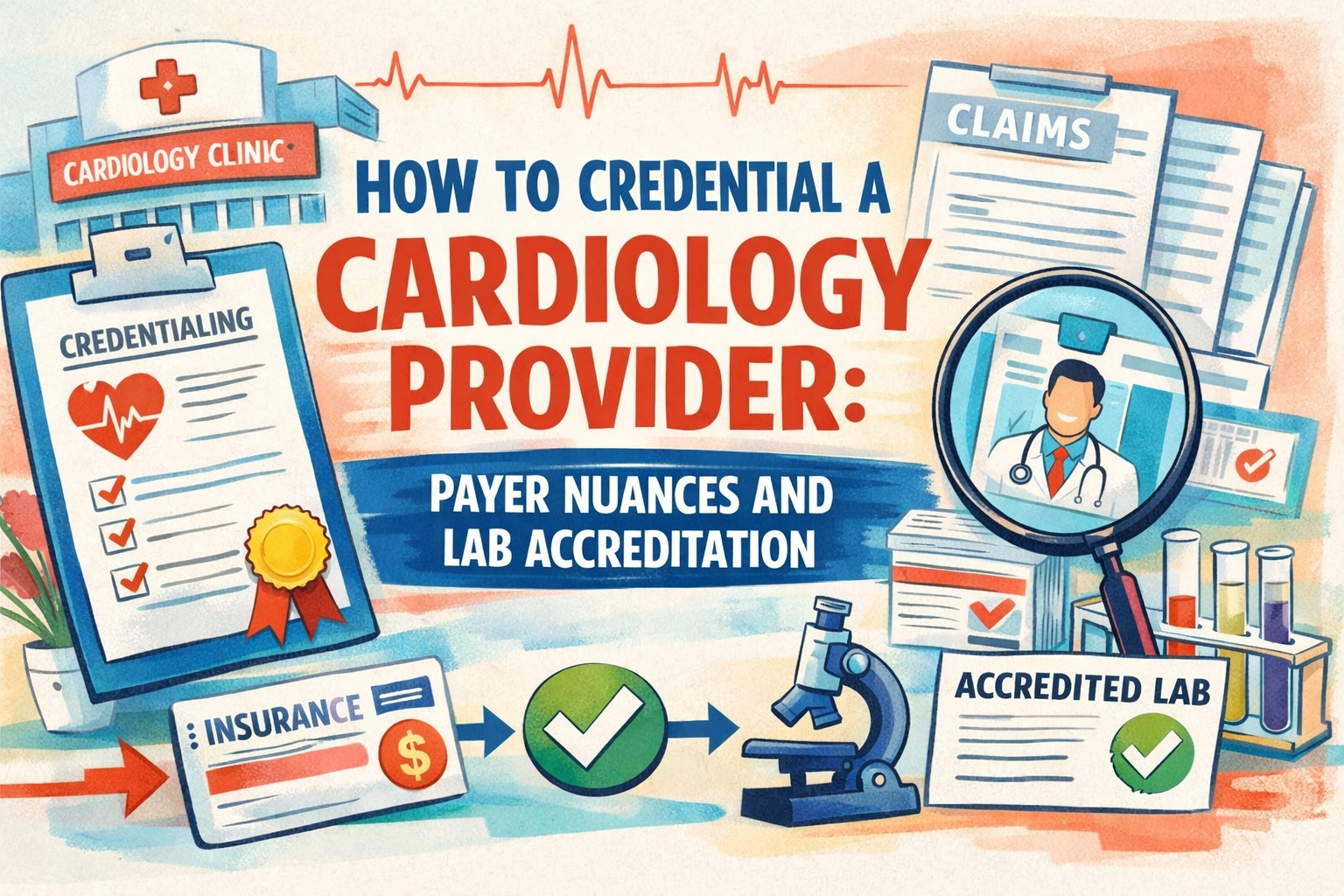
Cardiology is one of the most complex specialties in the healthcare landscape. Between the high cost of equipment, the necessity of specialized diagnostic labs, and the intricate sub-specialties involved, the margin for error is non-existent. When you are looking at how to credential a cardiology provider, you are not just checking boxes; you are securing the financial foundation of a high-revenue practice. A single oversight in the enrollment process can lead to months of denied claims for high-ticket procedures like catheterizations or nuclear stress tests. At The Veracity Group, we see the fallout of poorly managed cardiology files every day. It is not just about the provider’s license; it is about the integration of the provider, the facility, and the specific diagnostic accreditations required to get paid. The ABIM Pillar: More Than Just a Certificate The American Board of Internal Medicine (ABIM) is the gatekeeper for cardiology excellence. For a provider to be successfully enrolled with major commercial payers and Medicare, holding a current ABIM Cardiovascular Disease certification is often non-negotiable. While some specialties allow for “board eligible” status for a grace period, cardiology payers are increasingly stringent. You must ensure that the provider’s ABIM status is not only active but that their maintenance of certification (MOC) is up to date. If a provider’s board certification lapses, payers like Blue Cross Blue Shield or Aetna may terminate the contract immediately, leading to a total cessation of reimbursements. General vs. Interventional Cardiology: The Enrollment Split When determining how to credential a cardiology provider, you must first identify their specific scope of practice. There is a massive operational difference between a General Cardiologist and an Interventional Cardiologist. General Cardiology: Focuses on non-invasive diagnostics, consultations, and long-term management. Enrollment typically focuses on standard office-based CPT codes. Interventional Cardiology: Involves invasive procedures such as stenting and angioplasty. This requires additional verification of fellowship training and often necessitates higher malpractice coverage limits. Payers look for specific sub-specialty designations. If an Interventional Cardiologist is enrolled only as a General Cardiologist, you will see a surge in denials for procedural codes. Your enrollment strategy must mirror the provider’s actual day-to-day workload to avoid these “silent” revenue leaks. The IAC Requirement: The Silent Killer of Lab Revenue The most common mistake practices make when learning how to credential a cardiology provider is ignoring the Intersocietal Accreditation Commission (IAC). If your practice operates an in-house imaging lab: whether it is Echocardiography, Vascular Testing, or Nuclear/PET: your enrollment is only half-finished if the lab itself isn’t aligned. Many payers, specifically UnitedHealthcare and various Medicare Advantage plans, require IAC accreditation for the facility before they will reimburse the technical component of diagnostic tests. The Problem: You enroll the doctor perfectly. They perform an echocardiogram. The claim is denied. The Reason: The payer does not recognize your office as an accredited imaging facility. The Solution: You must link the provider’s NPI to a facility that holds active IAC accreditation. Without this link, the thousands of dollars invested in imaging equipment become a sunk cost. This is a critical step that differentiates a generic enrollment process from a specialized cardiology strategy. Strategic Professional Alignment: The ACC Every cardiologist should be actively involved with the American College of Cardiology (ACC). While the ACC is a professional association rather than a government regulator, their standards often dictate the “best practices” that payers use to evaluate provider competency. When you are navigating how to credential a cardiology provider, leveraging the provider’s FACC (Fellow of the American College of Cardiology) designation can be a powerful tool during network adequacy appeals. If a payer claims their cardiology panel is “full,” demonstrating that your provider brings specialized ACC-recognized skills to an underserved area can often force a closed panel to open. Mapping the Cardiology Enrollment Workflow To successfully navigate the cardiology landscape, you must follow a rigid, consequence-driven timeline. Any deviation will result in “hold” status on your applications, which can take weeks to resolve. 1. The CAQH Foundation Your provider’s CAQH ProView profile must be a mirror image of their CV. For cardiologists, this includes listing every hospital where they have or have had privileges. Payers cross-reference these hospital affiliations to ensure the provider can perform the procedures they are claiming. If there is a gap between the CV and the CAQH profile, the application will be flagged for “quality review,” adding 45 to 60 days to the process. 2. Medicare PECOS and the PTAN Medicare enrollment via the PECOS system is the backbone of cardiology billing. Because many cardiology patients are in the 65+ demographic, your Medicare PTAN (Provider Transaction Access Number) is your lifeline. Ensure the “Specialty Code” selected is accurate (e.g., 06 for Cardiology, 72 for Pain Management/Interventional). An incorrect specialty code here will cause a domino effect of denials across all secondary payers. 3. State-Specific Nuances Licensure is not a “one and done” task. In states with heavy cardiology competition, medical boards and payers may require specific “controlled substance” registrations even if the provider rarely prescribes them. For more on how these state-specific rules impact different specialties, see our guide on speech-language pathology enrollment or visit our full services page to see how we handle these complexities across the board. The High Cost of DIY Cardiology Enrollment Trying to manage cardiology enrollment in-house often leads to the “90% trap.” You get 90% of the work done, but the remaining 10%: the lab accreditations, the sub-specialty coding, and the NPI linkages: is where the revenue lives. The consequences of failure include: Retroactive Denials: If a provider is seeing patients before the “effective date” is finalized, payers will claw back every cent paid during that window. Directory Inaccuracies: If your provider isn’t correctly loaded into the payer’s directory with their sub-specialty, patients will never find them. Contracting Voids: Missing a re-credentialing deadline can result in the loss of a legacy contract, forcing you to renegotiate at lower, modern rates. Final Thoughts: Securing Your Cardiology Revenue When you understand how to credential a cardiology provider, you