Behavioral Health Credentialing: Who Gets Credentialed (LCSW, LPC, LMFT)?

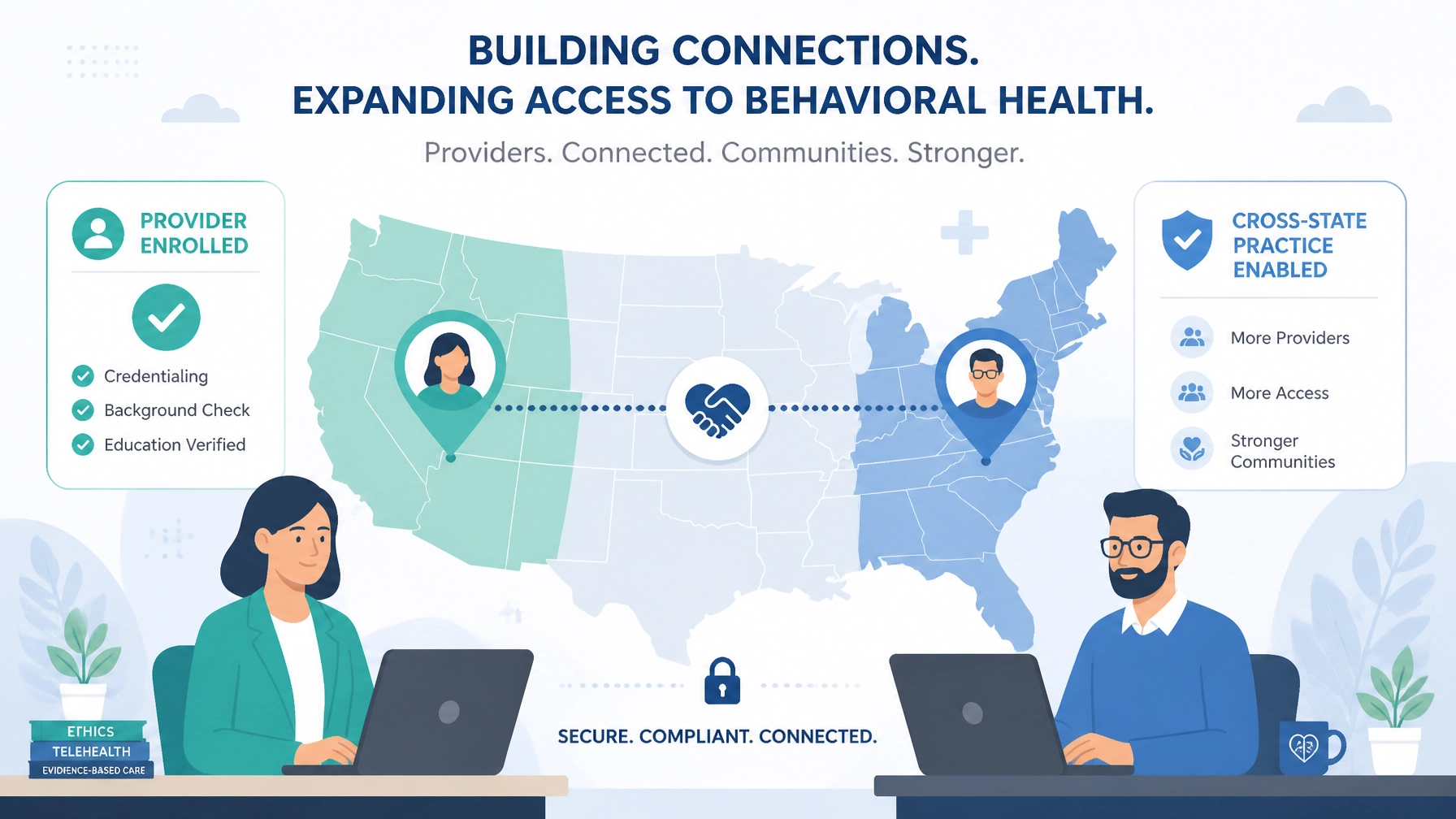
Effective behavioral health credentialing is the cornerstone of a sustainable mental health practice, ensuring that providers are properly recognized by insurance networks to provide care. As the demand for mental health services reaches an all-time high, navigating the complexities of provider enrollment is no longer optional; it is a critical business imperative for groups and solo practitioners alike. Looking for professional provider credentialing services in the USA? 👉 Check our main service page here: veracityeg.com The behavioral health landscape is undergoing a massive shift. Payers are under immense pressure to expand their networks, yet the requirements for entry remain stringent. For the modern practice, understanding exactly who needs to be credentialed: and the specific hurdles for LCSWs, LPCs, and LMFTs: is the difference between a thriving revenue cycle and a mounting pile of denied claims. At The Veracity Group, we see the back-office struggles that occur when a practice assumes all licenses are treated equally by payers. They are not. The Backbone of Mental Health: Master’s-Level Clinicians In the past, many insurance panels were dominated by psychiatrists and psychologists. Today, the "Big Three" of master's-level clinicians: Licensed Clinical Social Workers (LCSW), Licensed Professional Counselors (LPC), and Licensed Marriage and Family Therapists (LMFT): form the backbone of behavioral health delivery. Insurance payers have realized that these providers are essential to meeting network adequacy standards. However, each license type carries its own set of "red tape" that will stall your enrollment if not managed with precision. 1. Licensed Clinical Social Workers (LCSW) The LCSW is often considered the "gold standard" for master’s-level enrollment because of their long-standing recognition by Medicare. If your practice employs LCSWs, you must ensure their documentation is impeccable. Supervision Documentation: Payers require absolute proof of the 3,000+ supervised clinical hours (state-dependent) completed post-graduation. The Attestation Trap: Many payers demand specific attestation forms from the original clinical supervisor. If that supervisor has retired or moved, your enrollment is at risk of a dead end. Clinical Focus: Payers look for a clear clinical track. If an LCSW’s background is primarily administrative, commercial panels may reject the application. 2. Licensed Professional Counselors (LPC, LCPC, LPCC) The LPC category is perhaps the most complex due to the lack of national naming uniformity. Depending on your state, you might be a Licensed Clinical Professional Counselor (LCPC) or a Licensed Professional Clinical Counselor (LPCC). Title Reciprocity Issues: Payers often use automated systems that flag "LPC" but may reject "LCPC" if the internal database isn't updated for that specific state's nomenclature. This is a common reason why behavioral health provider enrollment is so hard. Supervision Variances: A counselor in Colorado may need two years of supervision, while a peer in Texas needs 3,000 hours. Payers verify these against state board records with zero margin for error. Medicare Inclusion: As of January 1, 2024, the Centers for Medicare & Medicaid Services (CMS) officially allows LPCs and LMFTs to enroll in Medicare. This is a massive shift, and if you haven't updated your CAQH profiles to reflect this, you are leaving federal reimbursement on the table. 3. Licensed Marriage and Family Therapists (LMFT) LMFTs provide a specialized niche that many payers are eager to fill, but they often face the "closed panel" phenomenon more frequently than LCSWs. Panel Capacity: Because LMFTs are a smaller professional group, insurance companies often limit the number of slots available in a specific geographic area. You must demonstrate a unique specialty (such as trauma-informed family therapy) to force a panel opening. Educational Accreditation: Payers verify that the degree comes from a program accredited by COAMFTE or an equivalent body. Non-accredited degrees are an automatic disqualifier for most major commercial payers. The High Cost of Enrollment Delays When a provider is not properly credentialed, the financial consequences are immediate. You cannot bill for their services, and patients who discover their therapist is "out-of-network" mid-treatment will likely leave your practice. This churn is a silent driver of lost revenue. Consider a scenario where an LPC begins seeing patients before their enrollment is finalized. Even if the provider is fully licensed by the state, the insurance company will not pay the claims. Retroactive billing is rarely granted in the behavioral health world. At Veracity, we help practices avoid these "blackout periods" by initiating the provider enrollment process at least 90 to 120 days before a new hire's start date. Navigating the Medicare Shift The Consolidated Appropriations Act of 2023 fundamentally changed the game for LPCs and LMFTs. For decades, these providers were excluded from Medicare reimbursement. Now, the doors are open, but the Medicare enrollment process via PECOS is notoriously difficult. To successfully enroll these providers in Medicare, you must: Verify the provider has a valid NPI (National Provider Identifier). Ensure their state license is active and carries no "restricted" status. Submit the CMS-855I or CMS-855O application with surgical precision. Any minor typo in a provider's name or address: even a missing "Suite" number: can result in a rejection that resets your 60-day waiting period. Why Veracity Group is the Expert in Behavioral Health Behavioral health is not a "side niche" for us; it is a core area of our expertise. We understand that a therapist’s time is best spent with patients, not arguing with insurance companies about why an LCPC is the same as an LPC. We manage the entire lifecycle of enrollment, from the initial behavioral health provider enrollment to the ongoing maintenance of CAQH and demographic updates. Our team acts as the "backbone of professional credibility" for your practice, ensuring that your providers are never the reason for a denied claim. Our Strategy for Success: Proactive Outreach: We don't wait for payers to contact us. We follow up aggressively to ensure applications move through the queue. State-Specific Knowledge: We understand the nuances of multi-state Medicaid enrollment and how it affects LCSWs and LPCs. Error Prevention: We perform a comprehensive audit of all provider documents before a single application is submitted. The Consequences of Doing It Yourself Many practice owners attempt to
PA Credentialing: Solving Panel Access and Payer Quirks for Physician Assistants

Navigating the complexities of provider enrollment is a non-negotiable requirement for modern healthcare practices, yet medical credentialing for Physician Assistants (PAs) remains one of the most misunderstood areas of revenue cycle management. While PAs are the backbone of clinical efficiency, their path to full billing privileges is often obstructed by "silent stalls," payer-specific quirks, and panel access barriers that can leave your practice footing the bill for a provider who cannot legally generate revenue. In the fast-paced environment of 2026, you cannot afford to treat PA credentialing as a back-office afterthought. It is the passport to success for your revenue cycle. When a PA is not correctly linked to your Tax ID or their supervising agreement is outdated, the result is not just a delay: it is a guaranteed denial. The Panel Access Problem: Why PAs Get Blocked One of the most frustrating hurdles for Physician Assistants is the "closed panel" phenomenon. You may hire a highly qualified PA-C, only to find that a major commercial payer claims their panel is full and refuses to add new providers. This is often a administrative deflection rather than a hard clinical reality. For PAs, panel access is the gatekeeper of patient volume. If your PA is not on the panel, they cannot see patients from that payer’s network, or worse, they see them and the claims are processed at out-of-network rates: leaving the patient with an unexpected bill and your practice with a reputational hit. To overcome this, you must demonstrate a "need-based" argument or ensure that the PA is properly linked as a sub-provider under the group’s existing contract. At The Veracity Group, we navigate these barriers by ensuring every application is framed to highlight the PA's role in expanding access to care, which is a powerful lever in negotiations with payer network managers. The Supervising Physician Loophole Unlike physicians, PA credentialing is inherently tethered to a Supervising Physician (SP) Agreement. This is where many practices fail. Payers require absolute synchronicity between the SP agreement on file and the data entered into CAQH. If the names, license numbers, or effective dates on the SP agreement do not mirror the application exactly, the payer will trigger a "silent stall." They won’t always call you to tell you there is a discrepancy; they will simply let the application sit in a pending queue until it eventually expires. Key Requirements for PA Supervision Documentation: Current Signatures: Ensure the agreement is signed by both the PA and the SP within the required timeframe. Mirroring Data: Every detail in the agreement must match the demographic updates provided to the insurance companies. Scope of Practice: Clearly define the PA’s scope as it relates to the specialty (e.g., specific surgical assisting duties or prescribing authorities). Treat these agreements as living documents. When an SP leaves the practice or a new one is added, you must update every payer immediately. Failing to do so is a primary cause of "provider not eligible" denials. Payer-Specific Quirks: A State-by-State Minefield Payer requirements are not universal; they are a patchwork of state regulations and internal corporate policies. Navigating this maze requires insider knowledge of how specific payers operate. The Maryland CareFirst Challenge In Maryland, CareFirst BlueCross BlueShield utilizes CAQH for the initial credentialing phase, but the actual contracting process remains a manual, archaic system. There is no reliable portal tracking for the contract execution phase. If you aren’t aggressively following up with a dedicated representative, your PA might be "credentialed" but still unable to bill because the contract was never linked to their NPI. The Washington "Portal Mirage" In Washington state, providers often show as "active" or "credentialed" in payer portals weeks before the contracts are actually executed. Billing against this status is a trap. You will receive a flurry of denials because the back-end financial systems haven’t caught up to the front-end directory. You must wait for the countersigned contract before you flip the switch on billing. The Pennsylvania PROMISe ID If your practice operates in Pennsylvania, you know that Medicaid enrollment is a different beast. PAs must obtain a PROMISe ID. However, having this ID is only the first step. Each Managed Care Organization (MCO): such as UPMC, Keystone First, or Health Partners: manages its own credentialing and contracting independently. A PA enrolled with the state is not automatically enrolled with the MCOs. This multi-step process is why mastering multi-state Medicaid provider enrollment is critical for regional practices. Why Incorrect Denials Happen (And How to Stop Them) The most common reason for PA claim denials is the failure to link the NPI and TIN (Tax Identification Number) correctly. Even if the PA is credentialed, if the payer's system doesn't "see" that the PA belongs to your specific group at your specific location, the claim will fail. Common "Quirks" That Lead to Denials: Missing Modifiers: Some payers require specific modifiers for PA-provided services (such as -AS for surgical assists). If your billing software isn't configured for these payer-specific rules, the claims are dead on arrival. Incomplete CAQH Re-attestations: CAQH requires re-attestation every 90 days. If your PA misses this window, their status goes "inactive," and payers will immediately stop processing their claims. PECOS Delays: Medicare enrollment via the PECOS system is generally faster, but any error in the initial submission can lead to a 60-day lockout. Strategic sequencing is required: submit to PECOS first to establish the provider’s "baseline" before moving to commercial and Medicaid applications. The High Cost of DIY Credentialing Many practice managers attempt to handle PA credentialing in-house, viewing it as a simple administrative task. This is a high-risk gamble. The administrative burden of tracking five different portals, following up with ten different payers, and maintaining CAQH compliance for multiple providers is a full-time job. When you manage this internally, the "silent stalls" mentioned earlier go unnoticed for months. Every month a PA is unable to bill represents thousands of dollars in lost revenue. Credentialing is the silent driver of your practice’s cash flow; if the engine
How to Credential a Nurse Practitioner in 2026: Navigating Growth and State Rules

The healthcare landscape in 2026 is moving faster than ever, and at the center of this evolution is the Nurse Practitioner (NP). As physician shortages persist, NPs have become the backbone of modern clinical operations. However, scaling your practice by adding these versatile providers requires a mastery of provider enrollment services and medical credentialing to ensure your revenue cycle remains uninterrupted. If you aren't prepared for the shifting state regulations and updated filing requirements of 2026, your newest hire will become a financial liability rather than an asset. Looking for professional provider credentialing services in the USA? 👉 Check our main service page here: veracityeg.com The 2026 NP Surge: Why the Stakes are Higher Nurse Practitioners are the fastest-growing provider type in the United States. By 2026, the volume of NPs entering the workforce has reached record highs, driven by expanded educational programs and a desperate need for primary care and behavioral health access. For your practice, this growth is a massive opportunity: but only if you can get them on-boarded and billing quickly. A delay in enrollment doesn't just mean a few weeks of "waiting." It means denied claims, patient frustration, and a provider who is sitting idle while your overhead costs continue to climb. At The Veracity Group, we see practices lose tens of thousands of dollars because they underestimated the complexity of multi-state rules or missed a single deadline in the CAQH portal. Navigating the Multi-State Maze: Full, Reduced, and Restricted Authority The biggest hurdle in 2026 is the lack of uniformity across state lines. As of this year, 26 states grant NPs Full Practice Authority (FPA). In these jurisdictions, NPs can evaluate, diagnose, and treat patients without physician oversight. However, if you are operating a multi-state practice or a telehealth platform, you must understand the nuances of the other 24 states: Reduced Practice States: These states require a regulated collaborative agreement with a physician in order for the NP to participate in at least one element of practice. Restricted Practice States: These states require NPs to work with a physician throughout their entire careers for patient care. The Veracity Group Advantage: We specialize in navigating these complexities. When we handle contracting for your team, we don't just file paperwork; we verify that your NPs have the correct Collaborative Practice Agreements (CPA) in place to satisfy specific state board requirements. Without this, your enrollment application will be rejected before it even hits a reviewer’s desk. The Step-by-Step Blueprint for NP Enrollment in 2026 The process is a marathon, not a sprint. Follow these nine critical steps to ensure your NP is ready to bill on day one. 1. Secure National Board Certification (The 5-Year Rule) As of January 1, 2026, the American Nurses Credentialing Center (ANCC) enforces a strict requirement: APRN certification candidates must apply within five years of degree conferral. If your candidate has delayed their certification, this could stall their entire career path. Verify their board certification (ANCC or AANPCB) immediately. 2. Obtain State Licensure and NPI You cannot move forward without an active RN and NP license in the state where the provider will practice. Simultaneously, ensure they have a Type 1 NPI via the National Plan and Provider Enumeration System (NPPES). If you are an organization, you will also need your Type 2 NPI linked correctly. 3. The CAQH Provider Data Portal (Formerly ProView) As of late 2025, CAQH has fully transitioned to the CAQH Provider Data Portal. This is the centralized "passport" for provider data. Incomplete profiles are the #1 cause of enrollment stagnation. Critical Action: You must mark the profile as "Authorized to Release." The 120-Day Rule: You must reattest every 120 business days. If you miss this window, the profile expires, and the insurance payers lose access, leading to an immediate suspension of billing privileges. 4. Medicare Enrollment via PECOS Medicare enrollment is the heavy hitter. In 2026, most individual NPs file the CMS-855I application. Urgent Deadline: The current CMS-855I form has an OMB expiration date of May 1, 2026. Using an outdated form after this date will result in an automatic rejection. We recommend using the PECOS online system rather than paper, as it cuts processing time from 60+ days down to approximately 45 days. 5. Commercial Payer Submissions Once CAQH is authorized and Medicare is pending, you must hit the commercial payers (UnitedHealthcare, Aetna, Cigna, Blue Cross Blue Shield, etc.). Each payer has a unique portal and specific requirements for NPs, especially regarding their "scope of practice" in restricted states. 6. DEA and Malpractice Insurance NPs must have their own DEA registration if they are prescribing controlled substances (this typically takes 4–6 weeks). Furthermore, you must provide a current malpractice insurance certificate that explicitly names the NP and covers the specific state of practice. 7. Primary Source Verification (PSV) The payers will not take your word for it. They will contact the NP's school, the state board, and the National Practitioner Data Bank (NPDB). They also check the OIG exclusion list and the SAM database to ensure the provider hasn't been barred from federal programs. 8. Hospital Privileges (If Applicable) If your NP is working in a surgical or acute care setting, hospital privileging is a separate, equally grueling process. Check out our guide on medical group enrollment for surgery centers for more on these specific risks. 9. Final Approval and Effective Dates Once the payer completes their review, you receive a "Welcome Letter" and an effective date. Do not see patients under that payer before this date, or you will be providing free care. Common Pitfalls: The High Cost of "Doing it Later" In the world of provider enrollment, "later" means "lost revenue." Many practices try to handle this in-house, only to realize that their office manager is overwhelmed by the 50+ pages of Medicare documentation or the constant reattestation reminders from CAQH. The "Gap" Hazard: If an NP starts working on June 1st but isn't enrolled until August 1st, you have two months of salary
Credentialing for Anesthesiologists: What Payers Actually Require in 2026

Maintaining a high-performing anesthesia department or private group in 2026 requires more than just clinical excellence; it demands an aggressive approach to provider enrollment and administrative precision. As the healthcare landscape shifts toward more stringent data validation, ensuring your medical group enrollment remains compliant is the only way to safeguard your revenue stream. For anesthesiologists and Certified Registered Nurse Anesthetists (CRNAs), the margin for error has narrowed significantly as payers increasingly leverage automated audits and advanced analytics to flag documentation inconsistencies. Looking for professional provider credentialing services in the USA? 👉 Check our main service page here: veracityeg.com The High Stakes of Anesthesia Revenue Cycles Anesthesia is unique because it is the backbone of the surgical suite. If your anesthesiologist is not fully loaded into a payer’s system, the entire surgical encounter: from the facility fee to the surgeon's bill: can be thrown into a state of administrative limbo. In 2026, payers have moved beyond simple "paperwork." They are looking for a comprehensive digital profile that proves every provider on the team is qualified to handle high-risk procedures. The financial consequences of a single missed update are staggering. A delay in enrolling a new CRNA or MD can result in significant revenue disruptions, as providers often cannot bill for services until their enrollment is fully processed and active in the payer's system. In an environment where specialized CPT codes like 00100 through 01999 require precise billing logic, the 2026 coding landscape is even tighter. Official 2026 updates include revised descriptors for Head and Neck codes 00100–00222, new Thorax codes 00300–00474, and modified base units for Spine codes 00600–00670. Payers will not hesitate to reject a claim if your coding, modifiers, and provider file do not line up with the exact service performed. In 2026, anesthesia RCM requires specialty-specific logic because generic systems routinely fail to apply granular rules for units, time reporting, concurrency, and modifier sequencing, and that failure creates significant revenue leakage. Alt text: A professional administrative environment focusing on high-stakes medical documentation for anesthesia groups. Core Documentation Required by Payers in 2026 Payers such as Blue Cross Blue Shield, UnitedHealthcare, and Aetna have synchronized their requirements with federal standards, yet they maintain individual nuances that The Veracity Group navigates daily. To survive a 2026 audit, your providers must have the following documentation verified and ready: State Medical Licensure: You must possess current, unrestricted licenses in every state where you practice. With the rise of multi-state groups, maintaining a clean record across borders is non-negotiable. Board Certification: Payers now demand active status from the American Board of Anesthesiology (ABA) or the American Board of Physician Specialties (ABPS). For CRNAs, the National Board of Certification and Recertification for Nurse Anesthetists (NBCRNA) must be current. ACLS/PALS and DEA Registration: Advanced Cardiac Life Support and Pediatric Advanced Life Support certifications are mandatory for anesthesia providers. Furthermore, your DEA registration must reflect the correct address for every location where you administer controlled substances. 10-Year Work History: Any gap in employment exceeding 30 days must be explained in writing. Payers view unexplained gaps as red flags for potential malpractice or disciplinary issues. Malpractice History: Detailed loss runs for the last 10 years are required. Even a settled claim with no admission of guilt must be documented with a formal explanation. Payer-Specific Requirements and the "Team Care" Model The complexity increases when billing for the anesthesia care team model. In 2026, modifier logic must be exact. QK reports medical direction of two to four concurrent cases, QY reports medical direction of one case, QX reports the CRNA service under medical direction, QZ reports an independent CRNA service without medical direction, and AD reports medical supervision of more than four concurrent cases. Whether you are utilizing medical direction or medical supervision, payers require both the anesthesiologist and the CRNA to be fully enrolled and linked to the same group NPI. As of the April 2026 Blue Cross NC update effective April 3, 2026, billing multiple anesthesia modifiers on the same claim line is considered inappropriate and will be denied because those modifiers are mutually exclusive, with the sole exception of Modifier QS where applicable. Blue Cross NC also requires performance modifiers that identify the provider and level of involvement—AA, QK, QY, QX, QZ, or AD—to appear in the first modifier position. Physical status modifiers P1–P6 must follow in subsequent modifier positions, not lead the claim line. That sequencing rule is not cosmetic. It is a front-end claims logic issue that directly affects adjudication. Just as important, QK and QX reimbursement splits correctly only when both claims are submitted and paired correctly. In the standard team care model, each side is typically reimbursed at 50% of the allowable amount only when the physician and CRNA claims align on the same case, the same time record, and the correct modifier combination. If one side is missing, mismatched, or filed with the wrong modifier, the claim becomes a revenue leak disguised as a routine billing error. Blue Cross NC also flags conflicting involvement levels reported by the same provider on the same day. If the same rendering provider is reported as personally performed, medically directing, and supervising in conflicting ways, the claim will be denied because those levels of involvement are not interchangeable. Medicare and Medicaid CMS remains the most rigorous gatekeeper. In 2026, the PECOS system requires bi-annual revalidation for many anesthesia groups. If your Medicaid enrollment is not handled with the same level of care, you face immediate exclusion from managed care plans that rely on state-level data. Navigating the maze of CAQH and Medicare enrollment is a primary driver of success for modern practices. CMS also continues to define anesthesia time with very little room for interpretation. Under Medicare rules, time begins when the anesthesia provider starts preparing the patient in the procedure area or equivalent setting and ends when personal attendance is no longer required. That definition makes sloppy time capture a serious compliance issue. Rounding every case to exactly 15-minute increments is an
Telehealth Credentialing Across State Lines: Navigating the Midwest vs. West Medicaid Maze

Navigating medical provider enrollment services across state lines while building a reliable telehealth footprint feels like playing a high-stakes game of 5D chess. Your patients do not care about state borders. They care about access to care from their living rooms. But the moment those pixels cross a state line, you enter a regulatory minefield. If you think a single license is your "golden ticket" to a national telehealth model, you are in for a rude awakening. Medicaid programs in Indiana, Illinois, and Nevada are not just different; they are entirely different ecosystems with unique "gotchas" that will stall your revenue if you are not prepared. If your question is "Can I see Medicaid patients across state lines?" the answer is simple: yes, but only after you satisfy each state's licensing, enrollment, and verification rules. If your question is "How do I do it without delays?" the answer is even clearer: you need a state-by-state process that matches your provider type, service location, and payer requirements. Looking for professional provider credentialing services in the USA? 👉 Check our main service page here: veracityeg.com The Golden Rule of the Virtual Visit Before we dive into the regional trenches, let’s establish the foundational law of the land: The provider must be licensed in the state where the patient is physically located at the time of the encounter. This is non-negotiable. Whether you are treating a patient via a smartphone in a cornfield in Indiana or a high-rise in Las Vegas, your legal right to practice is dictated by the ground under the patient’s feet. Failing to secure the correct state-specific enrollment is the fastest way to trigger a claim denial or, worse, an OIG audit. While the Interstate Medical Licensure Compact (IMLC) offers a streamlined pathway for physicians, the Medicaid enrollment process remains a manual, state-by-state slog that requires precision and insider knowledge. Alt-tag: A map of the United States highlighting the Midwest and Western regions for telehealth expansion. 1. The Midwest vs. the West: Streamlining vs. Complexity For general provider enrollment services, the Indiana-Illinois-Nevada comparison tells you exactly what multi-state expansion looks like in practice. One state removes friction. One state slows you down with administrative precision. One state raises the verification bar for every applicant. If you are asking where enrollment is easiest, where it gets sticky, and where extra documentation is non-negotiable, this three-state comparison is the focal point. Indiana: The License-Only Advantage If you have not looked at Indiana lately, you are missing a rare win for administrative efficiency. As of July 1, 2024, Indiana officially removed the requirement for telehealth-specific certificates. That creates a cleaner path for physicians, advanced practice providers, therapists, and other eligible clinicians expanding telehealth services under Medicaid. This is the key Indiana takeaway: if you hold the proper Indiana license, you do not need a separate telehealth certificate to move forward. That is a real operational advantage for multi-state groups asking, "Can I enroll in Indiana without another telehealth approval layer?" The answer is yes, provided your license, ownership information, service location details, and enrollment file are complete. However, do not mistake "easier" for "automatic." You still must submit accurate provider data to the Indiana Health Coverage Programs (IHCP). A clean Indiana rule set does not forgive sloppy applications. Illinois: The Administrative Precision State Cross the border into Illinois, and the vibe shifts. Illinois is the state that forces you to respect process discipline. The core question here is not whether telehealth is possible. The real question is how cleanly your enrollment file matches across every data source. For most medical specialties, Illinois becomes difficult for three reasons: Application detail must align across systems. Provider records must match state and payer files exactly. Delays compound quickly when ownership, practice location, or rendering-provider data is inconsistent. Illinois Medicaid is notoriously meticulous. If your CAQH profile is not synchronized perfectly with your state application, your file will sit in "pending" purgatory for months. That problem is not specialty-specific. It affects primary care, specialty care, surgical groups, therapy practices, and multi-location organizations alike. 2. The West: The Land of Stringent Verification If the Midwest is characterized by shifting legislative sands, the West: specifically Nevada: is characterized by its rigorous verification walls. While Western states often have strong telehealth infrastructure, their "gatekeeper" mentality for Medicaid is significantly more intense than what you will find in the heartland. Nevada: The "Gotcha" State Nevada does not play games. If you are looking to expand your footprint here, prepare for a verification marathon. Nevada Medicaid requires more stringent primary source verification and provider qualification documentation than Indiana or Illinois for many enrollment scenarios. This is the big Nevada question: "Can I enroll as an out-of-state provider if I already bill Medicaid elsewhere?" Yes, but Nevada will still require its own documentation trail, validation standards, and closer review. That is the "gotcha" many groups miss. Prior enrollment success in another state does not buy you a shortcut in Nevada. Nevada is particularly focused on out-of-state telehealth providers. The state wants to confirm that you are not operating as a "ghost clinic" and that every provider meets Nevada-specific requirements for licensure, qualifications, service locations, and supporting records. For general medical provider enrollment services, that means your file must be audit-ready before submission, not cleaned up after the fact. Alt-tag: A comparison chart showing the different requirements for Medicaid enrollment in Indiana, Illinois, and Nevada. Comparing the "Gotchas" Feature Indiana Illinois Nevada Telehealth Certificate Removed (as of 7/1/2024); license-only path is the key advantage Not the main issue; administrative alignment is the real hurdle Stricter review depends on provider type and enrollment facts Verification Speed Moderate Slow and detail-heavy Very stringent and documentation-heavy Key "Gotcha" Valid state license is enough for the telehealth approval piece, but the enrollment file still must be complete Data mismatches stall applications fast High scrutiny on out-of-state providers and stronger primary source verification Enrollment Difficulty Lower Medium-High High 3. Can You Enroll in Multiple Medicaid States at
How to Credential a Provider in Maryland: MPRIME Delay, Location NPI Rules, and 2026 Medicaid Pressure

Navigating the medical provider enrollment services market in Maryland requires an understanding of a landscape dominated by massive hospital systems and rigid state mandates. Whether you are an independent clinic or a multisite group, the behavioral health enrollment landscape in the Old Line State is especially unforgiving when you miss a portal rule, a location setup requirement, or a state processing standard. In Maryland, you are operating in the shadow of giants like Johns Hopkins, the University of Maryland Medical System (UMMS), and MedStar Health. To compete for talent and patient volume, your enrollment process must be faster, cleaner, and more compliant than the behemoths next door. Looking for professional provider credentialing services in the USA? 👉 Check our main service page here: veracityeg.com The Maryland Regulatory Fortress: Understanding COMAR In Maryland, the "rules of the road" are dictated by the Code of Maryland Regulations (COMAR). Specifically, COMAR 10.07.01.24 mandates that every hospital have a formal, written process for any physician who admits or treats patients. This isn't just a suggestion; it is a statutory requirement that sets the tone for the entire state. For private practices and multisite clinics, this means your internal standards must mirror the high bar set by hospital-owned practices. One of the most critical aspects of Maryland compliance is the Uniform Credentialing Form. Maryland law requires health insurance carriers to accept the Council for Affordable Quality Healthcare (CAQH) form as the sole uniform application. While this sounds like it should simplify your life, the reality is that the CAQH profile must be meticulously maintained. A single outdated attestation or an expired document in CAQH will trigger a cascade of denials across every major payer in the state, from CareFirst BlueCross BlueShield to UnitedHealthcare. Upstream Prerequisites: Licensing and the Maryland CDS You cannot hope to achieve timely enrollment if your upstream ducks are not in a row. Before a provider can even be considered for a payer network, their foundational credentials must be active and flawless. This starts with the Maryland Board of Physicians or the relevant board for mid-level providers and behavioral health professionals. In Maryland, the DEA number is only half of the equation for prescribing. You must also secure a Maryland Controlled Dangerous Substances (CDS) certificate. We often see practices stall for weeks because they secured the state license but forgot the CDS, or secured the CDS but didn't update the address to reflect the new practice location. At The Veracity Group, we treat licensing and DEA/CDS management as the essential first step in the provider enrollment process. If the upstream data is flawed, the downstream revenue is guaranteed to suffer. Image Description: A high-end, studio-lit portrait of a focused healthcare executive reviewing a digital compliance dashboard. The lighting is professional and sharp, emphasizing a clean, clinical environment. Navigating the Hospital Shadow: The Onboarding Churn Maryland has one of the highest densities of hospital-owned or hospital-affiliated practices in the country. This creates a hyper-competitive environment for providers. When you hire a new physician, they are likely coming from another large system or are being courted by one. The "hospital shadow" means that your onboarding process must be seamless to ensure the provider can start seeing patients and generating revenue on day one. Constant onboarding is the norm in Maryland, not the exception. For multisite clinics, the challenge is multiplied. Since 2025, Maryland requires a separate NPI setup for every practice location, which turns location management into a make-or-break operational issue rather than a clerical footnote. Each new site requires updated demographic information with every payer, and your data must match the location-level record exactly. If you are adding a provider to a group that has "admitting privileges" requirements, you must ensure their hospital affiliations are finalized before the payers will pull the trigger on their enrollment. In plain terms: if one location record is wrong, your entire launch schedule starts bleeding time. Medicare and Medicaid Enrollment for Behavioral Health Providers The Medicare and Medicaid enrollment for behavioral health providers in Maryland is a specific area of friction. Maryland’s Medicaid program, managed by the Maryland Department of Health (MDH), still uses ePREP as the main enrollment portal, and that remains true until the planned MPRIME transition in October 2026. If your team is acting like MPRIME is already live for standard workflows, you are setting yourself up for preventable delays. You must work the process that exists now, not the process people keep talking about for later. For reference, Maryland continues to route provider enrollment activity through its Medicaid administration channels, and official program information remains anchored through the state’s Maryland Department of Health and enrollment-facing resources. Behavioral health groups face even tighter pressure. Maryland maintains a behavioral health moratorium for PRP and Health Home enrollment through June 2026, which means expansion plans in those categories hit a hard wall unless and until the state reopens that pathway. That is not a minor footnote. It directly affects hiring models, launch timing, and revenue forecasting for psychiatry groups, LCSWs, PMHNPs, and multidisciplinary behavioral health organizations. Wait times for Maryland Medicaid can stretch for months if the initial application contains even a minor clerical error. That pressure is even sharper in 2026 because CMS has pushed a 30-day processing standard and a digital-only direction for enrollment workflows, raising the operational bar for how practices prepare and submit files. If your documents are incomplete, inconsistent, or trapped in an outdated paper-first process, you will lose time fast. This is where professional medical provider enrollment services become an essential partner. You cannot afford to have a licensed clinical social worker (LCSW) or a psychiatrist sitting idle because the state is kicking back a line item, a location mismatch, or a missing digital document. You must be proactive, aggressive, and precise in your submissions to the Maryland Department of Health and in your alignment with federal enrollment expectations through CMS. Image Description: A professional studio shot of a healthcare provider in a clean, white lab coat, looking confidently
How to Credential a Provider in Minnesota: Patience and Precision with the DHS

Minnesota’s healthcare market is tightening, not loosening. With a massive push toward integrated health systems and a rapidly expanding behavioral health enrollment landscape, you now face a harder operating environment shaped by program integrity crackdowns, tighter federal standards, and longer payment risk for flagged services. To keep your revenue cycle moving, securing high-quality medical provider enrollment services and dedicated behavioral health provider enrollment support is not just an advantage: it is a survival strategy for growing clinics and multisite groups. Looking for professional provider credentialing services in the USA? 👉 Check our main service page here: veracityeg.com The Minnesota Landscape: Integrated Systems and BH Growth Minnesota is unique because of its high density of large, integrated delivery networks. Systems like Mayo Clinic, M Health Fairview, and Allina Health set a high standard for administrative precision. For smaller practices or expanding multisite groups, this means your enrollment data must be flawless to compete for space within the same payer networks. Furthermore, the state has seen an unprecedented explosion in behavioral health growth. As more clinics open to meet the mental health needs of the community, the behavioral health enrollment landscape has become increasingly crowded. This surge has put a significant strain on the Minnesota Department of Human Services (DHS), resulting in processing queues that can stall a provider’s start date by months if the initial application isn't perfect. Image Description: A minimalist, earth-tone overhead shot of a clean wooden desk with a single ceramic mug and a high-end notebook. The lighting is soft and natural, emphasizing a calm and organized professional atmosphere. The "Upstream" Essentials: Licensing and DEA Before you even look at a payer application in Minnesota, you must address the upstream licensing and DEA requirements. You cannot enroll a provider who does not have a valid Minnesota Board of Medical Practice (or relevant board) license in hand. At The Veracity Group, we emphasize that enrollment is the final stage of a much longer journey. If your licensing process is lagging, your enrollment is dead on arrival. We track the expiration dates and application statuses of state licenses and DEA registrations with the same intensity that we track payer approvals. For behavioral health providers, ensuring the correct licensure (such as LICSW, LPCC, or LMFT) is verified early is critical to avoiding immediate rejections from the DHS. Navigating the Minnesota Credentialing Collaborative (MCC) Minnesota was a pioneer in streamlining the administrative burden through the Minnesota Credentialing Collaborative (MCC). The MCC uses the ApplySmart system, a centralized hub where providers can submit their data once and distribute it to multiple health plans, including Blue Cross and Blue Shield of Minnesota, HealthPartners, and Medica. While the MCC is designed to simplify your life, it is not a "set it and forget it" tool. Precision is mandatory. A single typo in an NPI number or a missing signature on an electronic form can halt the entire distribution process. Our team at Veracity ensures that every data point in the MCC is cross-referenced with your CAQH profile to maintain total data integrity. 1. The DHS and MHCP: A Test of Patience Under New Integrity Pressure If your practice sees patients covered by Minnesota Health Care Programs (MHCP), you will deal directly with the DHS. This is where Minnesota has become far less forgiving. The state continues to use the Minnesota Provider Screening and Enrollment (MPSE) portal, but the bigger story is the compliance environment surrounding that portal. Key hurdles in the MHCP enrollment process now include: Enrollment freeze on 13 high-risk categories through 2026: Minnesota has extended an enrollment moratorium on selected high-risk provider and service categories, including segments such as adult day services and certain residential or community-based program types. If your organization expands into one of these lines, your timeline is not just slow; your path may be blocked unless you qualify for a permitted exception. Optum pre-payment review pressure: Minnesota has expanded pre-payment review activity through Optum for selected high-risk services. That means claims can sit in review before money hits your account, and payment delays can stretch toward 90 days when documentation, site data, ownership details, or service records do not line up cleanly. Stricter screening tied to federal funding pressure: Minnesota’s heightened program integrity posture follows a period of intense scrutiny tied to a roughly $2 billion federal funding withhold dispute, which pushed the state to tighten oversight, documentation controls, and risk-based monitoring. CMS 2026 processing and digital expectations: CMS has continued pressing states toward faster, more standardized processing, including a 30-day benchmark for cleaner digital workflows and stronger movement toward electronic submission and maintenance rather than paper-first processes. In practical terms, your team must treat digital file accuracy as non-negotiable. Site-level validation still matters: Certain high-risk provider types remain subject to site review, ownership verification, and enhanced screening before approval or continued participation. What this means for your practice If you are opening, adding locations, or onboarding providers in Minnesota, you must work backwards from the compliance risk: High-risk service lines require a go/no-go check before application work starts Ownership, address, licensure, and service-location records must match across every system Claims readiness must be built alongside enrollment readiness Any missing field will delay approval and can also delay payment after approval The cost of a delay with the DHS is high. In a state with major Medicaid and MinnesotaCare participation, being out-of-network or stuck in review for even 30 days can result in serious revenue disruption. A 90-day pre-payment hold is worse: it turns your receivables into wet concrete. They are there, but they do not move. This is exactly why why behavioral health provider enrollment is so hard often comes down to state-specific controls that demand constant monitoring. Image Description: A gritty, professional visual with concrete textures, muted gray tones, and structured paperwork motifs that reflect Minnesota’s stricter MHCP screening environment and operational pressure. Downstream Impact: Contracting and Renegotiation Enrollment is not the finish line; it is the starting block. Once a provider is successfully loaded into
How to Credential a Provider in Wisconsin: Streamlining the Badger State Workflow

Navigating the healthcare landscape in Wisconsin requires more than just clinical expertise; it demands a sophisticated command of medical provider enrollment services to keep your revenue moving without interruption. Whether you are managing a mid-sized multisite group in Milwaukee or expanding a specialized clinic in Madison, the complexity of Medicare and Medicaid enrollment for behavioral health providers and specialists creates real friction. In the Badger State, where payer processes shift and documentation rules stay unforgiving, a passive approach to enrollment creates denials, delays, and preventable cash-flow damage. Looking for professional provider credentialing services in the USA? 👉 Check our main service page here: veracityeg.com The Upstream Foundation: Licensing and DEA Before you even look at a payer application, you must secure the foundation. In Wisconsin, the path to successful enrollment starts upstream with meticulous attention to state-specific licensing and DEA registrations. A provider cannot legally practice or bill until the Wisconsin Department of Safety and Professional Services (DSPS) has issued the appropriate physician license through LicensE, the agency’s online application portal. Veracity manages this critical first step by ensuring all primary source verification is completed long before the payer sees the file. This includes the mandatory Wisconsin DEA certificate, which must reflect a Wisconsin-based practice address. Without these "passports to practice," your enrollment timeline will stall indefinitely. We treat these administrative prerequisites as the backbone of your professional credibility, clearing the way for the downstream enrollment activities that follow. Fact-Check: The Wisconsin 2026 Licensing Guardrails Wisconsin’s physician licensing rules are not a vibe-based exercise. They are statutory guardrails, and if your file misses one, your enrollment plan will skid into a ditch. Here are the points your team must get right: For full MD/DO licensure, Wisconsin requires 24 months of postgraduate training in an ACGME- or AOA-approved program under Wis. Stat. § 448.05(2)(a)2.a. If your onboarding checklist still says one year, it is outdated. Wisconsin also recognizes an Administrative Physician License under Wis. Stat. § 448.05(2c) for physicians who are functioning in administrative roles and not seeing patients. That distinction matters when you are onboarding executives, medical directors, or physician leaders whose role does not include clinical encounters. The state’s International Physician Provisional License under Wis. Stat. § 448.05(2m) is a separate pathway for qualifying internationally trained physicians. It requires an employment offer in Wisconsin, at least 5 years of practice in the physician’s home country, and it can convert to a full license after 3 years of successful practice in Wisconsin. This is not a loophole. It is a defined statutory lane. The Visiting Physician route is also narrower than many teams assume. Under Wis. Stat. § 448.05(2)(e)3, the applicant must provide proof that they teach, research, or practice medicine or surgery outside Wisconsin. In plain English: DSPS wants evidence that the physician is genuinely visiting, not quietly relocating through the side door. The physician renewal date is October 31 of every odd-numbered year under Wis. Stat. § 440.08(2). Miss that deadline and your enrollment timeline stops being a workflow problem and starts becoming a revenue problem. If you want the official front door, DSPS maintains physician licensing information on its Physician page and processes applications through LicensE. In Wisconsin, the licensing file is the first domino. If it falls late, everything behind it falls late too. 1. Navigating the ForwardHealth Portal: The 10-Day Clock and the 2025 LTC Deadline The Wisconsin Medicaid program, known as ForwardHealth, stays rigid about application timing. Once you initiate an enrollment application in the ForwardHealth Portal, you have exactly 10 calendar days to complete and submit it. If you miss that window, the system purges the data and you start over. That timing pressure matters even more for adult long-term care and HCBS providers. Wisconsin guidance requires affected LTC waiver and HCBS providers to enroll or revalidate in ForwardHealth by December 31, 2025 to stay on track for continued reimbursement, with state communications warning that missing the deadline creates serious payment disruption for services tied to those programs. For practices serving Family Care, IRIS, PACE, or related waiver populations, this is not background noise. It is an operational deadline that will make or break continuity. This ticking-clock scenario is where internal teams lose momentum. At Veracity, we stage every document before the first click in the portal, from the NPI to the professional liability certificate to service-location data and ownership records. Because ForwardHealth acts as a gateway for multiple state-funded programs, one avoidable mistake will ripple across your payer mix and stall revenue at the exact moment you need providers active. Alt: A sleek, holographic digital interface displaying a countdown clock and medical data streams, representing the high-tech precision required for Wisconsin ForwardHealth enrollment. 2. Managing the Multisite Group Complexity Wisconsin is seeing a massive surge in mid-sized multisite groups, particularly in the primary care and urgent care sectors. For these organizations, managing 50 or 100 providers across ten different locations creates a logistical nightmare. The risk of provider churn is high, and the administrative burden of tracking revalidation cycles: which commonly hit on a 36-month cadence in Medicaid workflows: is immense. We solve this through the strategic implementation of monday.com. By using high-transparency project boards, Veracity gives your leadership team a real-time view of every provider’s status. You will not be left guessing whether a provider is active in Green Bay but still pending in Waukesha. That visibility now matters even more for Physician Assistants. Wisconsin ForwardHealth announced that starting June 1, 2025, enrolled PAs can bill as separate providers, which changes how many groups must structure enrollment records, demographic updates, and claim workflows. If your team still treats Wisconsin PA setup like the old rendering-only model, your file structure and billing readiness will break at the exact point revenue should start. This is especially important for primary care, urgent care, surgical, and multispecialty groups that rely on PA productivity across multiple service sites. This level of transparency is the silent driver of operational efficiency. It lets you schedule patients with
How to Credential a Provider in Massachusetts: Navigating the Bay State Complexity

Navigating the Massachusetts healthcare market requires more than just clinical expertise; it demands a sophisticated approach to medical provider enrollment services. In a state defined by prestigious academic medical centers and a rapidly shifting behavioral health enrollment landscape, staying ahead of payer requirements is the difference between a thriving practice and a mounting pile of uncompensated care. Massachusetts is notoriously complex, characterized by a dense concentration of providers, aggressive payer gatekeeping, and a regulatory environment that leaves no room for administrative error. If you are operating a multi-site group or a specialized clinic in the Bay State, you are already aware that the "standard" 90-day window is often a myth. Between the intricacies of MassHealth and the dominant market share of Blue Cross Blue Shield of Massachusetts (BCBS MA), your administrative team must be prepared for a marathon, not a sprint. At The Veracity Group, we treat enrollment as a strategic pillar of your revenue cycle, ensuring that your providers are not just licensed, but fully integrated into the payer networks that drive your business. Looking for professional provider credentialing services in the USA? 👉 Check our main service page here: veracityeg.com The Massachusetts Framework: HCAS and the IMA Massachusetts utilizes a centralized system designed to streamline the process, but centralized does not always mean simple. HealthCare Administrative Solutions (HCAS) serves as the hub for many of the state’s largest payers. For providers based within the Commonwealth, the Integrated Massachusetts Application (IMA) is the mandatory vehicle for data submission. While the IMA is intended to reduce redundancy, the sheer volume of data required is staggering. Payers like Tufts Health Plan, Harvard Pilgrim (Point32Health), and Fallon Health all pull from this data, yet each maintains its own internal vetting nuances. If your internal team treats the IMA as a "set it and forget it" task, you will face delays. You must actively manage the transition from the IMA submission to the individual payer’s secondary review. As of 2026, the pressure on that handoff is higher. CMS is enforcing faster processing expectations, including a 30-day standard in key enrollment workflows, while pushing providers toward digital-first submission through PECOS and related electronic channels. In plain English: paper-heavy habits slow you down, and incomplete digital files will jam the whole machine. Alt Text: A grainy, high-contrast 90s editorial style photograph of a medical professional reviewing a thick stack of documents under a bright, moody desk lamp, emphasizing the weight of regulatory compliance. Upstream Essentials: Licensure and the MCSR Before you even consider behavioral health provider enrollment, your "upstream" credentials must be impeccable. In Massachusetts, this begins with the Board of Registration in Medicine (BORIM). The licensure process in the Bay State is one of the most rigorous in the country, often requiring extensive primary source verification that can take months. Furthermore, Massachusetts requires a state-specific Massachusetts Controlled Substances Registration (MCSR) in addition to the federal DEA certificate. We frequently see practices stall because they secured the federal DEA but neglected the MCSR, or vice versa. The Veracity Group manages these licensing requirements as a prerequisite to enrollment, ensuring that when the application hits the payer's desk, there are zero "missing document" triggers to reset your timeline. Navigating the MassHealth Maze For those involved in Medicare and Medicaid enrollment for behavioral health providers, MassHealth represents the most significant administrative hurdle. Massachusetts has moved toward a highly regionalized Medicaid model, involving Accountable Care Organizations (ACOs) and Managed Care Organizations (MCOs) that each have distinct enrollment protocols. Strict Documentation: MassHealth requires a Provider Contract and a specialized Data Collection Form that must match your NPI registry and PECOS data exactly. The Behavioral Health Carve-Out: Many behavioral health services are managed through the Massachusetts Behavioral Health Partnership (MBHP). Navigating the intersection of standard MassHealth and MBHP requires a specialized understanding of which codes are covered under which umbrella. High Churn Risks: Massachusetts sees significant provider movement due to the high density of residency and fellowship programs. This "churn" means your enrollment team must be in a constant state of motion to prevent gaps in coverage as providers move between groups. SCO Eligibility Shift for 2026: Effective January 1, 2026, Senior Care Options (SCO) enrollment requires members to have Medicare Part A and Part B. If your practice serves older adults and dual-eligible populations, your front-end eligibility workflow must reflect that change immediately. If you miss it, your billing team inherits the mess. Tighter PA Timelines: Effective January 1, 2026, MassHealth applies 7 calendar days for standard prior authorization requests and 72 hours for expedited requests for the medical benefit under updated interoperability rules. That sounds provider-friendly, but only if your submissions are complete on day one. Stricter Encounter Data Rules: For the 2025–2026 cycle, encounter reporting is under tighter scrutiny. 10-digit NPIs and accurate taxonomy reporting are now non-negotiable data points in managed care submission workflows. When those fields do not reconcile cleanly, denials, rejections, and downstream payment friction follow fast. Alt Text: A bold, grainy 90s magazine-style shot of a busy Boston street corner with a medical building in the background, captured with a wide-angle lens and saturated colors to represent the fast-paced provider churn. Transparency Through Technology: The monday.com Advantage The biggest frustration for CEOs and Owners is the "black hole" of enrollment. You submit an application, and then you wait weeks for an update that never comes. The Veracity Group eliminates this opacity by utilizing monday.com as our primary project management engine. Every client we partner with gains access to a live, transparent board where every provider’s status is tracked in real-time. You don’t have to call us to ask if the BCBS MA application was received; you can see the timestamp of the submission, the name of the representative we spoke with, and the projected "go-live" date. This level of provider enrollment transparency is essential for multi-site groups in Massachusetts where a single missing credential can stall a whole department's revenue. The Cost of High Provider Churn Massachusetts is a hub for medical
How to Credential a Provider in Illinois: Conquering the IMPACT Barrier

Navigating the Illinois healthcare market requires more than just clinical excellence; it demands a sharp, disciplined response to the administrative gauntlet known as the IMPACT system. For organizations trying to scale, friction in medical provider enrollment services quickly becomes a revenue choke point that slows onboarding and delays payment. Whether you manage one location or a sprawling multisite group, understanding the behavioral health provider enrollment landscape is how you keep your revenue cycle moving in the Land of Lincoln. In Illinois, the enrollment process is defined by high-stakes documentation, a state-mandated digital portal, and hard compliance deadlines that carry real consequences. If your practice is not prepared for the rigorous demands of the Illinois Medicaid Program Advanced Cloud Technology (IMPACT), you will hit avoidable delays, rejected submissions, and payment disruption. 1. The Digital Gatekeeper: Understanding HFS IMPACT The primary obstacle in Illinois is the IMPACT portal, managed by the Illinois Department of Healthcare and Family Services (HFS). This system serves as the single source of truth for Medicaid-related provider enrollment activity in the state. Under HealthChoice Illinois, a provider must be fully approved in IMPACT before participating with Medicaid managed care plans. That setup sounds clean. In practice, it is a concrete wall with a login screen. Illinois expects your information to be complete, accurate, and maintained inside IMPACT, and the state is actively enforcing revalidation requirements on the current five-year cycle. As reflected in Illinois HFS revalidation guidance, providers who miss their IMPACT revalidation deadline face immediate disenrollment, which stops participation and billing until the record is restored through the required process. That is the real Illinois risk: not just slow approval, but sudden loss of active status because a required update sat untouched in the portal. Digital glitch art displaying high-contrast kinetic typography of the words "IMPACT SYSTEM" shattering into data streams, symbolizing the complexity of the Illinois enrollment portal. 2. Mandatory Documentation: The "Yellow Paper," Revalidation Timing, and IMPACT Application Type In Illinois, missing one required item does not create a minor delay. It triggers rejection, rework, or a revalidation miss that knocks you out of active status. To move a provider through the pipeline, you must secure the following items before upload and before the revalidation clock runs out: The Application ID Number: This is the state-assigned identifier often tied to the physical notice many teams call the "yellow paper." Without it, matching the record and moving the file forward becomes far harder. Certified W-9 alignment: If a provider receives state or federal funds directly, the tax record must align with the enrollment record. A mismatch between legal name, TIN, or pay-to information and the IMPACT profile is a fast path to failure. National Provider Identifier (NPI): Your 10-digit NPI must match taxonomy, licensure, and service setup exactly. Correct IMPACT application type: Illinois places real weight on selecting the right record structure, including the Individual/Sole Proprietor pathway when that is the proper enrollment type. If your filing structure does not match how the provider is organized and billing, the rest of the application starts crooked. Operational availability for follow-up: Illinois has also been reinforcing practical support through office hours and provider assistance sessions connected to IMPACT revalidation. If your team is not monitoring those opportunities and the portal notices that drive them, you lose time you do not have. For large multisite groups, managing these documents and deadlines across dozens of providers creates a serious administrative burden. The Veracity Group uses monday.com boards to give you total transparency during this phase, ensuring every yellow paper, portal task, and follow-up item is tracked from receipt through final submission. 3. Scaling the Friction: Multisite and Behavioral Health Challenges The behavioral health enrollment landscape in Illinois is especially unforgiving because site-level accuracy matters. As the state pushes integrated care and tighter program oversight, behavioral health providers run into unique complications around service locations, affiliations, and record maintenance. Unlike markets where one approval effectively travels everywhere, Illinois often demands precise site linkage for each location where a provider renders services. For massive multisite groups, this creates an exponential increase in the number of moving parts you must control. One demographic mistake, one location mismatch, or one overlooked revalidation notice can cascade into denied claims across multiple sites. Maintaining demographic updates with precision is not optional. It is your pressure valve against payment disruption. Looking for professional provider credentialing services in the USA? 👉 Check our main service page here: veracityeg.com Upstream Preparation: Licensing and DEA Enrollment does not start with the IMPACT portal; it starts months earlier with licensing and DEA registration. The Veracity Group handles the upstream heavy lifting, ensuring that a provider’s Illinois state license and controlled substance registrations are in perfect order before the enrollment clock even starts ticking. If your provider’s DEA address does not match their primary service location in IMPACT, the system will flag the application for manual review, which can add weeks or months to your timeline. By aligning these upstream factors, we clear the path for a smoother transition into the provider enrollment phase. Kinetic typography in a high-speed digital blur showing the words "UPSTREAM LICENSING" and "DOWNSTREAM REVENUE" connecting through a series of geometric, glitched lines. 4. The 2025–2026 Revalidation Mandate: Miss the Deadline, Lose Your Status Illinois is actively operating on the standard five-year revalidation cycle in the 2025–2026 window. That cycle is not background noise. It is a live compliance trigger inside IMPACT. HFS has made clear that if you fail to complete revalidation by your assigned deadline in the portal, the consequence is immediate disenrollment. That means: Your provider record drops out of active status Your Medicaid billing ability stops Your managed care participation is disrupted Your revenue takes the hit before your operations team finishes asking what happened Illinois has also been running monthly Revalidation Town Halls throughout 2025 to help providers navigate the process, along with additional assistance resources through HFS. If your team is not attending those sessions, monitoring portal notices, and acting before