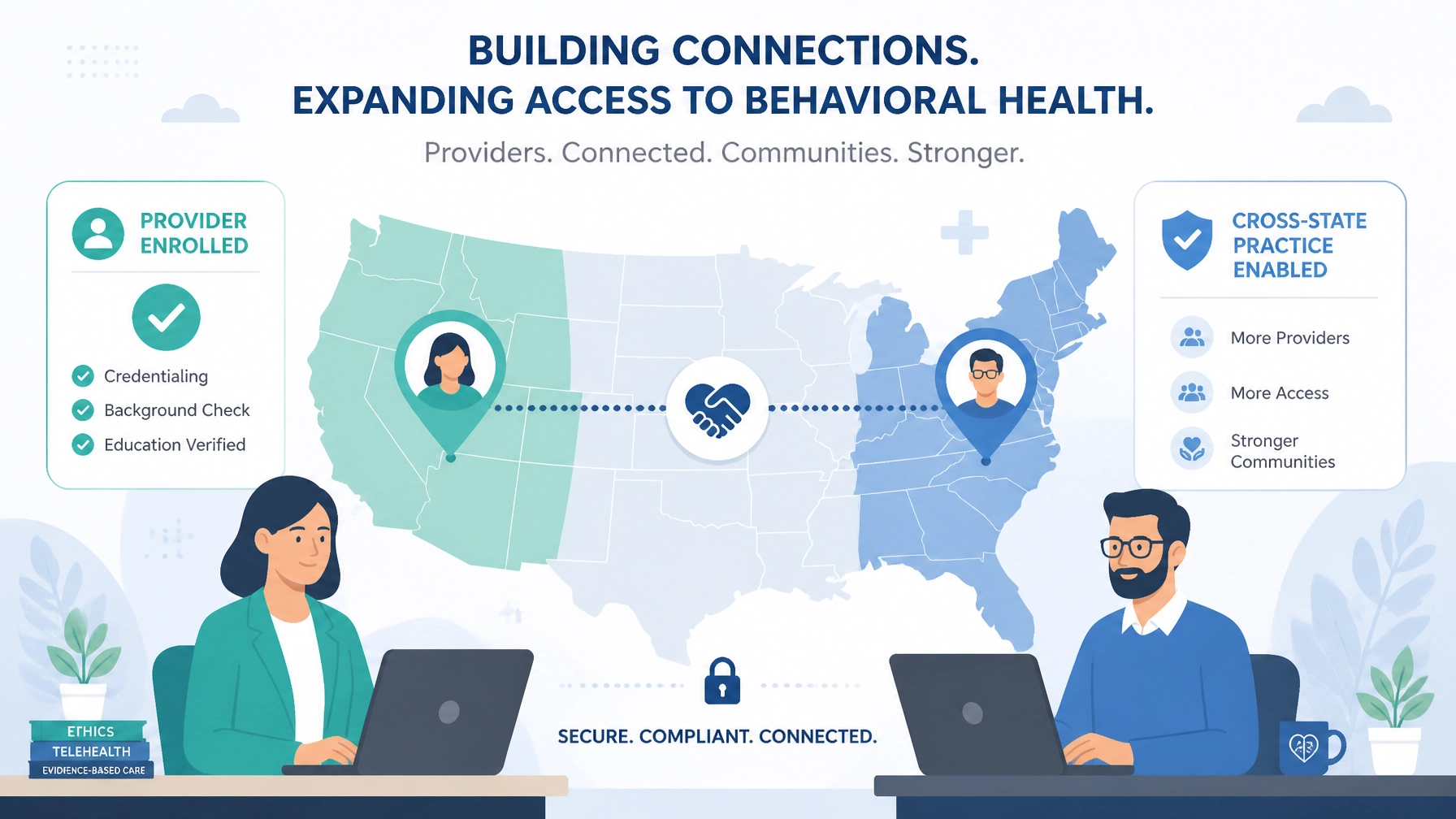
How to Credential a Provider in Georgia: Breaking Through the Payer Gridlock

Georgia is a high-volume healthcare hub with fast clinic growth and a well-earned reputation for payer bottlenecks. Navigating medical provider enrollment services in the Peach State now requires more than persistence; it requires tight control of Georgia’s evolving Medicaid rules and a working command of the behavioral health enrollment landscape. For practices looking to scale, the real bottleneck is not provider recruiting. It is the enrollment machinery that stalls activation, delays billing, and chokes cash flow across Medicaid, Medicare Advantage, and commercial plans. If you are expanding a multi-site group or launching a specialized clinic in Georgia, you are operating in one of the most administratively dense markets in the Southeast. The cost of delay is immediate. Every day a provider stays off the roster is a day of lost visits, denied claims, and revenue that does not come back. In 2026, Georgia demands closer attention than ever because Group/Billing enrollment through GAMMIS is mandatory by January 1, 2026 for organizations billing through a central group structure, and CMS continues pushing tighter digital enrollment expectations and faster turnaround standards. If you do not adapt your process, Georgia will punish the gap. Looking for professional provider credentialing services in the USA? 👉 Check our main service page here: veracityeg.com 1. The Georgia Medicaid Backbone: Centralized Review Plus GAMMIS Group/Billing Rules Georgia is unique in its Medicaid structure because the state uses a centralized review model tied to the Department of Community Health (DCH) and the GAMMIS portal as the operating backbone for enrollment activity. That centralized setup is meant to reduce duplicate work across managed Medicaid, but in practice it only works when your file is complete, current, and aligned at both the individual and organizational levels. The biggest 2026 fact-check item is not optional: Group/Billing Enrollment through GAMMIS is mandatory by January 1, 2026 for organizations billing Medicaid claims through a group or billing entity. Georgia requires organizations to link rendering NPIs to a central group NPI inside the state’s enrollment structure. If your organization still relies on a loose payee setup or inconsistent NPI relationships, you are sitting on a denial trigger. That means your Georgia playbook must include these non-negotiables: Enroll the organization correctly in GAMMIS as the billing/group entity. Link all rendering providers to the correct central group NPI. Validate that practice addresses, tax IDs, ownership details, and rosters match across GAMMIS, NPPES, and payer files. Correct mismatches before claims start flowing. However, centralized does not mean fast. Georgia still rewards precision and punishes stale documentation. If licensure, insurance, or certifications are out of date, the file stops moving. For groups handling Medicare and Medicaid enrollment for behavioral health providers, this matters even more because roster errors cascade across Georgia Families and Georgia Families 360° participation and can interrupt billing across multiple locations at once. Alt text: A clean, high-white-space Scandinavian minimal editorial photograph of a modern, organized medical office workspace with natural light. 2. Navigating GAMMIS Without Getting Buried The Georgia Medicaid Management Information System is the digital gate for enrollment, maintenance, status checks, and organizational updates. Whether you are adding a rendering provider, enrolling a new location, or cleaning up an ownership file, GAMMIS is where the battle is won or lost. In plain English: if your group file is messy, GAMMIS exposes it fast. The most common Georgia breakdowns show up in four places: Rendering NPIs not properly tied to the billing/group NPI Address mismatches between GAMMIS, NPPES, and payer records Ownership or legal-entity records that do not match Secretary of State documents Missed revalidation or maintenance updates that freeze claims This is the operational trap for large groups, behavioral health platforms, and multisite organizations. One disconnected provider record can hold up clean billing across the full entity. That is why groups expanding into Georgia need a disciplined enrollment map, not a pile of PDFs and email chains. If your organization is scaling service lines or locations, the same discipline outlined in our guide on medical group enrollment for surgery centers applies here too: the larger the roster, the harsher the consequences of one weak link. 3. The Medicare Advantage Gridlock and the New Network Pressure Georgia has heavy Medicare Advantage penetration. Payers such as Anthem Blue Cross and Blue Shield of Georgia, UnitedHealthcare, and Humana dominate major markets. Traditional Medicare follows a more standardized path, but Medicare Advantage in Georgia is where provider onboarding often hits a concrete wall. These plans routinely operate with restricted networks, especially in dense markets like Atlanta, Savannah, and Augusta. Submitting an application is not enough. You must show network value, specialty access, geographic fit, and roster readiness. That work now sits against a tougher backdrop because Georgia’s CATCH Act network reporting standards tightened in March 2025. Under updated reporting requirements issued through the Georgia Office of Commissioner of Insurance, carriers face more scrutiny around network adequacy, time-and-distance access, appointment wait times, and the completeness of provider reporting. You can review the state directive directly through the Georgia OCI CATCH Act materials. Fact Check: HB 1354 Puts a 45-Day Clock on Commercial Enrollment Here is the legal shift too many Georgia writeups miss: the Insurer Credentialing Reform Act (HB 1354) requires commercial health insurers to complete provider credentialing within 45 days after receiving a complete application. As outlined by Georgians for a Healthy Future, the law also pushes a standardized credentialing form aligned with Georgia Medicaid. In plain English, commercial plans now face the same 45-day standard that Georgia Medicaid already uses. That is not a small cleanup item. That is the state admitting the old commercial timeline was a traffic jam with a necktie on. Why this matters: Georgia lawmakers and advocates pushed this reform hard to address the behavioral health enrollment bottleneck and improve network adequacy, especially where patients wait too long because providers sit in payer limbo instead of seeing patients. If your practice operates in psychiatry, counseling, addiction medicine, or multi-site behavioral health, this is the kind of statutory change that deserves a
How to Credential a Provider in Tennessee: Solving the TennCare Puzzle

Navigating the healthcare landscape in the Volunteer State requires more than clinical expertise; it demands a sharp understanding of a regulatory environment that keeps moving. For any practice seeking medical provider enrollment services, the challenge sits in the gap between growth and the administrative friction inside the behavioral health enrollment landscape. Tennessee is seeing sustained Behavioral Health (BH) demand, yet the path to becoming an in-network, billable provider still runs through TennCare rules, MCO requirements, and a compliance framework that punishes sloppy execution. In 2025 and 2026, that pressure is even more operational: TennCare has expanded TennCare III eligibility for parents and caretaker relatives to 105% of the federal poverty level, which is functionally 100% FPL plus the standard 5% income disregard and an increase from the prior 89% threshold; the provider registration process remains fully web-based; and the state continues to expect clean, digital, document-ready submissions instead of paper-chase improvisation. If you are expanding your footprint in Nashville, Memphis, or the surrounding rural areas, you must recognize that provider enrollment is the silent driver of your revenue cycle. In Tennessee, "good enough" documentation will lead to "not enough" revenue. The complexity of the state’s Medicaid program, known as TennCare, combined with a high density of Managed Care Organizations (MCOs), makes the enrollment process a high-stakes endeavor where a single missed attestation can result in months of lost billing. The Upstream Foundation: Licensing and DEA Precision Before you even glance at a TennCare application, your upstream requirements must be flawless. You cannot build a skyscraper on a swamp, and you certainly cannot enroll a provider without a pristine Tennessee professional license. The Veracity Group often sees practices rush the enrollment phase only to realize their provider’s DEA registration is still linked to an out-of-state address or their Tennessee license hasn't cleared the final board review. In Tennessee, the Board of Medical Examiners and the Board of Nursing have specific nuances regarding collaborative for mid-level providers. For Behavioral Health practitioners, such as Licensed Clinical Social Workers (LCSW) or Licensed Professional Counselors (LPC), ensuring the license is active and public-facing is the non-negotiable first step. Furthermore, your DEA registration must precisely match the location where the provider will be seeing patients. Tennessee is rigorous about its Controlled Substance Monitoring Program (CSMD). Any discrepancy between your licensing data and your DEA registration will trigger a red flag during the provider enrollment process, stalling your progress before it even begins. Alt Text: A charcoal sketch showing a hand holding a traditional fountain pen over a thick, textured stack of medical licensing documents, emphasizing the weight and importance of official paperwork. Solving the TennCare Puzzle TennCare is the primary hurdle for Tennessee providers. Unlike states with a unified Medicaid billing system, Tennessee uses a heavily managed model. To see TennCare members, you must first obtain a TennCare/Medicaid ID number. This is mandatory for contracting with the state’s MCOs. The process now runs through a web-based registration workflow. The TennCare Provider Registration portal is the operational front door for 2025 and 2026, and practices need to treat it that way. Paper-era habits will slow you down. Your CAQH data, licensure files, ownership details, practice locations, and supporting documents must be lined up before you ever hit submit. The key is the CAQH (Council for Affordable Quality Healthcare) roster. Tennessee still leans heavily on CAQH for data verification. If your provider's CAQH profile is not attested every 120 days, or if there is a gap in work history that is not clearly explained, your TennCare file will stall in digital purgatory. That urgency matters even more because TennCare’s member base is broader than it was before. Following the approved TennCare III amendment, Tennessee expanded eligibility for parents and caretaker relatives to 105% of the federal poverty level, which is 100% FPL plus a 5% income disregard. That is a real eligibility bump from the previous 89% threshold, and it matters operationally because more eligible members means more pressure on clinics to get providers active fast, keep directories accurate, and avoid enrollment lag that blocks access to care. The same amendment also added a headline-grabbing but very practical family support benefit: up to 100 diapers per month for infants under age two. That benefit does not change your enrollment workflow, but it does increase member touchpoints with TennCare-participating providers and pharmacies. In plain English: when coverage gets a little broader and benefits get a little more useful, access bottlenecks become a lot more visible if your providers are not active and billable on time. The MCO Gauntlet Once you secure your TennCare ID, the real work begins. You must then contract individually with the three primary Managed Care Organizations: BlueCare Tennessee (BlueCross BlueShield) UnitedHealthcare Community Plan Wellpoint (formerly Amerigroup) Each of these entities has its own internal credentialing committee and its own timeline. In the Tennessee behavioral health provider enrollment space, we see high provider churn, which makes the speed of this process critical. If it takes six months to get a provider in-network and that provider leaves in nine months, your practice has effectively lost the ability to generate a return on that hire. This is why many Tennessee groups are moving toward a high outsourcing rate for their enrollment needs: they simply cannot afford the internal overhead of managing these shifting timelines. Behavioral Health: The High-Growth Friction Point Tennessee is seeing a massive influx of multisite behavioral health groups. However, the behavioral health enrollment landscape is uniquely challenging because of how TennCare handles regionalization. Depending on where your clinic is located (East, Middle, or West Tennessee), the payer requirements and the regional provider relations reps you deal with will change. At the same time, your enrollment strategy must sit inside the real Tennessee coverage picture, not a fantasy map. Tennessee has not adopted full ACA Medicaid expansion, and as of 2025/2026 that remains a legislative non-starter. Yes, parents and caretaker relatives received an eligibility increase under TennCare III. No, that did not erase the state’s
How to Credential a Provider in Virginia: Fragmentation and the Commonwealth Burden

Navigating the healthcare landscape in the Old Dominion requires more than just clinical expertise; it demands a disciplined administrative strategy. Virginia presents a brutal mix of payer fragmentation and Medicaid enforcement that will stall even efficient organizations. Utilizing professional medical provider enrollment services is no longer optional for Virginia practices; it is operational defense. This is especially true within the behavioral health enrollment landscape, where regional nuances and strict oversight by the Virginia Department of Medical Assistance Services (DMAS) create serious barriers for new providers. The "Commonwealth Burden" is real, and it just got sharper. Effective July 1, 2025, Virginia DMAS eliminated the 90-day grace period for license expiration in PRSS, which means providers with expired licenses are now disenrolled immediately rather than getting a cushion. That one change turns sloppy maintenance into instant payment risk. Between Cardinal Care complexity and a dense field of mid-sized health systems, Virginia creates the kind of administrative pressure that punishes hesitation. If your organization is not proactive, you will face revenue leakage, claim disruption, and onboarding delays that drag far past acceptable limits. The Upstream Imperative: Licensure and DEA First In Virginia, your enrollment timeline begins long before you touch a payer application. The foundation of your success rests on the "upstream" elements of the provider's profile. You must ensure that the provider’s license with the Virginia Department of Health Professions (DHP) is not only active but carries the correct address and primary practice location. For many specialties, particularly in the behavioral health and surgical sectors, the DEA registration is the next critical hurdle. A common mistake we see at The Veracity Group is a provider moving from out-of-state and failing to update their DEA to a Virginia-based address before beginning the enrollment process. In Virginia’s strict regulatory climate, even a minor address mismatch between your DHP license and your DEA registration is enough to trigger an immediate rejection from major payers. This upstream bottleneck is the silent killer of practice growth. Navigating the Cardinal Care Labyrinth: Virginia Medicaid Virginia’s Medicaid program, now consolidated under the Cardinal Care banner, is notorious for its strict documentation requirements and two-tiered processing system. To successfully enroll a provider in Virginia Medicaid, you must first navigate the Provider Services Solution (PRSS). This is not a "set it and forget it" process; it requires meticulous attention to provider taxonomies, site-specific NPI data, licensure status, and ownership information. Alt text: A structured Virginia Medicaid access illustration symbolizing PRSS enrollment controls and Cardinal Care entry requirements. The Two-Tiered Medicaid Trap As reflected in DMAS provider guidance effective July 1, 2025, all providers must be enrolled in PRSS to bill DMAS or Virginia Medicaid MCOs, and MCOs are prohibited from paying claims to network providers who are not properly enrolled in PRSS. That means PRSS is not just an upstream formality. It is the front gate, the lock, and the alarm system. Once a provider is successfully registered in PRSS, the real work begins. In Virginia, state enrollment alone does not mean you can bill for services delivered to most Medicaid members. You must then separately enroll with each of the Managed Care Organizations (MCOs) that participate in Cardinal Care, such as: Anthem HealthKeepers Plus Sentara Health (formerly Optima/Virginia Premier) Molina Healthcare UnitedHealthcare Community Plan Aetna Better Health of Virginia Each of these payers has its own unique portal, its own set of readiness requirements, and its own internal timeline. For mid-sized multisite clinics, managing this across 20 or 30 providers is a logistical nightmare. If you miss one MCO application, you effectively lock your provider out of a massive segment of the Virginia patient population. If you let a license lapse, PRSS disenrollment now happens immediately, and the payment consequences hit just as fast. This is why Medicare and Medicaid enrollment for behavioral health providers is particularly taxing; the documentation required for LCSWs, LPCs, PMHNPs, psychologists, and psychiatrists in Virginia is among the most heavily scrutinized in the nation. Managing Payer Fragmentation for Multisite Clinics Virginia is a high-fragmentation state. Unlike some markets dominated by one or two "blue" plans, Virginia practitioners must deal with a balanced but disparate mix of national carriers and regional powerhouses like Sentara. For a multisite clinic, this fragmentation means that a provider working in Northern Virginia may face different network adequacy hurdles than a provider in the Tidewater region or Southwest Virginia. The administrative burden of maintaining these disparate enrollments is the primary cause of provider churn. When a provider cannot see patients because enrollment is stalled, or when an expired license triggers immediate PRSS disenrollment, the practice loses money and the provider loses patience. To combat this, you must adopt a rigorous tracking methodology. A clean application is now non-negotiable. CMS has reinforced a 30-day processing standard for clean applications in 2026, and that benchmark raises the pressure on practices to submit complete, internally consistent files the first time. If your file is missing signatures, has conflicting service locations, or carries a stale license date, you burn time you do not have. In Virginia, bad data is not a minor delay. It is a revenue shutdown in work clothes. At The Veracity Group, we advocate for a "clean file" approach. Every piece of documentation: from the CAQH profile to the malpractice face sheet: must be verified for accuracy before a single application is submitted. You can learn more about why this level of detail is necessary in our guide on navigating the maze of CAQH and Medicare enrollment. Alt text: A hand-crafted gouache illustration of a stylized clock and a map of Virginia, symbolizing the urgent need for timely enrollment in a fragmented market. The Veracity Advantage: monday.com and Extreme Transparency In an environment as volatile as Virginia, "I think we submitted that" is not an acceptable answer. The Veracity Group utilizes monday.com to provide our clients with a level of transparency that is rare in this industry. Every Virginia application is tracked with real-time status updates, including: PRSS Status Monitoring: We
How to Credential a Provider in Colorado: Navigating the RAE Maze

Colorado is currently experiencing heavy demand for faster provider onboarding, especially as multisite groups expand across the Front Range and rural communities. Managing behavioral health provider enrollment and medical provider enrollment services in this state demands a disciplined, three-step approach built around the Colorado Medicaid process. If your practice treats the RAE Maze like a simple form-filing exercise, delays will stack up, claims will stall, and revenue will sit on the runway instead of taking off. Looking for professional provider credentialing services in the USA? 👉 Check our main service page here: veracityeg.com The High Stakes of the Colorado Behavioral Health Enrollment Landscape Colorado’s Medicaid framework is regional, layered, and unforgiving when your data is incomplete. The Department of Health Care Policy and Financing (HCPF) administers Health First Colorado, and the state relies on Regional Accountable Entities (RAEs) to manage regional operations. That means your practice must move through a defined sequence, not a shortcut. For behavioral health organizations and multispecialty groups alike, this structure creates operational friction. A provider serving patients in more than one county or location can trigger different regional workflows, different contacts, and different downstream timing. That is why the process feels like a maze. It is not random, but it absolutely punishes loose tracking. Image Alt Text: A cinematic moody photo of a healthcare executive overlooking Colorado city lights, representing the layered regional complexity of Medicaid enrollment in Colorado. The Upstream Foundation: Licensing and DEA Before you start the Colorado Medicaid sequence, your source data must be clean. At The Veracity Group, we treat licensing, identifiers, and practice demographics as the runway lights for the entire enrollment process. If those lights are off, the plane does not land. Colorado Medical Board / DORA Licensing: Your provider must hold an active, unrestricted license through the Department of Regulatory Agencies (DORA). A licensing delay immediately pushes every downstream deadline. DEA and CSR Alignment: For prescribing providers, the Colorado practice address on file must match supporting records exactly. Address mismatches, legal name issues, and incomplete ownership details create preventable rejections. Group-to-Provider Data Accuracy: Individual NPI, group NPI, Tax ID, W-9, service location data, and ownership details must line up across every application touchpoint. By addressing these provider enrollment fundamentals first, you stop the classic ping-pong cycle of corrections, resubmissions, and avoidable delays. The Colorado Medicaid Process: The 3-Step RAE Maze Colorado does not run on a vague “submit and hope” model. The process is a strict three-step sequence: Enroll with Health First Colorado (HCPF) Credential with the RAE Contract with the RAE If your practice skips the order, blurs the phases, or assumes one approval activates the next, your timeline breaks. This is where many organizations lose weeks without realizing it. Step 1: Enroll With Health First Colorado (HCPF) Every provider must first complete enrollment with Health First Colorado through the HCPF process. This is the front gate. No RAE work matters until this piece is clean and active. What happens in this phase: HCPF validates provider and organizational data Enrollment records are reviewed for completeness and accuracy Core identifiers, ownership data, licensure, and practice information are checked Average completion time: 3 days That average is fast on paper, but only when your submission is complete. Missing ownership data, NPI mismatches, or location errors will turn a three-day checkpoint into a much longer detour. According to the Colorado HCPF provider enrollment guidance, this state-level enrollment is the mandatory first move. Step 2: Credential With the RAE Once HCPF enrollment is complete, the provider moves into the RAE credentialing phase. This is where the regional maze becomes real. The RAE reviews the provider under NCQA standards, confirms eligibility for network participation, and checks the documentation package required for regional approval. Average completion time: 20–30 days This step is where stale data quietly burns time. A neglected CAQH profile is one of the most common culprits. Keeping CAQH current reduces credentialing time by 1–5 days because the RAE does not have to chase avoidable discrepancies in work history, malpractice coverage, attestation, or practice demographics. That is not a minor win. In a busy launch cycle, 1–5 days is the difference between smooth onboarding and a very awkward conversation with your revenue team. Colorado’s RAE structure also matters here. The current regional alignment includes: Region 1: Rocky Mountain Health Plans Region 2: Northeast Health Partners Regions 3 & 5: Colorado Access Region 4: Health Colorado / CareLon Regions 6 & 7: CCHA If your provider locations span multiple regions, your internal tracking must reflect the correct RAE path for each service site. Otherwise, you create directory errors, delayed approvals, and claim denials that show up after your providers have already started seeing patients. For organizations tightening their data before submission, our guidance on maintaining a clean CAQH profile is a practical place to start, and the NCQA framework remains the benchmark behind this review process. Step 3: Contract With the RAE After regional approval, your practice still must complete RAE contracting. This is the step many groups underestimate, and it is exactly where launch timelines go sideways. Average completion time: 20–120 days depending on complexity Why the wide range? Because contracting depends on factors such as: Number of providers and service locations Specialty mix and scope of services Group structure and ownership complexity Accuracy of submitted entity data Regional processing pace and follow-up responsiveness This phase is where participation terms are finalized and the provider’s path to billing becomes operational. If your team treats contracting like an afterthought, the provider will sit in limbo: approved in one sense, but not ready where it counts. Image Alt Text: A cinematic moody image of enrollment documents and a professional pen, highlighting the precision required for Colorado Medicaid and RAE processing. Managing the Multisite Surge: Scale Without Chaos For large groups, the real threat is not volume alone. The threat is losing control of which provider is in which phase. If you are onboarding 10, 20, or 50 providers across Colorado, you are
The Partnership Advantage: Why RCM + Veracity Creates a One‑Stop Powerhouse

How RCM Partnerships Strengthen Enrollment, Contracting, and Cash Flow Revenue Cycle Management companies sit at the center of a clinic’s financial ecosystem. You manage claims, denials, coding, AR, and the day‑to‑day grind that keeps practices alive. But there’s one part of the revenue cycle that consistently slows everything down: Provider enrollment and contracting. When a provider isn’t enrolled, nothing moves. Claims stall. Cash flow freezes. Clinics get frustrated. And RCM teams get pulled into work they never intended to own. This is where strategic partnership becomes a competitive advantage — not a cost. Partnering with Veracity turns enrollment from a bottleneck into a strength. It creates a unified, one‑stop solution for clinics that want everything handled under one roof. And it gives RCM companies a way to expand their value without adding headcount, risk, or operational drag. Why RCM Companies Benefit 1. You stay the one‑stop shop your clients expect Clinics don’t want to manage multiple vendors. They want one team that handles the full revenue cycle — from enrollment to payment. By partnering with Veracity, you keep that promise without taking on the administrative burden. 2. Faster cash flow for your clients means better performance for you Enrollment delays are silent revenue killers. When Veracity handles the front‑end payer work, your billing cycle starts sooner, your metrics improve, and your clients feel the difference. 3. No need to build an internal enrollment department Hiring credentialing staff, training them, and keeping up with payer changes is expensive and time‑consuming. Outsourcing to a specialized partner eliminates that overhead while giving you enterprise‑level expertise. 4. You reduce risk and increase accuracy Enrollment errors lead to denials, recoupments, and compliance issues. Veracity’s workflows are built to prevent those failures before they happen. Why Veracity Benefits 1. We get to support RCM teams who already understand the revenue cycle RCM companies know the downstream impact of enrollment delays. That alignment makes collaboration seamless and efficient. 2. We expand our reach through trusted partners Every RCM relationship opens the door to more clinics that need clean, reliable enrollment support. 3. We get to do what we do best — at scale Our team thrives in the operational trenches. Partnering with RCM companies allows us to focus on the work that moves the needle: payer enrollment, contracting, CAQH, demographic updates, and ongoing maintenance. Why Clinics Win the Most 1. One vendor. One workflow. Zero confusion. Clinics don’t have to guess who handles what. Their RCM partner and enrollment partner operate as one unified system. 2. Faster onboarding for new providers When enrollment and billing teams work together, providers get credentialed and revenue‑ready sooner. 3. Cleaner communication and fewer delays No more back‑and‑forth between departments or vendors. No more “We’re waiting on enrollment.” No more surprises. 4. A smoother, more predictable revenue cycle When the front end is handled correctly, the back end performs better. Clinics feel that stability immediately. The Win‑Win Model Partnering with Veracity isn’t outsourcing — it’s operational alignment. Everyone wins because everyone stays in their lane — and the lanes finally connect. Ready to Explore a Partnership? If you’re an RCM company looking to expand your value without expanding your payroll, let’s talk. We’ll walk through your current workflow, identify where enrollment slows things down, and show you how a partnership can transform your client experience. You can schedule a quick call here: https://calendly.com/theveracitygroup/20-minute-meeting-with-aaron Or reach out directly with your best day/time: 📞 812‑604‑5870 📧 office@veracityeg.com
The Selection Process: Vetting Your Enrollment Partner

When you scale your practice, the efficiency of your medical provider enrollment services is the difference between a thriving revenue cycle and a debilitating backlog of denied claims. Navigating the specific nuances of behavioral health provider enrollment requires a partner who understands more than just paperwork; they must understand the architecture of your business. Selecting a third-party partner is a high-stakes decision that dictates your organization’s long-term financial health. You cannot afford to treat this as a simple administrative hand-off. It is a strategic alliance that requires rigorous due diligence, technical vetting, and a clear understanding of operational compatibility. At The Veracity Group, we recognize that an industrial-scale enrollment partner must act as an extension of your C-suite. The "industrial" aspect refers to the capacity to handle high volumes, multi-state complexities, and diverse payer portfolios without sacrificing accuracy. If your partner fails to keep pace with your growth, your revenue cycle will stall, leaving your providers unable to see patients or, worse, seeing them without a path to reimbursement. The High Cost of the Wrong Choice The consequences of an ill-fitted enrollment partner are immediate and severe. When you outsource your health plan enrollments to a firm that lacks technical expertise, you inherit their inefficiencies. Delayed enrollments lead to leakage, where patients seek care elsewhere because your providers are not yet "in-network." Furthermore, improper handling of Medicaid MCO enrollment can lock you out of vital state-funded revenue streams for months. You must view your enrollment partner as the backbone of your professional credibility. A single missed deadline or a misfiled CAQH profile can trigger a domino effect of denials. The Veracity Group emphasizes that vetting is not just about checking boxes; it is about ensuring the partner possesses the scalability to grow alongside your facility. Looking for professional provider credentialing services in the USA?👉 Check our main service page here: veracityeg.com Technical Capabilities and Workforce Infrastructure Your first step in the selection process is evaluating the partner’s production capacity. You must ask for hard data regarding their monthly output and workforce size. An industrial partner should demonstrate a sophisticated use of technology to automate repetitive tasks while maintaining human oversight for complex clinical nuances. Alt Tag: An isometric 3D illustration showing a clean, organized digital workspace with structured data flowing between a healthcare facility and an enrollment hub, representing professional medical provider enrollment services. Key Technical Evaluation Criteria: monday.com Project Management for Client Transparency: You must demand operational visibility, not vague status updates. At The Veracity Group, we run enrollment work in monday.com, and every client receives a dedicated board that tracks each provider and payer application from intake through submission, follow-up, and final confirmation. You see real-time status, due dates, owners, notes, and document checkpoints—so nothing falls through the cracks and your team never has to guess where an enrollment stands. This also creates a clear audit trail across the entire enrollment lifecycle, with time-stamped updates that support internal governance and payer-facing documentation when questions arise. Data Security: Ensure the partner utilizes HIPAA-compliant platforms and robust encryption. Your provider data is a primary asset; its protection is non-negotiable. Reviewing their our services page or requesting a technical roadmap will reveal if they are truly an industrial-grade firm or merely a small boutique operation masquerading as a scalable solution. The Provider Enrollment Checklist for Vetting To standardize your evaluation, you must utilize a provider enrollment checklist. This framework allows you to compare potential partners on an even playing field. If a candidate cannot provide clear answers to these points, they are not ready for an industrial-scale partnership. Payer Knowledge Base: Do they have established relationships with national payers like UnitedHealthcare, Aetna, and BCBS? State-Specific Expertise: Can they navigate the specific requirements of multi-state Medicaid enrollment? Specialty Nuances: Do they understand the specific licensure requirements for different provider types, such as LCSWs for behavioral health or surgical center compliance for ASCs? Transparency: Do they provide a real-time dashboard where you can track the status of every application? Navigating Medicaid MCO Enrollment Complexities Managed Care Organizations (MCOs) represent a significant portion of the modern healthcare landscape. Vetting your partner on their ability to handle Medicaid MCO enrollment is critical. These entities often have separate, more rigorous requirements than traditional fee-for-service Medicaid. A competent partner will proactively manage the transition between state-level enrollment and individual MCO contracting. They must understand the credentialing cycles and the specific "open enrollment" windows that many MCOs enforce. Without this specialized knowledge, your providers will remain on the sidelines, unable to serve the Medicaid population, which can be a significant hit to your mission and your bottom line. You can learn more about these specific hurdles in our guide on behavioral health provider enrollment. Alt Tag: An isometric infographic illustrating a structured provider enrollment checklist with 3D icons for documentation, verification, and payer approval steps. How Long Does Provider Enrollment Take? One of the most frequent questions you will face is: how long does provider enrollment take? A transparent partner will give you a realistic timeline rather than a "best-case scenario" sales pitch. Typically, the process can range from 60 to 120 days, depending on the payer and the complexity of the provider's history. Industrial partners like The Veracity Group use historical data to predict these timelines with high accuracy. They understand that Medicare enrollment might take 60 days via the PECOS system, while a commercial payer in a congested market might drag the process out to four months. Your partner must have the proactive communication skills to update you on these timelines weekly. If they cannot provide a clear "Current State vs. Goal State" report, your revenue forecasting will be impossible. Strategic and Operational Alignment Beyond the technical, you must assess the strategic fit. Your partner must understand your business model and operate as an extension of your leadership team. Are you a rapidly expanding multi-specialty group, or a specialized surgery center? Most firms stop at enrollment tasks and leave you to coordinate the rest. That
The Outsourcing Advantage: Scaling Your Practice Through Strategic Enrollment

Navigating the modern behavioral health enrollment landscape requires more than just administrative persistence; it demands a tactical approach to market entry. As your practice grows, managing the complexities of Medicare and Medicaid enrollment for behavioral health providers becomes a full-time operational burden that can stifle your clinical mission. You cannot afford to let paperwork dictate your growth trajectory. By leveraging The Veracity Group, you transform a traditional bottleneck into a streamlined engine for expansion. Strategic outsourcing is not merely a convenience; it is the backbone of professional credibility and the primary vehicle for sustainable revenue. The Resource Reallocation Factor Your internal team is your most valuable asset. When you force high-level administrators or clinical directors to chase down NPDB reports or follow up on pending applications with Medicaid MCOs, you are misallocating talent. Outsourcing these functions allows your staff to focus on strategic priorities like patient care, service design, and business development. By delegating tactical functions to a specialized partner, you reclaim hundreds of hours annually. This shift in focus directly drives growth because it allows your leadership to work on the business rather than being buried in the administrative weeds. The Veracity Group provides the operational capacity you need to scale without the overhead of hiring and training an internal department. Looking for professional provider credentialing services in the USA? 👉 Check our main service page here: veracityeg.com Immediate Access to Expertise and Technology The enrollment environment is a moving target. Regulations change, portal interfaces update, and state-specific requirements for LCSWs, LPCCs, and BCBAs vary wildly. When you outsource, you gain immediate access to specialized expertise and sophisticated technology that would take years and significant capital to build internally. Professional outsourcing firms utilize automated enrollment systems that reduce manual data entry from hours to minutes. These tools ensure that your data is not only accurate but also formatted correctly for every payer, from Medicare PECOS to local commercial plans. You benefit from a partner’s existing infrastructure, leveraging proven processes that have been refined across thousands of applications. This expertise is your passport to success in new markets, ensuring you don't fall victim to common pitfalls that lead to application rejections. A bright, modern 3D render of a digital globe interconnected with medical icons and checkmarks, representing global expertise and streamlined healthcare connectivity. Flexible Scaling Without Fixed Costs Traditional growth often comes with the heavy burden of fixed costs. Hiring internal staff to manage enrollment means paying salaries, benefits, and taxes regardless of your current application volume. This model is rigid and risky. Strategic outsourcing provides the flexibility to scale operations up or down quickly in response to your actual demand. If you are expanding into a new state or launching a new service line, you can ramp up your outsourcing needs immediately. Conversely, during slower periods, you aren't stuck with the "dead weight" of an underutilized department. This cost optimization ensures that your capital is always working for you. You only pay for the capacity you need, allowing you to reinvest the savings into clinical innovation and patient acquisition. Navigating the Behavioral Health Maze For those in the mental health and substance abuse space, the stakes are even higher. The behavioral health enrollment landscape is notoriously fragmented. You deal with unique billing requirements, such as H-codes or specific revenue codes for intensive outpatient programs (IOP). The Veracity Group understands that a "one-size-fits-all" approach fails in this specialty. When managing Medicare and Medicaid enrollment for behavioral health providers, you must account for specific provider types and their respective scopes of practice. Missing a single state-mandated certification can delay your reimbursement cycle by months. Outsourcing ensures that every nuance: from CAQH profile maintenance to NPI Registry updates: is handled with precision. This is especially critical for multi-state practices where Medicaid requirements differ significantly at every border. A modern, professional 3D render showing a diverse group of healthcare professionals collaborating around a glowing, futuristic data dashboard, symbolizing teamwork and efficiency. The High Cost of Delays and Errors In the healthcare industry, time is literally money. Every day a provider sits on the sidelines waiting for an effective date is a day of lost revenue. Even worse, administrative errors in the enrollment process can lead to claim denials, retroactive recoupments, and damaged relationships with payers. Outsourcing to an expert partner like Veracity mitigates these risks through: Primary Source Verification: Ensuring every license and certification is valid and current. Application Tracking: Proactive follow-ups with payers to move files through the queue. Data Integrity: Centralizing provider information to prevent conflicting data across multiple platforms. Expiry Management: Automating alerts for upcoming license or certification renewals. A single error on a Medicaid MCO enrollment application can reset your waiting period, often adding 60 to 90 days to the process. You cannot leave your revenue stream to chance. How to Choose a Strategic Partner Not all outsourcing providers are created equal. To ensure you are truly gaining a competitive advantage, you must vet potential partners based on their operational transparency and industry track record. A quality partner will not just "take over" the work; they will provide you with clear reporting and insights into your enrollment pipeline. Look for a partner that understands the complexities of the gig economy and the unique needs of part-time or contracted providers. Your partner should act as an extension of your team, providing the declarative confidence you need to tell your board or investors that your expansion plan is on track. According to the National Committee for Quality Assurance (NCQA), maintaining high standards in provider data is essential for both compliance and patient safety. A 3D render of a stylized hourglass filled with digital coins, illustrating the time-saving and revenue-generating power of efficient provider enrollment. Streamlined Patient and Provider Experiences Efficiency isn't just about the back office; it affects your front-facing reputation. When your enrollment processes are handled by experts, your providers experience a smoother onboarding journey. They aren't hounded for the same document five times, and they can begin seeing
Finding the Edge: Enrollment Outsourcing for Small Medical Groups

Navigating the complexities of the modern healthcare landscape requires more than just clinical excellence; it demands administrative precision. For your small medical group, the burden of behavioral health provider enrollment or general medical provider enrollment services often feels like a secondary full-time job that yields zero patient outcomes. When you are focused on scaling a practice, every minute spent navigating payer portals is a minute lost to patient care. The Veracity Group understands that for small businesses, efficiency is not just a goal: it is a survival mechanism. Finding the right enrollment outsourcing partner provides you with the "industrial edge" necessary to compete with larger hospital systems while maintaining the personalized touch of a private practice. The High Cost of the "Do-It-Yourself" Model Many small business owners in the healthcare space believe that keeping administrative tasks in-house saves money. This is a financial fallacy. When you or your high-value office manager spend forty hours a month chasing Medicaid MCO enrollment status or correcting demographic errors, you are hemorrhaging revenue. In-house enrollment management is often reactive rather than proactive. You wait for a denial to realize a provider’s location was never updated. You discover a "closed panel" only after you have already started seeing patients. These mistakes lead to revenue leakage that small practices cannot afford. Outsourcing transforms this chaotic, reactive process into a streamlined, predictable revenue cycle engine. Looking for professional provider credentialing services in the USA? 👉 Check our main service page here: veracityeg.com Where to Find Enrollment Outsourcing Services for Small Businesses Identifying the right partner is the first hurdle. You are not looking for a massive, impersonal clearinghouse; you need a partner that understands the specific nuances of small business operations. 1. Niche Healthcare Administrative Partners The best place to start is with firms that specialize exclusively in provider enrollment. General medical billing companies often offer enrollment as a "sidecar" service, but they lacks the deep-dive expertise required for complex multi-state Medicaid provider enrollment. Search for partners like The Veracity Group that treat enrollment as a core competency. 2. Industry Associations and Peer Networks Consult your state-specific medical associations or groups like the Medical Group Management Association (MGMA). Peer recommendations are invaluable because they highlight firms that successfully navigate local payer landscapes. A firm that excels in California might not have the same "boots on the ground" knowledge for the New York market. 3. Professional LinkedIn Networks Use targeted searches for "Provider Enrollment Specialists" or "Healthcare Managed Care Consultants." Look for thought leadership content. A firm that regularly publishes insights on CAQH and Medicare enrollment demonstrates the technical authority you need. The Benefits of Using an Outsourcing Provider The shift to an outsourced model is a strategic investment in your practice’s scalability. Here is how it changes your operational trajectory: Accelerated Cash Flow: Professional outsourcers know the shortcuts. They understand which payers allow for retroactive effective dates and which require a hard stop until the contract is signed. This expertise trims weeks off the standard enrollment timeline. Reduced Overhead: You eliminate the need for specialized in-house software, constant training on payer portal updates, and the salary/benefits of a dedicated enrollment coordinator. Operational Continuity: When an in-house employee leaves, your enrollment knowledge leaves with them. An outsourcing partner like Veracity provides institutional stability. Your filings move forward regardless of internal staff turnover. Payer Relations Leverage: Experienced firms often have established contacts within the provider relations departments of major insurance carriers. This allows for faster troubleshooting when applications get stuck in the "black hole" of administrative review. How to Choose the Right Outsourcing Provider Not all outsourcing firms are created equal. To find your industrial edge, you must vet potential partners against a strict set of criteria. Evaluate Their Technology Stack Does the provider use a manual spreadsheet system, or do they utilize a robust cloud-based tracking system? You need real-time visibility into your application status. If a firm cannot give you a clear report on where each provider stands with each payer at any given moment, they are not the right fit for a modern small business. Assess Their Specialty Knowledge If you are running a mental health clinic, a firm that only handles primary care may struggle with the intricacies of behavioral health provider enrollment. Each specialty has unique taxonomy codes and licensure requirements (like LCSW or LMHC specificities) that must be handled with precision. Confirm Transparency and Communication A quality partner provides a dedicated account manager. You should not be calling a general "support" line to find out why your Blue Cross Blue Shield application is pending. Direct communication is the hallmark of a professional service. The Provider Enrollment Checklist for Small Groups Before you sign a contract with an outsourcing provider, you must have your "house in order." Even the best firm cannot fix a lack of documentation. Use this checklist to ensure a smooth transition: Current CAQH Profile: Ensure your CAQH 2.0 profile is updated and all documents are uploaded. Digital Document Repository: Have high-resolution scans of all diplomas, board certifications, state licenses, and malpractice face sheets ready. Work History: Maintain a continuous, month/year work history for every provider. Gaps of more than 30 days must be explained. Practice Demographics: Confirm your Tax ID, NPI (Type 1 and Type 2), and physical location details are consistent across all records. Payer List: A definitive list of which insurance panels you want to join (or stay on). Navigating the Medicaid MCO Maze For many small businesses, Medicaid MCO enrollment is the most significant hurdle. Managed Care Organizations have distinct requirements that often differ from standard state Medicaid protocols. Managing these contracts requires a high level of contracting expertise. The Veracity Group specializes in navigating these bureaucratic labyrinths. We ensure that your practice meets all network adequacy standards and that your providers are linked correctly to your group's Tax ID. Failure to manage this link properly is the leading cause of claim denials for newly hired clinicians. According to the Centers for Medicare & Medicaid Services
The Golden State Wall: Breaking Through Medicaid Provider Enrollment California

California’s healthcare landscape is a brutalist expanse, a monolithic structure where the barrier to entry is high and the margin for error is non-existent. Navigating Medicaid provider enrollment California is no longer a choice for organizations looking to capture a share of the nation’s largest state-funded market; it is a necessity that demands total operational alignment. Whether you are expanding from a base in Medicaid provider enrollment Texas or managing a nationwide footprint, the Golden State presents a regulatory wall that can either be scaled with precision or crashed against with devastating financial consequences. The Monolith: Understanding the Medi-Cal Scale California doesn't do things in half-measures. With over 15 million members, Medi-Cal is a titan. To provide services here, you aren't just filling out forms; you are entering a high-stakes ecosystem governed by the Department of Health Care Services (DHCS). The scale is so massive that the system itself feels industrial: cold, efficient when it works, and punishing when it doesn't. If you have navigated Medicaid provider enrollment Florida or Medicaid provider enrollment Ohio, you might think you understand the drill. You don't. California operates on a different frequency. The sheer volume of applications means that the DHCS does not have time for incomplete data or minor discrepancies. A single transposed digit in a NPI or an outdated address isn't just a "tweak": it is a catalyst for an immediate rejection that puts you back at the end of a very long, very dark line. The PAVE Portal: Your Industrial Gateway The Provider Application and Validation for Enrollment (PAVE) portal is the primary conduit for entry. Think of PAVE as the digital equivalent of a brutalist concrete fortress. It is designed to be the "single point of entry," but for the uninitiated, it often feels like a labyrinth of logic checks and document uploads. The DHCS moved to PAVE to streamline the process, yet the operational rigor required to manage a PAVE account is intense. Every provider type has specific requirements that must be met with surgical precision. Key challenges within the PAVE landscape include: Identity Verification: The system uses a multi-factor approach that can stall if the provider's underlying data in the NPPES or PECOS systems isn't perfectly mirrored. Document Integrity: Uploading blurry or poorly scanned credentials will result in an immediate "Deficiency Letter." Application Maintenance: Enrollment is not a "set it and forget it" task. You must manage revalidations and demographic updates with the same intensity as the initial application. For those used to the processes of Medicaid provider enrollment Pennsylvania, the PAVE portal’s rigid structure can be a shock to the system. There is no room for "close enough" here. Alt-text: A high-contrast, moody image of a massive concrete wall with a single, glowing digital screen embedded in it, representing the PAVE portal in a brutalist style. The Looming Deadline: June 2026 The clock is ticking in a way that many providers are choosing to ignore: at their own peril. As reported in this CMADocs update on DHCS enforcement of the Medi-Cal prescriber enrollment requirement beginning June 26, 2026 (https://www.cmadocs.org/newsroom/news/view/ArticleId/51130/DHCS-to-enforce-Medi-Cal-prescriber-enrollment-requirement-beginning-June-26-2026), a critical deadline is approaching for all prescribers. By June 26, 2026, all ordering, referring, and prescribing (ORP) physicians and other professionals must be fully enrolled in Medi-Cal. This is not a suggestion. This is a mandate. Failure to comply will result in denied pharmacy claims and a complete shutdown of your ability to serve the Medi-Cal population. The "Golden State Wall" will simply close its gates. If you think the system will be lenient because of patient care concerns, you haven't been paying attention to the shift toward strict regulatory enforcement. Looking for professional provider credentialing services in the USA? 👉 Check our main service page here: veracityeg.com The Operational Cost of Delay In a gritty, high-stakes market like California, time is a depleting resource. The high cost of delays isn't just a line item on a spreadsheet; it's a hole in your revenue cycle that can swallow an entire practice. While you wait for an enrollment specialist to figure out why a PAVE application was kicked back, your providers are seeing patients for free. The consequences of poor enrollment management are stark: Total Revenue Stoppage: Unlike some private payers that might allow for retroactive billing, Medi-Cal is notoriously rigid. If you aren't enrolled, you aren't getting paid. Administrative Burnout: Forcing your clinical staff to handle the industrial-strength bureaucracy of the DHCS is a recipe for turnover. Patient Attrition: When pharmacy claims are denied because a prescriber missed the June 2026 deadline, patients will find a provider who was prepared. Scaling your operations effectively requires a deep understanding of mastering multi-state Medicaid provider enrollment. You cannot treat California like a side project; it must be the focal point of your compliance strategy. Alt-text: A gritty, industrial office setting with high-contrast shadows and stacks of paper, symbolizing the administrative weight of Medicaid enrollment. Navigating the DHCS Regulatory Landscape The DHCS is the architect of the Golden State Wall. They set the rules, and those rules are enforced with industrial coldness. To survive, your organization must adopt a posture of proactive compliance. Effective April 1, 2026, the DHCS has even announced contingency plans for system outages, allowing for paper-based submissions if PAVE fails. However, relying on a paper fallback is not a strategy: it’s a desperate measure. The "Veracity Take" on this is simple: The state is preparing for a system-wide bottleneck as the June 2026 deadline approaches. If you wait until the last minute, you will be caught in the surge. You must view provider enrollment as the industrial backbone of your professional credibility. Without it, your high-end medical equipment and expert clinicians are just expensive decorations. The Veracity Blueprint for Success Breaking through the Golden State Wall requires more than just filling out forms. It requires a tactical approach to the DHCS and the PAVE system. Data Scrubbing: Before even touching the PAVE portal, every piece of provider data must be verified against federal and
The Keystone Burden: Medicaid Provider Enrollment Pennsylvania Explained

Navigating the healthcare landscape in the Commonwealth requires more than clinical expertise; it demands an iron will to withstand the industrial weight of administrative compliance. For practitioners and facilities looking to serve the state’s most vulnerable populations, Medicaid provider enrollment Pennsylvania stands as a formidable gatekeeper. This process is not a simple registration but a complex, multi-layered gauntlet that involves rigorous state-level scrutiny and the mastery of specialized digital systems. Without a strategic approach, your practice will stall before it even opens its doors to Medicaid patients, caught in a cycle of technical rejections and background check delays. Looking for professional provider credentialing services in the USA? 👉 Check our main service page here: veracityeg.com The PROMISe Portal: Pennsylvania’s Digital Monolith The heart of the Pennsylvania Medicaid machine is the PROMISe™ (Provider Reimbursement and Operations Management Information System) portal. This is the single point of entry for enrollment activity, but its utility is matched only by its complexity. It is where Pennsylvania’s Department of Human Services (DHS) drives the operational workflow behind enrollment actions and downstream billing administration. (See the official DHS PROMISe provider resources: https://www.pa.gov/agencies/dhs/resources/for-providers/promise/promise-provider-enrollment.) For a new provider, the PROMISe portal can feel like a brutalist structure: functional, yes, but cold and unforgiving. Every field must be populated with surgical precision. A single discrepancy between your NPI data and your Pennsylvania business registration will result in an immediate stall. The system is designed to filter out errors through automated rejection, often leaving providers wondering where the "crack in the foundation" actually lies. The Three Pillars of PROMISe Submissions New Enrollment: For those entering the Pennsylvania market for the first time or adding a new service location. Revalidation: A mandatory process occurring every five years to ensure your practice remains compliant with evolving state standards. Reactivation: Necessary for providers whose billing privileges have lapsed due to inactivity or missed revalidation windows. Alt-tag: A high-contrast, noir-style image of a glowing computer screen in a dark, industrial office setting, displaying a complex login portal representing PROMISe. The Scrutiny of DHS Background Check Requirements Pennsylvania is notorious for the depth of its background check requirements, particularly for those in the home health and behavioral health sectors. This is where the "Keystone Burden" becomes most palpable. The DHS does not simply take your word for your history; it demands a trifecta of clearances that can take weeks: or months: to clear. The Mandatory Clearances Act 34 (PA State Police Criminal Record Check): A baseline requirement for all individuals associated with the provider entity. Act 33 (PA Child Abuse History Clearance): Essential for any provider whose services might intersect with minors, a common requirement for multi-disciplinary practices. Act 73 (FBI Fingerprinting): This federal-level check often creates the longest bottleneck, requiring physical appointments and coordination with third-party vendors. The high cost of delays in these background checks is not just administrative; it is financial. While your background check sits in a queue at a state office, your revenue cycle remains at a standstill. You cannot bill for services provided until the enrollment is finalized, and retroactive billing is limited and difficult to secure. The 30-Day Expiration: The "Ticking Clock" Inside PROMISe PROMISe runs on deadlines, not sympathy. Incomplete or returned enrollment applications expire after 30 calendar days. Once that clock runs out, you are no longer “waiting”: you are restarting, re-uploading, and re-explaining the same facts under a new tracking record. That is how a clerical miss becomes a quarter of lost revenue. The Weight of "High-Risk" Classifications In the eyes of the Pennsylvania Department of Human Services, not all providers are created equal. Federal and state regulations dictate a Risk-Based Screening model that categorizes providers into "limited," "moderate," or "high" risk levels. If your practice falls into a high-risk classification: such as a newly enrolling home health agency or a supplier of durable medical equipment (DME): the level of scrutiny intensifies significantly. High-risk providers are subject to mandatory site visits and unannounced inspections. Furthermore, any provider with a history of payment suspensions, prior exclusions from federal programs, or qualifying overpayments within the last ten years is automatically flagged for maximum oversight. Here’s the detail teams miss until PROMISe forces it into the open: service locations are often flagged as “high-risk” at logon when PROMISe identifies outstanding provider overpayments tied to the enrollment record. The system does not “politely” wait for the end of your application. It triggers the moment you enter the building. Navigating a high-risk enrollment is like walking through a minefield in the dark. One misstep regarding your physical location’s compliance or your corporate structure can lead to an outright denial. This is where The Veracity Group provides its greatest value, acting as the industrial-grade spotlight that illuminates the path forward. We map the triggers that activate maximum oversight and keep your submission fortified against DHS pushback. Alt-tag: A moody, gritty noir image of a heavy iron door with "AUTHORIZED PERSONNEL ONLY" etched into it, symbolizing the barriers of high-risk provider enrollment. The MCO Disconnect: A Common Pitfall One of the most dangerous misconceptions in Medicaid provider enrollment Pennsylvania is the belief that state enrollment guarantees access to patients. It does not. Enrollment through the PROMISe portal only makes you "eligible" to participate in the Medicaid program. The Administrative Gauntlet: ACNs, Timely Filing, and the Paper Trail That Never Dies Even after enrollment clears, Pennsylvania’s workflow punishes messy documentation. Two PROMISe mechanics show up again and again when cash flow gets trapped: Attachment Control Number (ACN): When supporting documentation has to be tied to a claim action or an exception workflow, PROMISe uses an ACN as the tracking spine. If the ACN trail is wrong, the paperwork exists but effectively “doesn’t exist” in the system’s eyes. 180-day timely filing rule + exception request: Pennsylvania enforces a 180-day timely filing window for claims, and when you miss it, you must push an exception request through PROMISe’s rules and documentation requirements. This is not a simple “please reprocess” note. It is a controlled,