
Medicaid provider enrollment has quietly become one of the most important operational steps in a practice’s revenue cycle. It determines whether your NPI can be recognized, whether claims route correctly, and whether patients can even schedule with you. When enrollment stalls, everything downstream slows with it — billing, scheduling, and cash flow.
In 2026, the stakes are even higher. States are tightening documentation rules, increasing verification checks, and accelerating Medicaid revalidation cycles. Practices that treat enrollment as “paperwork” are the ones losing weeks of revenue without realizing it.
Why Medicaid Provider Enrollment Matters More Than Ever
Medicaid enrollment is the foundation of your payer relationships. If your Medicaid provider enrollment status is stuck in review, your practice is effectively invisible to the program. Claims reject, eligibility checks fail, and patients are turned away at the front desk.

Most delays come from preventable issues:
- Taxonomy mismatches
- Incorrect service locations
- Outdated CAQH data
- Missing EFT/ERA documentation
- NPI enrollment inconsistencies
These aren’t payer problems : they’re workflow problems. When that data is mismatched or outdated, it doesn’t just cause a delay: it kills your revenue cycle at the source.
The Hidden Cost of a “Pending” Enrollment Status
A pending provider enrollment Medicaid application doesn’t just slow down billing. It blocks:
- New patient scheduling
- Directory visibility
- Referral acceptance
- Prior authorization approvals
Practices often discover the issue only after claims reject or the state flags an error during Medicaid revalidation. By then, the revenue loss has already happened.

Why Enrollment Delays Are Increasing in 2026
States are tightening verification processes to reduce fraud and improve data accuracy. That means more:
- Identity checks
- Ownership disclosures
- Background screenings
- Address and taxonomy validation
- Cross‑matching with federal databases
If your data isn’t perfectly aligned across systems, the application stalls : even if the payer never tells you why. Furthermore, high-risk provider categories now require fingerprint submission and potential on-site visits. Adhering to these data accuracy protocols ensures your clinic meets the high network adequacy and access standards defined by organizations like NCQA.
How to Keep Your Medicaid Enrollment Moving
1. Standardize Your Data Before You Apply
Your NPI, CAQH, W‑9, and practice structure must match exactly.
One mismatch = weeks of delay.
2. Track Your Enrollment Status Weekly
If your Medicaid provider enrollment status hasn’t moved in 30 days, escalate.
Waiting never fixes it.
3. Prepare Early for Revalidation
States are shortening revalidation cycles.
Set reminders 90 days before your deadline.
4. Treat Enrollment as Infrastructure
Enrollment isn’t admin work — it’s revenue protection.
Build a workflow, not a one‑off task.
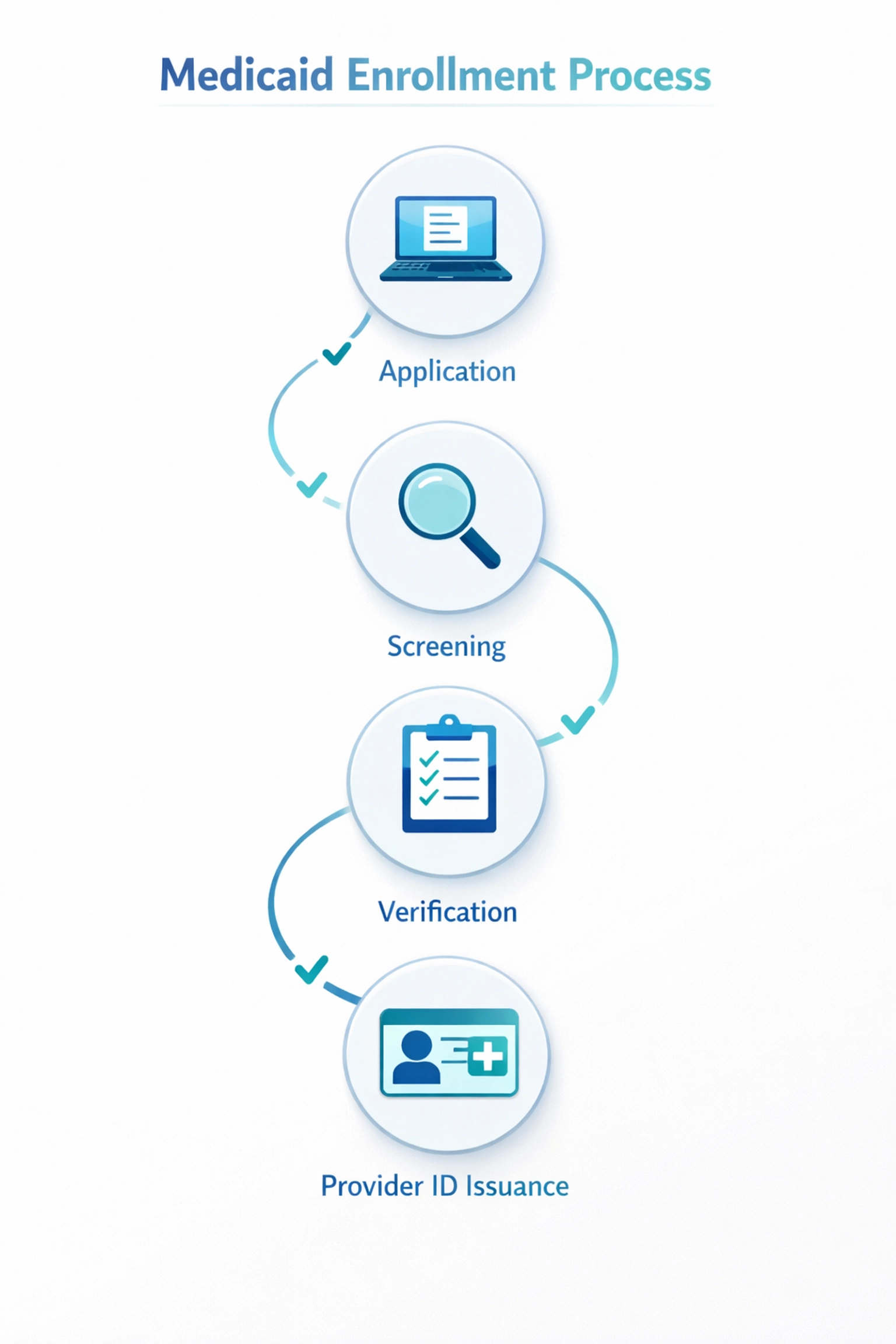
The Bottom Line
Medicaid provider enrollment is the first gate to revenue stability. When you treat it as a strategic function — not a form‑filling exercise — you eliminate delays, protect cash flow, and expand patient access.
Clean data.
Clear workflow.
Consistent follow‑up.
That’s the formula for staying ahead in 2026.
#Veracity #MedicaidEnrollment #ProviderEnrollment #PayerEnrollment #HealthcareCredentialing #MedicaidUpdates #PayerUpdates #HealthcareCompliance #OperationalExcellence #HealthcareOperations #PracticeManagement #MedicalPracticeManagement #ClinicManagement #HealthcareWorkflow #HealthcareInsights #HealthcareSolutions #HealthcareChallenges #RevenueCycle #RevenueProtection #HealthSystems #ClinicLife #MedicalPractice #WorkSmarter #FutureOfHealthcare #HealthcareLeadership #HealthcareConsulting #HealthcareWorkers
