Veracity upscaled revised

How to Credential a Provider in Wisconsin: Streamlining the Badger State Workflow

K2aBtWm1FLn

Navigating the healthcare landscape in Wisconsin requires more than just clinical expertise; it demands a sophisticated command of medical provider enrollment services to keep your revenue moving without interruption. Whether you are managing a mid-sized multisite group in Milwaukee or expanding a specialized clinic in Madison, the complexity of Medicare and Medicaid enrollment for behavioral health providers and specialists creates real friction. In the Badger State, where payer processes shift and documentation rules stay unforgiving, a passive approach to enrollment creates denials, delays, and preventable cash-flow damage. Looking for professional provider credentialing services in the USA? 👉 Check our main service page here: veracityeg.com The Upstream Foundation: Licensing and DEA Before you even look at a payer application, you must secure the foundation. In Wisconsin, the path to successful enrollment starts upstream with meticulous attention to state-specific licensing and DEA registrations. A provider cannot legally practice or bill until the Wisconsin Department of Safety and Professional Services (DSPS) has issued the appropriate physician license through LicensE, the agency’s online application portal. Veracity manages this critical first step by ensuring all primary source verification is completed long before the payer sees the file. This includes the mandatory Wisconsin DEA certificate, which must reflect a Wisconsin-based practice address. Without these "passports to practice," your enrollment timeline will stall indefinitely. We treat these administrative prerequisites as the backbone of your professional credibility, clearing the way for the downstream enrollment activities that follow. Fact-Check: The Wisconsin 2026 Licensing Guardrails Wisconsin’s physician licensing rules are not a vibe-based exercise. They are statutory guardrails, and if your file misses one, your enrollment plan will skid into a ditch. Here are the points your team must get right: For full MD/DO licensure, Wisconsin requires 24 months of postgraduate training in an ACGME- or AOA-approved program under Wis. Stat. § 448.05(2)(a)2.a. If your onboarding checklist still says one year, it is outdated. Wisconsin also recognizes an Administrative Physician License under Wis. Stat. § 448.05(2c) for physicians who are functioning in administrative roles and not seeing patients. That distinction matters when you are onboarding executives, medical directors, or physician leaders whose role does not include clinical encounters. The state’s International Physician Provisional License under Wis. Stat. § 448.05(2m) is a separate pathway for qualifying internationally trained physicians. It requires an employment offer in Wisconsin, at least 5 years of practice in the physician’s home country, and it can convert to a full license after 3 years of successful practice in Wisconsin. This is not a loophole. It is a defined statutory lane. The Visiting Physician route is also narrower than many teams assume. Under Wis. Stat. § 448.05(2)(e)3, the applicant must provide proof that they teach, research, or practice medicine or surgery outside Wisconsin. In plain English: DSPS wants evidence that the physician is genuinely visiting, not quietly relocating through the side door. The physician renewal date is October 31 of every odd-numbered year under Wis. Stat. § 440.08(2). Miss that deadline and your enrollment timeline stops being a workflow problem and starts becoming a revenue problem. If you want the official front door, DSPS maintains physician licensing information on its Physician page and processes applications through LicensE. In Wisconsin, the licensing file is the first domino. If it falls late, everything behind it falls late too. 1. Navigating the ForwardHealth Portal: The 10-Day Clock and the 2025 LTC Deadline The Wisconsin Medicaid program, known as ForwardHealth, stays rigid about application timing. Once you initiate an enrollment application in the ForwardHealth Portal, you have exactly 10 calendar days to complete and submit it. If you miss that window, the system purges the data and you start over. That timing pressure matters even more for adult long-term care and HCBS providers. Wisconsin guidance requires affected LTC waiver and HCBS providers to enroll or revalidate in ForwardHealth by December 31, 2025 to stay on track for continued reimbursement, with state communications warning that missing the deadline creates serious payment disruption for services tied to those programs. For practices serving Family Care, IRIS, PACE, or related waiver populations, this is not background noise. It is an operational deadline that will make or break continuity. This ticking-clock scenario is where internal teams lose momentum. At Veracity, we stage every document before the first click in the portal, from the NPI to the professional liability certificate to service-location data and ownership records. Because ForwardHealth acts as a gateway for multiple state-funded programs, one avoidable mistake will ripple across your payer mix and stall revenue at the exact moment you need providers active. Alt: A sleek, holographic digital interface displaying a countdown clock and medical data streams, representing the high-tech precision required for Wisconsin ForwardHealth enrollment. 2. Managing the Multisite Group Complexity Wisconsin is seeing a massive surge in mid-sized multisite groups, particularly in the primary care and urgent care sectors. For these organizations, managing 50 or 100 providers across ten different locations creates a logistical nightmare. The risk of provider churn is high, and the administrative burden of tracking revalidation cycles: which commonly hit on a 36-month cadence in Medicaid workflows: is immense. We solve this through the strategic implementation of monday.com. By using high-transparency project boards, Veracity gives your leadership team a real-time view of every provider’s status. You will not be left guessing whether a provider is active in Green Bay but still pending in Waukesha. That visibility now matters even more for Physician Assistants. Wisconsin ForwardHealth announced that starting June 1, 2025, enrolled PAs can bill as separate providers, which changes how many groups must structure enrollment records, demographic updates, and claim workflows. If your team still treats Wisconsin PA setup like the old rendering-only model, your file structure and billing readiness will break at the exact point revenue should start. This is especially important for primary care, urgent care, surgical, and multispecialty groups that rely on PA productivity across multiple service sites. This level of transparency is the silent driver of operational efficiency. It lets you schedule patients with

How to Credential a Provider in Massachusetts: Navigating the Bay State Complexity

UPelOgtHwyZ

Navigating the Massachusetts healthcare market requires more than just clinical expertise; it demands a sophisticated approach to medical provider enrollment services. In a state defined by prestigious academic medical centers and a rapidly shifting behavioral health enrollment landscape, staying ahead of payer requirements is the difference between a thriving practice and a mounting pile of uncompensated care. Massachusetts is notoriously complex, characterized by a dense concentration of providers, aggressive payer gatekeeping, and a regulatory environment that leaves no room for administrative error. If you are operating a multi-site group or a specialized clinic in the Bay State, you are already aware that the "standard" 90-day window is often a myth. Between the intricacies of MassHealth and the dominant market share of Blue Cross Blue Shield of Massachusetts (BCBS MA), your administrative team must be prepared for a marathon, not a sprint. At The Veracity Group, we treat enrollment as a strategic pillar of your revenue cycle, ensuring that your providers are not just licensed, but fully integrated into the payer networks that drive your business. Looking for professional provider credentialing services in the USA? 👉 Check our main service page here: veracityeg.com The Massachusetts Framework: HCAS and the IMA Massachusetts utilizes a centralized system designed to streamline the process, but centralized does not always mean simple. HealthCare Administrative Solutions (HCAS) serves as the hub for many of the state’s largest payers. For providers based within the Commonwealth, the Integrated Massachusetts Application (IMA) is the mandatory vehicle for data submission. While the IMA is intended to reduce redundancy, the sheer volume of data required is staggering. Payers like Tufts Health Plan, Harvard Pilgrim (Point32Health), and Fallon Health all pull from this data, yet each maintains its own internal vetting nuances. If your internal team treats the IMA as a "set it and forget it" task, you will face delays. You must actively manage the transition from the IMA submission to the individual payer’s secondary review. As of 2026, the pressure on that handoff is higher. CMS is enforcing faster processing expectations, including a 30-day standard in key enrollment workflows, while pushing providers toward digital-first submission through PECOS and related electronic channels. In plain English: paper-heavy habits slow you down, and incomplete digital files will jam the whole machine. Alt Text: A grainy, high-contrast 90s editorial style photograph of a medical professional reviewing a thick stack of documents under a bright, moody desk lamp, emphasizing the weight of regulatory compliance. Upstream Essentials: Licensure and the MCSR Before you even consider behavioral health provider enrollment, your "upstream" credentials must be impeccable. In Massachusetts, this begins with the Board of Registration in Medicine (BORIM). The licensure process in the Bay State is one of the most rigorous in the country, often requiring extensive primary source verification that can take months. Furthermore, Massachusetts requires a state-specific Massachusetts Controlled Substances Registration (MCSR) in addition to the federal DEA certificate. We frequently see practices stall because they secured the federal DEA but neglected the MCSR, or vice versa. The Veracity Group manages these licensing requirements as a prerequisite to enrollment, ensuring that when the application hits the payer's desk, there are zero "missing document" triggers to reset your timeline. Navigating the MassHealth Maze For those involved in Medicare and Medicaid enrollment for behavioral health providers, MassHealth represents the most significant administrative hurdle. Massachusetts has moved toward a highly regionalized Medicaid model, involving Accountable Care Organizations (ACOs) and Managed Care Organizations (MCOs) that each have distinct enrollment protocols. Strict Documentation: MassHealth requires a Provider Contract and a specialized Data Collection Form that must match your NPI registry and PECOS data exactly. The Behavioral Health Carve-Out: Many behavioral health services are managed through the Massachusetts Behavioral Health Partnership (MBHP). Navigating the intersection of standard MassHealth and MBHP requires a specialized understanding of which codes are covered under which umbrella. High Churn Risks: Massachusetts sees significant provider movement due to the high density of residency and fellowship programs. This "churn" means your enrollment team must be in a constant state of motion to prevent gaps in coverage as providers move between groups. SCO Eligibility Shift for 2026: Effective January 1, 2026, Senior Care Options (SCO) enrollment requires members to have Medicare Part A and Part B. If your practice serves older adults and dual-eligible populations, your front-end eligibility workflow must reflect that change immediately. If you miss it, your billing team inherits the mess. Tighter PA Timelines: Effective January 1, 2026, MassHealth applies 7 calendar days for standard prior authorization requests and 72 hours for expedited requests for the medical benefit under updated interoperability rules. That sounds provider-friendly, but only if your submissions are complete on day one. Stricter Encounter Data Rules: For the 2025–2026 cycle, encounter reporting is under tighter scrutiny. 10-digit NPIs and accurate taxonomy reporting are now non-negotiable data points in managed care submission workflows. When those fields do not reconcile cleanly, denials, rejections, and downstream payment friction follow fast. Alt Text: A bold, grainy 90s magazine-style shot of a busy Boston street corner with a medical building in the background, captured with a wide-angle lens and saturated colors to represent the fast-paced provider churn. Transparency Through Technology: The monday.com Advantage The biggest frustration for CEOs and Owners is the "black hole" of enrollment. You submit an application, and then you wait weeks for an update that never comes. The Veracity Group eliminates this opacity by utilizing monday.com as our primary project management engine. Every client we partner with gains access to a live, transparent board where every provider’s status is tracked in real-time. You don’t have to call us to ask if the BCBS MA application was received; you can see the timestamp of the submission, the name of the representative we spoke with, and the projected "go-live" date. This level of provider enrollment transparency is essential for multi-site groups in Massachusetts where a single missing credential can stall a whole department's revenue. The Cost of High Provider Churn Massachusetts is a hub for medical

How to Credential a Provider in Illinois: Conquering the IMPACT Barrier

DpQj1599T5W

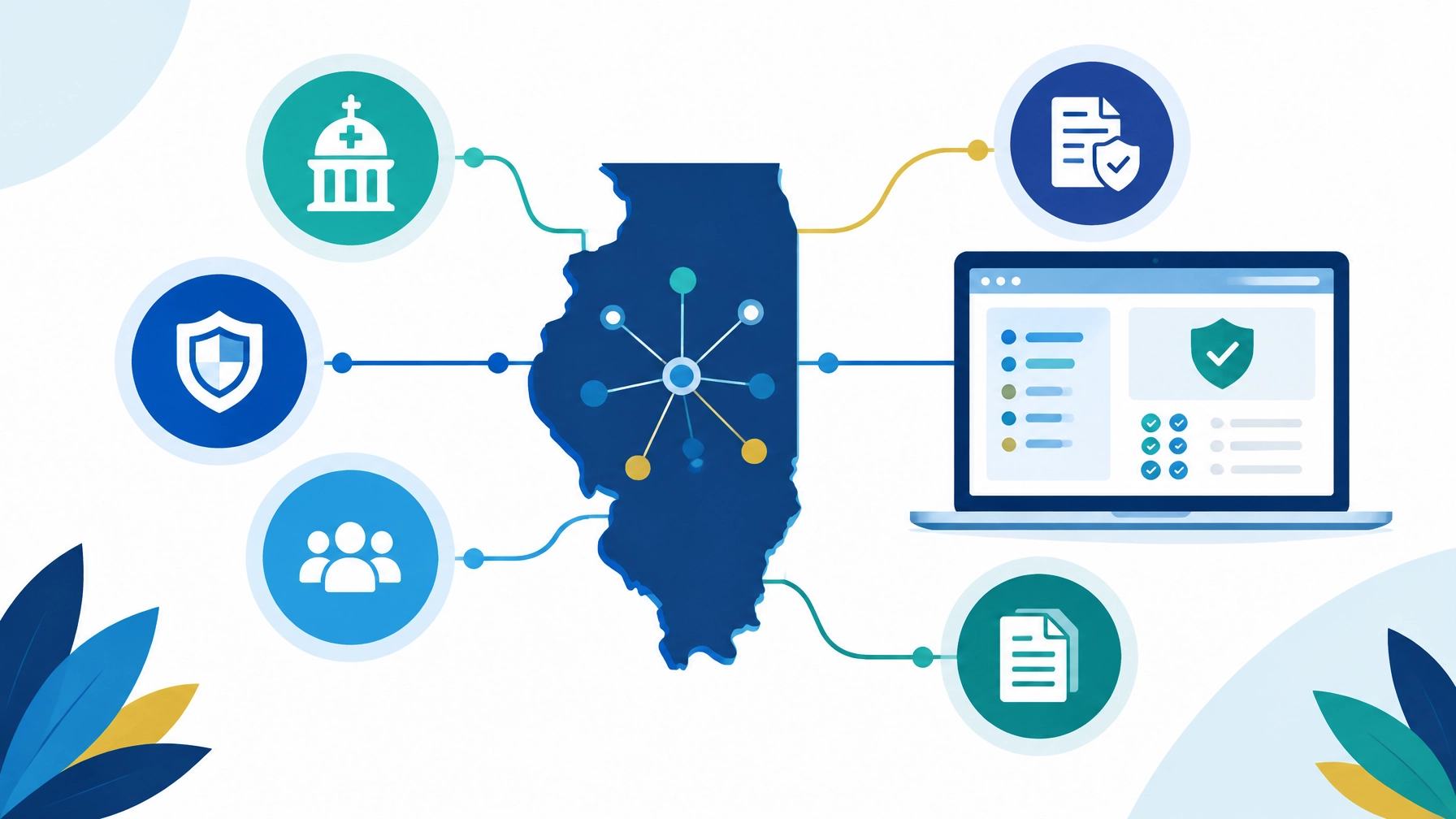
Navigating the Illinois healthcare market requires more than just clinical excellence; it demands a sharp, disciplined response to the administrative gauntlet known as the IMPACT system. For organizations trying to scale, friction in medical provider enrollment services quickly becomes a revenue choke point that slows onboarding and delays payment. Whether you manage one location or a sprawling multisite group, understanding the behavioral health provider enrollment landscape is how you keep your revenue cycle moving in the Land of Lincoln. In Illinois, the enrollment process is defined by high-stakes documentation, a state-mandated digital portal, and hard compliance deadlines that carry real consequences. If your practice is not prepared for the rigorous demands of the Illinois Medicaid Program Advanced Cloud Technology (IMPACT), you will hit avoidable delays, rejected submissions, and payment disruption. 1. The Digital Gatekeeper: Understanding HFS IMPACT The primary obstacle in Illinois is the IMPACT portal, managed by the Illinois Department of Healthcare and Family Services (HFS). This system serves as the single source of truth for Medicaid-related provider enrollment activity in the state. Under HealthChoice Illinois, a provider must be fully approved in IMPACT before participating with Medicaid managed care plans. That setup sounds clean. In practice, it is a concrete wall with a login screen. Illinois expects your information to be complete, accurate, and maintained inside IMPACT, and the state is actively enforcing revalidation requirements on the current five-year cycle. As reflected in Illinois HFS revalidation guidance, providers who miss their IMPACT revalidation deadline face immediate disenrollment, which stops participation and billing until the record is restored through the required process. That is the real Illinois risk: not just slow approval, but sudden loss of active status because a required update sat untouched in the portal. Digital glitch art displaying high-contrast kinetic typography of the words "IMPACT SYSTEM" shattering into data streams, symbolizing the complexity of the Illinois enrollment portal. 2. Mandatory Documentation: The "Yellow Paper," Revalidation Timing, and IMPACT Application Type In Illinois, missing one required item does not create a minor delay. It triggers rejection, rework, or a revalidation miss that knocks you out of active status. To move a provider through the pipeline, you must secure the following items before upload and before the revalidation clock runs out: The Application ID Number: This is the state-assigned identifier often tied to the physical notice many teams call the "yellow paper." Without it, matching the record and moving the file forward becomes far harder. Certified W-9 alignment: If a provider receives state or federal funds directly, the tax record must align with the enrollment record. A mismatch between legal name, TIN, or pay-to information and the IMPACT profile is a fast path to failure. National Provider Identifier (NPI): Your 10-digit NPI must match taxonomy, licensure, and service setup exactly. Correct IMPACT application type: Illinois places real weight on selecting the right record structure, including the Individual/Sole Proprietor pathway when that is the proper enrollment type. If your filing structure does not match how the provider is organized and billing, the rest of the application starts crooked. Operational availability for follow-up: Illinois has also been reinforcing practical support through office hours and provider assistance sessions connected to IMPACT revalidation. If your team is not monitoring those opportunities and the portal notices that drive them, you lose time you do not have. For large multisite groups, managing these documents and deadlines across dozens of providers creates a serious administrative burden. The Veracity Group uses monday.com boards to give you total transparency during this phase, ensuring every yellow paper, portal task, and follow-up item is tracked from receipt through final submission. 3. Scaling the Friction: Multisite and Behavioral Health Challenges The behavioral health enrollment landscape in Illinois is especially unforgiving because site-level accuracy matters. As the state pushes integrated care and tighter program oversight, behavioral health providers run into unique complications around service locations, affiliations, and record maintenance. Unlike markets where one approval effectively travels everywhere, Illinois often demands precise site linkage for each location where a provider renders services. For massive multisite groups, this creates an exponential increase in the number of moving parts you must control. One demographic mistake, one location mismatch, or one overlooked revalidation notice can cascade into denied claims across multiple sites. Maintaining demographic updates with precision is not optional. It is your pressure valve against payment disruption. Looking for professional provider credentialing services in the USA? 👉 Check our main service page here: veracityeg.com Upstream Preparation: Licensing and DEA Enrollment does not start with the IMPACT portal; it starts months earlier with licensing and DEA registration. The Veracity Group handles the upstream heavy lifting, ensuring that a provider’s Illinois state license and controlled substance registrations are in perfect order before the enrollment clock even starts ticking. If your provider’s DEA address does not match their primary service location in IMPACT, the system will flag the application for manual review, which can add weeks or months to your timeline. By aligning these upstream factors, we clear the path for a smoother transition into the provider enrollment phase. Kinetic typography in a high-speed digital blur showing the words "UPSTREAM LICENSING" and "DOWNSTREAM REVENUE" connecting through a series of geometric, glitched lines. 4. The 2025–2026 Revalidation Mandate: Miss the Deadline, Lose Your Status Illinois is actively operating on the standard five-year revalidation cycle in the 2025–2026 window. That cycle is not background noise. It is a live compliance trigger inside IMPACT. HFS has made clear that if you fail to complete revalidation by your assigned deadline in the portal, the consequence is immediate disenrollment. That means: Your provider record drops out of active status Your Medicaid billing ability stops Your managed care participation is disrupted Your revenue takes the hit before your operations team finishes asking what happened Illinois has also been running monthly Revalidation Town Halls throughout 2025 to help providers navigate the process, along with additional assistance resources through HFS. If your team is not attending those sessions, monitoring portal notices, and acting before

How to Credential a Provider in Georgia: Breaking Through the Payer Gridlock

TRFWlc9iiz2

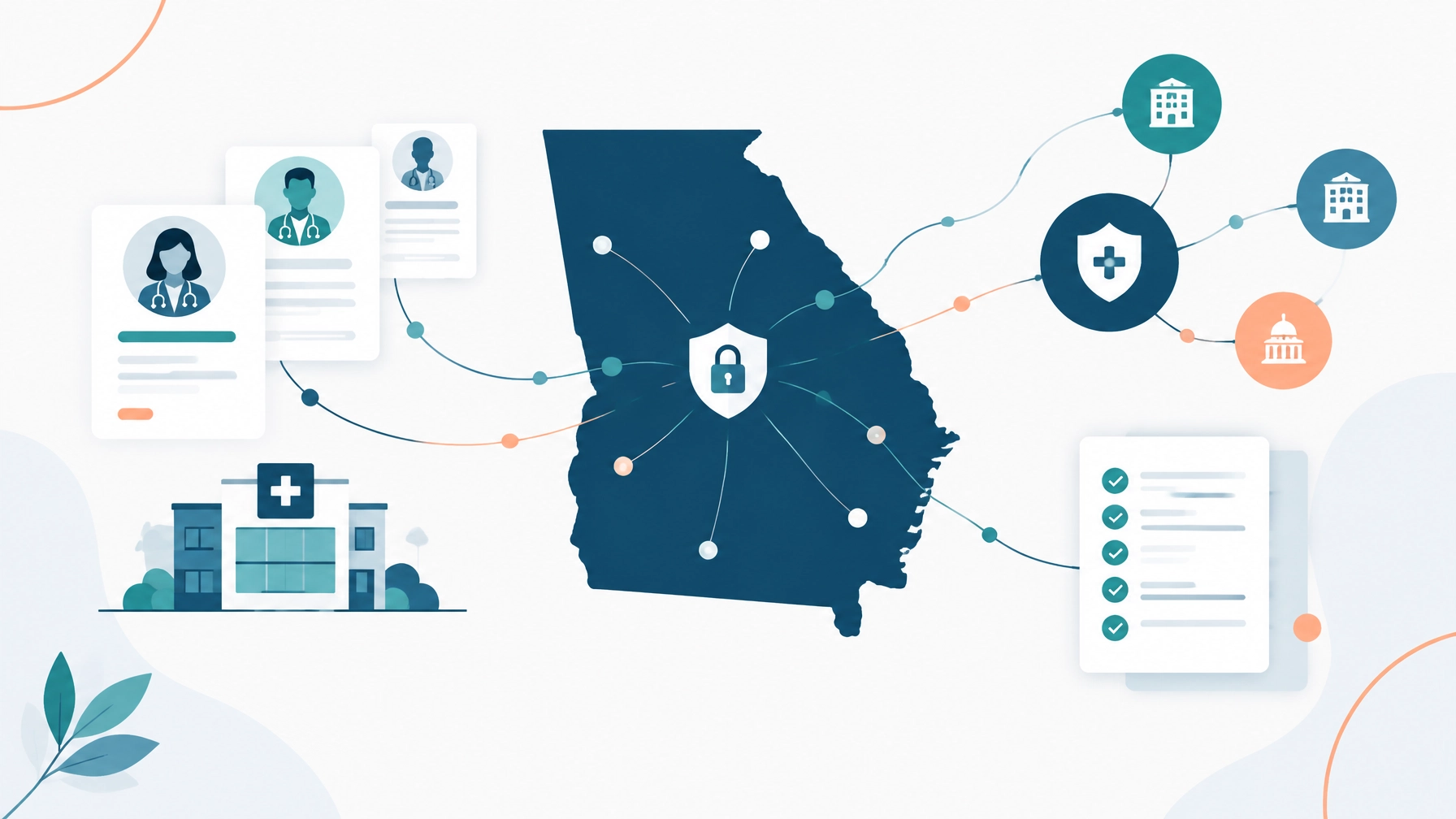
Georgia is a high-volume healthcare hub with fast clinic growth and a well-earned reputation for payer bottlenecks. Navigating medical provider enrollment services in the Peach State now requires more than persistence; it requires tight control of Georgia’s evolving Medicaid rules and a working command of the behavioral health enrollment landscape. For practices looking to scale, the real bottleneck is not provider recruiting. It is the enrollment machinery that stalls activation, delays billing, and chokes cash flow across Medicaid, Medicare Advantage, and commercial plans. If you are expanding a multi-site group or launching a specialized clinic in Georgia, you are operating in one of the most administratively dense markets in the Southeast. The cost of delay is immediate. Every day a provider stays off the roster is a day of lost visits, denied claims, and revenue that does not come back. In 2026, Georgia demands closer attention than ever because Group/Billing enrollment through GAMMIS is mandatory by January 1, 2026 for organizations billing through a central group structure, and CMS continues pushing tighter digital enrollment expectations and faster turnaround standards. If you do not adapt your process, Georgia will punish the gap. Looking for professional provider credentialing services in the USA? 👉 Check our main service page here: veracityeg.com 1. The Georgia Medicaid Backbone: Centralized Review Plus GAMMIS Group/Billing Rules Georgia is unique in its Medicaid structure because the state uses a centralized review model tied to the Department of Community Health (DCH) and the GAMMIS portal as the operating backbone for enrollment activity. That centralized setup is meant to reduce duplicate work across managed Medicaid, but in practice it only works when your file is complete, current, and aligned at both the individual and organizational levels. The biggest 2026 fact-check item is not optional: Group/Billing Enrollment through GAMMIS is mandatory by January 1, 2026 for organizations billing Medicaid claims through a group or billing entity. Georgia requires organizations to link rendering NPIs to a central group NPI inside the state’s enrollment structure. If your organization still relies on a loose payee setup or inconsistent NPI relationships, you are sitting on a denial trigger. That means your Georgia playbook must include these non-negotiables: Enroll the organization correctly in GAMMIS as the billing/group entity. Link all rendering providers to the correct central group NPI. Validate that practice addresses, tax IDs, ownership details, and rosters match across GAMMIS, NPPES, and payer files. Correct mismatches before claims start flowing. However, centralized does not mean fast. Georgia still rewards precision and punishes stale documentation. If licensure, insurance, or certifications are out of date, the file stops moving. For groups handling Medicare and Medicaid enrollment for behavioral health providers, this matters even more because roster errors cascade across Georgia Families and Georgia Families 360° participation and can interrupt billing across multiple locations at once. Alt text: A clean, high-white-space Scandinavian minimal editorial photograph of a modern, organized medical office workspace with natural light. 2. Navigating GAMMIS Without Getting Buried The Georgia Medicaid Management Information System is the digital gate for enrollment, maintenance, status checks, and organizational updates. Whether you are adding a rendering provider, enrolling a new location, or cleaning up an ownership file, GAMMIS is where the battle is won or lost. In plain English: if your group file is messy, GAMMIS exposes it fast. The most common Georgia breakdowns show up in four places: Rendering NPIs not properly tied to the billing/group NPI Address mismatches between GAMMIS, NPPES, and payer records Ownership or legal-entity records that do not match Secretary of State documents Missed revalidation or maintenance updates that freeze claims This is the operational trap for large groups, behavioral health platforms, and multisite organizations. One disconnected provider record can hold up clean billing across the full entity. That is why groups expanding into Georgia need a disciplined enrollment map, not a pile of PDFs and email chains. If your organization is scaling service lines or locations, the same discipline outlined in our guide on medical group enrollment for surgery centers applies here too: the larger the roster, the harsher the consequences of one weak link. 3. The Medicare Advantage Gridlock and the New Network Pressure Georgia has heavy Medicare Advantage penetration. Payers such as Anthem Blue Cross and Blue Shield of Georgia, UnitedHealthcare, and Humana dominate major markets. Traditional Medicare follows a more standardized path, but Medicare Advantage in Georgia is where provider onboarding often hits a concrete wall. These plans routinely operate with restricted networks, especially in dense markets like Atlanta, Savannah, and Augusta. Submitting an application is not enough. You must show network value, specialty access, geographic fit, and roster readiness. That work now sits against a tougher backdrop because Georgia’s CATCH Act network reporting standards tightened in March 2025. Under updated reporting requirements issued through the Georgia Office of Commissioner of Insurance, carriers face more scrutiny around network adequacy, time-and-distance access, appointment wait times, and the completeness of provider reporting. You can review the state directive directly through the Georgia OCI CATCH Act materials. Fact Check: HB 1354 Puts a 45-Day Clock on Commercial Enrollment Here is the legal shift too many Georgia writeups miss: the Insurer Credentialing Reform Act (HB 1354) requires commercial health insurers to complete provider credentialing within 45 days after receiving a complete application. As outlined by Georgians for a Healthy Future, the law also pushes a standardized credentialing form aligned with Georgia Medicaid. In plain English, commercial plans now face the same 45-day standard that Georgia Medicaid already uses. That is not a small cleanup item. That is the state admitting the old commercial timeline was a traffic jam with a necktie on. Why this matters: Georgia lawmakers and advocates pushed this reform hard to address the behavioral health enrollment bottleneck and improve network adequacy, especially where patients wait too long because providers sit in payer limbo instead of seeing patients. If your practice operates in psychiatry, counseling, addiction medicine, or multi-site behavioral health, this is the kind of statutory change that deserves a

How to Credential a Provider in Tennessee: Solving the TennCare Puzzle

P5XLp5MIorF

Navigating the healthcare landscape in the Volunteer State requires more than clinical expertise; it demands a sharp understanding of a regulatory environment that keeps moving. For any practice seeking medical provider enrollment services, the challenge sits in the gap between growth and the administrative friction inside the behavioral health enrollment landscape. Tennessee is seeing sustained Behavioral Health (BH) demand, yet the path to becoming an in-network, billable provider still runs through TennCare rules, MCO requirements, and a compliance framework that punishes sloppy execution. In 2025 and 2026, that pressure is even more operational: TennCare has expanded TennCare III eligibility for parents and caretaker relatives to 105% of the federal poverty level, which is functionally 100% FPL plus the standard 5% income disregard and an increase from the prior 89% threshold; the provider registration process remains fully web-based; and the state continues to expect clean, digital, document-ready submissions instead of paper-chase improvisation. If you are expanding your footprint in Nashville, Memphis, or the surrounding rural areas, you must recognize that provider enrollment is the silent driver of your revenue cycle. In Tennessee, "good enough" documentation will lead to "not enough" revenue. The complexity of the state’s Medicaid program, known as TennCare, combined with a high density of Managed Care Organizations (MCOs), makes the enrollment process a high-stakes endeavor where a single missed attestation can result in months of lost billing. The Upstream Foundation: Licensing and DEA Precision Before you even glance at a TennCare application, your upstream requirements must be flawless. You cannot build a skyscraper on a swamp, and you certainly cannot enroll a provider without a pristine Tennessee professional license. The Veracity Group often sees practices rush the enrollment phase only to realize their provider’s DEA registration is still linked to an out-of-state address or their Tennessee license hasn't cleared the final board review. In Tennessee, the Board of Medical Examiners and the Board of Nursing have specific nuances regarding collaborative for mid-level providers. For Behavioral Health practitioners, such as Licensed Clinical Social Workers (LCSW) or Licensed Professional Counselors (LPC), ensuring the license is active and public-facing is the non-negotiable first step. Furthermore, your DEA registration must precisely match the location where the provider will be seeing patients. Tennessee is rigorous about its Controlled Substance Monitoring Program (CSMD). Any discrepancy between your licensing data and your DEA registration will trigger a red flag during the provider enrollment process, stalling your progress before it even begins. Alt Text: A charcoal sketch showing a hand holding a traditional fountain pen over a thick, textured stack of medical licensing documents, emphasizing the weight and importance of official paperwork. Solving the TennCare Puzzle TennCare is the primary hurdle for Tennessee providers. Unlike states with a unified Medicaid billing system, Tennessee uses a heavily managed model. To see TennCare members, you must first obtain a TennCare/Medicaid ID number. This is mandatory for contracting with the state’s MCOs. The process now runs through a web-based registration workflow. The TennCare Provider Registration portal is the operational front door for 2025 and 2026, and practices need to treat it that way. Paper-era habits will slow you down. Your CAQH data, licensure files, ownership details, practice locations, and supporting documents must be lined up before you ever hit submit. The key is the CAQH (Council for Affordable Quality Healthcare) roster. Tennessee still leans heavily on CAQH for data verification. If your provider's CAQH profile is not attested every 120 days, or if there is a gap in work history that is not clearly explained, your TennCare file will stall in digital purgatory. That urgency matters even more because TennCare’s member base is broader than it was before. Following the approved TennCare III amendment, Tennessee expanded eligibility for parents and caretaker relatives to 105% of the federal poverty level, which is 100% FPL plus a 5% income disregard. That is a real eligibility bump from the previous 89% threshold, and it matters operationally because more eligible members means more pressure on clinics to get providers active fast, keep directories accurate, and avoid enrollment lag that blocks access to care. The same amendment also added a headline-grabbing but very practical family support benefit: up to 100 diapers per month for infants under age two. That benefit does not change your enrollment workflow, but it does increase member touchpoints with TennCare-participating providers and pharmacies. In plain English: when coverage gets a little broader and benefits get a little more useful, access bottlenecks become a lot more visible if your providers are not active and billable on time. The MCO Gauntlet Once you secure your TennCare ID, the real work begins. You must then contract individually with the three primary Managed Care Organizations: BlueCare Tennessee (BlueCross BlueShield) UnitedHealthcare Community Plan Wellpoint (formerly Amerigroup) Each of these entities has its own internal credentialing committee and its own timeline. In the Tennessee behavioral health provider enrollment space, we see high provider churn, which makes the speed of this process critical. If it takes six months to get a provider in-network and that provider leaves in nine months, your practice has effectively lost the ability to generate a return on that hire. This is why many Tennessee groups are moving toward a high outsourcing rate for their enrollment needs: they simply cannot afford the internal overhead of managing these shifting timelines. Behavioral Health: The High-Growth Friction Point Tennessee is seeing a massive influx of multisite behavioral health groups. However, the behavioral health enrollment landscape is uniquely challenging because of how TennCare handles regionalization. Depending on where your clinic is located (East, Middle, or West Tennessee), the payer requirements and the regional provider relations reps you deal with will change. At the same time, your enrollment strategy must sit inside the real Tennessee coverage picture, not a fantasy map. Tennessee has not adopted full ACA Medicaid expansion, and as of 2025/2026 that remains a legislative non-starter. Yes, parents and caretaker relatives received an eligibility increase under TennCare III. No, that did not erase the state’s

How to Credential a Provider in Virginia: Fragmentation and the Commonwealth Burden

JFqwJnUiiol

Navigating the healthcare landscape in the Old Dominion requires more than just clinical expertise; it demands a disciplined administrative strategy. Virginia presents a brutal mix of payer fragmentation and Medicaid enforcement that will stall even efficient organizations. Utilizing professional medical provider enrollment services is no longer optional for Virginia practices; it is operational defense. This is especially true within the behavioral health enrollment landscape, where regional nuances and strict oversight by the Virginia Department of Medical Assistance Services (DMAS) create serious barriers for new providers. The "Commonwealth Burden" is real, and it just got sharper. Effective July 1, 2025, Virginia DMAS eliminated the 90-day grace period for license expiration in PRSS, which means providers with expired licenses are now disenrolled immediately rather than getting a cushion. That one change turns sloppy maintenance into instant payment risk. Between Cardinal Care complexity and a dense field of mid-sized health systems, Virginia creates the kind of administrative pressure that punishes hesitation. If your organization is not proactive, you will face revenue leakage, claim disruption, and onboarding delays that drag far past acceptable limits. The Upstream Imperative: Licensure and DEA First In Virginia, your enrollment timeline begins long before you touch a payer application. The foundation of your success rests on the "upstream" elements of the provider's profile. You must ensure that the provider’s license with the Virginia Department of Health Professions (DHP) is not only active but carries the correct address and primary practice location. For many specialties, particularly in the behavioral health and surgical sectors, the DEA registration is the next critical hurdle. A common mistake we see at The Veracity Group is a provider moving from out-of-state and failing to update their DEA to a Virginia-based address before beginning the enrollment process. In Virginia’s strict regulatory climate, even a minor address mismatch between your DHP license and your DEA registration is enough to trigger an immediate rejection from major payers. This upstream bottleneck is the silent killer of practice growth. Navigating the Cardinal Care Labyrinth: Virginia Medicaid Virginia’s Medicaid program, now consolidated under the Cardinal Care banner, is notorious for its strict documentation requirements and two-tiered processing system. To successfully enroll a provider in Virginia Medicaid, you must first navigate the Provider Services Solution (PRSS). This is not a "set it and forget it" process; it requires meticulous attention to provider taxonomies, site-specific NPI data, licensure status, and ownership information. Alt text: A structured Virginia Medicaid access illustration symbolizing PRSS enrollment controls and Cardinal Care entry requirements. The Two-Tiered Medicaid Trap As reflected in DMAS provider guidance effective July 1, 2025, all providers must be enrolled in PRSS to bill DMAS or Virginia Medicaid MCOs, and MCOs are prohibited from paying claims to network providers who are not properly enrolled in PRSS. That means PRSS is not just an upstream formality. It is the front gate, the lock, and the alarm system. Once a provider is successfully registered in PRSS, the real work begins. In Virginia, state enrollment alone does not mean you can bill for services delivered to most Medicaid members. You must then separately enroll with each of the Managed Care Organizations (MCOs) that participate in Cardinal Care, such as: Anthem HealthKeepers Plus Sentara Health (formerly Optima/Virginia Premier) Molina Healthcare UnitedHealthcare Community Plan Aetna Better Health of Virginia Each of these payers has its own unique portal, its own set of readiness requirements, and its own internal timeline. For mid-sized multisite clinics, managing this across 20 or 30 providers is a logistical nightmare. If you miss one MCO application, you effectively lock your provider out of a massive segment of the Virginia patient population. If you let a license lapse, PRSS disenrollment now happens immediately, and the payment consequences hit just as fast. This is why Medicare and Medicaid enrollment for behavioral health providers is particularly taxing; the documentation required for LCSWs, LPCs, PMHNPs, psychologists, and psychiatrists in Virginia is among the most heavily scrutinized in the nation. Managing Payer Fragmentation for Multisite Clinics Virginia is a high-fragmentation state. Unlike some markets dominated by one or two "blue" plans, Virginia practitioners must deal with a balanced but disparate mix of national carriers and regional powerhouses like Sentara. For a multisite clinic, this fragmentation means that a provider working in Northern Virginia may face different network adequacy hurdles than a provider in the Tidewater region or Southwest Virginia. The administrative burden of maintaining these disparate enrollments is the primary cause of provider churn. When a provider cannot see patients because enrollment is stalled, or when an expired license triggers immediate PRSS disenrollment, the practice loses money and the provider loses patience. To combat this, you must adopt a rigorous tracking methodology. A clean application is now non-negotiable. CMS has reinforced a 30-day processing standard for clean applications in 2026, and that benchmark raises the pressure on practices to submit complete, internally consistent files the first time. If your file is missing signatures, has conflicting service locations, or carries a stale license date, you burn time you do not have. In Virginia, bad data is not a minor delay. It is a revenue shutdown in work clothes. At The Veracity Group, we advocate for a "clean file" approach. Every piece of documentation: from the CAQH profile to the malpractice face sheet: must be verified for accuracy before a single application is submitted. You can learn more about why this level of detail is necessary in our guide on navigating the maze of CAQH and Medicare enrollment. Alt text: A hand-crafted gouache illustration of a stylized clock and a map of Virginia, symbolizing the urgent need for timely enrollment in a fragmented market. The Veracity Advantage: monday.com and Extreme Transparency In an environment as volatile as Virginia, "I think we submitted that" is not an acceptable answer. The Veracity Group utilizes monday.com to provide our clients with a level of transparency that is rare in this industry. Every Virginia application is tracked with real-time status updates, including: PRSS Status Monitoring: We

How to Credential a Provider in Arizona: Scaling for the Desert Churn

ZsNQOAYHALC

Navigating the healthcare landscape in the Grand Canyon State requires more than just a map; it requires a high-octane strategy to handle the sheer volume of growth and turnover. Whether you are expanding a primary care network in Maricopa County or scaling a specialized clinic in Pima, professional medical provider enrollment services are the engine that keeps your revenue cycle moving. In a state where behavioral health provider enrollment is surging alongside a transient workforce, your ability to onboard providers quickly is the difference between a thriving practice and a financial drought. That urgency sits inside one of the most important healthcare economies in the country: Arizona healthcare is the state’s largest sector, employing more than 410,000 people, accounting for nearly 10% of the workforce, and contributing $78 billion to state GDP. The Arizona market is unique. It is defined by "Desert Churn": a high rate of provider movement fueled by rapid population growth, a physician supply of just 2.3 physicians per 1,000 residents versus the 2.6 national average, and a payer mix that leans heavily on Medicare Advantage and AHCCCS (Arizona Health Care Cost Containment System). The pressure is not theoretical. Arizona faces a shortage of 23,300 healthcare professionals by 2030, and today it already needs 667 primary care and 228 mental health practitioners just to reach basic access ratios. Public coverage has also expanded fast: AHCCCS and Medicare enrollment has grown 110% since 2000, AHCCCS now covers 31% of the population, or roughly 2.3 million people, and Medicaid reimbursement still lands at only about 60% of private insurance rates. At the same time, Arizona ranks 4th in the nation for quality of care, outperforming states such as California and Massachusetts, with systems like Banner Health and Mayo Clinic-Phoenix helping set the pace. The payer side is becoming even more volatile in 2026. Arizona is staring down a 46.3% weighted average rate increase in the individual market, including reported jumps of 49.0% for AZ Complete Health/Ambetter, 48.7% for Blue Cross Blue Shield of Arizona, and 44.3% for UnitedHealthcare. On top of that, Banner/Aetna CVS is exiting the Arizona individual market on December 31, 2025, forcing more than 55,000 policyholders to shop for new coverage and triggering a major patient-rebalancing event across the state. That combination of growth, shortage, quality pressure, payer volatility, and reimbursement compression makes enrollment execution a board-level issue. In the 2025-2026 consolidation and sale cycle, efficient provider onboarding is not back-office housekeeping; it is a direct driver of practice valuation. In a market with 46% rate hikes and a major carrier exit, provider enrollment speed is the only reliable way for your practice to capture displaced patient demand, protect directory visibility, and maintain revenue stability. To stay ahead, you must look beyond the standard paperwork and treat enrollment as a strategic, multi-phase operation. At The Veracity Group, we run that operation through monday.com, giving you a disciplined, visible control tower to move providers into payer networks fast enough to match Arizona’s high-stakes market. The Foundation: Upstream Licensing and DEA Verification Before a single enrollment application can be submitted to a payer like Blue Cross Blue Shield of Arizona or UnitedHealthcare, the "upstream" work must be flawless. In Arizona, this begins with the Arizona Medical Board or the Arizona Board of Physician Assistants. You cannot afford to wait until a provider’s start date to realize their DEA registration is still tied to a previous out-of-state address. We see this mistake constantly: practices focus so much on the "middle" of the process that they neglect the foundation. At Veracity, our provider enrollment services include a rigorous audit of these upstream credentials. If the license is pending or the DEA isn't Arizona-compliant, the entire machine grinds to a halt. You must ensure that every box is checked: from the initial state application to the specific prescriptive authority required for behavioral health specialists: before you ever touch a payer portal. Image Alt: A polished Retro 80s Neon Arizona healthcare operations scene with enrollment documents and bright magenta-cyan accents, symbolizing fast-moving provider onboarding across the state. Navigating the AzAHP Credentialing Alliance Arizona is home to one of the most structured credentialing environments in the country: the Arizona Association of Health Plans (AzAHP) Credentialing Alliance. This is a centralized system where multiple health plans participate in a unified process managed through a Credentialing Verification Organization (CVO). For your practice, this means there is a "single source of truth," but it also means there is a single point of failure. If your CAQH profile is not perfectly aligned with the AzAHP requirements, your provider will be stuck in a loop of "information requested" statuses. Key Components of the AzAHP Process: CAQH Accuracy: Your CAQH (Council for Affordable Quality Healthcare) profile is the heartbeat of Arizona enrollment. It must be re-attested every 90 days without fail. The Data Form: AzAHP requires a specific data form that supplements the CAQH profile. Missing one signature on this form can delay a provider’s effective date by 30 to 60 days. Primary Source Verification: The CVO will verify everything: education, board certifications, and a minimum five-year work history. Any gap in that history longer than 30 days must be explained in writing. For more information on the official standards, you can visit the AzAHP Credentialing Alliance portal. Managing the "Desert Churn" with Transparency In Arizona’s fast-growing primary care and behavioral health (BH) sectors, provider churn is a constant reality. Providers move between multisite groups frequently, and the state’s below-average physician density intensifies the problem. With only 2.3 physicians per 1,000 residents, Arizona runs leaner than the national benchmark, so every delayed onboarding creates immediate access gaps, referral leakage, and scheduling bottlenecks. The pressure is now colliding with payer upheaval. Arizona’s 2026 individual market rate filings show a jaw-dropping 46.3% weighted average increase, while Banner/Aetna CVS exits the Arizona individual market on December 31, 2025, forcing more than 55,000 policyholders to find new coverage. That is not background noise. It is a massive patient-rebalancing event, and practices that

How to Credential a Provider in Colorado: Navigating the RAE Maze

N9tOOTIMDfx

Colorado is currently experiencing heavy demand for faster provider onboarding, especially as multisite groups expand across the Front Range and rural communities. Managing behavioral health provider enrollment and medical provider enrollment services in this state demands a disciplined, three-step approach built around the Colorado Medicaid process. If your practice treats the RAE Maze like a simple form-filing exercise, delays will stack up, claims will stall, and revenue will sit on the runway instead of taking off. Looking for professional provider credentialing services in the USA? 👉 Check our main service page here: veracityeg.com The High Stakes of the Colorado Behavioral Health Enrollment Landscape Colorado’s Medicaid framework is regional, layered, and unforgiving when your data is incomplete. The Department of Health Care Policy and Financing (HCPF) administers Health First Colorado, and the state relies on Regional Accountable Entities (RAEs) to manage regional operations. That means your practice must move through a defined sequence, not a shortcut. For behavioral health organizations and multispecialty groups alike, this structure creates operational friction. A provider serving patients in more than one county or location can trigger different regional workflows, different contacts, and different downstream timing. That is why the process feels like a maze. It is not random, but it absolutely punishes loose tracking. Image Alt Text: A cinematic moody photo of a healthcare executive overlooking Colorado city lights, representing the layered regional complexity of Medicaid enrollment in Colorado. The Upstream Foundation: Licensing and DEA Before you start the Colorado Medicaid sequence, your source data must be clean. At The Veracity Group, we treat licensing, identifiers, and practice demographics as the runway lights for the entire enrollment process. If those lights are off, the plane does not land. Colorado Medical Board / DORA Licensing: Your provider must hold an active, unrestricted license through the Department of Regulatory Agencies (DORA). A licensing delay immediately pushes every downstream deadline. DEA and CSR Alignment: For prescribing providers, the Colorado practice address on file must match supporting records exactly. Address mismatches, legal name issues, and incomplete ownership details create preventable rejections. Group-to-Provider Data Accuracy: Individual NPI, group NPI, Tax ID, W-9, service location data, and ownership details must line up across every application touchpoint. By addressing these provider enrollment fundamentals first, you stop the classic ping-pong cycle of corrections, resubmissions, and avoidable delays. The Colorado Medicaid Process: The 3-Step RAE Maze Colorado does not run on a vague “submit and hope” model. The process is a strict three-step sequence: Enroll with Health First Colorado (HCPF) Credential with the RAE Contract with the RAE If your practice skips the order, blurs the phases, or assumes one approval activates the next, your timeline breaks. This is where many organizations lose weeks without realizing it. Step 1: Enroll With Health First Colorado (HCPF) Every provider must first complete enrollment with Health First Colorado through the HCPF process. This is the front gate. No RAE work matters until this piece is clean and active. What happens in this phase: HCPF validates provider and organizational data Enrollment records are reviewed for completeness and accuracy Core identifiers, ownership data, licensure, and practice information are checked Average completion time: 3 days That average is fast on paper, but only when your submission is complete. Missing ownership data, NPI mismatches, or location errors will turn a three-day checkpoint into a much longer detour. According to the Colorado HCPF provider enrollment guidance, this state-level enrollment is the mandatory first move. Step 2: Credential With the RAE Once HCPF enrollment is complete, the provider moves into the RAE credentialing phase. This is where the regional maze becomes real. The RAE reviews the provider under NCQA standards, confirms eligibility for network participation, and checks the documentation package required for regional approval. Average completion time: 20–30 days This step is where stale data quietly burns time. A neglected CAQH profile is one of the most common culprits. Keeping CAQH current reduces credentialing time by 1–5 days because the RAE does not have to chase avoidable discrepancies in work history, malpractice coverage, attestation, or practice demographics. That is not a minor win. In a busy launch cycle, 1–5 days is the difference between smooth onboarding and a very awkward conversation with your revenue team. Colorado’s RAE structure also matters here. The current regional alignment includes: Region 1: Rocky Mountain Health Plans Region 2: Northeast Health Partners Regions 3 & 5: Colorado Access Region 4: Health Colorado / CareLon Regions 6 & 7: CCHA If your provider locations span multiple regions, your internal tracking must reflect the correct RAE path for each service site. Otherwise, you create directory errors, delayed approvals, and claim denials that show up after your providers have already started seeing patients. For organizations tightening their data before submission, our guidance on maintaining a clean CAQH profile is a practical place to start, and the NCQA framework remains the benchmark behind this review process. Step 3: Contract With the RAE After regional approval, your practice still must complete RAE contracting. This is the step many groups underestimate, and it is exactly where launch timelines go sideways. Average completion time: 20–120 days depending on complexity Why the wide range? Because contracting depends on factors such as: Number of providers and service locations Specialty mix and scope of services Group structure and ownership complexity Accuracy of submitted entity data Regional processing pace and follow-up responsiveness This phase is where participation terms are finalized and the provider’s path to billing becomes operational. If your team treats contracting like an afterthought, the provider will sit in limbo: approved in one sense, but not ready where it counts. Image Alt Text: A cinematic moody image of enrollment documents and a professional pen, highlighting the precision required for Colorado Medicaid and RAE processing. Managing the Multisite Surge: Scale Without Chaos For large groups, the real threat is not volume alone. The threat is losing control of which provider is in which phase. If you are onboarding 10, 20, or 50 providers across Colorado, you are

The Partnership Advantage: Why RCM + Veracity Creates a One‑Stop Powerhouse

RCM and Veracity partnership visual showing handshake, financial charts, and icons for revenue cycle and enrollment.

How RCM Partnerships Strengthen Enrollment, Contracting, and Cash Flow Revenue Cycle Management companies sit at the center of a clinic’s financial ecosystem. You manage claims, denials, coding, AR, and the day‑to‑day grind that keeps practices alive. But there’s one part of the revenue cycle that consistently slows everything down: Provider enrollment and contracting. When a provider isn’t enrolled, nothing moves. Claims stall. Cash flow freezes. Clinics get frustrated. And RCM teams get pulled into work they never intended to own. This is where strategic partnership becomes a competitive advantage — not a cost. Partnering with Veracity turns enrollment from a bottleneck into a strength. It creates a unified, one‑stop solution for clinics that want everything handled under one roof. And it gives RCM companies a way to expand their value without adding headcount, risk, or operational drag. Why RCM Companies Benefit 1. You stay the one‑stop shop your clients expect Clinics don’t want to manage multiple vendors. They want one team that handles the full revenue cycle — from enrollment to payment. By partnering with Veracity, you keep that promise without taking on the administrative burden. 2. Faster cash flow for your clients means better performance for you Enrollment delays are silent revenue killers. When Veracity handles the front‑end payer work, your billing cycle starts sooner, your metrics improve, and your clients feel the difference. 3. No need to build an internal enrollment department Hiring credentialing staff, training them, and keeping up with payer changes is expensive and time‑consuming. Outsourcing to a specialized partner eliminates that overhead while giving you enterprise‑level expertise. 4. You reduce risk and increase accuracy Enrollment errors lead to denials, recoupments, and compliance issues. Veracity’s workflows are built to prevent those failures before they happen. Why Veracity Benefits 1. We get to support RCM teams who already understand the revenue cycle RCM companies know the downstream impact of enrollment delays. That alignment makes collaboration seamless and efficient. 2. We expand our reach through trusted partners Every RCM relationship opens the door to more clinics that need clean, reliable enrollment support. 3. We get to do what we do best — at scale Our team thrives in the operational trenches. Partnering with RCM companies allows us to focus on the work that moves the needle: payer enrollment, contracting, CAQH, demographic updates, and ongoing maintenance. Why Clinics Win the Most 1. One vendor. One workflow. Zero confusion. Clinics don’t have to guess who handles what. Their RCM partner and enrollment partner operate as one unified system. 2. Faster onboarding for new providers When enrollment and billing teams work together, providers get credentialed and revenue‑ready sooner. 3. Cleaner communication and fewer delays No more back‑and‑forth between departments or vendors. No more “We’re waiting on enrollment.” No more surprises. 4. A smoother, more predictable revenue cycle When the front end is handled correctly, the back end performs better. Clinics feel that stability immediately. The Win‑Win Model Partnering with Veracity isn’t outsourcing — it’s operational alignment. Everyone wins because everyone stays in their lane — and the lanes finally connect. Ready to Explore a Partnership? If you’re an RCM company looking to expand your value without expanding your payroll, let’s talk. We’ll walk through your current workflow, identify where enrollment slows things down, and show you how a partnership can transform your client experience. You can schedule a quick call here: https://calendly.com/theveracitygroup/20-minute-meeting-with-aaron Or reach out directly with your best day/time: 📞 812‑604‑5870 📧 office@veracityeg.com

The Selection Process: Vetting Your Enrollment Partner

OFBgnw9PJC9

When you scale your practice, the efficiency of your medical provider enrollment services is the difference between a thriving revenue cycle and a debilitating backlog of denied claims. Navigating the specific nuances of behavioral health provider enrollment requires a partner who understands more than just paperwork; they must understand the architecture of your business. Selecting a third-party partner is a high-stakes decision that dictates your organization’s long-term financial health. You cannot afford to treat this as a simple administrative hand-off. It is a strategic alliance that requires rigorous due diligence, technical vetting, and a clear understanding of operational compatibility. At The Veracity Group, we recognize that an industrial-scale enrollment partner must act as an extension of your C-suite. The "industrial" aspect refers to the capacity to handle high volumes, multi-state complexities, and diverse payer portfolios without sacrificing accuracy. If your partner fails to keep pace with your growth, your revenue cycle will stall, leaving your providers unable to see patients or, worse, seeing them without a path to reimbursement. The High Cost of the Wrong Choice The consequences of an ill-fitted enrollment partner are immediate and severe. When you outsource your health plan enrollments to a firm that lacks technical expertise, you inherit their inefficiencies. Delayed enrollments lead to leakage, where patients seek care elsewhere because your providers are not yet "in-network." Furthermore, improper handling of Medicaid MCO enrollment can lock you out of vital state-funded revenue streams for months. You must view your enrollment partner as the backbone of your professional credibility. A single missed deadline or a misfiled CAQH profile can trigger a domino effect of denials. The Veracity Group emphasizes that vetting is not just about checking boxes; it is about ensuring the partner possesses the scalability to grow alongside your facility. Looking for professional provider credentialing services in the USA?👉 Check our main service page here: veracityeg.com Technical Capabilities and Workforce Infrastructure Your first step in the selection process is evaluating the partner’s production capacity. You must ask for hard data regarding their monthly output and workforce size. An industrial partner should demonstrate a sophisticated use of technology to automate repetitive tasks while maintaining human oversight for complex clinical nuances. Alt Tag: An isometric 3D illustration showing a clean, organized digital workspace with structured data flowing between a healthcare facility and an enrollment hub, representing professional medical provider enrollment services. Key Technical Evaluation Criteria: monday.com Project Management for Client Transparency: You must demand operational visibility, not vague status updates. At The Veracity Group, we run enrollment work in monday.com, and every client receives a dedicated board that tracks each provider and payer application from intake through submission, follow-up, and final confirmation. You see real-time status, due dates, owners, notes, and document checkpoints—so nothing falls through the cracks and your team never has to guess where an enrollment stands. This also creates a clear audit trail across the entire enrollment lifecycle, with time-stamped updates that support internal governance and payer-facing documentation when questions arise. Data Security: Ensure the partner utilizes HIPAA-compliant platforms and robust encryption. Your provider data is a primary asset; its protection is non-negotiable. Reviewing their our services page or requesting a technical roadmap will reveal if they are truly an industrial-grade firm or merely a small boutique operation masquerading as a scalable solution. The Provider Enrollment Checklist for Vetting To standardize your evaluation, you must utilize a provider enrollment checklist. This framework allows you to compare potential partners on an even playing field. If a candidate cannot provide clear answers to these points, they are not ready for an industrial-scale partnership. Payer Knowledge Base: Do they have established relationships with national payers like UnitedHealthcare, Aetna, and BCBS? State-Specific Expertise: Can they navigate the specific requirements of multi-state Medicaid enrollment? Specialty Nuances: Do they understand the specific licensure requirements for different provider types, such as LCSWs for behavioral health or surgical center compliance for ASCs? Transparency: Do they provide a real-time dashboard where you can track the status of every application? Navigating Medicaid MCO Enrollment Complexities Managed Care Organizations (MCOs) represent a significant portion of the modern healthcare landscape. Vetting your partner on their ability to handle Medicaid MCO enrollment is critical. These entities often have separate, more rigorous requirements than traditional fee-for-service Medicaid. A competent partner will proactively manage the transition between state-level enrollment and individual MCO contracting. They must understand the credentialing cycles and the specific "open enrollment" windows that many MCOs enforce. Without this specialized knowledge, your providers will remain on the sidelines, unable to serve the Medicaid population, which can be a significant hit to your mission and your bottom line. You can learn more about these specific hurdles in our guide on behavioral health provider enrollment. Alt Tag: An isometric infographic illustrating a structured provider enrollment checklist with 3D icons for documentation, verification, and payer approval steps. How Long Does Provider Enrollment Take? One of the most frequent questions you will face is: how long does provider enrollment take? A transparent partner will give you a realistic timeline rather than a "best-case scenario" sales pitch. Typically, the process can range from 60 to 120 days, depending on the payer and the complexity of the provider's history. Industrial partners like The Veracity Group use historical data to predict these timelines with high accuracy. They understand that Medicare enrollment might take 60 days via the PECOS system, while a commercial payer in a congested market might drag the process out to four months. Your partner must have the proactive communication skills to update you on these timelines weekly. If they cannot provide a clear "Current State vs. Goal State" report, your revenue forecasting will be impossible. Strategic and Operational Alignment Beyond the technical, you must assess the strategic fit. Your partner must understand your business model and operate as an extension of your leadership team. Are you a rapidly expanding multi-specialty group, or a specialized surgery center? Most firms stop at enrollment tasks and leave you to coordinate the rest. That