A ‘Barbaric’ Problem in American Hospitals Is Only Getting Bigger

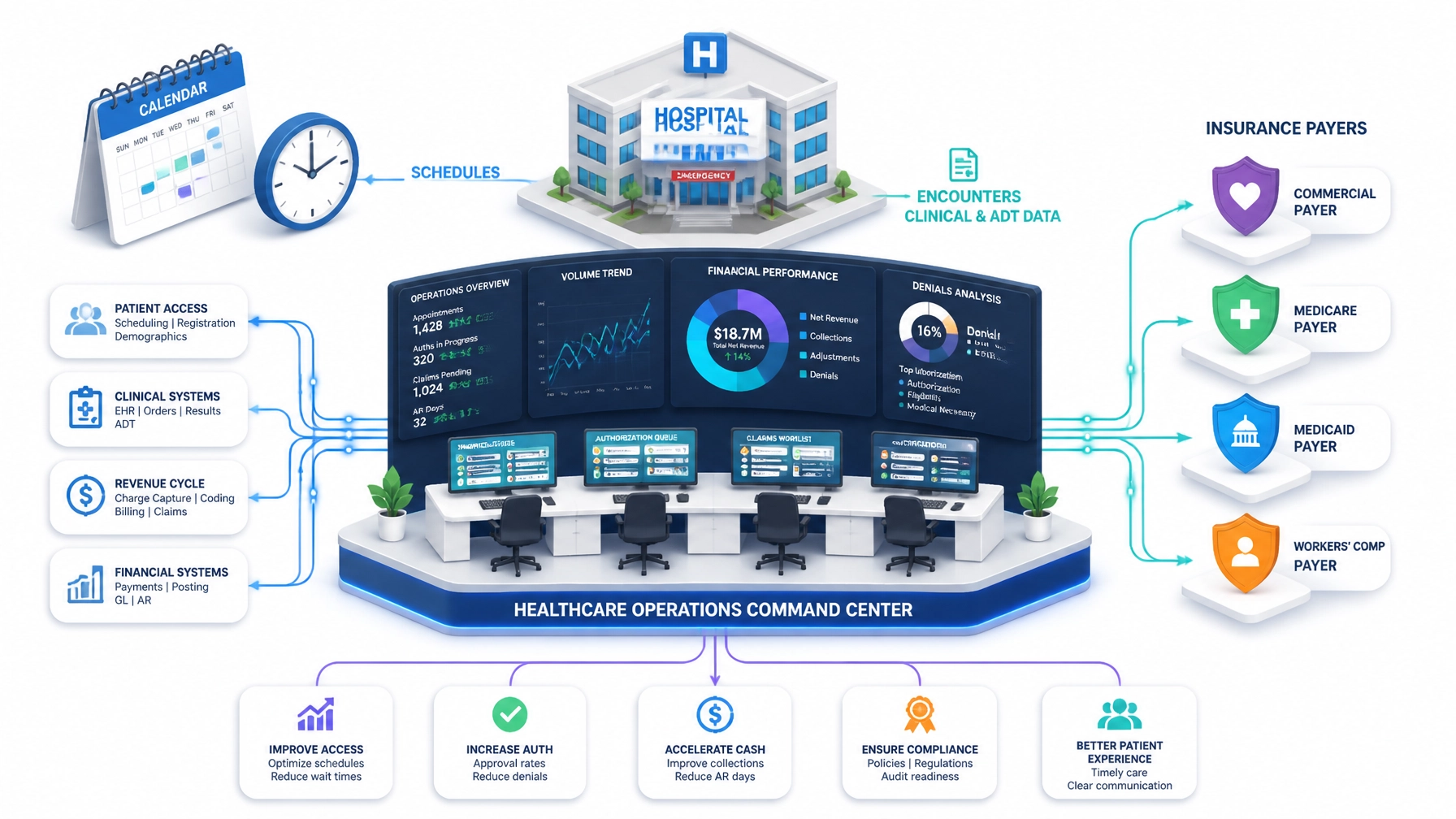
Navigating the complexities of provider enrollment and the shifting priorities of modern healthcare systems often requires a deep look at the front lines of patient care. As reported by Elisabeth Rosenthal for KFF Health News, a harrowing trend known as "emergency department boarding" is transforming American hospitals into a medical underworld. Patients are no longer just passing through the ER; they are living there: sometimes for days: on hard stretchers in hallways while waiting for a room that may never materialize. Looking for professional provider credentialing services in the USA? 👉 Check our main service page here: veracityeg.com The Purgatory of the Hallway Elisabeth Rosenthal, a physician and seasoned journalist, recently shared a deeply personal account of her husband Andrej’s battle with esophageal cancer and his subsequent encounters with the hospital system. For Andrej, the emergency room became a place of "purgatory." His experience is not an isolated incident; it is a symptom of a systemic failure where the emergency department (ED) becomes a permanent holding cell for the sickest patients. Boarding occurs when a patient has been officially admitted to the hospital but cannot be moved to an inpatient ward because no beds are available. In this limbo state, patients are subjected to the constant noise, fluorescent lights, and lack of privacy inherent to an ER. For someone like Andrej, who was navigating the final stages of terminal cancer, this environment was more than just uncomfortable: it was "barbaric." A Systemic Crisis in Plain Sight While the problem of ER boarding has existed for years, data suggests it has reached a breaking point. Adrian Haimovich, an ER doctor at Boston’s Beth Israel Deaconess Medical Center, notes that boarding for more than 24 hours has surged, particularly among the elderly population since the pandemic. The issue is multifaceted. According to industry experts like Gabe Kelen of Johns Hopkins University, hospitals are increasingly managed like airlines: intentionally overbooking to ensure every staffed bed is generating revenue. Because an empty bed is a financial loss, hospitals prioritize lucrative elective procedures, such as joint replacements or heart catheterizations, over emergency admissions for chronic or end-of-life care. This creates a "moral hazard" for medical staff. Doctors and nurses in the ED are forced to care for boarders: patients who require long-term inpatient management: while simultaneously triaging new emergencies. The result is a high-pressure environment where patients easily fall through the cracks. The Business of Bed Management The financial structure of healthcare plays a starring role in this crisis. As the American Hospital Association points out, the high cost of staffing and a shortage of post-acute care facilities (like rehab or hospice) create a bottleneck. When patients in "real" beds have nowhere to go, the entire system backs up into the ER. Interestingly, the business model also provides a perverse incentive. Hospitals can still bill at inpatient rates even if the patient is on a stretcher in a hallway. Furthermore, patients with complex, chronic conditions who don't require high-revenue interventions are often the ones left waiting the longest, as they are seen as less "profitable" than a surgical candidate waiting for the same bed. The Veracity Take: Why This Matters for Your Practice At The Veracity Group, we see the downstream effects of these systemic bottlenecks every day. While this crisis is often discussed in clinical terms, it is inextricably linked to administrative efficiency and provider enrollment. 1. Staffing and Credentialing Pressures When ERs are overwhelmed by boarders, the demand for "safe staffing" increases. This leads to a frantic need for locum tenens or newly hired providers to fill the gaps. If your credentialing delays are holding up these providers, you aren't just losing revenue: you are contributing to a bottleneck that physically endangers patients. 2. The Revenue Cycle Trap As noted in the KFF report, boarding contributes to medical errors and prolonged stays. For practices and health systems, this means a higher likelihood of claim denials and audit triggers. If a patient is billed for inpatient care while sitting in an ED hallway, payers may eventually push back on the "level of care" provided, leading to significant clawbacks. 3. Reputation and Enrollment Patients like Andrej and families like the Rosenthals remember these experiences. In an era of transparency, a hospital’s "throughput" becomes a public metric. Ensuring your providers are correctly enrolled and linked to the right facilities is the baseline of professional credibility; without it, you can't even begin to address the operational failures of bed management. For more insights on navigating these shifts, check out our blog or read our analysis of CMS enrollment trends. The Path Forward: Regulation and Transparency There is some movement toward a solution. The Centers for Medicare & Medicaid Services (CMS) has finalized rules that will eventually require hospitals to report boarding times. By 2028, these metrics will become mandatory and will likely affect Medicare reimbursements. However, as Rosenthal points out, the political climate remains a hurdle. Federal agencies tasked with researching these crises have faced staffing and funding cuts, leaving many proposed solutions: such as expert panels and new licensing requirements: on the shelf. Conclusion: A Call for Parity and Efficiency The "barbaric" state of ER boarding is a reminder that healthcare is not just a series of transactions; it is a service provided to people in their most vulnerable moments. For healthcare administrators and practice owners, the takeaway is clear: operational efficiency is a moral imperative. Whether it's ensuring your CAQH profiles are updated to prevent staffing gaps or fighting for better contracting terms that reflect the reality of modern care, the work we do behind the scenes matters. We must move beyond "band-aid" fixes and address the root causes of why our hospitals are failing the very people they are meant to save. Looking for professional provider credentialing services in the USA? 👉 Check our main service page here: veracityeg.com #ProviderEnrollment #HealthcareCrisis #ERBoarding #HospitalManagement #PatientSafety #MedicalEthics #HealthcareFinance #KFFHealthNews #CMSCompliance #HealthAdmin #ProviderCredentialing #MedicalNews #HospitalBeds #EmergencyMedicine #HealthcareReform #TheVeracityGroup #PracticeManagement #RevenueCycle #PatientCare #HealthTrends #NursingShortage #MedicalBilling #HealthcareOperations #PublicHealth
BCBS contract negotiations: what every independent practice should know

Navigating the landscape of payer contract strategy is the most critical lever an independent practice can pull to ensure long-term financial viability. In the current healthcare climate, Blue Cross Blue Shield (BCBS) often functions as the 800-pound gorilla in the room, dictating terms that many providers feel forced to accept. However, BCBS dominance is not a valid reason to settle for sub-par reimbursement rates or unfavorable contract terms. Effective provider enrollment and proactive negotiation are the only ways to prevent your practice from being squeezed by rising overhead and stagnant or declining pay scales. Looking for professional provider credentialing services in the USA? 👉 Check our main service page here: veracityeg.com The Myth of the "Non-Negotiable" Contract The most dangerous assumption an independent practice owner can make is that a BCBS contract is "take it or leave it." Payers rely on this passivity. They send out mass amendments and standard fee schedules expecting a high percentage of providers to sign without a second glance. You must recognize that while BCBS may hold a significant market share, they still require a robust network of independent specialists to satisfy their employer groups and members. Never accept the first offer. In the world of healthcare contracting, the initial offer from a payer is their ceiling: the most they hope to get away with paying you. For the provider, that same offer should be viewed as the floor. It is the starting point for a conversation, not the final word. If you are not pushing back, you are leaving money on the table that your practice earned. The Michigan Precedent: A Warning for May 2026 The urgency of monitoring your BCBS agreement has never been higher. A prime example of the "silent squeeze" is the recent move by BCBS Michigan. The payer proposed a 50% reimbursement reduction affecting E/M codes 99202–99205 and 99212–99215 when billed with 0-day or 10-day global period procedures and modifier 25. This modifier, used for significant, separately identifiable evaluation and management (E&M) services by the same physician on the same day as a procedure, is a cornerstone of efficient specialty care. This remains a live policy proposal with a delayed start — recent alerts indicate implementation has been paused or postponed. A 50% cut to this modifier is a direct hit to the bottom line of every independent practice in the region. If you are operating in Michigan or surrounding areas, your payer contract strategy must account for these unilateral amendments. Failing to protest or negotiate these specific terms before they go into effect is a silent driver of practice insolvency. This is not just a Michigan problem; it is a model other plans could emulate if unopposed. Alt-tag: A professional consultant reviewing healthcare reimbursement data on a tablet. Benchmarking Indiana: From 95% to 130% of Medicare To understand the power of negotiation, look at the current state of independent practices in Indiana. In our work with Indiana practices, we frequently see BCBS rates stuck at 95% of Medicare. In an era of record-high inflation and increasing labor costs, 95% of Medicare is a recipe for a slow-motion financial disaster. At The Veracity Group, we view 95% as a failure of strategy. When we step in to handle negotiations, our target is 130% of Medicare. This 35% swing represents the difference between a practice that is merely surviving and one that has the capital to invest in new technology, hire top-tier staff, and expand its footprint. The difference between these two outcomes isn't the quality of care: it's the quality of the data and the persistence of the negotiator. You can learn more about how we approach the high-stakes world of medical business in our guide to Veracity: The Business of Medicine. The CAQH Prerequisite: Why Clean Data is Your Only Leverage Before you ever pick up the phone to call a provider relations representative, your house must be in order. The CAQH ProView profile is a primary data hub for many commercial payers and a practical prerequisite for smooth negotiations. If your CAQH data is outdated, expired, or inconsistent with what BCBS has on file, your negotiation will stall before it begins. Payers use administrative errors as a reason to deny rate increase requests. If you haven't performed a thorough audit of your CAQH profile recently, you are walking into a high-stakes meeting with a "passport" that has expired. Maintaining CAQH is not just an administrative chore; it is a strategic prerequisite for smooth negotiations. For a deeper dive into ensuring your data is ready for the 2026 cycle, see our breakdown of what every practice manager needs to know about CAQH updates. The High Cost of the "Auto-Renew" Trap Many BCBS contracts contain "evergreen" clauses. These allow the contract to automatically renew every 12 or 24 months without any adjustments for inflation or changes in the local market. Evergreen contracts that renew without rate adjustments are one of the biggest silent drivers of revenue loss. If you haven't reviewed your base agreement in the last 24 months, your effective rates have likely decreased significantly when adjusted for the current cost of doing business. The Veracity Take: Independent practices must treat their payer contracts like any other major vendor agreement. You wouldn't let a medical supply company raise prices after they have risen significantly over time while you kept your service fees the same. Why allow BCBS to do it? You must track your effective dates with the same rigor you track your clinical outcomes. Alt-tag: A healthcare executive analyzing a contract with a focus on financial growth. Strategic Steps for Your Next BCBS Negotiation To move the needle on your reimbursement rates, follow this authoritative framework: Analyze Your Top 20 Codes: Do not try to negotiate the entire fee schedule at once. Focus on the 20 CPT codes that drive 80% of your revenue. Know your current rate, the Medicare rate, and the rates offered by other commercial payers like UnitedHealthcare or Cigna. Gather Value-Based Data: Payers
What is a payer contract escalator clause : and why you need one

Silence is the most expensive line item in your P&L. Every time you sign a payer contract without an escalator clause, you’re agreeing—on paper—to get poorer every year while your costs climb. Payers know this. They bank on your enrollment fatigue and your reluctance to reopen contracts. That’s why an escalator clause isn’t a “nice to have”; it’s the only thing standing between you and a built-in annual pay cut. The 95% Medicare Trap: Why Silence is Costly In markets like Indiana and Illinois, payers like Anthem and Blue Cross Blue Shield (BCBS) have a standard operating procedure for providers who do not negotiate. By default, they often reimburse at 95% to 98% of the current Medicare Physician Fee Schedule. If you accept these terms during your initial provider enrollment, you are starting from a position of weakness. Medicare rates are already notoriously low and subject to federal budget cuts. Accepting a percentage below that benchmark is a recipe for long-term insolvency. Furthermore, many of these contracts are "evergreen," meaning they renew automatically every year. Without an escalator clause, your rates remain fixed at that 95% mark indefinitely. Meanwhile, your staff salaries, medical supplies, and rent all increase. This gap is where practice profitability goes to die — and the numbers make the problem impossible to ignore. What that looks like in real dollars A practice collecting $1,000,000 a year at flat 95% of Medicare with 5% annual overhead inflation loses roughly $50,000 of margin in year one and $97,500 by year two. The work stays the same. The math quietly turns against you. Alt-tag: A chart showing the widening gap between rising healthcare operating costs and flat payer reimbursement rates over a five-year period. What is a Payer Contract Escalator Clause? An escalator clause is a specific provision in a payer agreement that guarantees an automatic, periodic increase in your reimbursement rates. It keeps your compensation aligned with economic reality without forcing you to reopen negotiations every 12 months. Sample escalator concept language (For illustration only—final language via counsel) “Effective on each anniversary of the Effective Date, Payer shall increase the reimbursement rates in Exhibit A by the greater of (a) 3% or (b) the percentage increase in the Medical Care component of the Consumer Price Index (MCPI) over the preceding 12-month period, provided that in no event shall the rates fall below 120% of the Medicare Physician Fee Schedule in effect as of January 1, 2026.” Most providers don’t realize this language is already used by hospitals, ASC groups, and large multispecialty systems. You’re not asking for anything unusual — you’re asking for parity. There are three primary ways these clauses are structured: Fixed Percentage Increases: The contract specifies that on a set date each year (often the anniversary of the effective date), all base rates will increase by a fixed percentage: typically 3% to 5%. CPI-Linked Increases: The rates are tied to the Consumer Price Index (CPI) or the Medical Consumer Price Index (MCPI). This ensures your revenue scales alongside the actual cost of living and medical inflation. Medicare Benchmark Adjustments: The contract is set as a percentage of the current year’s Medicare fee schedule. As Medicare adjusts (even if the adjustments are minimal), your rates move in tandem. Pillar 2: The Veracity Contract Strategy At Veracity, we implement a specific Payer Contract Strategy: which we refer to as Pillar 2 of our management framework. We don't settle for the "standard" offer. Our approach is built on aggressive benchmarking and protective floors. The 130% Anchor When we handle contract analysis and renegotiation, we anchor our negotiations at 130% of Medicare. This is the standard we believe reflects the true value of high-quality specialized care. By starting here, we move the conversation away from the payer's 95% default and force them to justify why they should pay any less than the market value for your services. The 120% Floor The most critical component of a Veracity-negotiated escalator is the 120% floor. We recognize that Medicare rates can occasionally drop due to legislative changes. To protect your practice, we insert language that ensures your reimbursement never falls below 120% of a specific baseline year’s Medicare schedule, regardless of what happens in Washington D.C. This creates a "one-way" escalator: your rates go up with the market, but they are protected from falling with federal budget cuts. That means a bad year in Washington doesn’t become a bad year in your P&L. This level of protection is the difference between a practice that survives and one that thrives. Alt-tag: An infographic illustrating the Veracity Group strategy: a 130% Medicare anchor with a 120% protective floor. Why an Annual Escalator is Non-Negotiable If a payer refuses to include an annual escalator, they are telling you that they expect your services to become less valuable every year. Here is why you must insist on this clause: Combating Staff Turnover: To keep high-quality medical assistants, nurses, and billing staff, you must provide annual raises. If your revenue is flat, those raises come directly out of the owner’s pocket. Neutralizing Inflation: Inflation isn’t a "maybe"; it’s a mathematical certainty. An escalator clause is your hedge against the rising cost of utilities, technology, and insurance premiums. Reducing Administrative Burden: Re-negotiating a contract is a months-long process involving data analysis, multiple rounds of communication, and legal review. An automatic escalator removes this burden from your plate, allowing you to focus on patient care while the contract manages itself. Leverage in Future Mergers: If you ever plan to sell your practice or join a larger group, contracts with built-in escalators significantly increase your practice's valuation. Buyers want to see guaranteed revenue growth. How to Get an Escalator Clause into Your Contract You cannot simply ask for an escalator; you must demand it backed by data. Payers will always push back, claiming "network parity" or "standardized terms." These are stalling tactics. When you work with Veracity, we use your CAQH profile and historical claims data to demonstrate your
The Behavioral Health Enrollment Landscape: A Deep Dive into State-Level Requirements

The current behavioral health provider enrollment environment demands exact documentation control, state-by-state licensure analysis, and timeline discipline from RCM leaders and clinic administrators. If you rely on generic medical provider enrollment services workflows, your organization will absorb avoidable denials, retroactive billing gaps, stalled payer activation, and unnecessary write-offs. In behavioral health, enrollment is not back-office housekeeping. It is a revenue protection function tied directly to provider readiness, network participation, and compliant claim submission. 1. Why the Behavioral Health Enrollment Landscape Is Operationally Different The behavioral health enrollment landscape is more fragmented than most physician enrollment environments because the underlying licensure models are fragmented. States do not use one unified framework for counselors, social workers, or marriage and family therapists. They use different degree standards, supervised experience thresholds, board exams, provisional license categories, and independent practice rules. Those differences materially affect: Whether the provider qualifies for enrollment at all Whether supervision documentation is required Whether the provider may bill independently or only under a facility structure Whether Medicaid recognizes the license class as an eligible rendering type Whether managed care plans mirror state Medicaid rules or impose narrower standards For RCM teams, this means enrollment cannot be processed from the NPI outward. It must be processed from the state license status, supervision model, scope of practice, and payer recognition rules outward. 1.1 Core Data Elements That Drive Behavioral Health Enrollment Before any Medicare, Medicaid, or commercial file is submitted, your team must validate these technical data points: License type and exact title LCSW, LPC, LMHC, LCPC, LMFT, associate or provisional variants Independent vs. supervised practice authority Supervisory documentation requirements Primary practice location and service locations Taxonomy code alignment NPI Type 1 and organizational NPI relationships CAQH ProView status where applicable Medicaid provider type and specialty code mapping Medicare eligibility by practitioner class Telehealth and in-person service scope under state law and payer policy. Many payers now increasingly require telehealth-specific taxonomy alignment. If one of those fields is wrong, your file does not just slow down. It breaks. 2. Scope of Practice Variations That Affect Enrollment Scope of Practice (SOP) is not an abstract legal issue. It determines whether a payer will accept the provider as an independent rendering professional, require supervision attestations, restrict billable services, or reject the application outright. 2.1 LCSWs In many states, LCSWs function as independently licensed clinical providers authorized to assess, diagnose, and treat behavioral health conditions within the state-defined social work scope. For enrollment, that usually translates into the strongest pathway among master’s-level behavioral health clinicians. Even so, RCM leaders must confirm: Whether the state Medicaid agency recognizes the license as independently billable Whether diagnosis authority is explicitly allowed under state law Whether the provider must enroll under a specific behavioral health specialty designation Whether the payer requires post-master’s supervised hours evidence during enrollment or revalidation 2.2 LPCs / LMHCs / LCPCs Counselor licensure creates the most frequent enrollment confusion because states use different naming conventions and different thresholds for independent practice. One state uses LPC, another uses LMHC, another uses LCPC, and payer files do not always map those titles cleanly. Your enrollment team must confirm: Exact state-recognized license title Whether the provider has full independent practice authority Whether diagnosis is included in the legal SOP Whether the state Medicaid program recognizes that license category for direct enrollment Whether managed care plans follow state Medicaid recognition or restrict participation further 2.3 LMFTs LMFTs often face the widest variation in payer recognition. A state may license LMFTs for independent clinical work, yet a Medicaid program or delegated MCO workflow may still have narrower enrollment pathways or outdated provider-type mapping. That mismatch is a classic source of silent denials. Your team must verify: Whether LMFT is an active Medicaid rendering provider type in the state Whether facility-linked billing rules apply Whether family, couples, and individual treatment services are recognized under payer policy Whether telehealth participation is aligned with the LMFT’s state-level SOP 3. State-by-State Technical FAQ & Requirements This section is designed for clinic administrators, payer enrollment managers, and RCM leaders building multi-state behavioral health onboarding workflows. These examples are technical reference points, not legal advice, and they must be verified against the current state board and Medicaid agency rules at the time of filing. 3.1 Indiana Indiana uses multiple counseling license tracks, and that structure directly affects enrollment review. Key technical points LACA / LAC tracks: Indiana distinguishes associate and full counselor pathways. Files must reflect the exact active credential level shown at the board level. Practicum requirement: Indiana counseling pathways include a 350-hour practicum benchmark tied to qualifying graduate preparation. Associate-level or supervised pathways do not automatically convert into independent payer eligibility. RCM teams must confirm whether the rendering provider is fully licensed for independent practice before building a direct enrollment strategy. FAQ Does Indiana allow all counseling license levels to enroll independently?No. Your team must map the exact Indiana license class to the payer’s recognized rendering categories before submission. Why do Indiana files stall?Indiana files stall when clinics submit an application based on job title rather than the actual board-issued license status, supervision level, and payer-recognized provider type. 3.2 California California remains one of the most operationally demanding states for behavioral health enrollment because board requirements, Medi-Cal workflows, and organizational rendering provider data all require precision. Key technical points California behavioral health licensure pathways commonly require 3,000 supervised hours The Law & Ethics exam is a core licensure checkpoint in California behavioral health pathways Medi-Cal enrollment often runs through PAVE Group and facility files must align every rendering provider’s NPI, legal name, license number, and service role exactly FAQ What breaks California enrollment files most often?The most common failure point is mismatch across PAVE, state licensure records, NPI data, and organizational rosters. Why is California hard for multi-site behavioral health groups?Because rendering provider rosters, service locations, and program structures must line up across multiple data systems. If one identifier is off, the application returns for correction and the clock resets. 3.3 Florida Florida
Weekend Update: Enrollment Trends Explained in 3 Minutes

Welcome back to your weekend brief. Navigating the world of medical provider enrollment services shouldn't feel like a high-stakes escape room, but when you're managing Medicare and Medicaid enrollment for behavioral health providers, the walls tend to close in fast. If you were hoping for a smooth digital transformation this season, I have some bad news: it’s April 2026, and we are still playing a waiting game with the ghosts of administrative promises past. The PECOS 2.0 Rollout Update PECOS 2.0 is currently rolling out. CMS is transitioning the platform to a cloud environment between April 20, 2026, and May 3, 2026, and PECOS 2.0 will be fully live on May 4, 2026. That means this is no longer a vaporware story. It is an active federal system transition with real operational implications for your practice. The rollout matters because CMS is introducing several functional upgrades designed to reduce duplicate work and improve visibility across the enrollment process. The new platform includes a single application for multiple enrollments, pre-populated data that carries forward existing provider information, and real-time status updates so you can track progress without relying entirely on email chains and manual follow-up. The Veracity Take This timeline changes the conversation, but it does not remove the operational pressure on your team. During a live transition window, delays, processing variability, and documentation issues still create serious consequences for revenue. You must stay disciplined while CMS moves PECOS into the new environment. The practical advantage is clear: single-application workflows, pre-populated records, and real-time status visibility will make enrollment tracking more efficient once the rollout completes. Until then, your best move is the same one that protects cash flow every time: submit early, verify every data field, and monitor application movement closely through the transition period. Alt-tag: A cyberpunk-style watercolor illustration of a complex digital landscape with two perfectly interlocking puzzle pieces in the center: one male and one female: glowing with golden energy to represent a perfect administrative fit. The Puzzle Logic: Why Enrollment is Your "Interlocking" Piece Think of your healthcare practice as a complex puzzle. You have the clinicians, the patients, and the facility. But there is a final, critical connection that many administrators overlook until it’s too late. To make the revenue cycle work, you need a perfectly engineered male and female interlocking system. One side is your provider’s clinical data; the other is the payer's enrollment requirements. If both sides are "female": meaning you have two gaps and no bridge: nothing fits. If you try to force a provider into a schedule without the "male" interlocking piece of a completed enrollment, the whole structure collapses. You are left with a provider who can see patients but cannot generate a single cent of collectible revenue. This is the silent driver of practice failure. We see this most often when clinics assume a provider's previous enrollment will "follow" them. It won't. Enrollment is location-specific, group-specific, and tax-ID-specific. Without that exact fit, the puzzle remains incomplete, and your cash flow remains stalled. The "Silent Driver" of Revenue Loss: Enrollment Gaps The most dangerous threat to your bottom line isn't a drop in patient volume; it's the enrollment gap. This is the period between when a provider starts seeing patients and the date their enrollment becomes effective. For Medicare and Medicaid enrollment for behavioral health providers, these gaps can be devastating. Because behavioral health often relies on high-volume, lower-reimbursement sessions (like 90834 or 90837), even a two-week gap in enrollment can result in tens of thousands of dollars in unbillable services. The Effective Date Trap: Payers like CMS often set the effective date based on when the application was received, not when the provider started. If your paperwork sits on a desk for three weeks, you lose three weeks of revenue. The Retroactive Limitation: Medicaid, in particular, has strict and often non-existent retroactive windows. If you miss the window, those claims are dead on arrival. The Credentialing Carry-over: While some believe "credentialing" is the finish line, the enrollment phase is where the money actually lives. You can be "credentialed" by a board but not "enrolled" in a plan, leaving you in a state of professional limbo. The high cost of credentialing-delays is often the difference between a profitable quarter and a massive deficit. You cannot afford to treat enrollment as an afterthought. Alt-tag: A vibrant watercolor image of a clock melting into a pile of money, symbolizing the high cost of time delays in medical provider enrollment services. Specialized Focus: Behavioral Health Hurdles Behavioral health is currently the "Wild West" of enrollment. With the surge in demand for mental health services, payers have increased scrutiny on provider types like LCSWs (Licensed Clinical Social Workers) and PMHNPs (Psychiatric Mental Health Nurse Practitioners). If you are expanding your behavioral health group, you must navigate these specialty-specific hurdles: Supervision Requirements: Many Medicaid plans require specific supervisory signatures for provisionally licensed clinicians. If the enrollment application doesn't reflect the exact supervisory relationship on file with the state board, it will be rejected instantly. NPI Type 2 Alignment: Ensure your group NPI (Type 2) is correctly linked to every individual NPI (Type 1). A common mistake in behavioral health is billing under the individual NPI for a group-based service, which leads to immediate denials. Telehealth Taxonomy: Since 2024, the use of specific telehealth taxonomies has become mandatory for most behavioral health enrollments. Using an outdated "office-only" taxonomy code while providing 100% remote therapy is an invitation for an audit. For a deeper dive into the specific requirements for different license levels, check out our guide on medical-licensing-csr-dea. Alt-tag: A cyberpunk-inspired watercolor of a brain interconnected with digital nodes and medical icons, highlighting the technical complexity of behavioral health enrollment. Why Manual Reviews Are the New Normal Because PECOS 2.0 is still in rollout, we are seeing a period where aggressive manual reviews remain part of the process. This means that instead of a fully stabilized automated system checking your boxes, a human being at
Operational Rigor for Independent Practices: The Veracity Group Service Stack

Revenue leakage in an independent practice is rarely the result of poor clinical care; it is almost always the result of administrative friction. When a new provider joins your team in a state like Indiana, the clock begins ticking on a fiscal countdown that determines whether that hire is an asset or a liability for the first two quarters. Implementing robust provider enrollment and credentialing services is the only way to stop the bleeding before it begins. If your practice operates without a rigorous framework for data management and payer relations, you are effectively volunteering to provide free labor for months on end. Looking for professional provider credentialing services in the USA? 👉 Check our main service page here: veracityeg.com The 90-Day Revenue Wall The financial health of your practice depends on a 90-day timeline. This is the window where most administrative failures occur. From the moment a contract is signed, the race to secure effective dates begins. If your provider is seeing patients but isn't yet loaded into the payer’s system, those claims will sit in limbo or face immediate denial. We see this most frequently with major payers like Anthem. Because Anthem maintains significant market share in various regions, being "out" for even a few weeks can derail your monthly projections. The Veracity Group treats this 90-day window as a hard deadline. We do not wait for payers to send reminders. We push the file through the system using a persistent, data-driven approach that ignores the standard "wait and see" mentality that plagues many in-house billing departments. You can read more about the high cost of credentialing delays and how they impact your bottom line. Provider Enrollment: Beyond the Paperwork Enrollment is the foundation of your revenue cycle. It is not merely filling out forms; it is the strategic mapping of your providers to the correct tax IDs and NPIs within the payer databases. Mistakes here are correctable, but the correction process is slow, resource-intensive, and financially damaging. Fixing a bad enrollment record often takes weeks or months, and the revenue disruption during that gap is costly. The Veracity Group manages provider enrollment by establishing a clean data trail. We ensure that every location, every specialty, and every sub-specialty is accurately reflected. This prevents the "not found" errors that lead to patient frustration and uncollectible balances. When you hire us, we act as the aggressive intermediary between your practice and the insurance giants. We speak their language, we know their portals, and we know exactly which buttons to push when a file gets stuck in the black hole of "initial review." Credentialing and the CAQH Requirement CAQH is the backbone of professional credibility in the modern medical office. If your CAQH profile is incomplete, outdated, or contains conflicting information, your credentialing will stall. There is no middle ground. Many practices treat CAQH as a "set it and forget it" task, but the reality is that regular attestations and document updates are mandatory. Our team takes full ownership of your CAQH profile. We ensure that every certification, every insurance policy, and every work history detail is verified and uploaded. This level of operational rigor ensures that when a payer like UnitedHealthcare or Aetna goes to pull your data, they find a perfect file. Perfection in the data stage leads to speed in the approval stage. We eliminate the back-and-forth requests for "missing information" that typically add weeks to the process. Medical Licensing and DEA Registration You cannot practice medicine without a license, and you cannot prescribe controlled substances without a DEA registration. While these seem like basic requirements, the administrative burden of maintaining them across multiple providers can be overwhelming. Each state has its own quirks: especially when dealing with the Indiana Professional Licensing Agency (IPLA) or similar bodies. The Veracity Group handles medical licensing and DEA registration with a focus on expiration management. We don’t just help you get the license; we ensure you never lose it due to an administrative oversight. We track the renewals, handle the fees, and manage the communication with the boards. This allows your providers to focus on patients while we handle the regulatory gatekeeping. Payer Contract Analysis and Negotiation Getting into a network is only half the battle. The other half is ensuring that the rates you are paid are actually sustainable for your business. Many independent practices sign the first "standard" contract put in front of them by Anthem or Cigna, not realizing they have just locked themselves into rates that haven't been updated in years. Our payer contract analysis and negotiation service is designed to identify these discrepancies. We look at your top-billed codes and compare them against the proposed fee schedules. If the math doesn't work, we tell you. If there is room for negotiation based on your patient volume or specialty, we lead that charge. You should never be the lowest-paid provider in your zip code simply because you didn't have the data to ask for more. For a deeper dive into how this affects your long-term strategy, check our guide on contracting and negotiations. The Veracity Service Stack: A Comprehensive Approach When you look at our full list of services, you see a stack designed for total practice protection. We are not a "temp agency" for paperwork. We are an operational partner. Our stack includes: Initial Credentialing: Getting your providers into the system fast. Re-credentialing: Maintaining your status without interruptions. Medicare/Medicaid Enrollment: Managing the complex CMS requirements via PECOS. Demographic Updates: Ensuring your directory information is accurate so patients can find you. Ongoing Monitoring: Constant surveillance of license expirations and OIG sanctions. This integrated approach means that no part of the provider's professional identity falls through the cracks. If a provider's license is due for renewal, we already have it on our dashboard. If a payer is lagging on a contract update, we are already on the phone with their provider relations representative. Why Operational Rigor is Non-Negotiable The healthcare industry does not reward "trying hard."
How to read an explanation of benefits (EOB) to spot underpayment

Every dollar left on the table is a direct contribution to an insurance company’s bottom line at the expense of your practice's survival. When a claim is processed, the Explanation of Benefits (EOB) is the only document that tells the true story of how your provider enrollment and physician credentialing efforts are translating into actual revenue. If you aren't auditing these documents with a microscopic lens, you are almost certainly being underpaid. Looking for professional provider credentialing services in the USA? 👉 Check our main service page here: veracityeg.com The High Cost of EOB Illiteracy An EOB is the post-game film of a medical claim. It details what you charged, what the payer decided was "fair," and what they actually sent to your bank account. The complexity is intentional. Payers like Aetna and Cigna rely on claim editing software and dense Claim Adjustment Reason Codes (CARC) to support lower initial payments. That includes standard industry logic such as NCCI edits, Medically Unlikely Edits (MUEs), and payer-specific bundling logic. These edits do not explicitly override your contract, but they are designed to reduce payment by default unless your practice identifies the issue and challenges it. Ignoring these discrepancies doesn't just lose you a few dollars today; it creates a precedent of accepted underpayment that can hollow out your revenue cycle. If your provider enrollment wasn't handled with precision, the payer might be processing your claims at an "out-of-network" rate or under an old, less favorable contract version without you even realizing it. This is why staying updated on payer gridlock trends in 2026 is vital for any practice manager who wants to keep the lights on. Billed vs. Allowed vs. Paid: The Critical Trio To spot an underpayment, you must distinguish between three primary figures. Billed Amount: This is your "sticker price." It is what you charge for the service. While this number is often high to ensure you capture the maximum possible reimbursement, it is rarely what you get paid. Allowed Amount: This is the most important number on the page. It is the maximum amount the insurance company will cover for a specific service based on your contract. If your contract says a Level 3 office visit is worth $75, but the "Allowed" column says $60, you have an immediate contractual underpayment. Paid Amount: This is the actual check or EFT amount. This equals the Allowed Amount minus the patient responsibility (copay, coinsurance, or deductible). If you see an encounter where you billed $150, the payer allowed $75, but only paid $40, you need to verify if that remaining $35 is truly shifted to the patient’s deductible. If the EOB shows a $35 adjustment without a corresponding patient responsibility code, that is money stolen from your practice. Alt tag: A detailed breakdown of EOB columns showing Billed, Allowed, and Paid amounts for a medical claim audit. Decoding the CARC Codes: The Payer’s Secret Language The "Reason Code" column is where payers hide their justifications for underpayment. You must memorize the most common Claim Adjustment Reason Codes (CARC) to fight back effectively. CO45 (Contractual Obligation): This is the most common code. it represents the difference between your billed amount and the contracted allowed amount. However, payers often hide "silent PPO" discounts or unauthorized fee schedule cuts under CO45. If the CO45 adjustment is larger than what your contract stipulates, it is an underpayment. CO97 (Procedure is bundled): This code claims the service is not separately payable because it’s included in another service. Payers often apply claim editing logic here, including NCCI-style bundling edits, MUE-related limitations, or their own proprietary bundling rules. These edits do not formally replace the payment terms in your contract, but they routinely reduce reimbursement by default unless your practice audits the EOB and disputes the application when it is wrong. CO4 (Inconsistent Coding): This indicates the payer believes the procedure code is inconsistent with the modifier used or the patient’s gender/age. Often, this is a sign that your enrollment and credentialing data might be out of sync with the payer’s records. For a full list of standardized codes, you can refer to the official X12 CARC database, which provides the technical definitions used across the industry. The $75 Encounter Scenario Let’s look at a concrete example. Imagine you have a contract with Aetna that specifies a $75 reimbursement for a specific CPT code. You submit a claim for $120. The EOB returns: Billed: $120 Allowed: $55 Adjustments: $65 (Code CO45) Paid: $55 In this scenario, you have been underpaid by $20 per encounter. If you see 10 patients a day with this code, that is $1,000 a week missing from your pocket. The reason? The payer may have updated their internal fee schedule without notifying you, or they may be applying a "multiple procedure discount" incorrectly. Without comparing the "Allowed" amount to your physical contract, you would simply assume $55 is the correct rate. Why Enrollment Errors Lead to EOB Nightmares A significant portion of underpayments isn't due to malicious intent by the payer, but rather "administrative friction" caused by poor data management. If your Tax ID or NPI isn't linked correctly to the specific contract version in the payer's system, the EOB will reflect a default, lower rate. We often see Veracity clients who are being paid 20% less than their peers simply because their CAQH profile wasn't updated, leading the payer to drop them into a "standard" tier rather than a "preferred" tier. Your EOB is the first place these mistakes become visible. If you see "Out of Network" or "Reduced Rate" flags on an EOB for a payer you know you are contracted with, you have an enrollment emergency on your hands. Alt tag: A medical practice manager reviewing a stack of EOBs with a red pen, highlighting discrepancies in payment codes. The Dispute Window: Why Speed is Your Only Ally Every payer has a strictly defined "timely filing" and "dispute window." For many, you only have 60 to 90 days from
Signs your payer contract is underperforming : and what to do about it

Your billing system shows a "Paid" status, but your practice is still losing money. Most practice owners equate a processed claim with a successful transaction, yet this line of thinking is exactly why so many provider enrollment files lead to stagnant revenue. If you haven't scrutinized your payer contract in the last 24 months, you are likely subsidizing the insurance carrier’s bottom line with your own overhead. The Medicare Benchmark Trap The most immediate sign of an underperforming contract is a rate that hovers at or below the 100% Medicare threshold. In competitive markets like Indiana, we frequently see legacy contracts where providers are being reimbursed at 95-98% of Medicare. While this might have felt "market standard" five years ago, it is a mathematical failure in the current economy. When Anthem or other major carriers keep you tethered to a percentage of Medicare that doesn't account for the rising cost of labor and medical supplies, they are effectively giving themselves an annual discount. You must benchmark every single one of your top 20 CPT codes against the current year's CMS Physician Fee Schedule. If your commercial rates aren't at least 120% to 140% of Medicare for your primary service lines, you are leaving six figures on the table. Invisible Revenue Killers: Recoupment and Filing Deadlines An underperforming contract isn't just about the base rate; it is about the "gotcha" clauses buried in the fine print that allow payers to claw back money months or years after the service was rendered. Vague Recoupment Windows Check your contract for recoupment or "look-back" periods. If your contract allows a payer to initiate a recoupment two years after a claim was paid, you are operating under a constant financial threat. Expertly negotiated commercial contracts limit this window to 12 months or less, ensuring that once your books are closed for the fiscal year, they stay closed. Medicaid recoupment periods are different because many state programs have longer review and recovery windows set by statute or regulation. ERISA plan overpayment disputes also follow federal rules that do not always mirror standard commercial contract norms, so you must evaluate those provisions under the governing plan and federal framework rather than assuming a market-standard limit applies. Aggressive Filing Deadlines Timely filing limits are another silent driver of revenue loss. If your contract mandates a 60-day filing window while the payer has 180 days to respond, the playing field is tilted against you. High-performing contracts align these deadlines or provide the provider with a wider window to account for the administrative delays inherent in modern billing. You can see how these administrative hurdles compound in our Payer Gridlock Report 2026. The High Cost of Silence The greatest expense in healthcare isn't malpractice insurance or payroll; it is the cost of not negotiating. Payers rely on "evergreen clauses" that automatically renew your existing rates every year without adjustment. If you don't send a formal notice of intent to renegotiate, you are essentially telling the payer that you are happy with a "pay cut" via inflation. For a mid-sized group, the difference between a contract paying 98% of Medicare and one paying 115% can represent $200,000 to $500,000 in annual net income. This is money that should be used for staff retention, new technology, or clinical expansion. Instead, it stays in the payer’s reserves because the practice didn't initiate a contract analysis and renegotiation strategy. Understanding the 180-Day Timeline You cannot fix a broken contract in a month. If your contract is underperforming, you must commit to a 180-day timeline for a successful turnaround. This window accounts for the data gathering, the initial proposal, the inevitable "no" from the payer, and the subsequent rounds of back-and-forth required to reach a favorable outcome. Days 1-30: Data extraction. You must know your volume by payer and your weighted average reimbursement. Days 31-60: Benchmarking and Proposal. Draft a direct, data-driven proposal that highlights your value to the network (e.g., specialized services, geographic coverage in underserved parts of Indiana). Days 61-150: Active Negotiation. This is where most practices fail. They send a letter, get a form-letter rejection, and stop. You must be prepared to escalate to provider relations managers and higher-level executives. Days 151-180: Implementation. Once the new rates are signed, they must be loaded into the payer’s system correctly. Failure to monitor the implementation phase is a common pitfall. Payers often "forget" to update the fee schedule in their adjudication engine, leading to continued underpayments despite a new signature. Unilateral Amendments and "Silent" Payer Shifts If you receive a "notice of amendment" in the mail and toss it in a drawer, you are likely agreeing to a rate reduction. Payers like Anthem frequently use unilateral amendment clauses to change the terms of your agreement without requiring a new signature. You must review every piece of correspondence from your payers. These amendments often change the "Provider Manual," which is incorporated into your contract by reference. By changing the manual, they change your contract. If your contract doesn't have language that allows you to "opt-out" or triggers a negotiation period upon a material change, your contract is underperforming. Actionable Step: Conduct a "Top 10" Audit Today The path to better reimbursement starts with a single spreadsheet. Do not try to audit every code at once; that leads to analysis paralysis. Your Practical Task: Identify your top 10 most frequently billed CPT codes. Pull the actual reimbursement amounts from your three largest commercial payers for these codes. Compare these figures to the current Medicare Fee Schedule. If the commercial rate is less than 115% of Medicare, or if the rate hasn't changed since 2022, you have an underperformance problem that requires immediate professional intervention. The Veracity Group sees this pattern across the country: practices work harder every year to see more patients, only to have their margins squeezed by outdated contracts. Negotiating isn't being "difficult": it is a core requirement of running a solvent healthcare business. If you aren't at the table, you are on
What is the Medicare fee schedule and why your commercial rates should be based on it

Navigating the complexities of provider enrollment and medical credentialing is the foundational step for any healthcare practice looking to secure its financial future in an increasingly competitive landscape. Understanding how you get paid is just as important as the care you provide, and at the heart of the American healthcare reimbursement system lies the Medicare Physician Fee Schedule (MPFS). For many practice owners, the MPFS is viewed merely as a government price list, but in reality, it is the backbone of professional credibility and the most critical benchmark for negotiating commercial insurance contracts. To maintain a sustainable practice, you must move beyond passive acceptance of payer rates. You must understand the mechanics of the MPFS and implement a strategic "130% Medicare framework" for your commercial contracts. This guide will break down the technicalities of the fee schedule and explain why anchoring your commercial rates to this public standard is the only way to ensure your practice covers its costs while remaining profitable. Decoding the Medicare Physician Fee Schedule (MPFS) The Medicare Physician Fee Schedule is more than just a list of prices; it is a sophisticated, data-driven system known as the Resource-Based Relative Value Scale (RBRVS). Established to create a level playing field, the RBRVS determines the "value" of a medical service based on the resources required to provide it. Every CPT code is assigned a Relative Value Unit (RVU), which is broken down into three distinct components: Work RVU: This accounts for the time, technical skill, physical effort, and mental judgment the clinician exercises during the procedure. Practice Expense (PE) RVU: This covers the overhead costs of running a practice, including clinical and administrative staff salaries, office rent, medical supplies, and equipment. Malpractice (MP) RVU: This reflects the cost of professional liability insurance associated with the specific service. To arrive at a final payment amount, these RVUs are adjusted by a Geographic Practice Cost Index (GPCI): which accounts for regional differences in the cost of living and doing business: and then multiplied by a fixed Conversion Factor set annually by the Centers for Medicare & Medicaid Services (CMS). You can review the latest updates on these regulatory shifts through resources like CMS.gov. Why the MPFS is the Industry’s "Fairness" Baseline The primary reason the MPFS serves as the industry standard is its transparency. Unlike commercial contracts, which are often shrouded in "proprietary" secrecy and non-disclosure agreements, the MPFS is public record. Every provider and every payer knows exactly what the baseline is. Using the MPFS as a benchmark provides a common language for negotiations. When you sit down at the table with a commercial payer, discussing rates in terms of "percentages of Medicare" allows for an objective comparison. It removes the guesswork and prevents payers from offering "black box" rates that look acceptable on the surface but fail to account for the rising costs of labor and medical supplies. Without a clear benchmark, your practice is flying blind. You cannot determine if a commercial offer is a "good deal" unless you know how it relates to the national standard. This is why contract analysis and renegotiation are vital; you must have the data to prove your worth. The 130% Medicare Framework: A Strategy for Sustainability While Medicare is the standard, it is rarely enough to sustain a private practice on its own. Medicare rates frequently sit at or near the margin for many private practices, especially after years of conversion factor cuts and rising overhead. For a commercial practice to be healthy, generate a profit, and reinvest in new technology, you must target a higher threshold. This is where the 130% Medicare framework comes into play. A common and defensible internal target is to aim for commercial rates in the range of 120–130% of current Medicare, adjusted for your market, specialty, and cost structure. Why 130%? Cost Coverage: Inflation and the rising cost of clinical staff mean that 100% of Medicare often results in a net loss for private practices after overhead is calculated. Negotiation Buffer: Payers will frequently offer "100% of Medicare" as a starting point. By establishing a 130% goal, you create a buffer for negotiation that ensures you don't settle for rates that compromise your practice’s viability. Standard of Care: To provide high-quality care and maintain modern facilities, your revenue must exceed the baseline "government" rate. Implementing this framework is a silent driver of practice growth. It ensures that every commercial patient seen contributes meaningfully to the practice’s bottom line. If your commercial contracts sit at or below Medicare while your overhead continues to rise, there’s a high likelihood you’re effectively subsidizing those payers with your own labor. Why Commercial Rates Vary (And Why You Need Leverage) You may notice that your colleague across town or a provider in a different specialty receives higher rates for the same CPT codes. Commercial rates are not static; they are influenced by several variables: Geography: As mentioned with the GPCI, it simply costs more to operate in Manhattan than it does in rural Missouri. However, commercial payers often have their own internal "market rates" that go beyond federal adjustments. Specialty Demand: If you provide a high-demand, low-supply specialty service, your leverage increases. Payers need you in their network to meet adequacy requirements. Negotiation Leverage: This is where many practices fail. Leverage is built through volume, quality data, and, most importantly, having your provider enrollment and credentialing house in order. You cannot negotiate from a position of strength if your enrollment is incomplete or your data is inaccurate in the payer's system. The High Cost of Passive Contracting The "set it and forget it" mentality is the enemy of practice profitability. Many providers sign a contract when they first open their doors and never look at it again. Over a decade, as the MPFS adjusts and inflation climbs, that "fixed" rate becomes a financial anchor. The consequences of ignoring your fee schedule alignment are severe: Revenue Leakage: Losing 5–10% on every claim because your rates haven't kept pace with
How to negotiate your first insurance contract as a new practice

Opening a new medical practice is a monumental achievement that represents years of dedication, yet the transition from clinician to business owner requires an immediate pivot toward high-stakes administrative strategy. Your long-term financial viability depends heavily on your initial provider enrollment strategy and your ability to conduct a rigorous contract analysis before committing to any payer agreement. Negotiating your first insurance contract is not a mere formality; it is the definitive moment where you set the price for your expertise and define the operational boundaries of your business. For many new practice owners, the initial stack of payer contracts feels like an intimidating "take it or leave it" proposition. This is a dangerous misconception that leads to years of stagnant revenue and administrative headaches. You must approach these documents as the start of a business relationship, not a mandatory decree. The Danger of the "Boilerplate" Trap The most common mistake a new practice makes is blindly signing "boilerplate" contracts. Payers often present standard agreements designed to protect their own bottom line, frequently featuring reimbursement rates that have not been updated for the local market in years. When you sign these without scrutiny, you are essentially agreeing to work at a discount before your doors even open. A boilerplate contract is a starting point, not a final destination. These documents often contain "evergreen" clauses that allow the payer to renew the contract indefinitely without cost-of-living adjustments. If you do not push back during the initial phase, you lose your greatest window of leverage. The time to demand better terms is when the payer is looking to fill a gap in their network with a fresh, motivated provider like you. Preparation: Gathering Your Negotiating Arsenal Negotiation is won or lost long before the first email is sent. You cannot ask for more money or better terms simply because you "need" them; you must prove your value with data. Regional Benchmarks: Research what other practices in your specialty and geographic area are receiving. While exact rates are often protected by non-disclosure agreements, industry reports from the American Medical Association (AMA), MGMA, FAIR Health, and state medical associations provide essential context for regional reimbursement trends. Internal Practice Data: Since you are new, you may not have years of claims history, but you will have projections. Identify your top 10–20 most frequently used CPT codes. These codes are the lifeblood of your revenue. A 5% increase on a high-volume code is worth significantly more than a 20% increase on a code you rarely use. Cost of Care: You must know your "break-even" point. If a payer’s fee schedule offers $90 for a service that costs your practice $95 to deliver (including overhead, staff, and supplies), that contract is a liability, not an asset. Critical Contract Components to Scrutinize When you receive a contract for contracting and negotiations, you must look past the legal jargon and focus on the operational "landmines" that can derail your cash flow. The Fee Schedule The fee schedule is the most visible part of the contract, but it is also the most complex. It defines exactly how much you will be paid for every service rendered. You must demand a full, transparent fee schedule rather than a vague reference to "a percentage of Medicare." Ensure that the rates are fixed for a specific period and include a mechanism for annual increases. Claims Submission and Payment Timelines Revenue cycle management is the heartbeat of your practice. Look for "timely filing" limits. Some payers require claims to be submitted within 90 days, while others allow a year. Conversely, look for "prompt payment" clauses that hold the payer accountable for paying clean claims within a specific window (usually 30–45 days). Without these protections, your practice becomes an interest-free lender to the insurance company. Termination Clauses A "Termination Without Cause" clause is your exit ramp. This allows either party to end the agreement with a specified notice period (typically 60, 90, or 120 days). Without this, you may be trapped in an unfavorable contract for years. Conversely, ensure the payer cannot terminate you "at will" without giving you enough time to transition your patients or renegotiate. Credentialing Requirements The credentialing process is the prerequisite for any contract. You must understand the specific requirements for each payer, including their reliance on CAQH profiles. Delays in this stage result in "silent" revenue loss: you are seeing patients but cannot bill for them because your enrollment is stuck in a pending queue. Framing Your Value Proposition To win a negotiation, you must shift the conversation from "what I want" to "what the payer needs." Payers are looking to provide their members with access to high-quality, cost-effective care. Your value proposition is the "hook" that makes them willing to adjust their standard rates. Geographic Access: Is your practice located in a "healthcare desert" or an underserved area? If the payer’s network is thin in your zip code, you are a vital asset for their network adequacy requirements. Specialty Services: Do you offer a niche specialty or a specific procedure that is in high demand but low supply? Patient Access: Do you offer evening or weekend hours? Do you provide telehealth services? Payers value practices that keep patients out of expensive emergency rooms by offering flexible access. Quality Metrics: If you have data showing lower-than-average complication rates or high patient satisfaction scores, use it. Payers are increasingly moving toward value-based care models where quality is a currency. Common Pitfalls to Avoid The path to a successful first contract is littered with administrative obstacles. Avoid these three common errors: Ignoring the "Amendment" Clause: Some contracts allow payers to change the terms or fee schedules unilaterally with simple written notice. You must negotiate for the right to object to or negotiate these amendments before they take effect. Underestimating the Timeline: Negotiating an insurance contract is not a fast process. It can take three to six months from the first contact to a signed agreement. Starting too late creates a desperation that