A Day in the Life of a Clinic Manager: The Real Stress Behind the Scenes

The following is a composite narrative based on common experiences shared by clinic managers across the healthcare industry. While the character and specific details are illustrative, the challenges depicted reflect real situations faced daily by healthcare administrators nationwide. 6:45 AM: The Calm Before the Storm Sarah arrives at the clinic 45 minutes before opening, clutching her third cup of coffee. The parking lot is empty, the phones are silent, and for exactly twelve minutes, she experiences something resembling peace. She uses this precious time to review yesterday’s provider enrollment deadline alerts and check for any overnight insurance updates that could derail her carefully planned day. Her phone buzzes. A text from the front desk coordinator: “Can’t come in today – kid has fever.” Sarah’s stomach drops. Staffing shortages have become her constant companion, and today’s schedule is already packed with new patient appointments. 7:30 AM: When Everything Hits at Once The doors unlock and chaos immediately floods in. Within fifteen minutes, Sarah is juggling: Two insurance companies that have mysteriously “lost” provider enrollment applications submitted weeks ago A frustrated physician asking why his Medicare enrollment is still pending after 90 days A pharmacy calling about a prior authorization that requires immediate attention The phone system going down (because of course it is) The reality of clinic management isn’t found in any job description. It’s the art of performing miracles while maintaining a professional smile, even when your internal systems are screaming. 10:15 AM: The Credentialing Crisis Dr. Martinez storms into Sarah’s office, waving a denial letter. His provider enrollment application with a major insurance network has been rejected because of a single missing signature on page 47 of a 52-page document. The insurance company’s deadline for resubmission? Tomorrow. Sarah knows this means: Three hours minimum to locate, print, re-complete, and overnight the corrected application Potential revenue delays of 60-90 days if they miss the deadline An angry physician who won’t understand why “simple paperwork” takes so long Meanwhile, her email inbox shows 23 new messages, including urgent requests for demographic updates from four different insurance companies, each with their own unique portal and requirements. 12:30 PM: Lunch? What’s Lunch? Sarah’s supposed lunch break becomes a crisis management session. The morning’s staffing shortage has created a domino effect: Appointment scheduling is behind by 45 minutes Patients are getting restless in the waiting room The remaining staff is overwhelmed and looking to Sarah for solutions she doesn’t have She spends her “lunch” calling temporary staffing agencies, knowing full well that bringing in unfamiliar staff creates new challenges with CAQH profiles and system access permissions. Her sandwich sits untouched as she explains to an increasingly frustrated patient why their appointment needs to be rescheduled. Again. 2:45 PM: The Audit Surprise Nothing quite compares to the panic-inducing phrase: “Hi, we’re from [Insurance Company] and we’re here for an unannounced audit.” Sarah’s afternoon transforms into an archaeological expedition through filing cabinets, searching for documentation that may or may not exist in the format they want. Provider enrollment documentation, credentialing certificates, and compliance records must be produced immediately, while she simultaneously manages: Ongoing patient care operations that can’t be interrupted Staff questions about procedures they’ve never encountered The growing pile of administrative tasks that still need completion by day’s end 4:30 PM: The Emotional Toll By late afternoon, Sarah realizes she hasn’t had a real conversation with her family in days. Every evening phone call home is interrupted by urgent clinic issues. Every weekend includes at least two hours of “quick” administrative catch-up that somehow expands to consume entire afternoons. The invisible stress of clinic management isn’t just about missed deadlines or insurance complications. It’s about: Caring too much about patient access while fighting systems designed to complicate it Absorbing everyone else’s frustration while maintaining professional composure Making critical decisions without complete information under impossible time constraints Being responsible for everything while having control over very little 6:15 PM: After Hours, Before Tomorrow Even after the last patient leaves, Sarah’s day isn’t over. She stays late to: Complete provider enrollment applications that require uninterrupted focus Research new insurance requirements that seem to change weekly Prepare tomorrow’s crisis management strategy Answer emails that accumulated during the day’s firefighting Her computer screen glows in the empty office as she updates spreadsheets that track dozens of pending enrollments, each with different deadlines, requirements, and contact information. Breaking the Cycle: Small Steps Toward Sanity The reality is this: clinic management stress isn’t going away completely, but it can become manageable with the right strategies and support systems. Immediate Stress-Relief Tactics Set Communication Boundaries: Establish specific hours for non-emergency insurance calls and emails. Your mental health requires protected time. Create Buffer Systems: Build 15-minute buffers into daily schedules. When everything goes wrong (and it will), you’ll have breathing room instead of cascading delays. Delegate Strategically: Train multiple staff members on provider enrollment processes and insurance portal navigation. Single points of failure create unnecessary pressure. Long-Term Sustainability Solutions Invest in Relationship Building: Develop direct contacts at major insurance companies. A real person who knows your clinic can resolve issues faster than automated systems ever will. Document Everything: Create detailed process guides for common provider enrollment scenarios. When crisis hits, you need step-by-step instructions, not improvisation. Recognize When to Get Help: Some administrative burdens require specialized expertise. Professional provider enrollment services can handle complex multi-state applications and insurance relationship management while you focus on patient care and staff leadership. The Path Forward Sarah’s story isn’t unique: it’s replicated in clinics across the country every single day. Healthcare administrators carry enormous responsibility for keeping practices operational while navigating increasingly complex regulatory and insurance landscapes. The cost of handling everything in-house extends far beyond overtime hours and missed family dinners. It impacts decision-making quality, staff morale, patient satisfaction, and ultimately, your practice’s financial health. Smart clinic managers recognize that asking for help isn’t admission of failure: it’s strategic leadership. Whether that means hiring additional administrative staff, implementing better systems, or partnering with specialized provider
Provider Enrollment in Kansas: What Medical Practices Need to Know

Kansas medical practices face a complex web of enrollment requirements that can make or break their ability to serve patients and receive reimbursement. Whether you're establishing a new practice in Wichita, expanding services in Hutchinson, or adding providers to your existing clinic in Cheney, understanding Kansas provider enrollment is non-negotiable for financial success. Provider enrollment is not the same as credentialing: a critical distinction many practice managers miss. While credentialing verifies a provider's qualifications and education, enrollment determines whether your providers can actually bill insurance companies and government programs for services rendered. Without proper enrollment, you cannot collect payment, regardless of how qualified your providers are. Understanding Kansas's Provider Enrollment Landscape Kansas operates a multi-layered enrollment system that requires separate applications for different payer types. Every medical practice must navigate at least three distinct enrollment paths: Kansas Medicaid (KMAP), Medicare, and commercial insurance networks. Each system has unique requirements, timelines, and documentation standards that cannot be ignored or abbreviated. The stakes are particularly high in Kansas due to the state's managed care structure under KanCare. Since July 1, 2019, KanCare managed care organizations (MCOs) automatically deny payments for providers not actively enrolled with KMAP. This means dual enrollment requirements: you must be enrolled with both the state Medicaid program and individual MCOs to receive payment. Kansas Medicaid (KMAP) Enrollment: Your Foundation The Kansas Medical Assistance Program (KMAP) enrollment is mandatory for any practice serving Medicaid patients. This includes providers in high-Medicaid areas like Wichita-Hutchinson, where Medicaid enrollment often represents 25-35% of a practice's patient base. Starting Your KMAP Application The KMAP Provider Enrollment Wizard has replaced all paper applications, creating a streamlined but rigid online process. You must select your enrollment type carefully: this decision determines your billing capabilities and cannot be easily changed later. Common enrollment types include: Individual providers (solo practitioners) Individual providers within groups (requires group to be enrolled first) Group practices (separate application needed) Ordering, Referring, or Prescribing (ORP) providers (limited billing rights) Critical requirement: If you're enrolling individual providers within a group practice, the group must already have a KMMS identification number. You cannot enroll individual providers before the group enrollment is complete. Required Documentation Standards Kansas demands specific documentation that must be current and legible. Incomplete applications are automatically rejected, causing delays that can extend enrollment by 60-90 days. Essential documents include: Current Kansas medical licenses for all providers National Provider Identifier (NPI) numbers Tax Identification Numbers (TIN) or Social Security Numbers W-9 forms for each unique group affiliation Service location addresses (must match across all applications) Pro tip: Registration identifiers must align perfectly across your MCO contracts, state registration, and billing configuration. Even minor address discrepancies will trigger application delays. Commercial Payer Enrollment: The Revenue Engine While KMAP gets attention, commercial insurance enrollment drives the majority of revenue for most Kansas practices. Major commercial payers in Kansas include Blue Cross Blue Shield of Kansas, Aetna, Cigna, and United Healthcare, each with distinct enrollment requirements. Kansas-Specific Commercial Enrollment Challenges Kansas commercial payers typically require 90-120 day processing periods, not the 30-day turnaround many practice managers expect. This extended timeline is due to Kansas's rural geography and limited administrative infrastructure compared to larger states. Wichita-area practices face unique considerations due to the concentration of large employers and health systems. Many commercial contracts in the Wichita-Hutchinson corridor include narrow network requirements that demand additional documentation proving quality metrics and cost-effectiveness. Regional Payer Priorities Practices in Sterling, Cheney, and Pretty Prairie often deal with agricultural worker populations that require specialized insurance products. These rural Kansas communities frequently use farm bureau insurance products and regional health cooperatives that have non-standard enrollment processes. Key insight: Rural Kansas payers often prefer phone-based enrollment discussions before formal application submission. Building relationships with regional payer representatives can reduce enrollment time by 30-45 days. Risk-Based Screening: What Kansas Requires Kansas follows federal CMS risk-based screening protocols with additional state-specific requirements. All providers undergo mandatory background checks, but the depth of screening depends on your risk classification. High-Risk Provider Requirements High-risk providers in Kansas face enhanced scrutiny if they have: Payment suspensions based on fraud allegations within 10 years Previous exclusions by HHS-OIG or State Medicaid agencies Outstanding Medicaid overpayments Enrollment attempts within 6 months of lifted temporary moratoriums High-risk classification triggers site visits, additional documentation requests, and extended processing times that can reach 4-6 months. Limited-Risk Provider Protocols Limited-risk providers must accommodate site visits during the enrollment process. Kansas typically schedules these visits within 45-60 days of application submission. Practices that are unprepared for site visits face immediate enrollment delays. Preparation checklist for site visits: Organized patient records demonstrating compliance Staff training documentation Technology systems meeting HIPAA standards Clear policies for Medicaid billing and documentation Practical Tips for Faster Kansas Enrollment 1. Submit Applications in Strategic Sequence Always complete group enrollment before individual provider applications. Kansas requires group practices to have active KMMS numbers before processing individual provider enrollments within those groups. 2. Leverage the Application Tracking System Kansas provides Application Tracking Numbers (ATN) via automated email after submission. Monitor these numbers weekly and contact Provider Enrollment at 1-800-933-6593 if status updates stop progressing. 3. Prepare for MCO Contracting Separately KMAP approval is only the first step. You must submit separate MCO Contracting Request Forms to credential with specific managed care organizations. This is a second enrollment process, not automatic approval. 4. Maintain Document Currency Kansas requires updated documentation throughout the enrollment period. Medical licenses, malpractice insurance, and other credentials must remain current during application processing, which can take 3-4 months. Common Kansas Enrollment Mistakes That Cost Practices The "One Application" Misconception You cannot enroll multiple service locations in a single KMAP application. Practices with locations in both Wichita and Hutchinson need separate applications for each service location, each with complete documentation sets. Ignoring MCO-Specific Requirements Each Kansas MCO has unique credentialing standards beyond KMAP enrollment. Sunflower Health Plan, United Healthcare Community Plan, and Aetna Better Health of Kansas each require different documentation and have distinct processing timelines. Underestimating Rural Kansas Challenges
Telehealth Provider Enrollment: What Mental Health Clinics Need to Know

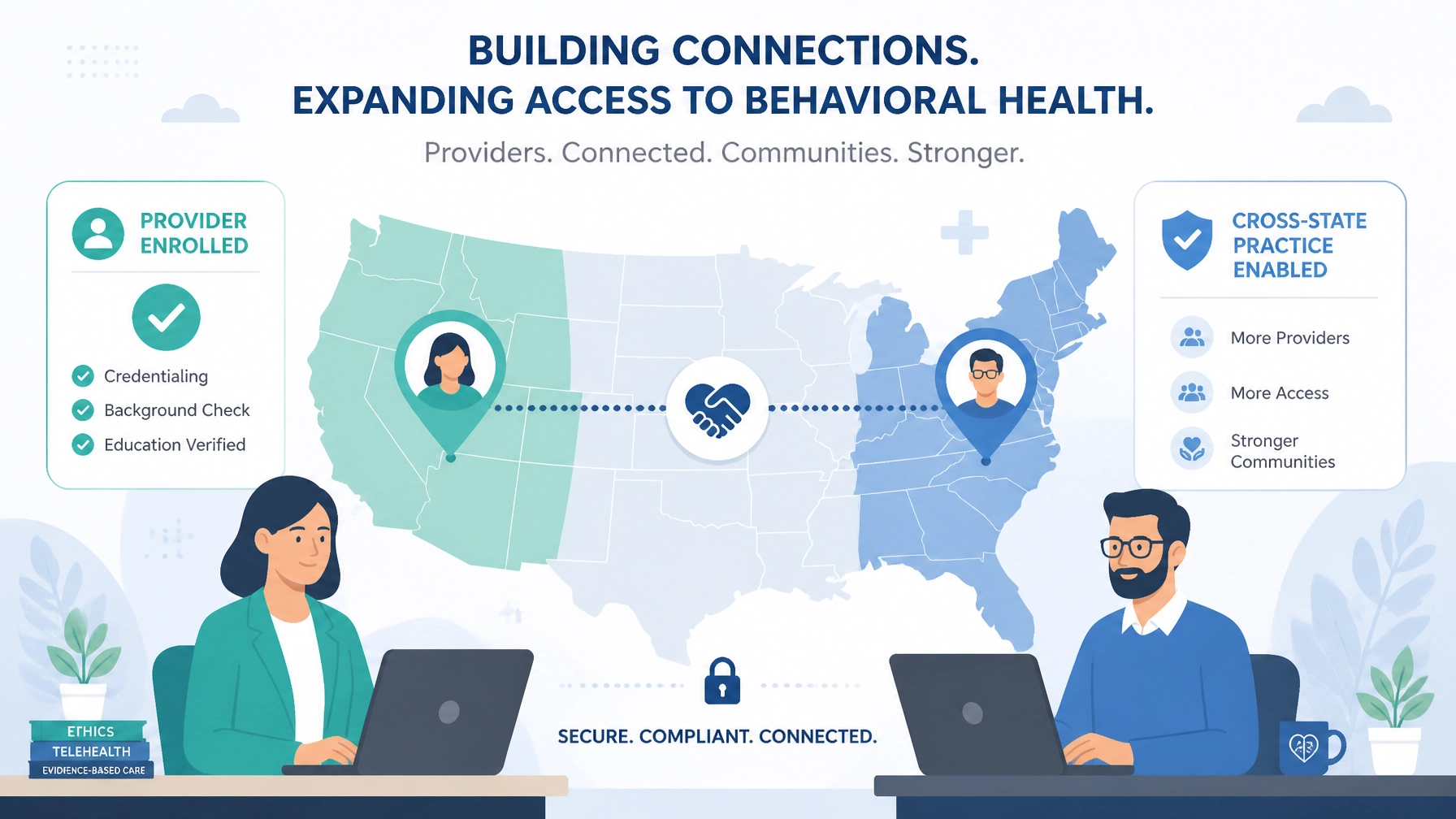
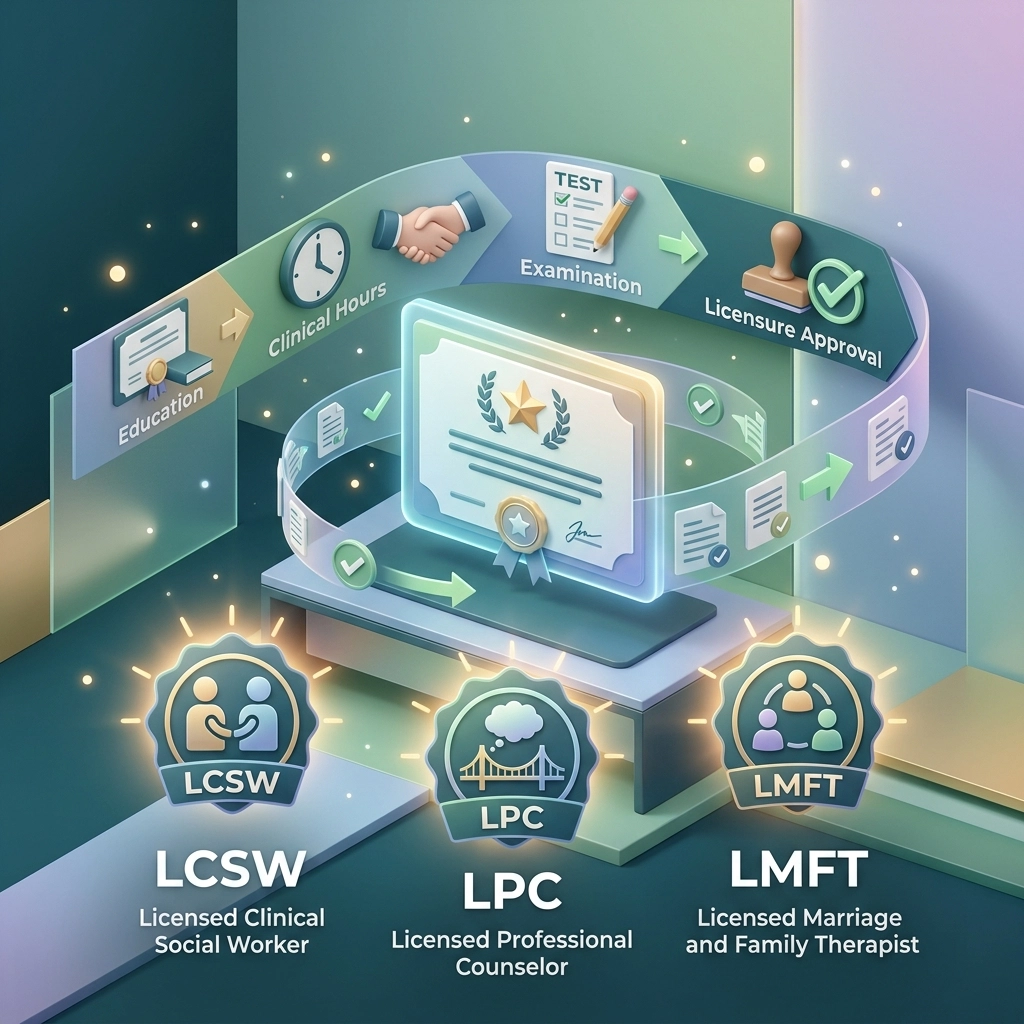
Mental health clinics embracing telehealth face a complex web of provider enrollment requirements that can make or break their expansion plans. While telehealth has revolutionized patient access to mental healthcare, the provider enrollment process requires careful navigation of federal regulations, state licensing requirements, and payer-specific rules that vary dramatically across jurisdictions. Provider enrollment for telehealth is not the same as credentialing: and understanding this distinction is critical for clinic administrators managing telehealth programs. Provider enrollment specifically addresses where and how your providers can deliver care, while ensuring compliance with location-based regulations that directly impact reimbursement. The Multi-State Licensing Challenge State licensing requirements create the biggest enrollment hurdle for telehealth mental health providers. Your providers must be licensed in the state where they are physically located and delivering services: not necessarily where the patient is located. This fundamental rule shapes every aspect of your enrollment strategy. For mental health clinics serving patients across state lines, this means each provider needs separate state licenses for every state where they provide care. A psychiatrist practicing in Pennsylvania treating a patient located in Pennsylvania must hold an active Pennsylvania license; when treating a patient located outside Pennsylvania, the provider must meet that state's licensure and enrollment requirements as well. The financial stakes are significant. Providers delivering care without proper state enrollment face claim denials, regulatory penalties, and potential legal exposure. State licensing boards take unauthorized practice seriously, and violations can result in sanctions that affect a provider's ability to practice anywhere. Medicare's October 2025 Game-Changer Starting October 1, 2025, Medicare's new telehealth mental health requirements fundamentally alter the provider enrollment landscape. These changes require immediate attention from clinic administrators planning telehealth programs. The in-person visit requirement becomes mandatory: patients must receive a Medicare-covered mental health service in-person from the telehealth provider within six months prior to the first telehealth session, then at least once every 12 months thereafter. This isn't just a clinical guideline: it's a reimbursement requirement that directly impacts your revenue cycle. Your enrollment strategy must account for physical office locations where these in-person visits occur. Medicare requires that these locations be properly documented in your provider enrollment files. Valid locations include clinic offices or provider home offices that are documented as practice locations. Hotels, cars, and temporary locations don't qualify. Key exemptions provide strategic opportunities: patients in rural areas at eligible originating sites and those receiving substance use disorder treatment are exempt from in-person visit requirements. Mental health clinics serving these populations can maintain purely telehealth-based enrollment strategies. Identity Verification and Compliance Requirements Patient identity verification becomes a formal enrollment consideration under the new Medicare rules. Providers must verify patient identity by requiring government-issued photo identification through video during telehealth encounters. The first encounter requires capturing photographic records of the patient presenting identification. This requirement affects your technology infrastructure and staff training: considerations that impact your provider enrollment planning. Your enrollment applications must demonstrate that your practice locations and technology systems support compliant identity verification processes. Eligible Provider Categories for Mental Health Telehealth Not every mental health professional qualifies for telehealth provider enrollment. Medicare recognizes specific provider categories for telehealth mental health services: Physicians and nurse practitioners Physician assistants and clinical nurse specialists Clinical psychologists and clinical social workers Licensed marriage and family therapists Licensed mental health counselors Qualified occupational therapists, physical therapists, and speech-language pathologists Certain services face enrollment restrictions. Providers delivering psychiatric diagnostic interview exams under specific CPT codes (90792, 90833, 90836, 90838) may not receive payment for these services depending on payer policies. Your enrollment strategy must account for these service-specific limitations. FQHC and RHC Special Enrollment Considerations Federally Qualified Health Centers and Rural Health Centers enjoy expanded telehealth enrollment opportunities that other clinics don't have. These organizations can permanently serve as Medicare distant site providers for behavioral health telehealth services, and their patients can receive telehealth services at home without geographic restrictions. However, effective January 1, 2026 (potentially accelerated to October 1, 2025), FQHCs and RHCs must meet the same in-person visit requirements unless providers document that risks outweigh benefits. This creates a temporary enrollment advantage that these organizations should leverage immediately. State-Specific Enrollment Variations Every state creates unique provider enrollment requirements for telehealth. In Pennsylvania, mental health providers delivering telehealth services to patients located in the Commonwealth must hold an active Pennsylvania license and ensure their practice locations are listed and maintained in PROMISe, the state's Medical Assistance provider enrollment system. Pennsylvania recognizes home offices as practice locations when properly documented for privacy, security, and record retention and requires accurate service location information in enrollment files. Pennsylvania does not require a separate telehealth certification. Providers billing Pennsylvania Medical Assistance enroll with DHS/OMAP, comply with OMHSAS telebehavioral health guidance, and follow payer contracting requirements under HealthChoices Behavioral Health managed care plans. Out-of-state providers serving Pennsylvania patients must meet Pennsylvania licensure and enrollment requirements before delivering care via telehealth. Your enrollment strategy must account for each state's specific requirements. What works in one state may be inadequate or non-compliant in another. This reality makes multi-state telehealth enrollment particularly challenging for mental health clinics. Technology and Location Documentation Requirements Provider enrollment applications must demonstrate compliant technology infrastructure. Your enrollment documentation needs to show that your telehealth platforms support required identity verification, secure communications, and proper record-keeping capabilities. Physical location documentation remains critical even for telehealth-focused providers. Medicare and state agencies require accurate documentation of where providers are physically located when delivering care. Home offices qualify as practice locations if properly documented, but temporary or mobile locations create enrollment complications. Practical Enrollment Steps for Mental Health Clinics Start with a comprehensive state analysis of where your providers are located and where you plan to serve patients. This geographic mapping drives your entire enrollment strategy and helps identify licensing and enrollment requirements. Coordinate state licensing with Medicare enrollment to ensure consistent location information across all applications. Discrepancies between state licensing addresses and Medicare enrollment locations create processing delays and compliance issues. Implement systems for tracking in-person visit requirements before October