Veracity upscaled revised

Occupational Therapy Credentialing: OT vs. OTA Billing and Enrollment Rules

COeY4TAjFjS

Managing an occupational therapy practice is a high-stakes balancing act where clinical excellence must meet rigorous administrative precision. Navigating the complexities of provider enrollment services and maintaining an active Medicare enrollment status is the backbone of your professional credibility and the primary driver of your revenue cycle. When you understand the nuances between Occupational Therapist (OT) and Occupational Therapy Assistant (OTA) billing rules, you protect your practice from the high cost of compliance failures. Looking for professional provider credentialing services in the USA? 👉 Check our main service page here: veracityeg.com The Enrollment Mandate: Why OTs Lead the Way In the world of federal and private payers, the Occupational Therapist is the anchor. For a practice to see a single cent of reimbursement for therapy services, the OT must be fully enrolled with the Centers for Medicare & Medicaid Services (CMS) and relevant private insurance panels. This enrollment is your "passport to success," granting the legal and financial authority to bill for services. Unlike OTs, Occupational Therapy Assistants (OTAs) do not enroll independently with Medicare. They cannot function as "solo" billing entities. Instead, their ability to generate revenue is entirely tethered to the supervising OT’s enrollment status. If an OT’s enrollment lapses or is improperly handled, every service provided by the OTA under their supervision becomes instantly unbillable. This creates a cascading risk: an administrative oversight at the OT level effectively shuts down the productivity of the entire assistant staff. At The Veracity Group, we see this scenario frequently: practices assuming that because an OTA is licensed, they are "good to go." In reality, the OTA's services are only recognized when they are linked to an enrolled OT within the same practice setting. Billing Mechanics: The OT NPI and the Supervising Relationship When it comes to the actual claim form, the enrolled OT’s National Provider Identifier (NPI) is the star of the show. All services provided by an OTA are billed under the supervising OT’s NPI. This is not just a suggestion; it is a fundamental requirement for audit-ready compliance. To maintain a compliant billing relationship, the following conditions must be met: Direct Supervision: The enrolled OT must provide the level of supervision required by state law and payer-specific guidelines. Shared Practice Setting: Both the OT and the OTA must be employed by or contracted with the same entity. Documentation Trail: The OT must sign off on the plan of care and progress notes, demonstrating that they are actively directing the course of treatment. Failure to establish this link properly is a silent driver of claim denials. Payers are increasingly using automated systems to flag therapy claims that lack the appropriate supervisory modifiers or that list an unauthorized provider as the primary billing clinician. Alt Text: A professional therapist reviewing billing documents and compliance checklists in a healthcare office setting. The 85% Rule: Understanding the CO Modifier One of the most significant shifts in occupational therapy reimbursement occurred on January 1, 2022. Medicare implemented a reduced payment rate of 85% for services provided "in whole or in part" by an OTA. This adjustment makes it more important than ever to accurately track who is providing the treatment. To trigger this payment adjustment, you must use the CO modifier on your billing claims. The CO modifier signals to the payer that an OTA performed the service. But when, exactly, does this modifier apply? The 10% De Minimis Rule The "10% rule" is the threshold for applying the CO modifier. If an OTA provides more than 10% of a therapeutic service or unit, the CO modifier is required, and the 85% reimbursement rate applies. This requires meticulous time-tracking. If an OT performs the initial 5 minutes of a 15-minute unit and the OTA performs the remaining 10 minutes, the OTA has exceeded the 10% threshold (in this case, they performed 66% of the unit). Consequently, that unit must be billed with the CO modifier. Pro-tip for Compliance: Do not try to "eyeball" these percentages. Audit-ready practices use digital timestamps or clear minute-tracking in their EMR to justify whether the CO modifier was applied or omitted. Relying on guesswork is a recipe for a recoupment demand during a post-payment audit. Mastering the 8-Minute Rule for Timed Codes Whether the service is provided by an OT or an OTA, everyone in the practice must adhere to the 8-minute rule for timed CPT codes (such as Therapeutic Exercise 97110 or Manual Therapy 97140). This rule is the "backbone of professional credibility" when it comes to justifying your billable units. To bill for a single unit of a timed code, the provider must spend at least 8 minutes of face-to-face time with the patient. The units then scale in 15-minute increments: 1 Unit: 8 minutes to 22 minutes 2 Units: 23 minutes to 37 minutes 3 Units: 38 minutes to 52 minutes 4 Units: 53 minutes to 67 minutes If an OTA and an OT both work with a patient during the same session, their time is combined to determine the total number of units billable. However, if the OTA’s portion of that combined time exceeds the 10% threshold for any specific unit, that specific unit is subject to the 15% payment reduction. Navigating these splits can be complex, especially in a busy clinic. For a deeper look at how to manage complex enrollment and billing structures, visit our provider enrollment page for expert guidance. Audit-Ready Compliance: The High Cost of Cutting Corners The Office of Inspector General (OIG) and private payers are hyper-focused on therapy services. Because OT/OTA billing involves modifiers and specific supervision rules, it is a high-target area for audits. A single mistake: such as billing an OTA’s services under an OT who was not in the building that day: can lead to allegations of "false claims." To remain audit-ready, your practice will implement the following safeguards: Verify Enrollment Monthly: Ensure every OT has an active status in the CAQH database. An expired credential or an outdated demographic update can trigger an

Chiropractic Enrollment: Navigating Medicare, Medicaid, and Commercial Differences

0pn5sRGnGBP

For a chiropractor, the spine is the foundation of health, but provider enrollment is the backbone of your practice’s financial survival. If your enrollment is misaligned, your entire revenue cycle collapses. Navigating the labyrinth of chiropractic enrollment is a high-frustration endeavor, often because the rules change depending on whether you are dealing with the federal government, a state agency, or a private corporation. Looking for professional provider credentialing services in the USA?👉 Check our main service page here: veracityeg.com The stakes are incredibly high. A single error in your Medicare application or a misunderstanding of a commercial payer’s network requirements will result in months of "out-of-network" status, leading to denied claims and patients walking out the door. At The Veracity Group, we see these bottlenecks every day. Understanding the nuances between Medicare, Medicaid, and commercial payers is not just a benefit: it is a requirement for a compliant and profitable practice. The Medicare Reality: No Opt-Out Options Medicare is the most rigid payer in the chiropractic landscape. Unlike medical doctors or other specialists who can choose to "opt out" of Medicare and enter into private contracts with patients, chiropractors cannot opt out of Medicare. This is a non-negotiable federal mandate. You have only two choices when it comes to Medicare enrollment: Participating (Par): You agree to accept assignment on all Medicare claims, meaning you accept the Medicare-approved amount as full payment. Non-Participating (Non-Par): You can choose to accept assignment on a case-by-case basis. However, you are still subject to a "limiting charge," and you must still file claims to Medicare for any covered service provided to a Medicare beneficiary. Alt text: A professional office desk with Medicare enrollment forms and a chiropractic spine model, representing the administrative side of chiropractic care. Failing to enroll correctly while treating Medicare-eligible patients is a fast track to federal penalties. Even if you don't want to receive direct payment from Medicare, you must be enrolled to ensure your patients can receive their benefits. This process requires a deep dive into the PECOS system, which is notorious for its technical hurdles and strict documentation requirements. The Coverage Gap: Only Spinal Manipulation Matters One of the greatest sources of frustration in provider enrollment for chiropractors is the limitation of covered services. Medicare and most Medicaid programs only recognize spinal manipulation (CPT codes 98940, 98941, and 98942) as a covered benefit. Every other service you might provide: including exams, X-rays, physical therapy modalities, and supplements: is considered a non-covered service. Active Care vs. Maintenance Care: Medicare only pays for "active" treatment: care that provides a functional improvement. Once a patient reaches a plateau, it is deemed "maintenance care," and Medicare will no longer pay. The ABN Requirement: You must use an Advance Beneficiary Notice (ABN) to inform patients when a service will likely not be covered. Failure to provide a properly executed ABN means you cannot legally collect payment from the patient for that service. This distinction is a silent driver of claim denials. If your enrollment status isn't perfectly synced with your billing and documentation, you are essentially providing free care. Medicaid: The 50-State Puzzle While Medicare is a federal program with uniform rules, Medicaid is a state-governed entity. This means that a chiropractor in Texas faces entirely different enrollment hurdles than one in Illinois. The complexity of mastering multi-state Medicaid provider enrollment is a significant burden for practices located near state borders or for groups expanding via telehealth and multi-site clinics. Medicaid enrollment often requires: State-specific background checks. Proof of local licensure. Compliance with varied "medical necessity" definitions. In many states, Medicaid reimbursement for chiropractic is notoriously low, which leads some providers to overlook the enrollment process. However, if you treat a patient who is dual-eligible (Medicare and Medicaid), you must be enrolled in both to ensure the secondary payer covers the patient’s co-insurance and deductibles. Ignoring Medicaid enrollment doesn't just hurt your bottom line; it shifts a financial burden onto your most vulnerable patients. Commercial Payers: The Portal and Panel Barrier Commercial payers like Blue Cross Blue Shield, UnitedHealthcare, and Aetna operate on a completely different logic. While they often cover more services than Medicare (such as exams and certain modalities), getting into their networks is increasingly difficult. Alt text: A digital screen showing a commercial insurance provider portal with a "Network Full" notification, illustrating the challenge of panel closures. The primary hurdle with commercial payers is panel closures. Many insurers claim their chiropractic networks are "full" in specific geographic areas. To overcome this, your enrollment application must be flawless. You need a robust CAQH profile that is updated every 90 days. Commercial payers use CAQH as their primary source of truth; if your profile is incomplete or contains outdated demographic info, your application will be discarded before it is even reviewed. Furthermore, commercial payers are much more aggressive about auditing. They will look for consistency between your enrollment data and your billing patterns. If you are enrolled as an individual but billing under a group NPI without the proper contracting and group enrollment, they will recoup every dollar they’ve paid you over the last three years. The High Cost of Non-Compliance: Inducements and Denials A common trap for chiropractors is the "friendly discount." You might feel inclined to waive a co-pay for a Medicare patient or offer a "new patient special" that includes a free exam. In the eyes of the Office of Inspector General (OIG), this is not kindness: it is a prohibited inducement. Offering discounts on non-covered services or waiving deductibles to attract federal beneficiaries can lead to massive fines and exclusion from all federal healthcare programs. Your provider enrollment status is your agreement to follow these rules. If you are enrolled, you are bound by these compliance standards. Reliable compliance starts with your provider enrollment strategy. You must ensure that your tax IDs, NPIs, and physical locations are all linked correctly across every payer system. A mismatch here is the primary cause of the "silent denials" that plague chiropractic

Behavioral Health Credentialing: Who Gets Credentialed (LCSW, LPC, LMFT)?

5GIyNnZitbC

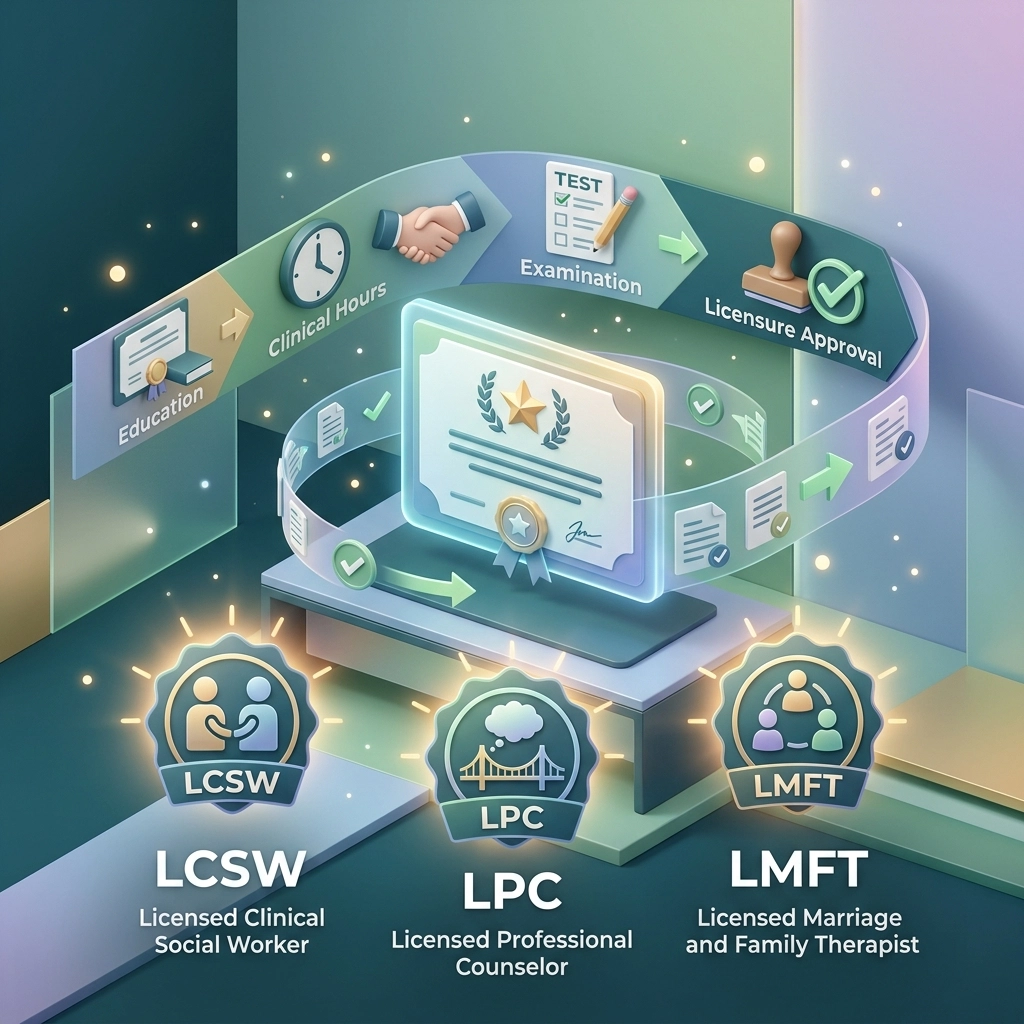
Effective behavioral health credentialing is the cornerstone of a sustainable mental health practice, ensuring that providers are properly recognized by insurance networks to provide care. As the demand for mental health services reaches an all-time high, navigating the complexities of provider enrollment is no longer optional; it is a critical business imperative for groups and solo practitioners alike. Looking for professional provider credentialing services in the USA? 👉 Check our main service page here: veracityeg.com The behavioral health landscape is undergoing a massive shift. Payers are under immense pressure to expand their networks, yet the requirements for entry remain stringent. For the modern practice, understanding exactly who needs to be credentialed: and the specific hurdles for LCSWs, LPCs, and LMFTs: is the difference between a thriving revenue cycle and a mounting pile of denied claims. At The Veracity Group, we see the back-office struggles that occur when a practice assumes all licenses are treated equally by payers. They are not. The Backbone of Mental Health: Master’s-Level Clinicians In the past, many insurance panels were dominated by psychiatrists and psychologists. Today, the "Big Three" of master's-level clinicians: Licensed Clinical Social Workers (LCSW), Licensed Professional Counselors (LPC), and Licensed Marriage and Family Therapists (LMFT): form the backbone of behavioral health delivery. Insurance payers have realized that these providers are essential to meeting network adequacy standards. However, each license type carries its own set of "red tape" that will stall your enrollment if not managed with precision. 1. Licensed Clinical Social Workers (LCSW) The LCSW is often considered the "gold standard" for master’s-level enrollment because of their long-standing recognition by Medicare. If your practice employs LCSWs, you must ensure their documentation is impeccable. Supervision Documentation: Payers require absolute proof of the 3,000+ supervised clinical hours (state-dependent) completed post-graduation. The Attestation Trap: Many payers demand specific attestation forms from the original clinical supervisor. If that supervisor has retired or moved, your enrollment is at risk of a dead end. Clinical Focus: Payers look for a clear clinical track. If an LCSW’s background is primarily administrative, commercial panels may reject the application. 2. Licensed Professional Counselors (LPC, LCPC, LPCC) The LPC category is perhaps the most complex due to the lack of national naming uniformity. Depending on your state, you might be a Licensed Clinical Professional Counselor (LCPC) or a Licensed Professional Clinical Counselor (LPCC). Title Reciprocity Issues: Payers often use automated systems that flag "LPC" but may reject "LCPC" if the internal database isn't updated for that specific state's nomenclature. This is a common reason why behavioral health provider enrollment is so hard. Supervision Variances: A counselor in Colorado may need two years of supervision, while a peer in Texas needs 3,000 hours. Payers verify these against state board records with zero margin for error. Medicare Inclusion: As of January 1, 2024, the Centers for Medicare & Medicaid Services (CMS) officially allows LPCs and LMFTs to enroll in Medicare. This is a massive shift, and if you haven't updated your CAQH profiles to reflect this, you are leaving federal reimbursement on the table. 3. Licensed Marriage and Family Therapists (LMFT) LMFTs provide a specialized niche that many payers are eager to fill, but they often face the "closed panel" phenomenon more frequently than LCSWs. Panel Capacity: Because LMFTs are a smaller professional group, insurance companies often limit the number of slots available in a specific geographic area. You must demonstrate a unique specialty (such as trauma-informed family therapy) to force a panel opening. Educational Accreditation: Payers verify that the degree comes from a program accredited by COAMFTE or an equivalent body. Non-accredited degrees are an automatic disqualifier for most major commercial payers. The High Cost of Enrollment Delays When a provider is not properly credentialed, the financial consequences are immediate. You cannot bill for their services, and patients who discover their therapist is "out-of-network" mid-treatment will likely leave your practice. This churn is a silent driver of lost revenue. Consider a scenario where an LPC begins seeing patients before their enrollment is finalized. Even if the provider is fully licensed by the state, the insurance company will not pay the claims. Retroactive billing is rarely granted in the behavioral health world. At Veracity, we help practices avoid these "blackout periods" by initiating the provider enrollment process at least 90 to 120 days before a new hire's start date. Navigating the Medicare Shift The Consolidated Appropriations Act of 2023 fundamentally changed the game for LPCs and LMFTs. For decades, these providers were excluded from Medicare reimbursement. Now, the doors are open, but the Medicare enrollment process via PECOS is notoriously difficult. To successfully enroll these providers in Medicare, you must: Verify the provider has a valid NPI (National Provider Identifier). Ensure their state license is active and carries no "restricted" status. Submit the CMS-855I or CMS-855O application with surgical precision. Any minor typo in a provider's name or address: even a missing "Suite" number: can result in a rejection that resets your 60-day waiting period. Why Veracity Group is the Expert in Behavioral Health Behavioral health is not a "side niche" for us; it is a core area of our expertise. We understand that a therapist’s time is best spent with patients, not arguing with insurance companies about why an LCPC is the same as an LPC. We manage the entire lifecycle of enrollment, from the initial behavioral health provider enrollment to the ongoing maintenance of CAQH and demographic updates. Our team acts as the "backbone of professional credibility" for your practice, ensuring that your providers are never the reason for a denied claim. Our Strategy for Success: Proactive Outreach: We don't wait for payers to contact us. We follow up aggressively to ensure applications move through the queue. State-Specific Knowledge: We understand the nuances of multi-state Medicaid enrollment and how it affects LCSWs and LPCs. Error Prevention: We perform a comprehensive audit of all provider documents before a single application is submitted. The Consequences of Doing It Yourself Many practice owners attempt to