Veracity upscaled revised

The Partnership Advantage: Why RCM + Veracity Creates a One‑Stop Powerhouse

RCM and Veracity partnership visual showing handshake, financial charts, and icons for revenue cycle and enrollment.

How RCM Partnerships Strengthen Enrollment, Contracting, and Cash Flow Revenue Cycle Management companies sit at the center of a clinic’s financial ecosystem. You manage claims, denials, coding, AR, and the day‑to‑day grind that keeps practices alive. But there’s one part of the revenue cycle that consistently slows everything down: Provider enrollment and contracting. When a provider isn’t enrolled, nothing moves. Claims stall. Cash flow freezes. Clinics get frustrated. And RCM teams get pulled into work they never intended to own. This is where strategic partnership becomes a competitive advantage — not a cost. Partnering with Veracity turns enrollment from a bottleneck into a strength. It creates a unified, one‑stop solution for clinics that want everything handled under one roof. And it gives RCM companies a way to expand their value without adding headcount, risk, or operational drag. Why RCM Companies Benefit 1. You stay the one‑stop shop your clients expect Clinics don’t want to manage multiple vendors. They want one team that handles the full revenue cycle — from enrollment to payment. By partnering with Veracity, you keep that promise without taking on the administrative burden. 2. Faster cash flow for your clients means better performance for you Enrollment delays are silent revenue killers. When Veracity handles the front‑end payer work, your billing cycle starts sooner, your metrics improve, and your clients feel the difference. 3. No need to build an internal enrollment department Hiring credentialing staff, training them, and keeping up with payer changes is expensive and time‑consuming. Outsourcing to a specialized partner eliminates that overhead while giving you enterprise‑level expertise. 4. You reduce risk and increase accuracy Enrollment errors lead to denials, recoupments, and compliance issues. Veracity’s workflows are built to prevent those failures before they happen. Why Veracity Benefits 1. We get to support RCM teams who already understand the revenue cycle RCM companies know the downstream impact of enrollment delays. That alignment makes collaboration seamless and efficient. 2. We expand our reach through trusted partners Every RCM relationship opens the door to more clinics that need clean, reliable enrollment support. 3. We get to do what we do best — at scale Our team thrives in the operational trenches. Partnering with RCM companies allows us to focus on the work that moves the needle: payer enrollment, contracting, CAQH, demographic updates, and ongoing maintenance. Why Clinics Win the Most 1. One vendor. One workflow. Zero confusion. Clinics don’t have to guess who handles what. Their RCM partner and enrollment partner operate as one unified system. 2. Faster onboarding for new providers When enrollment and billing teams work together, providers get credentialed and revenue‑ready sooner. 3. Cleaner communication and fewer delays No more back‑and‑forth between departments or vendors. No more “We’re waiting on enrollment.” No more surprises. 4. A smoother, more predictable revenue cycle When the front end is handled correctly, the back end performs better. Clinics feel that stability immediately. The Win‑Win Model Partnering with Veracity isn’t outsourcing — it’s operational alignment. Everyone wins because everyone stays in their lane — and the lanes finally connect. Ready to Explore a Partnership? If you’re an RCM company looking to expand your value without expanding your payroll, let’s talk. We’ll walk through your current workflow, identify where enrollment slows things down, and show you how a partnership can transform your client experience. You can schedule a quick call here: https://calendly.com/theveracitygroup/20-minute-meeting-with-aaron Or reach out directly with your best day/time: 📞 812‑604‑5870 📧 office@veracityeg.com

The Selection Process: Vetting Your Enrollment Partner

OFBgnw9PJC9

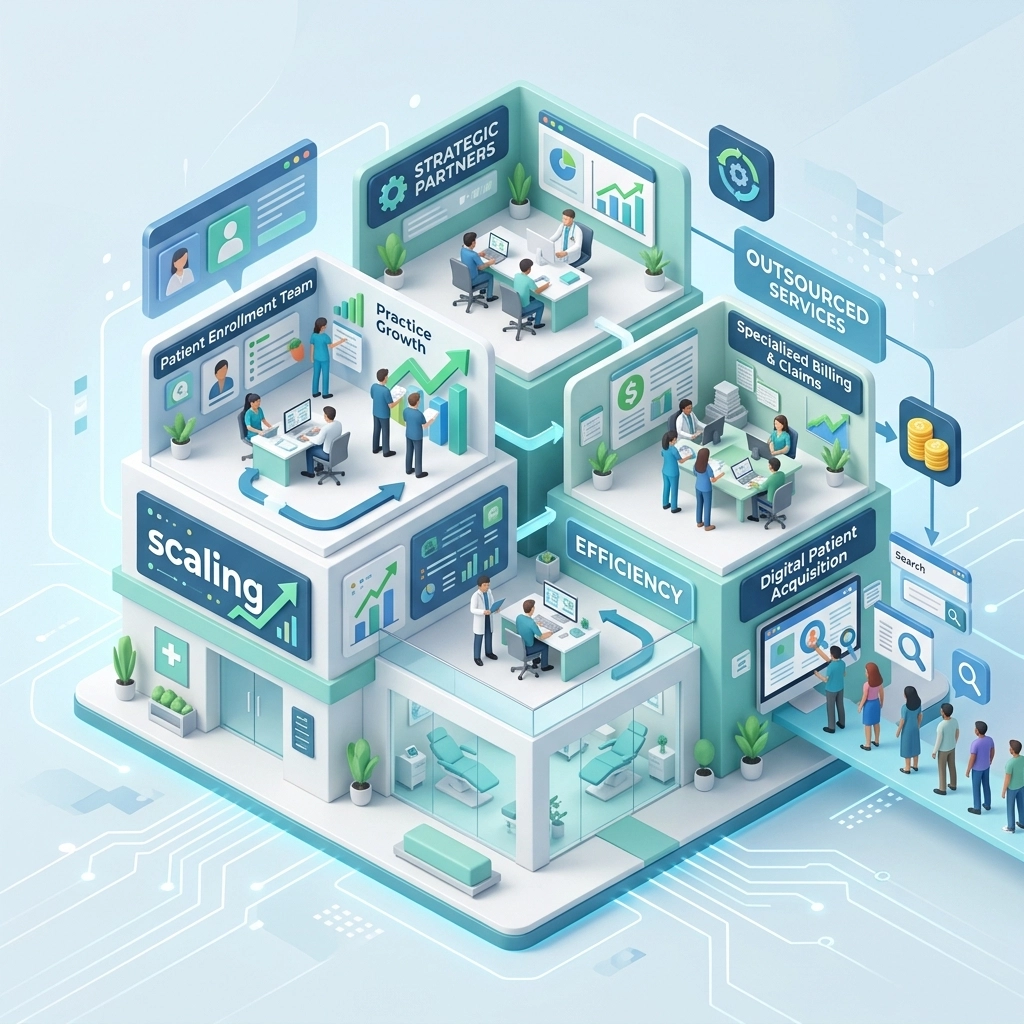
When you scale your practice, the efficiency of your medical provider enrollment services is the difference between a thriving revenue cycle and a debilitating backlog of denied claims. Navigating the specific nuances of behavioral health provider enrollment requires a partner who understands more than just paperwork; they must understand the architecture of your business. Selecting a third-party partner is a high-stakes decision that dictates your organization’s long-term financial health. You cannot afford to treat this as a simple administrative hand-off. It is a strategic alliance that requires rigorous due diligence, technical vetting, and a clear understanding of operational compatibility. At The Veracity Group, we recognize that an industrial-scale enrollment partner must act as an extension of your C-suite. The "industrial" aspect refers to the capacity to handle high volumes, multi-state complexities, and diverse payer portfolios without sacrificing accuracy. If your partner fails to keep pace with your growth, your revenue cycle will stall, leaving your providers unable to see patients or, worse, seeing them without a path to reimbursement. The High Cost of the Wrong Choice The consequences of an ill-fitted enrollment partner are immediate and severe. When you outsource your health plan enrollments to a firm that lacks technical expertise, you inherit their inefficiencies. Delayed enrollments lead to leakage, where patients seek care elsewhere because your providers are not yet "in-network." Furthermore, improper handling of Medicaid MCO enrollment can lock you out of vital state-funded revenue streams for months. You must view your enrollment partner as the backbone of your professional credibility. A single missed deadline or a misfiled CAQH profile can trigger a domino effect of denials. The Veracity Group emphasizes that vetting is not just about checking boxes; it is about ensuring the partner possesses the scalability to grow alongside your facility. Looking for professional provider credentialing services in the USA?👉 Check our main service page here: veracityeg.com Technical Capabilities and Workforce Infrastructure Your first step in the selection process is evaluating the partner’s production capacity. You must ask for hard data regarding their monthly output and workforce size. An industrial partner should demonstrate a sophisticated use of technology to automate repetitive tasks while maintaining human oversight for complex clinical nuances. Alt Tag: An isometric 3D illustration showing a clean, organized digital workspace with structured data flowing between a healthcare facility and an enrollment hub, representing professional medical provider enrollment services. Key Technical Evaluation Criteria: monday.com Project Management for Client Transparency: You must demand operational visibility, not vague status updates. At The Veracity Group, we run enrollment work in monday.com, and every client receives a dedicated board that tracks each provider and payer application from intake through submission, follow-up, and final confirmation. You see real-time status, due dates, owners, notes, and document checkpoints—so nothing falls through the cracks and your team never has to guess where an enrollment stands. This also creates a clear audit trail across the entire enrollment lifecycle, with time-stamped updates that support internal governance and payer-facing documentation when questions arise. Data Security: Ensure the partner utilizes HIPAA-compliant platforms and robust encryption. Your provider data is a primary asset; its protection is non-negotiable. Reviewing their our services page or requesting a technical roadmap will reveal if they are truly an industrial-grade firm or merely a small boutique operation masquerading as a scalable solution. The Provider Enrollment Checklist for Vetting To standardize your evaluation, you must utilize a provider enrollment checklist. This framework allows you to compare potential partners on an even playing field. If a candidate cannot provide clear answers to these points, they are not ready for an industrial-scale partnership. Payer Knowledge Base: Do they have established relationships with national payers like UnitedHealthcare, Aetna, and BCBS? State-Specific Expertise: Can they navigate the specific requirements of multi-state Medicaid enrollment? Specialty Nuances: Do they understand the specific licensure requirements for different provider types, such as LCSWs for behavioral health or surgical center compliance for ASCs? Transparency: Do they provide a real-time dashboard where you can track the status of every application? Navigating Medicaid MCO Enrollment Complexities Managed Care Organizations (MCOs) represent a significant portion of the modern healthcare landscape. Vetting your partner on their ability to handle Medicaid MCO enrollment is critical. These entities often have separate, more rigorous requirements than traditional fee-for-service Medicaid. A competent partner will proactively manage the transition between state-level enrollment and individual MCO contracting. They must understand the credentialing cycles and the specific "open enrollment" windows that many MCOs enforce. Without this specialized knowledge, your providers will remain on the sidelines, unable to serve the Medicaid population, which can be a significant hit to your mission and your bottom line. You can learn more about these specific hurdles in our guide on behavioral health provider enrollment. Alt Tag: An isometric infographic illustrating a structured provider enrollment checklist with 3D icons for documentation, verification, and payer approval steps. How Long Does Provider Enrollment Take? One of the most frequent questions you will face is: how long does provider enrollment take? A transparent partner will give you a realistic timeline rather than a "best-case scenario" sales pitch. Typically, the process can range from 60 to 120 days, depending on the payer and the complexity of the provider's history. Industrial partners like The Veracity Group use historical data to predict these timelines with high accuracy. They understand that Medicare enrollment might take 60 days via the PECOS system, while a commercial payer in a congested market might drag the process out to four months. Your partner must have the proactive communication skills to update you on these timelines weekly. If they cannot provide a clear "Current State vs. Goal State" report, your revenue forecasting will be impossible. Strategic and Operational Alignment Beyond the technical, you must assess the strategic fit. Your partner must understand your business model and operate as an extension of your leadership team. Are you a rapidly expanding multi-specialty group, or a specialized surgery center? Most firms stop at enrollment tasks and leave you to coordinate the rest. That

The Outsourcing Advantage: Scaling Your Practice Through Strategic Enrollment

GFSkCeqNhaq

Navigating the modern behavioral health enrollment landscape requires more than just administrative persistence; it demands a tactical approach to market entry. As your practice grows, managing the complexities of Medicare and Medicaid enrollment for behavioral health providers becomes a full-time operational burden that can stifle your clinical mission. You cannot afford to let paperwork dictate your growth trajectory. By leveraging The Veracity Group, you transform a traditional bottleneck into a streamlined engine for expansion. Strategic outsourcing is not merely a convenience; it is the backbone of professional credibility and the primary vehicle for sustainable revenue. The Resource Reallocation Factor Your internal team is your most valuable asset. When you force high-level administrators or clinical directors to chase down NPDB reports or follow up on pending applications with Medicaid MCOs, you are misallocating talent. Outsourcing these functions allows your staff to focus on strategic priorities like patient care, service design, and business development. By delegating tactical functions to a specialized partner, you reclaim hundreds of hours annually. This shift in focus directly drives growth because it allows your leadership to work on the business rather than being buried in the administrative weeds. The Veracity Group provides the operational capacity you need to scale without the overhead of hiring and training an internal department. Looking for professional provider credentialing services in the USA? 👉 Check our main service page here: veracityeg.com Immediate Access to Expertise and Technology The enrollment environment is a moving target. Regulations change, portal interfaces update, and state-specific requirements for LCSWs, LPCCs, and BCBAs vary wildly. When you outsource, you gain immediate access to specialized expertise and sophisticated technology that would take years and significant capital to build internally. Professional outsourcing firms utilize automated enrollment systems that reduce manual data entry from hours to minutes. These tools ensure that your data is not only accurate but also formatted correctly for every payer, from Medicare PECOS to local commercial plans. You benefit from a partner’s existing infrastructure, leveraging proven processes that have been refined across thousands of applications. This expertise is your passport to success in new markets, ensuring you don't fall victim to common pitfalls that lead to application rejections. A bright, modern 3D render of a digital globe interconnected with medical icons and checkmarks, representing global expertise and streamlined healthcare connectivity. Flexible Scaling Without Fixed Costs Traditional growth often comes with the heavy burden of fixed costs. Hiring internal staff to manage enrollment means paying salaries, benefits, and taxes regardless of your current application volume. This model is rigid and risky. Strategic outsourcing provides the flexibility to scale operations up or down quickly in response to your actual demand. If you are expanding into a new state or launching a new service line, you can ramp up your outsourcing needs immediately. Conversely, during slower periods, you aren't stuck with the "dead weight" of an underutilized department. This cost optimization ensures that your capital is always working for you. You only pay for the capacity you need, allowing you to reinvest the savings into clinical innovation and patient acquisition. Navigating the Behavioral Health Maze For those in the mental health and substance abuse space, the stakes are even higher. The behavioral health enrollment landscape is notoriously fragmented. You deal with unique billing requirements, such as H-codes or specific revenue codes for intensive outpatient programs (IOP). The Veracity Group understands that a "one-size-fits-all" approach fails in this specialty. When managing Medicare and Medicaid enrollment for behavioral health providers, you must account for specific provider types and their respective scopes of practice. Missing a single state-mandated certification can delay your reimbursement cycle by months. Outsourcing ensures that every nuance: from CAQH profile maintenance to NPI Registry updates: is handled with precision. This is especially critical for multi-state practices where Medicaid requirements differ significantly at every border. A modern, professional 3D render showing a diverse group of healthcare professionals collaborating around a glowing, futuristic data dashboard, symbolizing teamwork and efficiency. The High Cost of Delays and Errors In the healthcare industry, time is literally money. Every day a provider sits on the sidelines waiting for an effective date is a day of lost revenue. Even worse, administrative errors in the enrollment process can lead to claim denials, retroactive recoupments, and damaged relationships with payers. Outsourcing to an expert partner like Veracity mitigates these risks through: Primary Source Verification: Ensuring every license and certification is valid and current. Application Tracking: Proactive follow-ups with payers to move files through the queue. Data Integrity: Centralizing provider information to prevent conflicting data across multiple platforms. Expiry Management: Automating alerts for upcoming license or certification renewals. A single error on a Medicaid MCO enrollment application can reset your waiting period, often adding 60 to 90 days to the process. You cannot leave your revenue stream to chance. How to Choose a Strategic Partner Not all outsourcing providers are created equal. To ensure you are truly gaining a competitive advantage, you must vet potential partners based on their operational transparency and industry track record. A quality partner will not just "take over" the work; they will provide you with clear reporting and insights into your enrollment pipeline. Look for a partner that understands the complexities of the gig economy and the unique needs of part-time or contracted providers. Your partner should act as an extension of your team, providing the declarative confidence you need to tell your board or investors that your expansion plan is on track. According to the National Committee for Quality Assurance (NCQA), maintaining high standards in provider data is essential for both compliance and patient safety. A 3D render of a stylized hourglass filled with digital coins, illustrating the time-saving and revenue-generating power of efficient provider enrollment. Streamlined Patient and Provider Experiences Efficiency isn't just about the back office; it affects your front-facing reputation. When your enrollment processes are handled by experts, your providers experience a smoother onboarding journey. They aren't hounded for the same document five times, and they can begin seeing

Finding the Edge: Enrollment Outsourcing for Small Medical Groups

WV5RCkq2946

Navigating the complexities of the modern healthcare landscape requires more than just clinical excellence; it demands administrative precision. For your small medical group, the burden of behavioral health provider enrollment or general medical provider enrollment services often feels like a secondary full-time job that yields zero patient outcomes. When you are focused on scaling a practice, every minute spent navigating payer portals is a minute lost to patient care. The Veracity Group understands that for small businesses, efficiency is not just a goal: it is a survival mechanism. Finding the right enrollment outsourcing partner provides you with the "industrial edge" necessary to compete with larger hospital systems while maintaining the personalized touch of a private practice. The High Cost of the "Do-It-Yourself" Model Many small business owners in the healthcare space believe that keeping administrative tasks in-house saves money. This is a financial fallacy. When you or your high-value office manager spend forty hours a month chasing Medicaid MCO enrollment status or correcting demographic errors, you are hemorrhaging revenue. In-house enrollment management is often reactive rather than proactive. You wait for a denial to realize a provider’s location was never updated. You discover a "closed panel" only after you have already started seeing patients. These mistakes lead to revenue leakage that small practices cannot afford. Outsourcing transforms this chaotic, reactive process into a streamlined, predictable revenue cycle engine. Looking for professional provider credentialing services in the USA? 👉 Check our main service page here: veracityeg.com Where to Find Enrollment Outsourcing Services for Small Businesses Identifying the right partner is the first hurdle. You are not looking for a massive, impersonal clearinghouse; you need a partner that understands the specific nuances of small business operations. 1. Niche Healthcare Administrative Partners The best place to start is with firms that specialize exclusively in provider enrollment. General medical billing companies often offer enrollment as a "sidecar" service, but they lacks the deep-dive expertise required for complex multi-state Medicaid provider enrollment. Search for partners like The Veracity Group that treat enrollment as a core competency. 2. Industry Associations and Peer Networks Consult your state-specific medical associations or groups like the Medical Group Management Association (MGMA). Peer recommendations are invaluable because they highlight firms that successfully navigate local payer landscapes. A firm that excels in California might not have the same "boots on the ground" knowledge for the New York market. 3. Professional LinkedIn Networks Use targeted searches for "Provider Enrollment Specialists" or "Healthcare Managed Care Consultants." Look for thought leadership content. A firm that regularly publishes insights on CAQH and Medicare enrollment demonstrates the technical authority you need. The Benefits of Using an Outsourcing Provider The shift to an outsourced model is a strategic investment in your practice’s scalability. Here is how it changes your operational trajectory: Accelerated Cash Flow: Professional outsourcers know the shortcuts. They understand which payers allow for retroactive effective dates and which require a hard stop until the contract is signed. This expertise trims weeks off the standard enrollment timeline. Reduced Overhead: You eliminate the need for specialized in-house software, constant training on payer portal updates, and the salary/benefits of a dedicated enrollment coordinator. Operational Continuity: When an in-house employee leaves, your enrollment knowledge leaves with them. An outsourcing partner like Veracity provides institutional stability. Your filings move forward regardless of internal staff turnover. Payer Relations Leverage: Experienced firms often have established contacts within the provider relations departments of major insurance carriers. This allows for faster troubleshooting when applications get stuck in the "black hole" of administrative review. How to Choose the Right Outsourcing Provider Not all outsourcing firms are created equal. To find your industrial edge, you must vet potential partners against a strict set of criteria. Evaluate Their Technology Stack Does the provider use a manual spreadsheet system, or do they utilize a robust cloud-based tracking system? You need real-time visibility into your application status. If a firm cannot give you a clear report on where each provider stands with each payer at any given moment, they are not the right fit for a modern small business. Assess Their Specialty Knowledge If you are running a mental health clinic, a firm that only handles primary care may struggle with the intricacies of behavioral health provider enrollment. Each specialty has unique taxonomy codes and licensure requirements (like LCSW or LMHC specificities) that must be handled with precision. Confirm Transparency and Communication A quality partner provides a dedicated account manager. You should not be calling a general "support" line to find out why your Blue Cross Blue Shield application is pending. Direct communication is the hallmark of a professional service. The Provider Enrollment Checklist for Small Groups Before you sign a contract with an outsourcing provider, you must have your "house in order." Even the best firm cannot fix a lack of documentation. Use this checklist to ensure a smooth transition: Current CAQH Profile: Ensure your CAQH 2.0 profile is updated and all documents are uploaded. Digital Document Repository: Have high-resolution scans of all diplomas, board certifications, state licenses, and malpractice face sheets ready. Work History: Maintain a continuous, month/year work history for every provider. Gaps of more than 30 days must be explained. Practice Demographics: Confirm your Tax ID, NPI (Type 1 and Type 2), and physical location details are consistent across all records. Payer List: A definitive list of which insurance panels you want to join (or stay on). Navigating the Medicaid MCO Maze For many small businesses, Medicaid MCO enrollment is the most significant hurdle. Managed Care Organizations have distinct requirements that often differ from standard state Medicaid protocols. Managing these contracts requires a high level of contracting expertise. The Veracity Group specializes in navigating these bureaucratic labyrinths. We ensure that your practice meets all network adequacy standards and that your providers are linked correctly to your group's Tax ID. Failure to manage this link properly is the leading cause of claim denials for newly hired clinicians. According to the Centers for Medicare & Medicaid Services

The Golden State Wall: Breaking Through Medicaid Provider Enrollment California

ZmI8ilYekVp

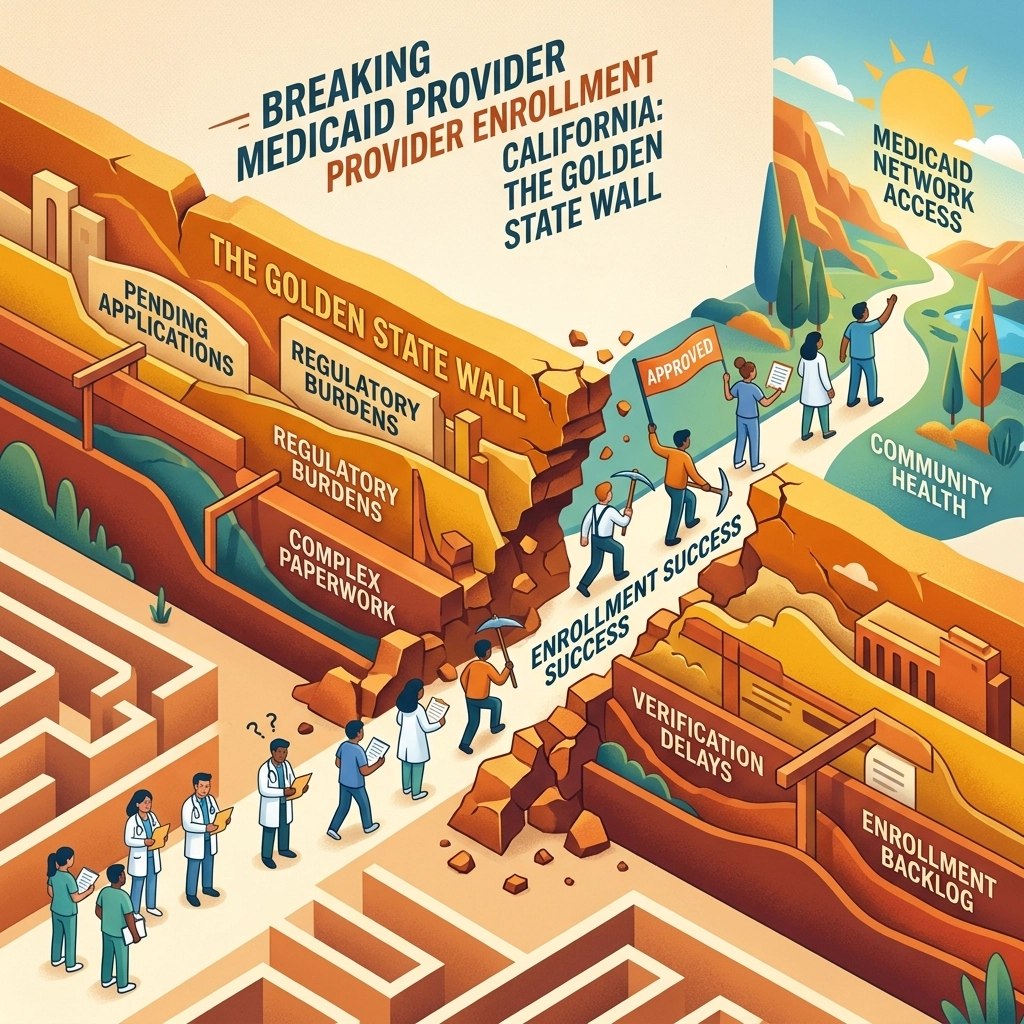
California’s healthcare landscape is a brutalist expanse, a monolithic structure where the barrier to entry is high and the margin for error is non-existent. Navigating Medicaid provider enrollment California is no longer a choice for organizations looking to capture a share of the nation’s largest state-funded market; it is a necessity that demands total operational alignment. Whether you are expanding from a base in Medicaid provider enrollment Texas or managing a nationwide footprint, the Golden State presents a regulatory wall that can either be scaled with precision or crashed against with devastating financial consequences. The Monolith: Understanding the Medi-Cal Scale California doesn't do things in half-measures. With over 15 million members, Medi-Cal is a titan. To provide services here, you aren't just filling out forms; you are entering a high-stakes ecosystem governed by the Department of Health Care Services (DHCS). The scale is so massive that the system itself feels industrial: cold, efficient when it works, and punishing when it doesn't. If you have navigated Medicaid provider enrollment Florida or Medicaid provider enrollment Ohio, you might think you understand the drill. You don't. California operates on a different frequency. The sheer volume of applications means that the DHCS does not have time for incomplete data or minor discrepancies. A single transposed digit in a NPI or an outdated address isn't just a "tweak": it is a catalyst for an immediate rejection that puts you back at the end of a very long, very dark line. The PAVE Portal: Your Industrial Gateway The Provider Application and Validation for Enrollment (PAVE) portal is the primary conduit for entry. Think of PAVE as the digital equivalent of a brutalist concrete fortress. It is designed to be the "single point of entry," but for the uninitiated, it often feels like a labyrinth of logic checks and document uploads. The DHCS moved to PAVE to streamline the process, yet the operational rigor required to manage a PAVE account is intense. Every provider type has specific requirements that must be met with surgical precision. Key challenges within the PAVE landscape include: Identity Verification: The system uses a multi-factor approach that can stall if the provider's underlying data in the NPPES or PECOS systems isn't perfectly mirrored. Document Integrity: Uploading blurry or poorly scanned credentials will result in an immediate "Deficiency Letter." Application Maintenance: Enrollment is not a "set it and forget it" task. You must manage revalidations and demographic updates with the same intensity as the initial application. For those used to the processes of Medicaid provider enrollment Pennsylvania, the PAVE portal’s rigid structure can be a shock to the system. There is no room for "close enough" here. Alt-text: A high-contrast, moody image of a massive concrete wall with a single, glowing digital screen embedded in it, representing the PAVE portal in a brutalist style. The Looming Deadline: June 2026 The clock is ticking in a way that many providers are choosing to ignore: at their own peril. As reported in this CMADocs update on DHCS enforcement of the Medi-Cal prescriber enrollment requirement beginning June 26, 2026 (https://www.cmadocs.org/newsroom/news/view/ArticleId/51130/DHCS-to-enforce-Medi-Cal-prescriber-enrollment-requirement-beginning-June-26-2026), a critical deadline is approaching for all prescribers. By June 26, 2026, all ordering, referring, and prescribing (ORP) physicians and other professionals must be fully enrolled in Medi-Cal. This is not a suggestion. This is a mandate. Failure to comply will result in denied pharmacy claims and a complete shutdown of your ability to serve the Medi-Cal population. The "Golden State Wall" will simply close its gates. If you think the system will be lenient because of patient care concerns, you haven't been paying attention to the shift toward strict regulatory enforcement. Looking for professional provider credentialing services in the USA? 👉 Check our main service page here: veracityeg.com The Operational Cost of Delay In a gritty, high-stakes market like California, time is a depleting resource. The high cost of delays isn't just a line item on a spreadsheet; it's a hole in your revenue cycle that can swallow an entire practice. While you wait for an enrollment specialist to figure out why a PAVE application was kicked back, your providers are seeing patients for free. The consequences of poor enrollment management are stark: Total Revenue Stoppage: Unlike some private payers that might allow for retroactive billing, Medi-Cal is notoriously rigid. If you aren't enrolled, you aren't getting paid. Administrative Burnout: Forcing your clinical staff to handle the industrial-strength bureaucracy of the DHCS is a recipe for turnover. Patient Attrition: When pharmacy claims are denied because a prescriber missed the June 2026 deadline, patients will find a provider who was prepared. Scaling your operations effectively requires a deep understanding of mastering multi-state Medicaid provider enrollment. You cannot treat California like a side project; it must be the focal point of your compliance strategy. Alt-text: A gritty, industrial office setting with high-contrast shadows and stacks of paper, symbolizing the administrative weight of Medicaid enrollment. Navigating the DHCS Regulatory Landscape The DHCS is the architect of the Golden State Wall. They set the rules, and those rules are enforced with industrial coldness. To survive, your organization must adopt a posture of proactive compliance. Effective April 1, 2026, the DHCS has even announced contingency plans for system outages, allowing for paper-based submissions if PAVE fails. However, relying on a paper fallback is not a strategy: it’s a desperate measure. The "Veracity Take" on this is simple: The state is preparing for a system-wide bottleneck as the June 2026 deadline approaches. If you wait until the last minute, you will be caught in the surge. You must view provider enrollment as the industrial backbone of your professional credibility. Without it, your high-end medical equipment and expert clinicians are just expensive decorations. The Veracity Blueprint for Success Breaking through the Golden State Wall requires more than just filling out forms. It requires a tactical approach to the DHCS and the PAVE system. Data Scrubbing: Before even touching the PAVE portal, every piece of provider data must be verified against federal and

The Keystone Burden: Medicaid Provider Enrollment Pennsylvania Explained

WQqomQpujb4

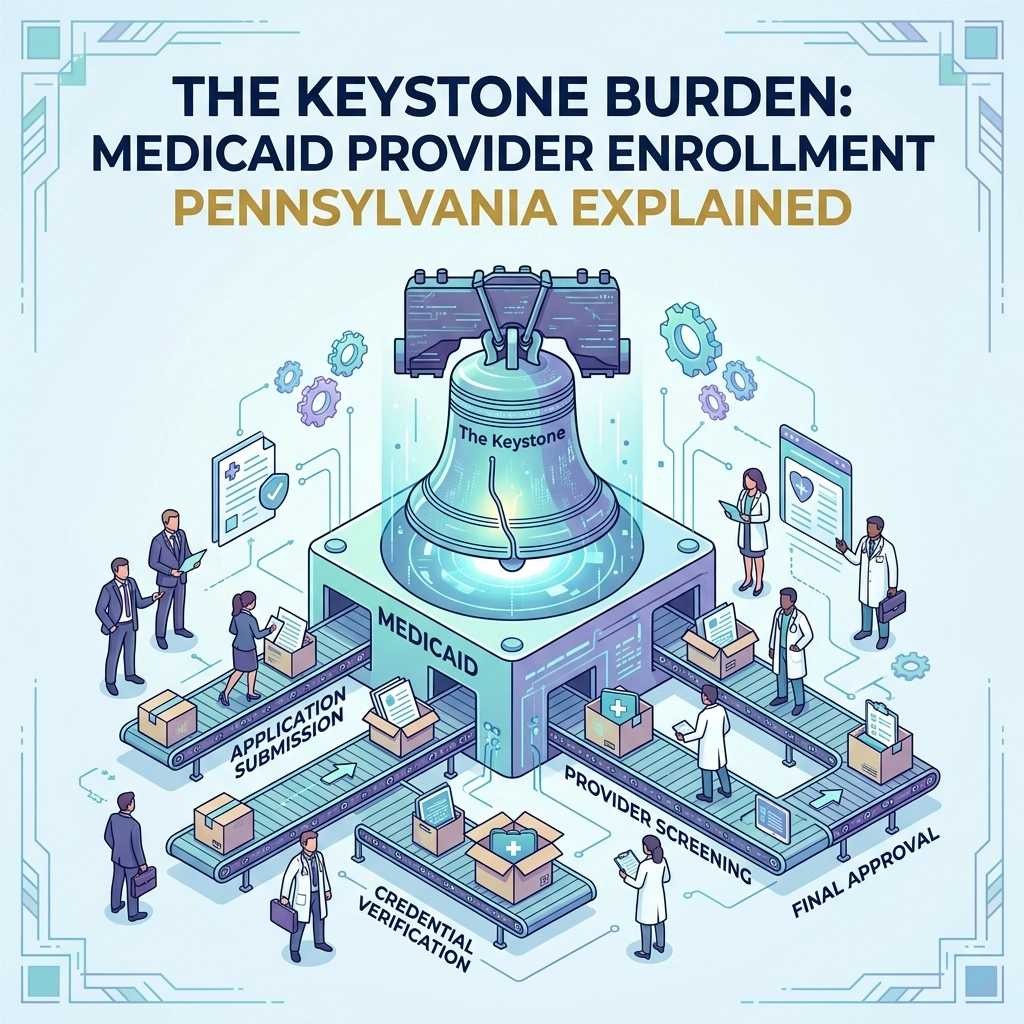
Navigating the healthcare landscape in the Commonwealth requires more than clinical expertise; it demands an iron will to withstand the industrial weight of administrative compliance. For practitioners and facilities looking to serve the state’s most vulnerable populations, Medicaid provider enrollment Pennsylvania stands as a formidable gatekeeper. This process is not a simple registration but a complex, multi-layered gauntlet that involves rigorous state-level scrutiny and the mastery of specialized digital systems. Without a strategic approach, your practice will stall before it even opens its doors to Medicaid patients, caught in a cycle of technical rejections and background check delays. Looking for professional provider credentialing services in the USA? 👉 Check our main service page here: veracityeg.com The PROMISe Portal: Pennsylvania’s Digital Monolith The heart of the Pennsylvania Medicaid machine is the PROMISe™ (Provider Reimbursement and Operations Management Information System) portal. This is the single point of entry for enrollment activity, but its utility is matched only by its complexity. It is where Pennsylvania’s Department of Human Services (DHS) drives the operational workflow behind enrollment actions and downstream billing administration. (See the official DHS PROMISe provider resources: https://www.pa.gov/agencies/dhs/resources/for-providers/promise/promise-provider-enrollment.) For a new provider, the PROMISe portal can feel like a brutalist structure: functional, yes, but cold and unforgiving. Every field must be populated with surgical precision. A single discrepancy between your NPI data and your Pennsylvania business registration will result in an immediate stall. The system is designed to filter out errors through automated rejection, often leaving providers wondering where the "crack in the foundation" actually lies. The Three Pillars of PROMISe Submissions New Enrollment: For those entering the Pennsylvania market for the first time or adding a new service location. Revalidation: A mandatory process occurring every five years to ensure your practice remains compliant with evolving state standards. Reactivation: Necessary for providers whose billing privileges have lapsed due to inactivity or missed revalidation windows. Alt-tag: A high-contrast, noir-style image of a glowing computer screen in a dark, industrial office setting, displaying a complex login portal representing PROMISe. The Scrutiny of DHS Background Check Requirements Pennsylvania is notorious for the depth of its background check requirements, particularly for those in the home health and behavioral health sectors. This is where the "Keystone Burden" becomes most palpable. The DHS does not simply take your word for your history; it demands a trifecta of clearances that can take weeks: or months: to clear. The Mandatory Clearances Act 34 (PA State Police Criminal Record Check): A baseline requirement for all individuals associated with the provider entity. Act 33 (PA Child Abuse History Clearance): Essential for any provider whose services might intersect with minors, a common requirement for multi-disciplinary practices. Act 73 (FBI Fingerprinting): This federal-level check often creates the longest bottleneck, requiring physical appointments and coordination with third-party vendors. The high cost of delays in these background checks is not just administrative; it is financial. While your background check sits in a queue at a state office, your revenue cycle remains at a standstill. You cannot bill for services provided until the enrollment is finalized, and retroactive billing is limited and difficult to secure. The 30-Day Expiration: The "Ticking Clock" Inside PROMISe PROMISe runs on deadlines, not sympathy. Incomplete or returned enrollment applications expire after 30 calendar days. Once that clock runs out, you are no longer “waiting”: you are restarting, re-uploading, and re-explaining the same facts under a new tracking record. That is how a clerical miss becomes a quarter of lost revenue. The Weight of "High-Risk" Classifications In the eyes of the Pennsylvania Department of Human Services, not all providers are created equal. Federal and state regulations dictate a Risk-Based Screening model that categorizes providers into "limited," "moderate," or "high" risk levels. If your practice falls into a high-risk classification: such as a newly enrolling home health agency or a supplier of durable medical equipment (DME): the level of scrutiny intensifies significantly. High-risk providers are subject to mandatory site visits and unannounced inspections. Furthermore, any provider with a history of payment suspensions, prior exclusions from federal programs, or qualifying overpayments within the last ten years is automatically flagged for maximum oversight. Here’s the detail teams miss until PROMISe forces it into the open: service locations are often flagged as “high-risk” at logon when PROMISe identifies outstanding provider overpayments tied to the enrollment record. The system does not “politely” wait for the end of your application. It triggers the moment you enter the building. Navigating a high-risk enrollment is like walking through a minefield in the dark. One misstep regarding your physical location’s compliance or your corporate structure can lead to an outright denial. This is where The Veracity Group provides its greatest value, acting as the industrial-grade spotlight that illuminates the path forward. We map the triggers that activate maximum oversight and keep your submission fortified against DHS pushback. Alt-tag: A moody, gritty noir image of a heavy iron door with "AUTHORIZED PERSONNEL ONLY" etched into it, symbolizing the barriers of high-risk provider enrollment. The MCO Disconnect: A Common Pitfall One of the most dangerous misconceptions in Medicaid provider enrollment Pennsylvania is the belief that state enrollment guarantees access to patients. It does not. Enrollment through the PROMISe portal only makes you "eligible" to participate in the Medicaid program. The Administrative Gauntlet: ACNs, Timely Filing, and the Paper Trail That Never Dies Even after enrollment clears, Pennsylvania’s workflow punishes messy documentation. Two PROMISe mechanics show up again and again when cash flow gets trapped: Attachment Control Number (ACN): When supporting documentation has to be tied to a claim action or an exception workflow, PROMISe uses an ACN as the tracking spine. If the ACN trail is wrong, the paperwork exists but effectively “doesn’t exist” in the system’s eyes. 180-day timely filing rule + exception request: Pennsylvania enforces a 180-day timely filing window for claims, and when you miss it, you must push an exception request through PROMISe’s rules and documentation requirements. This is not a simple “please reprocess” note. It is a controlled,

The Industrial Grind: Mastering Medicaid Provider Enrollment Ohio

HH81vKq6v52

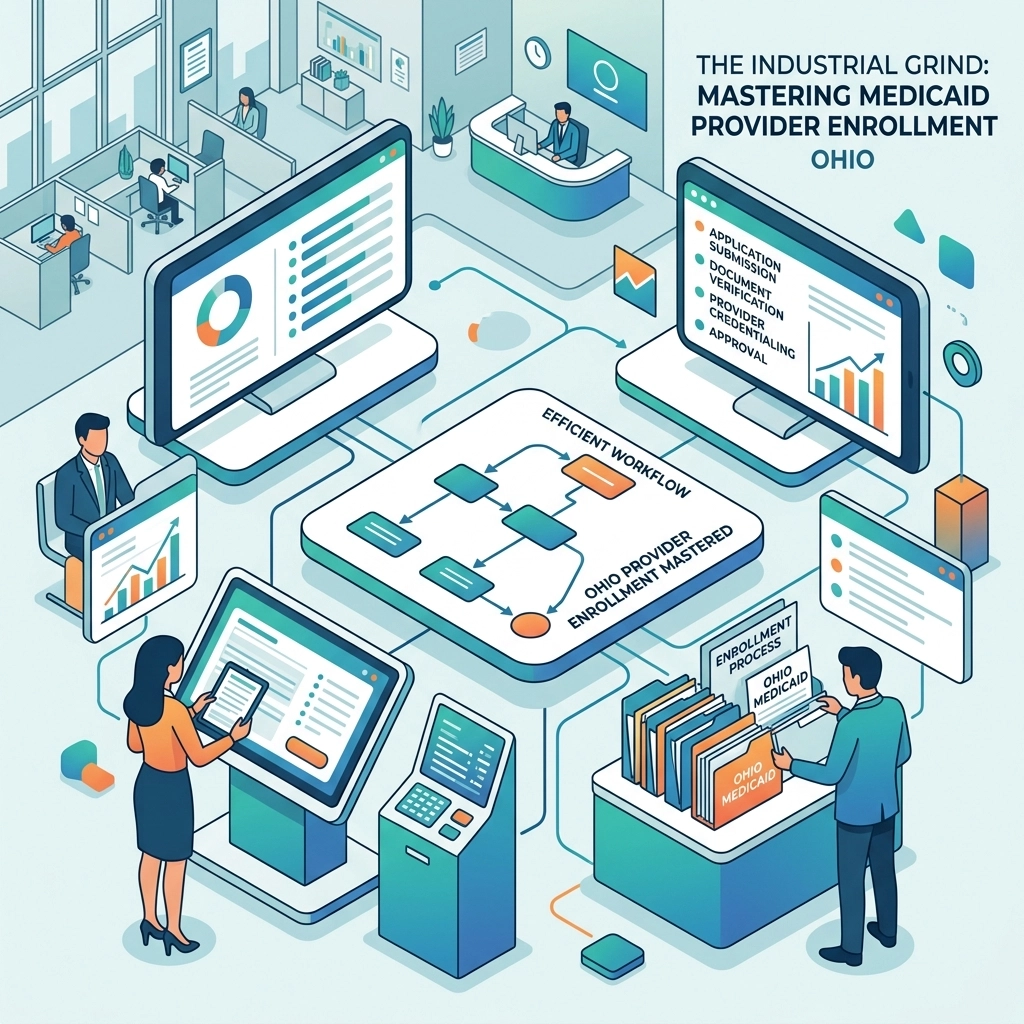
The landscape of healthcare administration is often a cold, grey expanse of regulation and red tape. Navigating Medicaid provider enrollment Ohio requires more than just clinical expertise; it demands a brutalist approach to precision and documentation. While some might look toward Medicaid provider enrollment California as a benchmark for complexity, Ohio has built its own industrial-grade system that leaves no room for error. For healthcare organizations operating in the Buckeye State, the machinery of the Ohio Department of Medicaid (ODM) is either a well-oiled engine for revenue or a grinding wall of administrative delays. In this high-stakes environment, the difference between a successful enrollment and a rejected application is the attention paid to the smallest gear in the machine. At The Veracity Group, we see the consequences of "good enough" every day: stalled claims, credentialing gaps, and the sudden cessation of cash flow. The PNM Module: Ohio’s Digital Fortress Ohio has fully transitioned to a web-based electronic application system known as the Provider Network Management (PNM) Module. This is not a suggestion; it is a mandate. Gone are the days of paper applications and physical signatures sent via certified mail. To enter the Ohio Medicaid ecosystem, you must first secure an OHID. The OHID acts as your digital key to the state’s industrial complex. Without a properly configured OHID and a designated Provider Administrator, the gates remain closed. This system is designed for high-volume data processing, but it is notoriously unforgiving. A single typo in your NPI or a mismatch in your tax identification number will trigger an automated rejection that can set your practice back weeks. When you begin the application, the system issues a Registration ID (Reg ID). You must record this ID immediately. Think of it as your tracking number through the industrial fog; without it, you cannot return to an incomplete application or track your status. If you lose this ID, you are essentially starting from scratch, wasting valuable administrative hours. Image Alt Tag: A gritty noir depiction of massive industrial gears and high-contrast shadows representing the complex ODM PNM module. OhioRISE: Specialized Enrollment for High-Intensity Care If your practice involves behavioral health or specialized pediatric care, you are likely looking at the OhioRISE (Resilience through Integrated Systems and Excellence) program. OhioRISE is a specialized managed care program for children with complex behavioral health and multi-system needs. Enrollment here is not a "one size fits all" process. The requirements for OhioRISE are stringent. It involves specific licensure levels: such as LCSW or LPCC: and requires providers to demonstrate a capacity for integrated care that goes beyond standard Medicaid expectations. Because the stakes for these patients are so high, the state’s scrutiny of these applications is intense. If you are struggling with these specific hurdles, understanding why behavioral health provider enrollment is so hard can provide clarity on the systemic challenges unique to this field. Failure to align your PNM application with OhioRISE specifications results in more than just a denial; it leaves a vulnerable population without the care they desperately need. Precision is the only path forward. The Cost of Friction: Billing Interruptions and Delays In the world of provider enrollment, time is quite literally money. You cannot render services to Medicaid members: and more importantly, you cannot get paid: until you are fully screened, enrolled, and credentialed. The "Industrial Grind" refers to the period where your providers are seeing patients but the billing department is hitting a wall because the enrollment isn't active. The Medicaid Department of Ohio automatically enrolls providers into RAPBACK, a background check system. While this is a streamlined safety feature, any red flags here will immediately halt the enrollment process. Furthermore, application fees are a reality for many provider types. Unless you have paid a fee to Medicare or another state’s Medicaid program within the last five years, you must be prepared to settle this financial requirement upfront. Looking for professional provider credentialing services in the USA? 👉 Check our main service page here: veracityeg.com If your application remains unprocessed due to missing documentation, the state will eventually purge it. This forces you to restart, often leading to a gap in coverage that causes claims to be denied retroactively. For a growing clinic, this is a catastrophic failure that is entirely preventable through meticulous management. Image Alt Tag: A brutalist concrete wall with a small opening of light, symbolizing the high-contrast difficulty of overcoming enrollment barriers. Strategic Precision: Mastering the Standard Application Whether you are navigating Medicaid provider enrollment Texas or the specific rigors of Ohio, the "Standard Application" path for individual practitioners is a sequence of logic gates. You must choose the correct provider type from the outset. Selecting "individual practitioner" when you should have selected "Medicaid Waiver (ODM)" for home-based services is a fundamental error that the system will not auto-correct for you. Each screen in the PNM module is tailored to your provider type. If you provide inaccurate answers, even by mistake, you risk more than just a delay. Knowingly making false statements on these applications can result in prosecution under federal or state law. This is why we advocate for an authoritative, expert-led approach to every submission. For those managing providers across state lines, the challenges multiply. Ohio’s system does not communicate with Medicaid provider enrollment Pennsylvania or Medicaid provider enrollment Florida. Each state is its own industrial silo. To manage this effectively, many organizations look toward mastering multi-state Medicaid provider enrollment to create a cohesive strategy that prevents regional gaps. The Veracity Take: Why You Can’t Afford to Wait At The Veracity Group, we treat enrollment as the backbone of professional credibility. If your enrollment isn't solid, your entire revenue cycle is built on sand. The "Industrial Grind" of the PNM module and Ohio Department of Medicaid (ODM) is designed to filter out the unprepared. We recommend a three-point check for all Ohio providers: Verification of OHID Credentials: Ensure your Provider Administrator is active and has the correct permissions. Reg ID Management: Never start an

Sunshine and Shadows: The Reality of Medicaid Provider Enrollment Florida

PREU4jxFR3z

Florida presents a stark dichotomy for healthcare providers: the external promise of the Sunshine State versus the cold, industrial reality of its administrative machinery. Navigating Medicaid provider enrollment Florida is rarely as bright as the postcards suggest; instead, it is a complex, brutalist structure of regulations, digital portals, and rigid compliance standards. Whether you are expanding from a successful Medicaid provider enrollment Texas operation or launching a new clinic in Miami, the transition into the Florida market requires a disciplined approach to overcome the heavy administrative weight that defines the Agency for Health Care Administration (AHCA) requirements. The Administrative Monolith: Understanding AHCA At the heart of Florida’s healthcare system stands the Agency for Health Care Administration (AHCA). To the uninitiated, AHCA functions as a gatekeeper with an uncompromising eye for detail. The enrollment process is not a mere formality; it is a rigorous vetting procedure designed to protect the state's Medicaid integrity. For providers, this translates into a multi-layered verification process that will make or break your ability to treat patients and receive reimbursement. The complexity of Florida’s system is intentional. It is built to filter out those who cannot meet the stringent operational standards required by the state. Every application submitted is scrutinized against the Florida Medicaid Management Information System (FMMIS) standards. If your practice is not fully operational before you begin the enrollment journey, you are already behind. AHCA mandates that clinics must be open and ready to provide services the moment the application is processed, creating a high-pressure environment where timing is everything. Image Description: A high-contrast, gritty noir image of a massive concrete government building with sharp angles and long shadows, symbolizing the industrial weight of healthcare administration. The Digital Labyrinth of the Florida Medicaid Management Information System The Florida Medicaid Management Information System (FMMIS) is the digital backbone of the state's provider network. While it serves as the portal for enrollment, it is often viewed by providers as a labyrinth of technical hurdles. The system demands a precise sequence of actions: determining provider types, creating secure portal accounts, and uploading a mountain of digitized documentation. One of the most significant challenges within FMMIS is the rigidity of the five-step enrollment pathway. Any deviation from the prescribed order: or a single missing document: can trigger a systemic rejection. This is not a system that allows for "placeholders." You must have your W-9 forms, professional licenses, and malpractice insurance perfectly aligned and ready for upload. The high cost of delays in this digital environment is measured in months, not days. An initial enrollment typically spans 30 to 90 days, but this timeline assumes a flawless submission. In the brutalist landscape of state bureaucracy, a "flawless submission" is a rarity for those without dedicated administrative support. Document misrouting or manual verification needs are common bottlenecks that extend the waiting period, leaving your revenue cycle in a state of purgatory. The Three Tiers of Participation In Florida, enrollment is not a one-size-fits-all designation. Providers must strategically choose their category within the provider enrollment framework. Understanding these tiers is essential for aligning your clinical goals with state reimbursement capabilities: Fully Enrolled Providers: These are the backbone of the system. Fully enrolled providers can bill for all covered services on a fee-for-service basis. This requires the highest level of scrutiny and documentation. Limited Enrolled Providers: This category is often utilized for specific programs or emergency services, offering a narrower scope of billing potential. Ordering or Referring (O/R) Providers: These providers do not bill for services directly but are essential for the continuum of care. Without an O/R enrollment, the prescriptions or referrals you write for Medicaid patients will be rejected at the pharmacy or specialist level. Failure to select the correct tier or understand the specific requirements for your provider type: such as the unique LCSW requirements for behavioral health or the surgical center compliance risks: leads to immediate administrative friction. As noted in our deep dive into behavioral health provider enrollment, the nuances of each specialty can add layers of complexity to an already somber process. Image Description: A moody, industrial close-up of a vintage typewriter and a stack of weathered files under a single harsh spotlight, representing the grit required for administrative compliance. The Heavy Weight of Compliance: Documentation and Background Checks Florida’s commitment to "Sunshine State" transparency does not extend to a lenient enrollment process. The state requires Level 2 criminal background screenings for all high-risk provider types. This industrial-strength vetting involves fingerprinting and a review of the AHCA background screening clearinghouse. Furthermore, the documentation burden is relentless. You must provide: True and accurate ownership disclosures. Verification of all professional licenses through the Florida Department of Health. Proof of operational status, including physical site inspections for certain provider categories. If your practice is involved in contracting, you know that the state’s requirements often overlap with those of Managed Care Organizations (MCOs). However, being enrolled in an MCO does not bypass the need for state-level enrollment. You must maintain a valid Medicaid ID to participate in any state-funded program. The Veracity Group: Your Anchor in the Storm In a landscape defined by brutalist architecture and gritty noir complexities, The Veracity Group acts as the anchor for your clinic. The administrative weight of Florida compliance is too heavy for most clinical teams to carry while simultaneously focusing on patient care. We provide the structural support needed to navigate the AHCA and FMMIS maze. We understand that enrollment matters for your bottom line. Our team handles the heavy lifting: from the initial FMMIS account setup to the final verification of your Medicaid ID. We treat the enrollment process as a high-stakes industrial project, ensuring that every "bolt" is tightened and every "beam" is in place. You can read more about how we manage these complexities in our weekend healthcare news recap. By partnering with us, you move away from the shadows of administrative uncertainty and toward a streamlined, professional submission. We act as your liaison with state agencies, mitigating the

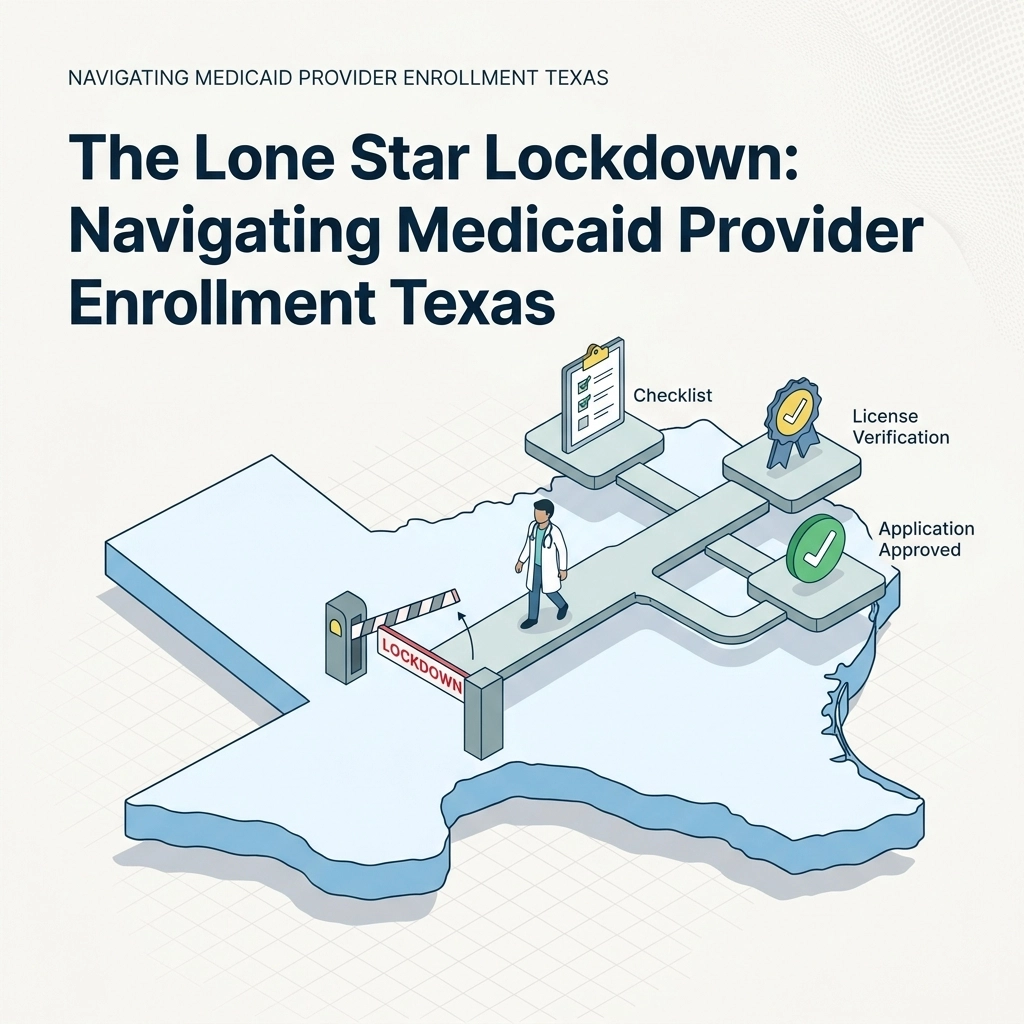
The Lone Star Lockdown: Navigating Medicaid Provider Enrollment Texas

BW9EikI05K1

Navigating the administrative landscape of the South requires more than just clinical expertise; it demands a mastery of the Medicaid provider enrollment Texas framework, a system designed with rigid checkpoints and zero margin for error. For healthcare entities operating within the borders of the Lone Star State, the Texas Medicaid & Healthcare Partnership (TMHP) acts as the ultimate gatekeeper. Failure to sync your operational pace with their regulatory requirements does not just result in a paperwork delay: it triggers a total revenue lockdown. In an environment where reimbursement is the lifeblood of your practice, treating enrollment as a secondary task is a high-stakes gamble that most clinics eventually lose. The sheer scale of the Texas healthcare market creates a brutalist architecture of bureaucracy. Whether you are a solo practitioner or a multi-facility surgical center, your entry into this market is dictated by the Provider Enrollment and Management System (PEMS). This digital fortress is the only way in, and it is notoriously unforgiving. The PEMS Portal: A Digital Gauntlet The transition to the Provider Enrollment and Management System (PEMS) represents a fundamental shift in how Texas manages its healthcare workforce. Gone are the days of paper-trailing and loose deadlines. Today, PEMS serves as the singular point of entry for all providers seeking to participate in Texas Medicaid, the Children’s Health Insurance Program (CHIP), and other state-sponsored initiatives. PEMS is designed for technical precision. It requires you to upload exhaustive documentation, from valid state licenses to proof of Medicare enrollment where applicable. The system provides immediate feedback, but that feedback often takes the form of hard rejections that can set your revenue cycle back by months. Because Texas requires prerequisite enrollment in Medicaid before you can participate in managed care organizations (MCOs), a bottleneck at the PEMS level effectively freezes your ability to see a massive segment of the patient population. Alt Text: A high-contrast, gritty noir image of a massive industrial gate closing, symbolizing the rigid barriers of the PEMS portal and the "Lone Star Lockdown" of provider enrollment. The 5-Year Revalidation: A Looming Operational Threat Compliance is not a one-time event; it is a recurring cycle of survival. Under federal regulations (Title 42 CFR §455.414), most providers must complete a full revalidation of their enrollment every five years. In Texas, this process is handled through TMHP and is managed with zero leniency. If your practice misses the revalidation window, your billing privileges are terminated. There is no "grace period" that allows for continued billing while you fix the error. Once you are de-enrolled, the path to re-entry is identical to a new enrollment, meaning you will face the full weight of the PEMS gauntlet all over again while your accounts receivable stagnate. This cycle is the "silent driver" of financial instability for many Texas practices. The Veracity Group manages this operational rigor by maintaining a proactive stance on revalidation dates. We do not wait for the notification from TMHP; we anticipate the window, ensuring that your practice remains "active" and compliant long before the deadline approaches. This level of oversight is the difference between seamless continuity and a catastrophic break in service. Expanding the Frontier: Multi-State Complexity For growing healthcare organizations, the challenges of Texas are often just the beginning. Expanding across state lines introduces a fragmented reality where every jurisdiction operates under its own set of brutalist rules. If you find the Texas system demanding, the nuances of Medicaid provider enrollment Florida will present an entirely different set of administrative hurdles, often involving distinct background screening and site visit requirements. Similarly, the administrative weight of Medicaid provider enrollment Pennsylvania or the highly specific regulatory environment of Medicaid provider enrollment California requires a dedicated team that understands the local landscape. Even in the Midwest, the process for Medicaid provider enrollment Ohio demands a level of precision that can overwhelm internal staff who are already stretched thin by patient care. Managing a multi-state footprint requires a centralized strategy. You cannot afford to have different processes for different states. By partnering with The Veracity Group, you gain access to a unified management structure that masters the Mastering Multi-State Medicaid Provider Enrollment process, ensuring that your expansion is not throttled by state-specific red tape. Alt Text: A somber, brutalist architectural shot of multiple industrial towers, representing the complex and separate Medicaid systems of Texas, Florida, Ohio, Pennsylvania, and California. The Operational Rigor of TMHP Compliance The Texas Medicaid & Healthcare Partnership (TMHP) operates with an industrial-grade focus on compliance. To stay in their good graces, your practice must adhere to the Affordable Care Act (ACA) screening requirements, which categorize providers into "limited," "moderate," or "high" risk levels. Each level brings a heightened degree of scrutiny, including potential site visits and criminal background checks. Managing these requirements internally often leads to "enrollment fatigue." Your staff might miss a subtle update in the TMHP provider manual or fail to update a demographic change within the required timeframe. These minor oversights lead to denied claims and, eventually, a total suspension of payments. Looking for professional provider credentialing services in the USA? 👉 Check our main service page here: veracityeg.com At The Veracity Group, we treat provider enrollment as a mission-critical function. We understand that your NPI is more than just a number: it is the backbone of your professional credibility and your financial health. We navigate the TMHP help desks and the PEMS error codes so your clinicians can stay focused on the patients who need them. The High Cost of Administrative Delays Every day a provider is not enrolled is a day of lost revenue that can never be recovered. Retroactive billing is often limited and difficult to secure. In Texas, the gap between hiring a new physician and seeing their first Medicaid-reimbursed dollar can span several months if the enrollment is not handled with expert precision. Consider the impact on a surgery center or a high-volume behavioral health clinic. A single missing link in the Medicaid provider enrollment Texas chain can cause a

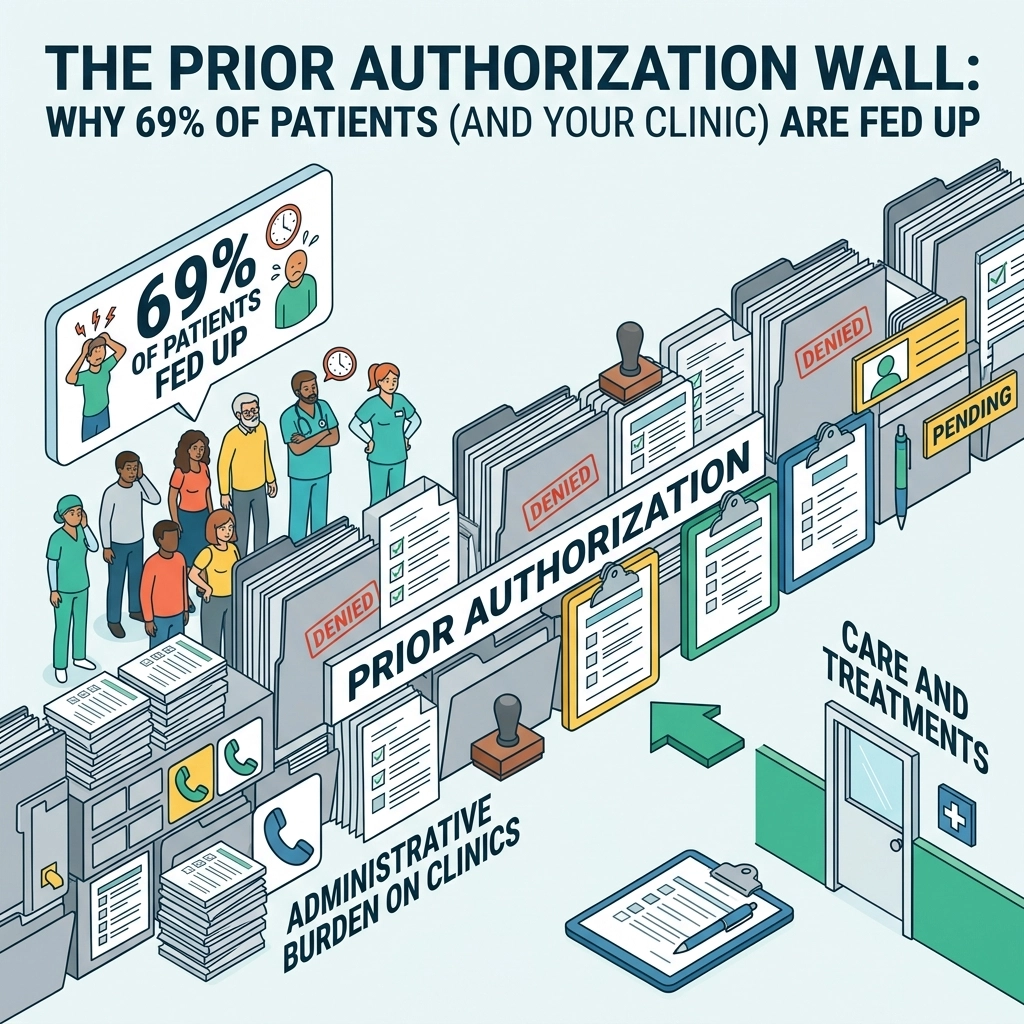
The Prior Authorization Wall: Why Patients (and Your Clinic) Are Fed Up

UAj2hKBJgWn

The healthcare landscape in 2026 feels like a high-contrast noir film: lots of flashing neon signs promising "innovation," but a whole lot of shadow where the actual care should be. At the center of this digital fog sits the "Prior Authorization Wall." It’s a glitch in the system that doesn’t just slow things down, it stops them cold. For any medical group trying to maintain a steady pulse, navigating provider enrollment and medical credentialing is only half the battle; the other half is surviving the administrative gauntlet of getting insurance companies to actually say "yes" to necessary care. According to the latest KFF Health Tracking Poll, 69% of insured adults say prior authorizations are a burden (major or minor)—but 34% (about one in three) call it the single biggest burden beyond costs. We’re not talking about a minor inconvenience here. We’re talking about a systemic roadblock that turns a routine procedure into a weeks-long waiting game in a digital lobby that never seems to empty. The KFF Reality Check: The Numbers That Scream When 69% of insured adults tell you prior authorizations are a burden (major or minor), you’ve reached a breaking point. The KFF data shows the real plot twist, though: 34% say prior authorizations are the single biggest burden beyond costs—and for insured adults with a chronic condition, that jumps to 39%. Technology was supposed to make healthcare "seamless," but it has often just created a faster way to say "no." Patients are essentially stuck in a vaporwave nightmare: lots of aesthetic portals and "patient-centered" branding, but zero movement. And the pain isn’t just vibes—66% of adults say prior authorization delays and denials are a major problem. On top of that, 47% of insured adults (and 57% of those with a chronic condition) report having a service denied or delayed in the past two years. For your clinic, these aren't just numbers on a poll. These are the people blowing up your front-desk phones. These are the patients who show up for an appointment only to be told their "golden ticket" authorization hasn't cleared the mainframe yet. It’s a bad look for the system, and it’s an even worse experience for the provider. Alt-tag: A neon-lit digital wall representing the 69% administrative barrier in healthcare. The Administrative Black Hole It isn’t just the patients who are hitting the wall. The back-office reality for medical groups is a high-stakes game of data entry and phone tag. As reported by the American Medical Association, a massive 94% of physicians report that prior authorization delays have a direct, negative impact on patient clinical outcomes. Think about that. Nearly every doctor in the country is watching their medical expertise get overruled or delayed by a cubicle-bound algorithm. This creates a ripple effect throughout your entire operation: Revenue Stagnation: Every "pending" authorization is a "pending" payment. Staff Burnout: Your best people shouldn't be spending four hours a day on hold with an insurer's "provider portal" that looks like it was designed in 1998. Patient Churn: Patients don't blame the insurer; they blame the person in the white coat. If you can’t get them their meds, they’ll find someone who (they hope) can. The systemic cost of this friction is estimated at $35 billion annually. That is a lot of neon-soaked cash going down the drain just to prove that a patient actually needs the surgery their doctor already said they needed. The Veracity Take: Why Enrollment Is Your Foundation At The Veracity Group, we see the Prior Authorization Wall for what it really is: a symptom of a larger administrative disease. If your contracting and enrollment aren't handled with surgical precision, you are essentially trying to climb this wall with one hand tied behind your back. Poorly managed contracting leads to vague authorization requirements. If your providers aren't properly linked to the correct plans through rigorous provider enrollment, the "system" doesn't even recognize your right to ask for an authorization in the first place. This is where the "glitch" happens. You submit a request, it gets kicked back because of a "provider mismatch," and suddenly you're back at square one while your patient waits in the dark. A solid enrollment strategy is the only way to ensure you have the "clearance" to navigate these payer networks effectively. You can't fight a high-tech war with low-tech enrollment data. Alt-tag: A high-contrast noir office scene showing a provider navigating complex digital healthcare data. 2026: The Year the Wall Starts to Crumble? There is some light at the end of this digital tunnel. Recognizing that the status quo is unsustainable, the CMS 2026 Prior Authorization Rule is set to impose some much-needed order on the chaos. The new mandates are designed to force payers into the 21st century: Faster Response Times: No more "waiting indefinitely." Payers will have strict windows to issue approvals or denials. Electronic Prior Authorization (ePA): Moving away from the fax-machine-and-carrier-pigeon era into integrated, API-driven workflows. Transparency Standards: Payers must actually explain why a denial happened, rather than just sending a cryptic code that requires a Rosetta Stone to decipher. This shift is a massive win for medical groups, but only if you're prepared. If your data isn't clean: if your CAQH profiles are outdated or your demographic updates are lagging: these new electronic systems will reject your requests faster than a human ever could. Why You Can’t Afford to Wait In the "Night City" of modern healthcare, speed is your only currency. The Prior Authorization Wall is designed to filter out the disorganized. If your clinic is struggling to keep up with the sheer volume of "red tape," you’re not just losing time; you’re losing your competitive edge. The Veracity Group exists to be the "fixer" in this scenario. We handle the heavy lifting of enrollment and credentialing so that when you hit that authorization wall, you have the documentation and the "digital passport" to walk right through it. The high cost of delays isn't just a line item on a