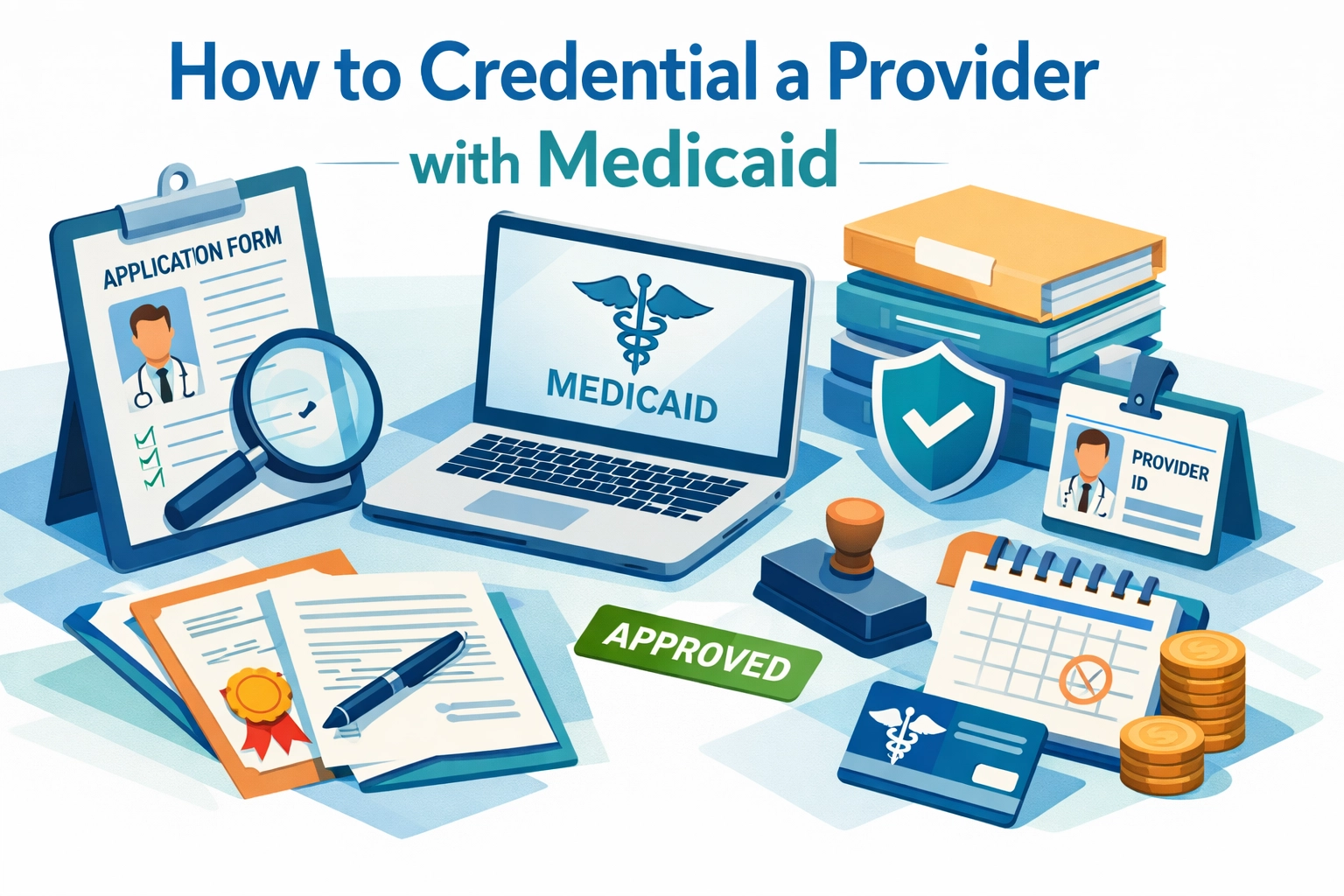
How to Credential a Provider with Medicaid

Navigating the complexities of state-funded healthcare requires a robust strategy for medical provider enrollment services to ensure your practice remains compliant and solvent. Whether you are managing a high-volume surgical center or focusing on Medicare and Medicaid enrollment for behavioral health providers, securing your Medicaid provider number is the essential first step toward treating one of the nation’s largest patient populations. This process is the backbone of professional credibility, acting as the gateway for providers to receive reimbursement for the vital services they offer to low-income individuals and families. Looking for professional provider credentialing services in the USA? 👉 Check our main service page here: veracityeg.com The High Cost of Administrative Delays In the modern healthcare landscape, you cannot afford to treat the Medicaid application as a secondary task. A single missing signature or an expired license can result in a months-long delay, effectively halting your revenue cycle and preventing patients from accessing necessary care. For many practices, the administrative burden of staying current with state-specific regulations is the silent driver of overhead costs. If your providers are not fully approved, you risk claim denials that are often impossible to overturn retroactively. You must treat the application process with the same precision you apply to clinical care. Phase 1: Establishing the Regulatory Foundation Before you even log into a state portal, you must ensure that the provider’s primary credentials are in perfect order. Medicaid agencies are notoriously rigorous regarding the baseline requirements. National Provider Identifier (NPI): Every provider must have a unique 10-digit NPI. You must distinguish between a Type 1 NPI (individual) and a Type 2 NPI (group/organization). If your provider is joining a group, both must be correctly registered and linked within the National Plan and Provider Enumeration System (NPPES). State Licensure: Ensure the provider holds an active, unrestricted license in the state where they will practice. Any history of disciplinary action will trigger an automatic manual review, lengthening the timeline significantly. Tax Identification Number (TIN): Whether you are a solo practitioner using a Social Security Number or a group using an Employer Identification Number (EIN), this data must match your IRS records exactly. Phase 2: Navigating the State-Specific Application Unlike federal programs, Medicaid is administered at the state level, meaning the requirements in Texas will differ significantly from those in New York. You must visit the specific state’s Department of Health or Medicaid portal to begin the process. Most states have transitioned to digital platforms, such as the Medi-Cal portal in California or the e-MedNY system in New York, to streamline submissions. During this phase, you will be required to provide: Personal and Professional Histories: This includes a full accounting of the provider’s education, residency, and fellowships. Practice Locations: You must list every physical location where the provider will see Medicaid patients. Failure to list a site can result in denials for services rendered at that location. Specialty-Specific Details: For example, behavioral health providers must often submit specific certifications or proof of supervision hours depending on their licensure level. If you are managing providers across multiple regions, mastering multi-state Medicaid provider enrollment is critical to avoid the common pitfalls of varying state mandates. Phase 3: The Mandatory Documentation Checklist The “paperwork trail” is where most applications fail. Medicaid agencies require a comprehensive digital packet of supporting documents. You should prepare a centralized file containing: Current State Medical License DEA and State Controlled Substance Certificates (where applicable) Professional Liability Insurance (Malpractice) Face Sheets Board Certifications Educational Diplomas and Training Certificates W-9 Forms Each document must be current. If a malpractice policy is set to expire within 30 days of your submission, the agency will likely reject the application or place it in a “pended” status until a new certificate is provided. You must be proactive in updating these documents before they reach their expiration date. Phase 4: Screening Levels and Risk Management Under the Affordable Care Act, Medicaid providers are categorized into three risk levels: Limited, Moderate, or High. Your risk level determines the intensity of the screening process. Limited Risk: Typically includes physician groups, individual practitioners, and medical clinics. Screening involves verifying licenses and checking federal databases for exclusions. Moderate Risk: Often includes physical therapists, oxygen suppliers, and certain imaging centers. This level requires “on-site” visits to ensure the facility is legitimate and operational. High Risk: Usually reserved for new home health agencies and DME (Durable Medical Equipment) suppliers. Providers in this category are subject to fingerprint-based criminal background checks. According to official CMS guidelines, these screenings are mandatory and cannot be waived. If your provider falls into the high-risk category, you must coordinate fingerprinting sessions immediately to prevent the application from stalling. Phase 5: Verification and On-Site Inspections Once submitted, the state agency vets the application against federal databases like the Office of Inspector General (OIG) Exclusions Database and the System for Award Management (SAM). This is to ensure the provider has not been barred from participating in federal healthcare programs. If an on-site inspection is required, an auditor will visit your practice to verify that the facility meets safety standards and is actually providing the services claimed. You must ensure that your office staff is prepared for an unannounced visit. The auditor will look for posted hours, patient record storage security, and the physical existence of medical equipment. Phase 6: The Provider Agreement and Effective Dates Upon successful verification, you will receive a Medicaid Provider Agreement. This is a legally binding document that outlines the terms of your participation, including reimbursement rates, audit rights, and compliance requirements. You must sign and return this agreement to finalize the process. The approval notice will include your unique Medicaid Provider Number (MPN) and, crucially, an effective date. In many states, you cannot bill for services provided before this date. However, some states allow for “retroactive enrollment” up to 90 days if certain conditions are met. You must verify your state’s specific policy to avoid losing revenue for services already rendered. Maintaining Your Enrollment Status Securing your Medicaid
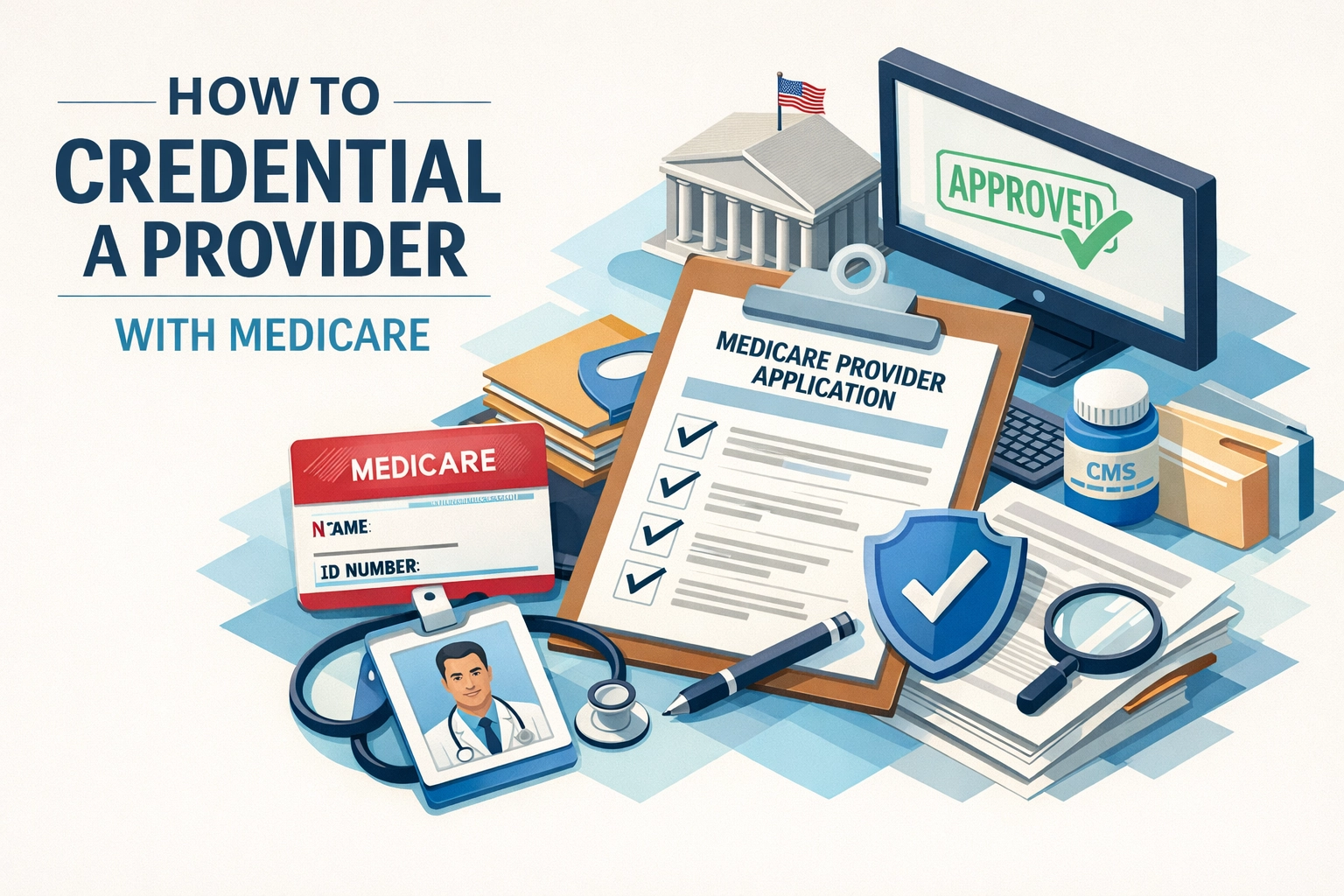
How to Credential a Provider with Medicare

Securing your place within the federal healthcare network requires a meticulous approach to medical provider enrollment services. For many practices, achieving successful Medicare and Medicaid enrollment for behavioral health providers and other medical specialists is the definitive factor in ensuring long-term financial stability and patient access. Navigating the Centers for Medicare & Medicaid Services (CMS) framework is not merely a bureaucratic task; it is the backbone of your professional credibility and the primary driver of your practice’s revenue cycle. The Foundation of Medicare Participation To begin the process of credentialing a provider with Medicare, you must first ensure that the foundation is structurally sound. Medicare is the largest payer in the United States, and their standards for entry are rigorous. Before an application is even initiated, a provider must possess a valid National Provider Identifier (NPI). This ten-digit numerical identifier is mandated by HIPAA and is issued through the National Plan and Provider Enumeration System (NPPES). Without a properly configured NPI Type 1 (for individuals) or Type 2 (for organizations), the process stops before it begins. You must also ensure that the provider holds an active, unrestricted license in the state where they intend to practice. Medicare does not offer “conditional” approvals; you are either fully compliant with state regulations or you are ineligible for participation. Step 1: Determining the Correct Enrollment Path The complexity of Medicare enrollment often stems from the variety of forms and systems available. You must determine which version of the CMS-855 application applies to your specific situation. CMS-855I: Used for individual physicians and non-physician practitioners. CMS-855B: Used for provider organizations, such as group practices and clinics. CMS-855O: Used for providers who only order or certify services but do not bill Medicare directly. CMS-855R: Used to reassign Medicare benefits from an individual to an organization. Most modern practices utilize the Provider Enrollment, Chain, and Ownership System (PECOS). This electronic portal is the preferred method for submission because it includes built-in data validation that reduces the likelihood of simple clerical errors. While paper applications are still accepted by your Medicare Administrative Contractor (MAC), the processing time for digital submissions is significantly faster: often cutting the wait time from 65 days down to 30 days. Step 2: The Documentation Exhaustive List One of the primary reasons for application denial is incomplete documentation. You should prepare to gather approximately 30 distinct documents per provider to satisfy the MAC’s requirements. Missing a single signature or an outdated insurance certificate will lead to a “rejection” or a “request for information” (RFI), which resets your processing clock. Critical documents include: State Professional License: Must be current and without disciplinary markers. IRS Form CP-575: This confirms your Tax Identification Number (TIN) and legal business name. Medicare will not accept an application if the name on the IRS document does not perfectly match the name on the enrollment form. Professional Liability Insurance: A copy of the current policy declaration page showing appropriate coverage limits. Educational Credentials: Diplomas, board certifications, and residency completion certificates. EFT Authorization (CMS-588): Medicare strictly requires electronic funds transfers for all payments. You must provide a voided check or a bank letter to verify the account. For a deeper look into how these requirements intersect with other systems, you might find our guide on navigating the maze of CAQH and Medicare enrollment particularly useful. Step 3: Navigating the PECOS Submission When you log into PECOS, the system will guide you through a series of “topics.” You must be prepared to disclose information regarding ownership and control. Medicare is highly sensitive to the corporate structure of healthcare entities. You are required to list any individual or organization with a 5% or greater ownership interest, as well as managing employees (such as a CEO or Medical Director). Failure to disclose an owner or a managing employee who has a history of “adverse legal actions” can result in the immediate revocation of billing privileges or the denial of the application. The Veracity Group recommends a thorough internal audit of all stakeholders before the data is entered into the federal system to avoid unforeseen compliance risks. Step 4: Financial and Participation Agreements During the enrollment process, you must make a critical decision regarding your Participation Status. By filing the CMS-460 (Medicare Participating Physician or Supplier Agreement), you agree to always accept “assignment.” This means you will accept the Medicare-approved amount as full payment for covered services. While non-participating providers can still treat Medicare patients, they face a lower reimbursement rate and are subject to “limiting charges” on what they can bill the patient. Most providers find that the administrative simplicity and higher reimbursement of full participation outweigh the perceived flexibility of non-participation. Looking for professional provider credentialing services in the USA? 👉 Check our main service page here: veracityeg.com Step 5: MAC Review and Site Visits Once the application is submitted, it moves to your specific Medicare Administrative Contractor (MAC). The MAC acts as the gatekeeper for CMS in your region. During this phase, the MAC will verify every data point you submitted. They will cross-reference your NPI, your state licensing board, and the Office of Inspector General (OIG) exclusion list. For certain provider types, Medicare requires a site visit to prevent “shell” offices and fraudulent billing setups. If your specialty is flagged for a site visit, an inspector will arrive unannounced to verify that the practice is operational, has a visible sign, and possesses the necessary equipment to treat patients. You must be prepared for this inspection; if the inspector finds the office closed during posted business hours, your application will be denied immediately. Step 6: Receiving the PTAN Upon successful review, the MAC will issue two crucial identifiers: your Effective Date and your Provider Transaction Access Number (PTAN). While the NPI identifies you across all payers, the PTAN is specific to Medicare. It is the key that unlocks the ability to submit claims and check the status of payments. Your effective date is generally the date the MAC received the application that
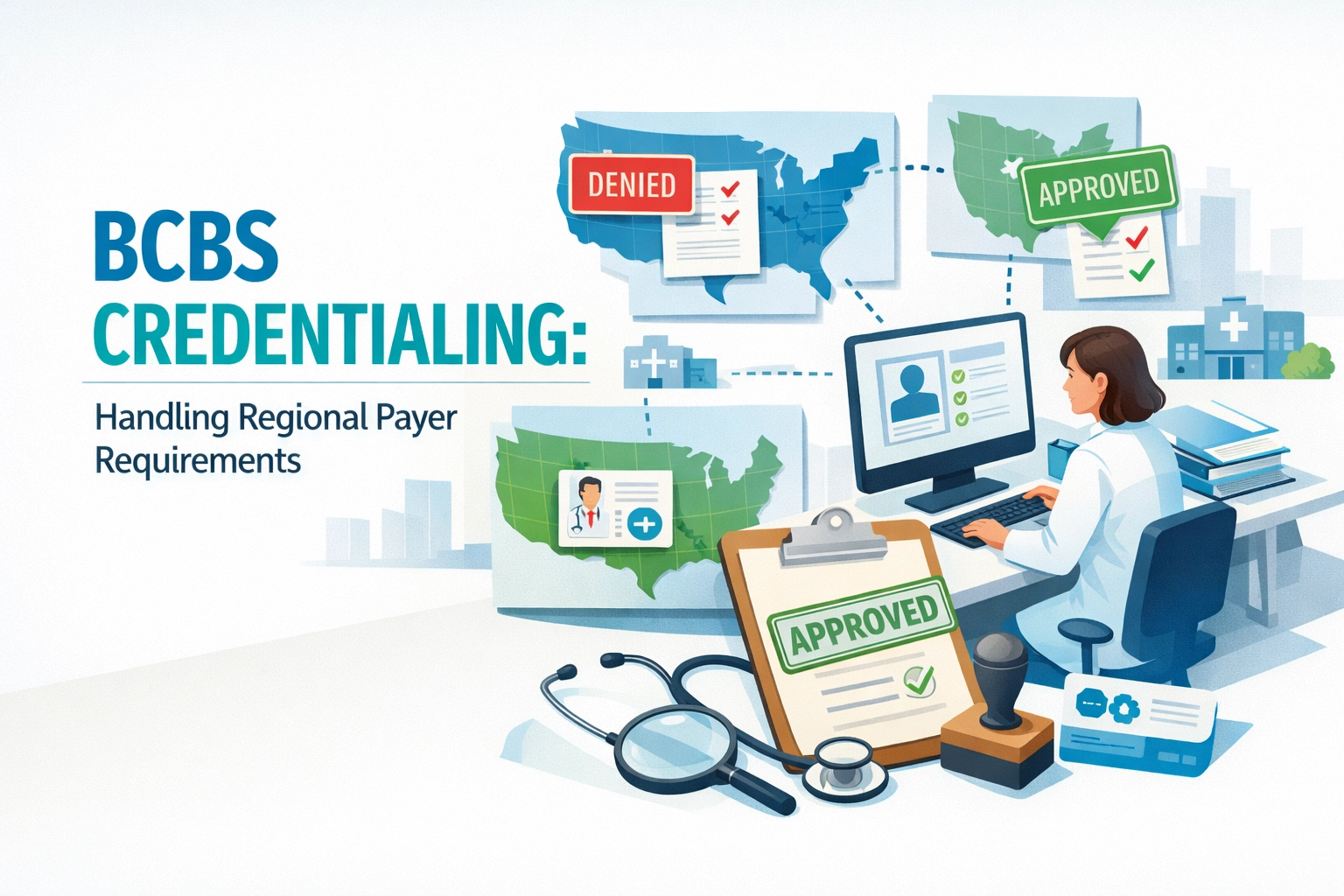
How to Credential a Provider with BCBS

In the competitive landscape of modern healthcare, efficient medical provider enrollment services are the foundation of a sustainable revenue cycle. For organizations expanding their reach, mastering behavioral health provider enrollment across multiple jurisdictions is not just an administrative task; it is a strategic necessity. Navigating the Blue Cross Blue Shield (BCBS) network requires a sophisticated understanding of a decentralized system where each regional entity operates with its own specific set of mandates, timelines, and compliance thresholds. Looking for professional provider credentialing services in the USA?👉 Check our main service page here: veracityeg.com The Decentralized Architecture of Blue Cross Blue Shield The most critical factor to understand about BCBS is that it is not a monolithic entity. It is a federation of independent, locally operated companies. While they share a brand and certain overarching standards set by the Blue Cross Blue Shield Association, the actual execution of provider entry into their networks is strictly governed by regional boards. This independence means that the requirements you satisfy for BCBS of Texas will not necessarily mirror those of BCBS of Illinois or Anthem in California. Each plan maintains its own Medical Policy, its own Provider Manual, and its own unique application portal. For multi-state practices, this geographic fragmentation is the single greatest hurdle to achieving network participation. Failing to account for these regional nuances results in prolonged revenue gaps and administrative gridlock that can stall your practice's growth for months. Identifying Regional Nuances and Provisional Status Regional variations are often subtle but carry significant consequences. For instance, certain plans have adopted progressive measures to accelerate the onboarding of new providers. As of July 2023, Blue Cross Blue Shield of Montana began offering provisional status, which allows providers to participate in the network while their full file is under final review, provided they meet specific state licensure criteria. Conversely, other regional plans, such as those in the Northeast or Midwest, may have much more rigid "closed-door" policies for certain specialties or geographic areas already saturated with providers. You must identify if your target region is currently accepting new applications for your specific specialty. In many cases, behavioral health provider enrollment faces unique challenges depending on the state's current mental health parity laws and regional network adequacy requirements. For a deeper look into the complexities of the mental health sector, see our guide on why behavioral health provider enrollment is so hard. The Essential Documentation Framework While regional specifics vary, the core documentation required by BCBS plans remains the backbone of professional credibility. Your practice must maintain a centralized, digital repository of all provider credentials to ensure rapid submission once a regional window opens. The standard list of requirements includes: Current State Medical License: Must be active and unrestricted in the state where the provider will practice. DEA Registration: Required for providers prescribing controlled substances, with an address matching the practice location. Board Certification Status: BCBS plans increasingly require board eligibility or certification for most specialties. Professional Liability Insurance: Certificates must show adequate coverage limits, typically $1M/$3M, depending on the region. Five-Year Work History: A comprehensive CV with no gaps; any gap exceeding six months must be explained in writing. NPI (National Provider Identifier): Both Type 1 (Individual) and Type 2 (Group) must be correctly registered. Managing the CAQH ProView Integration The vast majority of BCBS plans utilize the CAQH ProView database as their primary source of truth. However, simply having a profile is insufficient. To satisfy BCBS regional requirements, your CAQH profile must be 100% complete and re-attested every 120 days. If your CAQH data is outdated or if a plan does not have authorization to access your file, the application will stall indefinitely. You must ensure that each specific BCBS regional plan is granted permission within the CAQH portal to view your data. This is a common point of failure for many practices that assume a global "grant all" setting covers every newly formed regional subsidiary or specific Medicaid-managed care line of business. Strategic Prioritization for Multi-State Entities When expanding across state lines, you cannot treat every application with equal urgency. You must prioritize based on projected patient volume and revenue potential. Tier 1: High-volume regions where existing patient demand is high. Tier 2: Expansion regions with upcoming start dates. Tier 3: Maintenance regions where providers are already active but require updates. Establish a master tracking system that records the submission date, the regional tracking number, and the name of the designated network representative. Without this level of granular oversight, your files will disappear into the administrative "black hole" that often characterizes large payer organizations. Navigating Timelines and Follow-Up Protocols The typical window for BCBS network entry is 45 to 90 days. However, this is an optimistic estimate that assumes a "clean file" submission. In reality, regional backlogs can extend this to six months or more. You must implement a rigorous follow-up schedule. We recommend a "2-2-2" approach: follow up two weeks after submission to confirm receipt, every two weeks thereafter to check status, and then daily once the file moves to the final "Contracting" phase. Use official channels, such as the Montana Credentialing Status Checker or the specific portal for your region, to maintain a written record of all communication. For medical groups managing multiple providers, the risk of a single expired license or a missed re-attestation can trigger a mass de-enrollment across the entire group. This is why professional provider enrollment management is vital to the health of your practice. Consequence of Non-Compliance The high cost of delays in BCBS network participation is measured in lost revenue and patient attrition. If a provider is seeing patients before the effective date listed by the regional BCBS plan, those claims will be denied. Most BCBS plans do not offer retroactivity; if the provider is not effective until the 15th of the month, any services rendered on the 14th are non-reimbursable. This "silent driver" of lost profit can decimate the first-quarter earnings of a new clinic or a newly hired provider. Leveraging The
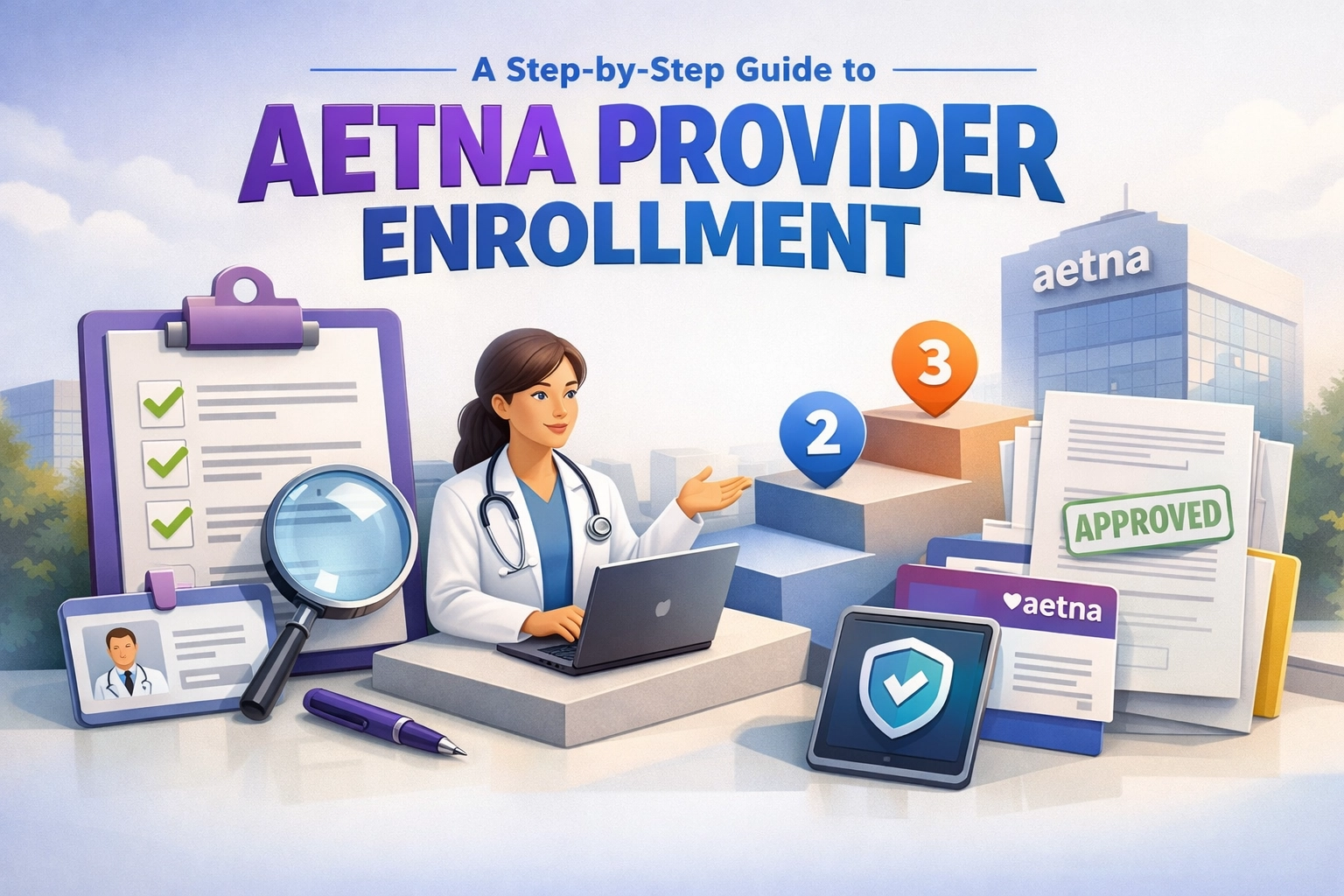
How to Credential a Provider with Aetna

Navigating the complex world of medical provider enrollment services is the key to unlocking consistent revenue streams and expanding your patient base. In today’s rapidly shifting behavioral health enrollment landscape, securing a spot within the Aetna network is not just an option: it is a strategic necessity for growth and long-term sustainability. At The Veracity Group, we understand that the administrative burden of joining a major payer network can feel like an insurmountable wall, but with a structured approach, it becomes the backbone of your professional credibility. Aetna is one of the largest healthcare insurers in the United States, serving millions of members. For your practice, becoming an in-network provider with Aetna is the “passport to success” that ensures patients can find you in search directories and that your claims are processed without the friction of out-of-network hurdles. Delaying this process is a silent driver of lost revenue; every day you spend outside the network is a day a potential patient chooses a competitor who is already enrolled. Looking for professional provider credentialing services in the USA? 👉 Check our main service page here: veracityeg.com The Critical Foundation: Pre-Enrollment Preparation Before you even log into a portal, you must establish a solid foundation. Incomplete applications are the primary reason for multi-month delays. You must treat the preparation phase as a high-stakes audit of your professional history. Accuracy is not a suggestion; it is a requirement. To ensure a seamless provider enrollment experience, you must gather the following documentation in a centralized, digital repository: National Provider Identifier (NPI): Ensure your NPI Type 1 (Individual) and Type 2 (Group, if applicable) information is current in the NPPES database. State Medical Licenses: Your license must be active and unrestricted in every state where you intend to see Aetna members. DEA and CDS Certificates: Mandatory for providers who prescribe controlled substances. Board Certification: Proof of your specialty status, which is heavily scrutinized in the Aetna review process. Comprehensive CV: Your curriculum vitae must account for every month of your professional life since graduation. Any gaps longer than 30 days must be explained in writing. Malpractice Insurance: A current Certificate of Insurance (COI) showing coverage limits that meet Aetna’s minimum requirements (typically $1M/$3M). Alt Text: A professional 3D render of organized medical documents and digital tablets on a clean corporate desk, symbolizing the preparation phase of healthcare enrollment. Step 1: Submitting the Request for Participation The journey begins at the Aetna Provider Onboarding Center. This is the digital gatekeeper for all new applicants. You do not simply “sign up”; you request to participate. Aetna evaluates its current network adequacy in your geographic area and specialty before deciding to move forward with your application. For those operating within the behavioral health provider enrollment sector, this step is particularly sensitive. Aetna carefully monitors the density of LCSWs, psychologists, and psychiatrists in specific regions. You must clearly identify your provider type: Individual Physicians and Groups: Use the NPI Type 1 individual application. Mid-Level Providers: Nurse Practitioners and Physician Assistants must select their specific specialty from the dropdown menu to ensure they are routed to the correct department. Behavioral Health Professionals: There is often a dedicated path for mental health practitioners to ensure clinical requirements are met. Once submitted, Aetna typically reviews these requests within 45 days. If the panel is “closed” in your area, your application may be denied immediately. This highlights the high cost of delays: if you wait too long to apply, you may find the door has already shut. Step 2: Leveraging the CAQH ProView Portal Aetna utilizes the Council for Affordable Quality Healthcare (CAQH) ProView as its primary data source. This is the industry standard for provider data management. If your CAQH profile is not updated, re-attested, or authorized for Aetna to access, your enrollment will stall indefinitely. You must ensure that your CAQH profile is 100% complete. This includes uploading current copies of your license, DEA, and insurance certificates. A common mistake is forgetting to “authorize” Aetna specifically within the CAQH settings. Without this authorization, Aetna’s systems cannot pull your data, leading to a frustrating cycle of “missing information” notices. Maintaining this portal is the “silent driver” of a successful enrollment; neglecting it can make or break your timeline. Alt Text: A clean, corporate 3D illustration showing a digital network connecting a medical professional’s profile to various insurance databases, representing the CAQH integration process. Step 3: Reviewing and Executing the Provider Agreement If Aetna accepts your request to participate, you will receive a registration kit and eventually a provider agreement. This contract is a legally binding document that outlines your reimbursement rates, billing responsibilities, and clinical obligations. As an expert in the field, Veracity recommends a thorough review of the fee schedule. You must confirm that the rates align with your practice’s financial goals. For many, this is the phase where professional contracting support becomes invaluable. Once you sign: typically via an electronic signature platform: the formal background verification begins. Step 4: The Internal Review and Committee Approval After the contract is signed, the application enters the heavy lifting phase. Aetna’s internal teams will verify every claim made in your application. They will perform primary source verification (PSV) for your education, training, and license history. This process generally takes between 60 and 90 days. During this window, you must remain vigilant. Aetna may reach out for clarification on hospital affiliations or past malpractice claims. Prompt responses are mandatory; a slow response can result in your file being “archived,” forcing you to start the entire process from the beginning. This is where the complexity of enrollment often catches practices off guard. Alt Text: A 3D render of a professional healthcare committee meeting in a modern glass boardroom, representing the final approval phase of insurance enrollment. Step 5: Finalization and Network Activation Success is marked by the receipt of your effective date and your Provider Identification Number (PIN). This is the moment your practice is officially “live” within the Aetna network. You will be
How to Credential a Provider

Navigating the complexities of medical provider enrollment services is the backbone of a successful practice, especially when managing specialized tracks like behavioral health provider enrollment. In the modern healthcare landscape, obtaining “in-network” status is not merely an administrative hurdle; it is your practice’s passport to financial viability and patient trust. Without a streamlined approach to insurance credentialing, your facility remains invisible to the vast majority of insured patients, effectively throttling your revenue cycle before it even begins. The process of credentialing a provider with insurance companies is a meticulous journey that demands precision, persistence, and an authoritative grasp of payer requirements. Whether you are a solo practitioner or a growing multi-specialty group, the steps you take today determine your ability to collect reimbursement tomorrow. Looking for professional provider credentialing services in the USA? 👉 Check our main service page here: veracityeg.com The High Cost of Administrative Delay Precision is the silent driver of a profitable practice. Every day a provider sits in “pending” status is a day of lost revenue and interrupted patient care. Incomplete applications are the most common cause of multi-month delays. When an insurer identifies a gap in your work history or a missing signature on a W9, they do not simply call you to clarify; they often move the entire file to the bottom of the stack or reject it outright. The consequence-driven reality of the industry is simple: if the data is not perfect, the application is stagnant. This administrative bottleneck can make or break a new clinic’s first year. For many, the answer lies in professional provider enrollment strategies that treat every application with the urgency it deserves. Phase 1: Building the Documentation Fortress Before you ever log into a payer portal, you must compile a comprehensive digital library of your credentials. Think of this as the “backbone of professional credibility.” You will need to gather and verify the following: Updated Curriculum Vitae (CV): This must account for every month of your career since medical or professional school. Any gaps longer than 30 days must be explained in writing. Active State Licenses: Ensure all licenses are current and clear of any disciplinary actions. DEA and CDS Certifications: Required for providers with prescribing authority. Board Certifications: Documentation of your specialty status. Malpractice Insurance: A current Certificate of Insurance (COI) showing adequate coverage limits. NPI Information: Your Type 1 (Individual) and/or Type 2 (Group) National Provider Identifier. Phase 2: The CAQH Universal Standard In the United States, the Council for Affordable Quality Healthcare (CAQH) acts as the central clearinghouse for provider data. Most major commercial payers use the CAQH ProView system to pull the information they need for credentialing. If your profile is not current, your application will fail. Maintaining a robust CAQH profile is a non-negotiable requirement. You must re-attest to your data every 90 days to keep it active. Failing to do so is a leading cause of providers being dropped from insurance panels. For a deeper dive into the technical nuances of this platform, you can explore our guide on navigating the CAQH maze. Phase 3: Strategic Payer Selection and Panel Openings Not every insurance company is accepting new providers at all times. Before investing hours into an application, your practice must conduct market research. Contact the provider relations department of the payers you wish to join to verify if their “panel is open” for your specific specialty and geographic location. In certain high-competition areas or over-saturated specialties, payers may deny your initial request to join. When this happens, you must be prepared to submit a Letter of Interest (LOI) that highlights your unique value proposition: such as evening hours, multi-lingual staff, or specialized procedures. This is particularly relevant in the mental health space, as many clinicians find that behavioral health provider enrollment requires more nuanced advocacy than general medicine. Phase 4: The Verification and CVO Review Once your application is submitted, it enters the verification phase. Insurance companies often utilize a Credentials Verification Organization (CVO) to perform primary source verification. This means they will contact your medical school, your previous employers, and your malpractice carrier directly to ensure everything you’ve submitted is 100% accurate. During this 60-to-120-day window, you must remain proactive. Do not assume that “no news is good news.” You must follow up with payer credentialing hotlines every 15 to 20 days to ensure your file has not stalled. Always request a “tracking number” or “reference ID” for every interaction to maintain a clear audit trail. Phase 5: Contract Execution and the Fee Schedule The final hurdle is the contract itself. Once you are approved, the payer will send a participation agreement. You must review the fee schedule before signing. Many providers make the mistake of assuming all contracts are standard, but the reimbursement rates offered can vary significantly. If the proposed rates do not sustain your practice’s overhead, this is the time to negotiate. While massive payers like Blue Cross Blue Shield or Aetna often have “take it or leave it” structures for solo providers, larger groups or specialized facilities may have more leverage. At The Veracity Group, we emphasize that your signature on a contract is a long-term commitment to a specific revenue model. Maintenance: The Silent Driver of Longevity Credentialing is not a “one and done” task. It is a continuous cycle of updates and re-credentialing. Every time you move offices, change your phone number, or renew your malpractice insurance, the payers must be notified immediately. Failure to update demographics can lead to claim denials and the removal of your practice from the online “Find a Doctor” directories. Effective monthly credential monitoring is essential to avoid the serious consequences of an expired license or an outdated CAQH profile. Your professional standing depends on your ability to remain compliant with every payer’s evolving standards. The Professional Path Forward The path to full provider enrollment is fraught with administrative landmines. However, when managed with the precision of an expert insider, it becomes a predictable process rather than a
How to Credential Urgent Care Providers in 2026

In the high-speed world of Urgent Care, the ability to provide immediate treatment is your greatest asset, but it is also your biggest operational vulnerability if your administrative backend lags. While your clinical staff excels at Emergency Medicine, the administrative weight of Medicare Enrollment and ongoing CAQH Management can create a massive bottleneck that halts your cash flow. To maintain a healthy bottom line, you must treat your administrative processes with the same urgency as a patient with an acute injury. Utilizing professional medical provider enrollment services is no longer a luxury; it is the backbone of professional credibility and financial stability in a competitive healthcare market. The High Cost of the "Wait and See" Approach For most medical practices, a delay in payer enrollment is an annoyance. For an urgent care center, it is a financial emergency. Your business model relies on high patient volume and rapid turnover. When a new provider joins your team but cannot see patients because they aren't "in-network," you aren't just losing their salary: you are losing the Place of Service (POS) 20 revenue that keeps your doors open. The reality is that insurance payers often take 90 to 120 days to process a single application. If you wait until a provider’s start date to begin the process, you are essentially committing to three or four months of overhead with zero reimbursement for that provider's services. This revenue gap will make or break a new location or a staffing expansion. Style: A clean, corporate flat design mixed with a modern 3D render. A professional medical practitioner holding a digital tablet that displays a high-speed loading bar and a green "Verified" checkmark. Minimalist, high-end aesthetic with a soft blue and white color palette. Why Speed is the "Silent Driver" of Urgent Care Success Urgent care centers often operate on thinner margins than specialized surgical centers. You deal with a diverse payor mix, ranging from private commercial plans to government-funded programs. Because your patients expect to walk in and be seen without an appointment, your facility must be ready to bill any provider for any patient at any time. 1. Capturing Global S-Codes In the urgent care setting, you frequently utilize S-codes (such as S9083 for global urgent care center services). If your provider is not fully enrolled with the payer, these flat-rate claims will be denied instantly. There is no "middle ground" with these codes; you are either in the system or you are providing free care. 2. Managing High Staff Turnover The nature of Emergency Medicine within a walk-in setting often leads to higher clinician turnover compared to private practices. Whether you are hiring locum tenens or permanent staff, you must have a system for rapid medical provider enrollment services to ensure that your new hires are revenue-positive from day one. 3. Maintaining UCA Accreditation If you are pursuing or maintaining accreditation through the Urgent Care Association (UCA), administrative excellence is part of the criteria. Efficient enrollment processes demonstrate to accrediting bodies and payers alike that your facility is managed with the highest level of professional rigor. The CAQH and PECOS Hurdle If you've ever spent an afternoon wrestling with the Provider Enrollment, Chain, and Ownership System (PECOS), you know it is a maze of red tape. For urgent care clinics, the complexity doubles because you often have multiple providers working across multiple locations. Style: A sophisticated 3D digital render of a transparent architectural bridge connecting a medical clinic icon to a stylized currency symbol. The design should be minimalist and high-end, using a professional corporate color scheme (navy, silver, and white). Inconsistency in data: even something as small as a misspelled street name or a missing suite number: will result in an immediate rejection. This is why navigating the maze of CAQH and Medicare enrollment is a task best left to experts who understand the nuances of the system. Veracity ensures that your data is synchronized across all platforms, preventing the dreaded "Information Mismatch" denials that plague so many clinics. Consequence-Driven Compliance: What Happens When You Fail? The consequences of slow or inaccurate enrollment go far beyond a few late checks. When you allow providers to see patients before they are fully enrolled, you risk: Retroactive Denials: Payers may initially pay a claim and then "claw back" the funds months later once they realize the provider wasn't properly credentialed at the time of service. Patient Dissatisfaction: Nothing kills an urgent care's reputation faster than a patient receiving a surprise "out-of-network" bill three months after their visit. Legal Exposure: Operating without proper enrollment can, in some cases, trigger audits from the Office of Inspector General (OIG), especially regarding Medicare and Medicaid patients. Style: Modern minimalist digital illustration. A sleek, professional clock face integrated with a medical shield or badge. High-end corporate aesthetic with sharp lines and 3D depth, focusing on the concept of "time-sensitive security." Strategic Solutions for Urgent Care Owners To stay ahead, you is required to implement a proactive strategy. You cannot afford to be reactive. Here is how the most successful clinics handle their enrollment: Start 120 Days Early: The moment a contract is signed, the enrollment process must begin. Centralize Your Documents: Keep all provider diplomas, board certifications, and DEA licenses in a secure, digital vault. Outsource the Heavy Lifting: The Veracity Group provides the specialized expertise needed to navigate the nuances of urgent care billing and enrollment. We handle the paperwork so your team can focus on the triage. Style: A professional 3D render of a modern urgent care facility interior, seen from a high-angle perspective. The image should feature digital data overlays (graphs and checkmarks) that feel integrated into the environment, emphasizing "The Digital Future of Healthcare." No people, just high-end architecture and tech. The Veracity Advantage: Speed and Accuracy At The Veracity Group, we don't just "submit applications." We manage the entire lifecycle of your provider's professional standing. From initial Medicare Enrollment to ensuring your facility is correctly linked to your providers in the NPPES registry,
How to Credential Urology Providers in 2026

Navigating the administrative complexities of a modern Urology practice requires a delicate balance between high-stakes patient care and the rigorous demands of General Surgery standards. For many group owners, the biggest hurdle isn't the clinical work: it’s the backend paperwork that keeps the revenue flowing. Utilizing expert medical provider enrollment services is no longer just a luxury; it is the backbone of professional credibility and financial stability in an increasingly regulated healthcare landscape. When your providers aren't properly enrolled with payers, your practice isn't just losing time: it’s hemorrhaging potential revenue that can never be recovered. In the fast-paced world of urological care, where robotic-assisted surgeries and complex diagnostic procedures are the norms, your administrative processes must be as precise as your surgical instruments. Provider enrollment management is the silent driver of your practice's success. Without a streamlined system, your surgeons are sidelined, and your billing team is left fighting a losing battle against claim denials. At The Veracity Group, we understand that for a growing urology group, speed and accuracy are the only metrics that matter. The High Cost of Enrollment Delays In the specialized field of urology, the stakes for enrollment are remarkably high. Whether you are adding a new associate or expanding into a new surgical center, every day a provider is not "par" with an insurance carrier is a day of lost income. Unlike some primary care settings, urology often involves high-value procedures: think lithotripsy, prostatectomies, and advanced bladder therapies: that require prior authorization and iron-clad enrollment status. If a provider begins seeing patients or performing surgeries before their enrollment is finalized, the consequences are severe. You face: Total Claim Denials: Payers will not reimburse for services rendered by an unenrolled provider. Patient Dissatisfaction: Patients may receive unexpected "out-of-network" bills, damaging your practice's reputation. Compliance Risks: Operating outside of payer agreements can trigger audits and jeopardize your standing with Medicare and Medicaid. Image Alt Tag: A modern, isometric 3D render of a clean medical office environment with soft pastel blue and teal accents, representing a high-end urology clinic's digital workflow. Specialized Requirements for Urologists Urology isn't a one-size-fits-all specialty, and your enrollment strategy shouldn't be either. Beyond the standard medical license and NPI, urologists have specific hurdles to clear. Payers often look for American Board of Urology (ABU) certification or evidence that the provider is "Board Eligible." For those performing specialized procedures, hospital privileging is a critical piece of the puzzle that must align perfectly with your insurance enrollment. Furthermore, if your group operates an In-Office Dispensing (IOD) program for urological oncology drugs or utilizes high-complexity labs, your provider enrollment must reflect these ancillary services. Medicare enrollment for urology groups often requires specific reassignment of benefits (Form CMS-855R) that must be handled with surgical precision to avoid a "deactivation" of your billing privileges. We have seen how small errors on these forms can lead to months of payment freezes, a risk no practice can afford to take. The CAQH Backbone For any urology group, the CAQH ProView profile is your digital passport. Most major commercial payers pull their data directly from this centralized database. However, simply having a profile isn't enough; it must be attested and updated every 90 days without fail. A common pitfall we see is outdated malpractice insurance information or expired DEA registrations within the CAQH portal. When a payer sees an expired document, they don't just send a polite reminder: they drop the provider from the network. This is where CAQH management becomes a vital part of your operational strategy. Keeping this data current ensures that when you apply for a new contract or update your demographic information, the process moves at the speed of business, not the speed of bureaucracy. Image Alt Tag: A professional, minimalist digital illustration showing a synchronized flow of medical data between a urology clinic and insurance payers, styled in soft corporate pastels. Navigating Multi-State and Medicare Challenges As urology groups expand, they often cross state lines or participate in multi-state telehealth networks. This introduces a new layer of complexity: Multi-State Medicaid enrollment. Each state has its own unique set of rules, portals, and background check requirements. Navigating this "maze" requires an insider's knowledge of state-specific nuances. Medicare enrollment is equally daunting. Whether you are dealing with PECOS or paper applications, the turnaround times can stretch into months if the initial filing isn't perfect. As reported by the Centers for Medicare & Medicaid Services (CMS), maintaining active enrollment is a continuous process that involves revalidation cycles every five years (or three years for DMEPOS). Missing a revalidation notice is a "silent killer" for your cash flow. If you want to dive deeper into how to handle these cycles, our guide on navigating CAQH and Medicare enrollment offers a strategic roadmap. The Solution: A Strategic Approach to Enrollment Stop viewing enrollment as a clerical task and start seeing it as a revenue cycle accelerator. To simplify the process for your urology group, follow these best practices: Centralize Your Data: Maintain a secure, digital vault of all provider documents (ABU certificates, medical licenses, DEA, peer references). Start Early: Begin the enrollment process at least 90 to 120 days before a new provider’s start date. Audit Regularly: Perform monthly checks on your provider's status across all major payers to catch "hidden" deactivations before they impact billing. Leverage Technology: Use automated tracking to monitor expiration dates for licenses and certifications. For many practices, the burden of managing this in-house is too great. This is where The Veracity Group steps in. We act as your dedicated enrollment department, handling the tedious follow-ups with insurance companies so your staff can focus on the patients in the waiting room. Whether you are dealing with multi-state Medicaid or complex surgical center contracting, our team ensures your providers are ready to bill from day one. Image Alt Tag: A high-end, clean 3D render of a futuristic medical dashboard showing real-time enrollment status and revenue metrics for a surgical group. Conclusion Simplified provider enrollment is not
How to Credential Wound Care Providers in 2026

Managing a specialized practice that bridges the gap between Dermatology and Hand Surgery requires more than just clinical excellence; it demands a rigorous approach to medical provider enrollment services. For wound care specialists, effective Provider Enrollment Management and proactive CAQH Management are the only ways to ensure you aren't providing life-changing care for free. In 2026, the landscape of healthcare reimbursement is more fragmented than ever, making your enrollment status the ultimate gatekeeper to your clinic's financial health. The High Stakes of Wound Care Enrollment Wound care is a unique beast in the healthcare world. You aren't just a general practitioner; you are a specialist dealing with complex, often chronic conditions that require specific certifications and high-cost supplies. If your enrollment isn't handled with precision, your claims will be denied, and your revenue will vanish. The complexity of wound care: spanning across nursing, vascular surgery, and podiatry: means that payers look at your credentials with a magnifying glass. Whether you are operating an independent clinic or working within a hospital system, your provider enrollment is the backbone of your professional credibility. Without it, you are locked out of the networks your patients rely on. Style: Modern Digital 3D render. A monochrome, high-end visualization of interlocking medical data nodes and clean geometric shapes, representing the complex connectivity of provider networks. Understanding Certification Pathways To even begin the enrollment process with major payers, you must hold the right credentials. The path to becoming a certified wound care specialist is rigorous, and different bodies have different requirements. Missing a single prerequisite can stall your enrollment for months. WOCNCB (Wound, Ostomy, and Continence Nursing Certification Board): This is often considered the gold standard for nurses. It requires a BSN and the completion of an accredited program or a specific experiential pathway involving 160 hours of clinical preceptorship. ABWM (American Board of Wound Management): They offer the Certified Wound Specialist (CWS) designation. This is open to physicians (MD/DO/DPM), as well as other licensed healthcare professionals with at least three years of clinical experience. NAWCO (National Alliance of Wound Care and Ostomy): Known for its flexibility, this pathway requires specific training courses and a combination of full-time or part-time work experience. You can learn more about these national standards at the American Board of Wound Management website. For your practice, ensure every provider's certification is not only active but properly reflected in their CAQH profile to avoid discrepancies during the primary source verification phase. Navigating the Medicare and Medicaid Maze Medicare enrollment for wound care is notoriously difficult because of the intersection of professional services and Durable Medical Equipment (DME). If your practice provides specialized dressings, negative pressure wound therapy (NPWT), or skin substitutes, you are often dealing with two different sides of the Medicare coin. Part B Enrollment: This covers your professional clinical services. DMEPOS Enrollment: If you are billing for the supplies used in patient care, you must maintain a separate enrollment as a DME supplier. Failure to coordinate these two tracks leads to massive revenue leakage. Payers will frequently reimburse the service but deny the high-cost supplies if your DMEPOS enrollment isn't active or if your site hasn't passed a mandatory CMS site visit. This is where medical group enrollment for surgery centers and specialized clinics often trips up: compliance risks are high when the physical location doesn't meet specific CMS standards. Style: Clean Corporate Monochrome. A minimalist 3D architectural render of a high-end medical facility foyer, emphasizing professionalism, stability, and structure. The Silent Driver: CAQH and Data Accuracy Your CAQH profile is your digital passport in the healthcare industry. For wound care specialists, this profile must be meticulously maintained. Because you often work across multiple facilities or provide services in both inpatient and outpatient settings, your demographic updates must be real-time. If a payer attempts to verify your location or your board certification and finds an outdated address or an expired certificate, your participation will be terminated. This isn't just a minor administrative hurdle; it is a catastrophic event for your billing department. At The Veracity Group, we emphasize that CAQH management is not a "set it and forget it" task. It requires constant oversight and quarterly re-attestations to keep your status active. Specialty-Specific Billing and Coding Requirements Enrollment isn't just about getting a provider ID; it’s about being linked to the correct CPT and HCPCS codes for reimbursement. Wound care specialists frequently utilize codes like: 97597 & 97598: Debridement of open wounds. 11042–11047: Surgical debridement. Q-codes: For skin substitutes and cellular-based products. If your enrollment profile doesn't correctly categorize your specialty or your facility type, payers may automatically flag these codes as "outside of scope," leading to automated denials. Ensure your provider enrollment accurately reflects your scope of practice to prevent these "silent" denials that exhaust your staff and drain your resources. Style: Modern Digital 3D render. A sophisticated visualization of a digital shield protecting medical documents, rendered in shades of grey, silver, and white to maintain a high-end medical aesthetic. The High Cost of Enrollment Delays Every day your provider is not enrolled is a day you are losing money. In the world of high-acuity wound care, where treatments can cost thousands of dollars per session, the consequences of delay are severe. Blocked Access: You cannot see patients in certain networks, causing them to seek care elsewhere. Uncompensated Care: If you see patients while "pending," you are gambling with your revenue. Many commercial payers do not allow for backdating of effective dates. Staff Burnout: Your administrative team will spend hundreds of hours on hold with provider relations, trying to fix errors that could have been avoided at the start. To avoid these pitfalls, many practices are moving toward monthly credential monitoring to catch issues before they result in a dropped contract. Why The Veracity Group is Your Strategic Partner The complexity of wound care enrollment requires an expert hand. You are focused on healing patients and preventing amputations; you shouldn't be bogged down by the minutiae of 855I forms
How to Credential Vascular Surgery Providers in 2026

In the high-stakes world of Vascular Surgery, precision is not just a skill: it is a requirement. Whether your practice operates independently or works in tandem with Cardiothoracic Surgery departments, the administrative burden of onboarding can often feel like a bottleneck to patient care. Implementing a robust strategy for Provider Enrollment Management is the only way to ensure your surgeons are in-network and ready to operate the moment they join the team. Without proactive CAQH Management, even the most talented vascular specialist is sidelined, leading to lost revenue and delayed life-saving procedures. Utilizing professional medical provider enrollment services is the silent driver of a profitable surgical department. The High Cost of Enrollment Delays For a vascular surgeon, a single day of being out-of-network is a massive financial hit. Consider the complexity of the procedures: abdominal aortic aneurysm (AAA) repairs, carotid endarterectomies, and complex peripheral bypasses. These are high-value services that require extensive hospital resources and surgical support. If your enrollment is not finalized, you cannot bill for these services, and the facility fees alone can create a massive deficit. The silent driver of practice failure is often found in the “pending” pile of a payer’s desk. When a provider joins a group, the assumption is often that they can begin seeing patients immediately. However, the reality of the American healthcare system is that payers can take 90 to 180 days to process an application. For a high-volume specialty like vascular surgery, that timeline is unacceptable. You must utilize expedited pathways and delegated agreements to bypass these traditional roadblocks. A minimalist 3D render of a human circulatory system in glowing blue and silver tones, representing the precision of vascular medicine. Navigating Specialty-Specific Requirements Vascular surgery is unique because of its heavy reliance on diagnostic imaging and office-based labs (OBLs). Enrollment isn’t just about the surgeon; it is about their ability to bill for the interpretation of the tests they perform. RPVI Certification: Most major payers now require the Registered Physician in Vascular Interpretation (RPVI) credential to reimburse for vascular ultrasound. If your enrollment packet does not prominently feature this certification, your “global” billing for the OBL will be denied, leaving you with only the technical component: or nothing at all. Hospital Privileging and Medicare: You cannot successfully complete Medicare enrollment without verified hospital privileges for the specific facilities where you will perform inpatient work. The Centers for Medicare & Medicaid Services (CMS) maintain strict standards for surgical specialties, and any discrepancy between your PECOS application and your hospital’s medical staff office records will result in an immediate rejection. The Hybrid Suite Factor: As more vascular procedures move to hybrid suites and ambulatory surgery centers (ASCs), the complexity of your medical group enrollment for surgery centers increases. Each location requires specific NPI Type 2 links that must be established during the initial enrollment phase. The Blueprint for Speed: Strategic Steps To achieve fast provider enrollment, you cannot simply submit an application and wait. You must be aggressive. The process is a “passport to success” that requires a methodical approach to documentation. Gathering the Core Essentials Before you even open a payer portal, your digital “war chest” must be ready. This includes: A current medical license with at least six months of future validity. Board certifications (ABMS or AOA). A comprehensive 10-year work history with no gaps. Current professional liability insurance (Malpractice) that meets the high-limit requirements typical for surgical specialties. The Power of CAQH Your CAQH profile is the backbone of professional credibility in the digital age. It must be updated and re-attested every 120 days. Many delays occur simply because a provider’s CAQH state is “Incomplete” or “Expired.” For vascular surgeons, ensuring that your sub-specialty designations are correctly coded is vital for appearing in the correct patient directories. You can learn more about navigating the maze of CAQH and Medicare enrollment to avoid common pitfalls. A high-end, clean corporate office setting with a sleek glass desk and a digital tablet showing synchronized medical data. Leveraging Delegated Enrollment One of the most effective ways to accelerate the timeline is through delegated enrollment agreements. This occurs when a large medical group or a professional service provider has an agreement with a payer to perform the vetting process themselves. Instead of the payer spending months verifying your surgical background and education, they trust the delegated entity’s report. This can cut the “wait time” from six months down to as little as 30 days. For a vascular practice looking to expand into a new territory, this is the difference between a successful launch and a financial disaster. Common Roadblocks for Vascular Specialists Even with the best preparation, certain obstacles are inherent to the specialty. Being aware of them allows you to navigate around them before they become a crisis. Multi-State Licensure: Many vascular surgeons operate across state lines, particularly in metropolitan areas that span several borders. Mastering multi-state Medicaid provider enrollment is a specialized skill. Each state has different requirements for background checks and site visits. The “OBL” Trap: If you are moving from a hospital-employed model to an office-based lab model, your enrollment status does not automatically follow you. You are essentially a “new” provider in the eyes of the payer’s billing system. Coding Changes: Billing codes for vascular procedures (like those in the 37000 series) are frequently updated. If your enrollment is tied to an outdated NPI profile or an incorrect taxonomy code, your claims for endovascular repairs will be stuck in “limbo” indefinitely. A professional close-up of a vascular surgeon’s hands with high-quality lighting, highlighting precision and modern technology. Why Outsourcing Is the New Standard The complexity of modern healthcare administration means that a “DIY” approach to enrollment is no longer viable for high-acuity specialties. The Society for Vascular Surgery (SVS) often highlights the administrative burden placed on modern surgeons. By using professional medical provider enrollment services, you are not just “outsourcing paperwork”: you are protecting your revenue cycle. A dedicated enrollment team understands the nuances of the “Vascular” taxonomy codes.
How to Credential Vision Providers in 2026

For Ophthalmology clinics and independent Optometrists, the path to a profitable practice begins long before the first comprehensive eye exam is ever performed. Ensuring your practice remains financially viable requires a rigorous focus on CAQH Management and comprehensive Provider Enrollment Management to avoid the pitfalls of modern healthcare administration. When your enrollment process is delayed, your revenue cycle stalls, creating a ripple effect that impacts patient care and staff morale. Utilizing expert medical provider enrollment services is no longer a luxury: it is the backbone of a successful vision care operation in an increasingly competitive market. The Administrative Burden of Vision Care Vision care is a unique beast in the healthcare world. Unlike general practitioners, vision specialists must navigate a dual-layer system of both medical insurance and vision benefit plans. This complexity means that a single provider often needs to be credentialed with dozens of different entities, from major medical carriers like Blue Cross Blue Shield to vision-specific giants like VSP and EyeMed. The administrative side of things is the engine under the hood. If that engine isn't tuned, the whole car stops moving. Many practices treat enrollment as a "set it and forget it" task, but in 2026, this passive approach is dangerous. Proactive management is the only way to avoid the high cost of delays. A single missing signature or an outdated CAQH profile can result in months of "out-of-network" status, forcing you to either turn patients away or eat the cost of the services rendered. Style: A clean, high-end 3D render of a futuristic human eye with digital data streams orbiting the iris, representing the intersection of vision care and data management. Minimalist white background. Why Enrollment is the Silent Driver of Your Revenue In the vision industry, your ability to bill for specific codes: such as 92002 or 92004 for ophthalmological services: is entirely dependent on your enrollment status. If you aren't properly linked to the payer, those claims will bounce faster than a rubber ball. Eliminating the "Pending" Trap: New providers often wait 90 to 120 days to be fully loaded into payer systems. Professional medical provider enrollment services can often shave weeks off this timeline by ensuring applications are "clean" the first time they are submitted. Capturing Medical vs. Routine Billing: Vision practices live in the gray area between routine exams and medical eye care (glaucoma, cataracts, macular degeneration). You must be correctly enrolled in both medical and vision panels to capture the full scope of your billable work. Maintaining Patient Loyalty: Nothing kills a patient relationship faster than a surprise bill because their "covered" exam was rejected due to an enrollment technicality. To stay ahead of these issues, it is essential to understand that enrollment matters, especially when regulatory changes shift the landscape of how vision benefits are processed. Navigating the "Big Three" of Vision Enrollment For most vision practices, the "Big Three" are Medicare, VSP, and EyeMed. Each has its own set of rules, portals, and "hoops" that you must jump through. 1. Medicare Enrollment (CMS) Medicare is the foundation for any practice treating geriatric patients or medical eye conditions. Whether you are an ophthalmologist performing surgery or an optometrist managing chronic conditions, your Medicare enrollment must be airtight. Medicare requires strict adherence to PECOS (Provider Enrollment, Chain, and Ownership System) updates and revalidations every five years (or three years for DMEPOS). 2. VSP and EyeMed These are the gatekeepers of vision care. Unlike medical insurance, vision plans often have "closed panels," meaning they may not be accepting new providers in your specific zip code. You must demonstrate a need for your services in that area or have a unique specialty (like low vision or pediatric optometry) to break through. This is where professional contracting expertise becomes your greatest asset. 3. CAQH Management Think of CAQH as your professional passport. If your passport is expired, you aren't going anywhere. For vision providers, CAQH management involves quarterly attestations and the constant uploading of current malpractice insurance, state licenses, and DEA certificates (where applicable). Even a 24-hour lapse in attestation can trigger a suspension of your insurance payments. Style: A minimalist, corporate editorial photograph of a modern, white-space-heavy optometry clinic. Sharp focus on high-end diagnostic equipment with a blurred, professional background. The Digital Shift: Automation and Pre-Registration According to the American Optometric Association, modernizing the patient intake process is one of the most effective ways to reduce administrative friction. By implementing digital pre-registration tools, you can collect insurance data before the patient ever steps into the exam lane. This data allows your staff to perform real-time eligibility checks. If you discover a provider enrollment issue during this phase, you can address it before a claim is even generated. It transforms your front office from a "reactive" department into a "proactive" one. Common Pitfalls for Vision Groups Whether you are a solo practitioner or a multi-location group, certain mistakes will cost you. As we’ve outlined in our guide on common credentialing mistakes, the consequences of oversight are severe. Failure to Update Demographics: Did you move suites? Change your phone number? If your demographic updates aren't synced across all payers, your checks will be sent to the wrong address, or worse, your contract will be terminated for "undeliverable" mail. Ignoring Multi-State Requirements: If you are a vision group expanding across state lines, you must navigate the nightmare of multi-state Medicaid enrollment. Each state has its own unique portal and background check requirements. The "New Hire" Lag: Bringing on a new associate is exciting, but if you don't start their provider enrollment process at least 90 days before their start date, they will be sitting in an exam room unable to generate revenue. Style: Modern digital 3D render of interconnected nodes and glowing light paths, symbolizing the complexity of multi-state healthcare networks and data integration. High-contrast, clean aesthetic. Implementing a Solution that Works The goal of any vision practice is to provide exceptional eye care, not to become an expert in insurance bureaucracy. However, the reality