Veracity upscaled revised

How to Enroll a Provider With Health Plans: Step‑by‑Step

Copilot 20260323

1. Gather All Provider Documents Payers are rejecting more applications due to missing or outdated documents. Ensure everything is current before submitting. 2. Update and Attest CAQH Commercial payers rely heavily on CAQH for verification. To meet 2026 standards: A single mismatch can delay enrollment by weeks. For a deeper look at why CAQH is now the primary source of truth for commercial payers—and how expired attestations quietly shut down your revenue—read our full breakdown here: CAQH Provider Enrollment Guide 3. Submit Enrollment Applications to Each Payer Medicare (PECOS) Medicaid (State‑Specific) Each state has its own portal, requirements, and timelines. Processing time: 60–120+ days. Some states require fingerprinting or background checks. Commercial Payers Includes BCBS, Aetna, Cigna, UHC, Humana, etc. Most require: 4. Track Application Status Weekly Payers lose documents. Systems glitch. Follow‑ups are essential. Track: Applications with errors take 3× longer to process. 5. Complete Contracting & Fee Schedule Review Once credentialed, the provider moves into contracting. Review: Skipping contract review leads to years of underpayment. 6. Confirm Network Effective Dates Enrollment is not complete until the payer confirms: Never bill before the effective date—claims may be permanently denied. 7. Add Provider to Billing System & Clearinghouse Finalize setup by: This step connects enrollment to actual revenue flow. Common Enrollment Mistakes to Avoid How Long Does Payer Enrollment Take? Payer Type Typical Timeline Medicare 30–90 days Medicaid 60–120+ days Commercial 60–150 days CAQH Setup 1–2 weeks Timelines are increasing due to stricter validation and digital verification requirements. Final Takeaway Provider enrollment is now one of the most important revenue‑cycle steps in healthcare. Clean documents, accurate CAQH, payer‑specific applications, and consistent follow‑ups are the keys to avoiding delays and protecting cash flow. For a deeper breakdown of why enrollment and credentialing must be treated as two separate workflows in 2026, read our full guide here: Provider Enrollment vs. Credentialing — Why Enrollment Needs Its Own Playbook in 2026 ProviderEnrollment #PayerEnrollment #CAQH #Credentialing #Contracting #RevenueCycle #HealthcareOperations #PracticeManagement #MedicalBilling #MedicareEnrollment #MedicaidEnrollment #CommercialPayers #PECOS #HealthcareAdministration #ProviderOnboarding #ProviderEnrollmentProcess #CAQHAttestation #PayerEnrollmentTimelines #HealthcareDataAccuracy #EnrollmentAndCredentialing #PayerSetupWorkflow #MedicalPracticeRevenue #ProviderActivationSteps #HealthcareEnrollmentManagement #VeracityEnrollmentSupport

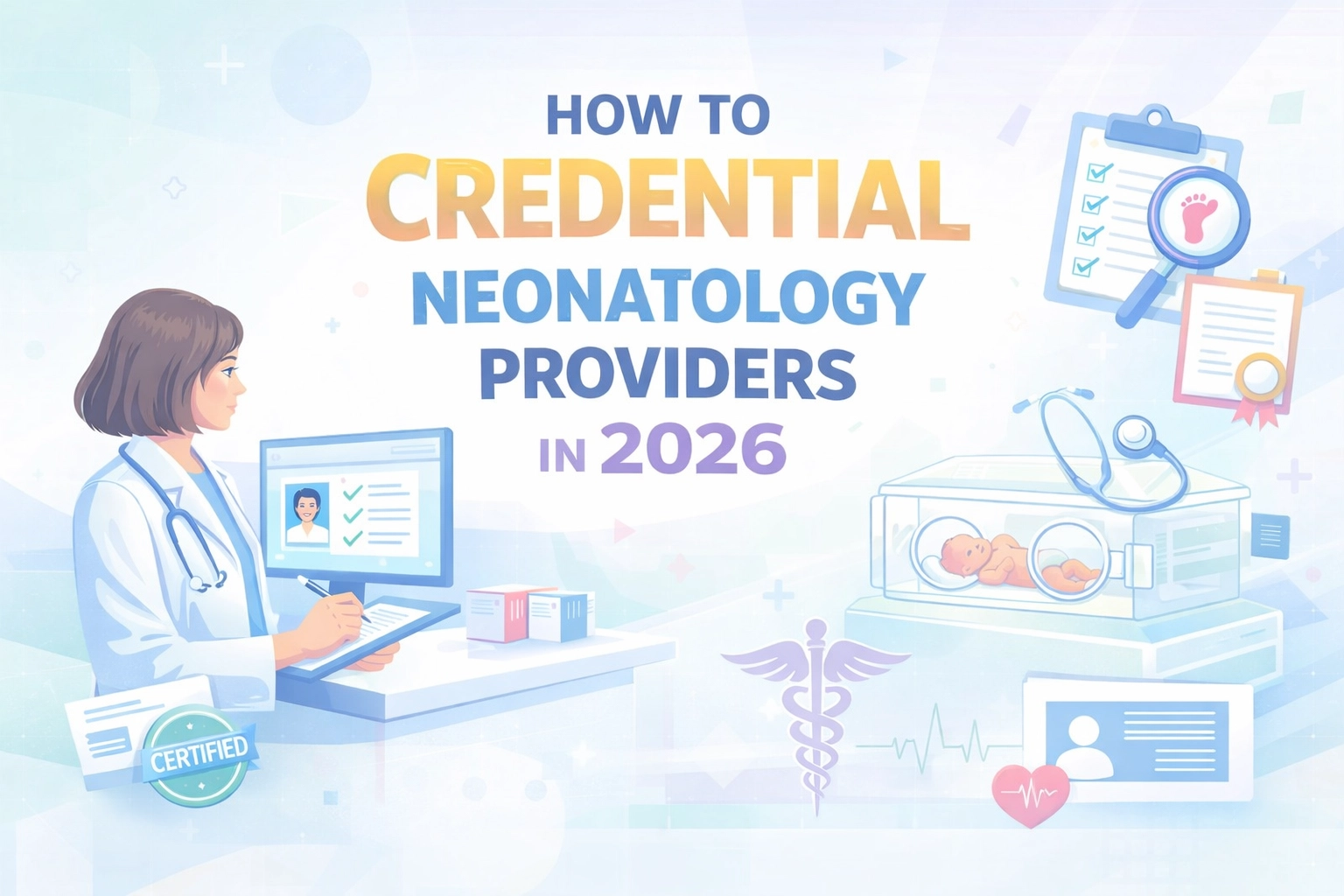
How to Credential Neonatology Providers in 2026

OCLA1aLQny0

In the high-stakes world of the Neonatal Intensive Care Unit (NICU), every second is critical. The same urgency applies to your administrative operations. If your neonatology providers are not fully enrolled with payers, your facility faces a catastrophic revenue leak. In 2026, the landscape of specialty enrollment has shifted. Payers have implemented more rigorous verification standards, tighter timelines, and a heavy focus on quality metrics that can make or break your practice’s financial health. Understanding how to credential neonatology providers requires more than just filling out forms; it demands a strategic, proactive approach to compliance and primary source verification. At The Veracity Group, we see firsthand how administrative delays in the NICU lead to six-figure losses. This guide outlines the mandatory steps to ensure your neonatologists are ready to bill from day one. The 2026 Regulatory Shift: 120-Day Verification As of July 1, 2025, the standard for primary source verification has tightened significantly. Payers now require all verification files to be completed within 120 days of the enrollment effective date. This is a departure from the previous 180-day window, leaving zero room for error. For neonatology, where dual certifications and complex hospital privilege histories are the norm, this shorter window is the silent driver of enrollment denials. Insurance carriers no longer accept data from outdated aggregator databases. You must provide direct confirmation from medical schools, residency programs, and board organizations. If your team is still relying on manual spreadsheets to track these dates, you are risking a compliance breach. Utilizing a professional provider enrollment service is the only way to ensure these deadlines are met with 100% accuracy. Alt Tag: A professional neonatologist reviewing medical documentation in a modern NICU setting. Core Documentation for Neonatology Specialists Neonatology is a sub-specialty of pediatrics, and the documentation requirements reflect this complexity. To begin the enrollment process, you must gather a comprehensive file that exceeds standard primary care requirements. 1. Dual Board Certifications Every neonatologist must maintain dual certification. Payers in 2026 are verifying status directly through the American Board of Pediatrics (ABP) for both General Pediatrics and the sub-specialty of Neonatal-Perinatal Medicine. Missing one or having an expired “Maintenance of Certification” (MOC) status will trigger an immediate rejection of the enrollment application. 2. Delineation of Privileges (DOP) Because neonatologists operate almost exclusively within a hospital setting, your Delineation of Privileges form is a vital piece of the puzzle. Payers require proof that the provider is authorized to perform high-level NICU procedures, such as intubation, umbilical catheterization, and surfactant administration. Without a signed DOP from the facility’s Chief of Staff, your payer applications will stall. 3. Comprehensive Case Logs For 2026, many commercial payers now request 24-month case logs during the initial enrollment phase. This requirement ensures that the specialist has maintained the clinical volume necessary to provide high-quality care. If your provider is a recent fellow, you must secure these logs from their fellowship program before they join your practice. Mastering the CAQH and NPPES Foundations The CAQH ProView profile is the backbone of professional credibility for any specialist. For neonatology, the profile must be meticulously updated to include neonatal-specific taxonomies (e.g., 207RN0300X). Incomplete CAQH profiles are the primary cause of “pended” applications. You must also ensure the provider’s NPI (National Provider Identifier) record in the NPPES system is current. Discrepancies between NPPES, CAQH, and the state license will result in an automated denial. Our experts at Veracity Group specialize in navigating the CAQH maze to prevent these common, yet costly, technical errors. Alt Tag: A checklist of required neonatology enrollment documents, including board certifications and state licenses. The Role of Quality Metrics in 2026 Enrollment Perhaps the most significant change in how to credential neonatology providers this year is the integration of quality data. For the first time, Medicare Advantage plans and major commercial carriers are using MIPS scores and patient satisfaction data as a prerequisite for enrollment. If a neonatologist has low MIPS scores from a previous practice, or if their online reputation is marred by negative reviews, payers are now exercising their right to deny entry into the network. Your practice is its data. Before submitting an application, you must audit the provider’s public-facing profiles and historical quality reporting. We often recommend a deep dive into contracting strategies to ensure your provider’s value is properly communicated to the payer. Continuous Monitoring and OIG Compliance In 2026, enrollment is not a “one and done” event. Federal and state regulations now mandate monthly OIG exclusion list screening. One-time checks at the start of employment are no longer sufficient to maintain compliance. If a provider falls onto the exclusion list: even temporarily due to an administrative error: and your practice bills for their services, the fines are astronomical. You must implement a system for continuous monitoring of: State Medical Licenses DEA Certificates OIG/SAM Exclusion Lists National Practitioner Data Bank (NPDB) reports This constant vigilance is the passport to success for a sustainable NICU practice. Many groups find that outsourcing this burden to a dedicated partner like The Veracity Group allows their clinical staff to focus on patient care while we handle the demographic updates and ongoing monitoring. Alt Tag: A digital dashboard showing real-time compliance monitoring for healthcare providers. Multi-State Challenges for Tele-Neonatology The rise of the gig economy in healthcare has led to an increase in tele-neonatology. If your providers offer virtual consultations across state lines, the enrollment complexity triples. While the Interstate Medical Licensure Compact has expanded to 40 states in 2026, each state Medicaid program still requires individual enrollment. New York and California, for example, have implemented real-time primary source verification for all new Medicaid enrollments. Managing multiple state-specific forms and varying timeline expectations is a logistical nightmare for an in-house team. You must have a centralized system to track these multi-jurisdictional requirements. Why The Veracity Group is Your Strategic Partner Navigating neonatology enrollment is a high-wire act. One missed board certification update or a delayed CAQH attestation can result in months of “out-of-network” status, leading to denied

How to Credential Mental Health Providers in 2026

BjLjsb0TU2h

The behavioral health enrollment landscape in 2026 is defined by a paradox of high demand and increasingly rigid administrative barriers. While the need for mental health services is at an all-time high, payers like Aetna, UnitedHealthcare (UHC), and Cigna have tightened their entry requirements to ensure network adequacy and clinical quality. For your practice, understanding the nuances of how to credential mental health providers is no longer a “back-office task”: it is the literal backbone of your revenue cycle. Failure to navigate this process with precision results in more than just administrative headaches; it leads to months of lost revenue, patient frustration when they find you are out-of-network, and potential legal exposure. Whether you are onboarding a Licensed Clinical Social Worker (LCSW), a Licensed Professional Counselor (LPC), or a Psychiatrist, you must follow a specialized workflow to ensure your providers are fully enrolled and ready to bill on day one. The Documentation Foundation for Behavioral Health The first step in medical provider enrollment services is the aggressive collection of primary source documentation. In 2026, payers will not accept “pending” documents or incomplete histories. For mental health providers, the documentation requirements are often more intensive than those for general medicine due to the specific licensure levels and supervisory requirements involved. You must compile the following before initiating any applications: Current State License: Ensure the license is active and reflects the specific level of practice (e.g., LMFT, LCSW, PhD). NPI Type 1: Every provider must have an individual National Provider Identifier. You can verify or update these records through the NPPES registry. Malpractice Insurance: A current certificate of insurance (COI) with minimum coverage limits, typically $1M/$3M, specifically naming the provider or the group. Comprehensive CV: Payers now require a month/year format for all education and work history. Any gap exceeding 30 days must be explained in writing, or the application will be rejected. Supervisory Agreements: For provisionally licensed providers (such as an LPC-A or LMSW), you must include a formal, signed supervisory agreement that meets state board and payer-specific standards. Mastering CAQH and NPPES for Mental Health Your CAQH ProView profile is your digital passport in the healthcare industry. In 2026, payers have moved toward automated “pull” systems where they retrieve data directly from CAQH to populate their internal systems. If your CAQH profile is not current, your behavioral health provider enrollment will stall indefinitely. One of the most common points of failure for mental health specialists is taxonomy code accuracy. Payers are increasingly using these codes to filter providers into specific network tiers. For example, if a provider is listed as a general “Counselor” in NPPES but is applying to a specialized “Clinical Child & Adolescent Psychology” panel, the mismatch will trigger an automatic denial. You must ensure that the CAQH ProView data matches your NPPES data exactly. Furthermore, you must perform a global attestation every 120 days. Many practices find that why behavioral health provider enrollment is so hard often stems from these small, missed deadlines. If a provider’s attestation expires while an application is in flight, the payer will often “freeze” the file without notifying the practice, leading to significant delays. Medicare and Medicaid Enrollment for Behavioral Health Providers The landscape for Medicare and Medicaid enrollment for behavioral health providers has shifted dramatically. With the recent inclusion of Marriage and Family Therapists (LMFTs) and Mental Health Counselors (LHCs) into the Medicare program, the volume of applications has surged, leading to backlogs at various Medicare Administrative Contractors (MACs). To successfully enroll in Medicare, you must use the PECOS system. You will need to decide whether the provider is “assigning benefits” to a group (Form CMS-855R) or enrolling as a solo practitioner (Form CMS-855I). For Medicaid, the process is even more complex, as many states now require multi-state enrollment if you are providing telehealth services across state lines. The The Veracity Group specializes in managing these multi-layered government applications, ensuring that your practice remains compliant with the latest CMS regulations while maximizing your reach. Navigating Private Payer Power Plays and Audits In 2026, we are seeing a significant increase in “Payer Power Plays.” Large insurers are utilizing advanced algorithms to audit provider directories and enrollment data. The recent audit surge from Aetna and UHC highlights the risk of having outdated information in your files. If a provider’s office address or phone number is incorrect in the payer’s system, they may be terminated from the network for “non-compliance” with directory accuracy standards. When applying to private payers, you must also be prepared for closed panels. Many mental health panels are “at capacity” in certain geographic areas. To overcome this, you must present a “Value Proposition” within your application. This includes: Specialized Certifications: (e.g., EMDR, CBT, Dialectical Behavior Therapy). Language Fluency: Bilingual providers are almost always fast-tracked. Extended Hours: Offering weekend or evening appointments. Telehealth Capabilities: Essential for modern network adequacy. Overcoming Behavioral Health Specific Hurdles Mental health enrollment involves unique hurdles that do not exist in other specialties. For example, the use of Supervisors and Incident-to Billing is under intense scrutiny. In 2026, most major commercial payers require the supervisor to be fully enrolled and the supervisee to be linked to that supervisor within the payer’s portal. Mismatched documentation regarding supervision is the leading cause of claim denials for new behavioral health associates. You is required to keep a meticulous paper trail of these clinical supervision hours to survive a potential retrospective audit. If your practice manages multiple specialties, you can see how this differs from our guides on how to credential dermatology providers or other medical specialties. The clinical oversight requirements in mental health make the enrollment process a high-stakes endeavor. The High Cost of DIY Enrollment Many practice managers attempt to handle enrollment in-house, only to find themselves buried under a mountain of “Request for Information” (RFI) letters. The average turnaround time for mental health enrollment in 2026 is 90 to 120 days. If you make a single error on the initial application, that clock resets. The loss of

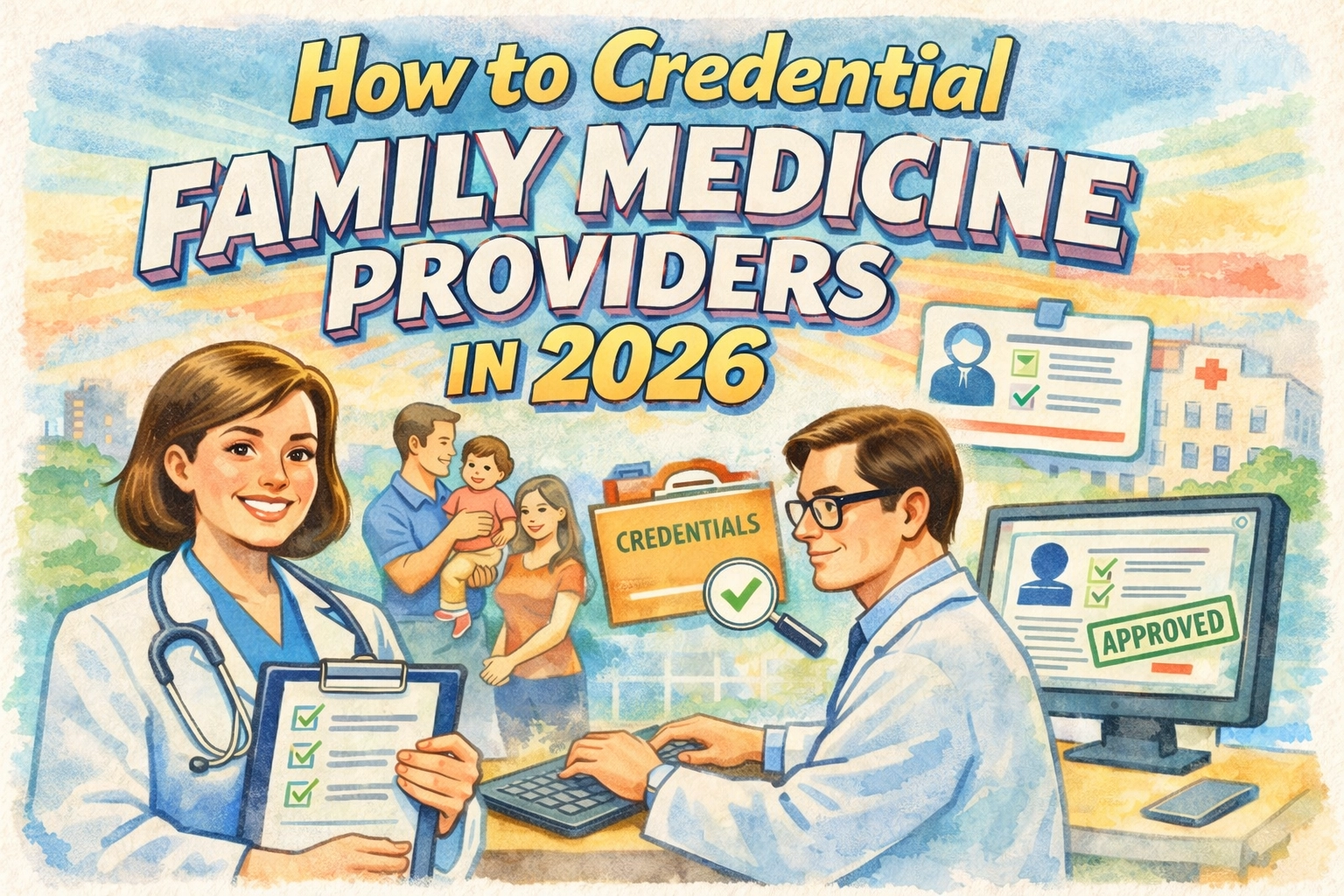
How to Credential Family Medicine Providers in 2026

AN7pT QmWh

Family medicine serves as the backbone of the American healthcare system, and as we navigate the complexities of 2026, the enrollment process for these providers has become more rigorous than ever. For a primary care practice, a provider who is not properly enrolled is a provider who is not generating revenue. In an era of tightening margins and increased regulatory scrutiny, your practice must implement a proactive enrollment strategy to avoid the high cost of administrative delays and claim denials. The landscape of provider enrollment is shifting. As CMS and private payers transition toward higher levels of digital integration and quality-based assessments, the “set it and forget it” mentality of previous decades is obsolete. Today, family medicine enrollment is a continuous cycle of data integrity and compliance. The Essential 2026 Documentation Checklist Before you even log into a portal, you must have a comprehensive digital dossier ready. Payers in 2026 have zero tolerance for incomplete submissions. A single missing document or an unexplained gap in a CV will trigger an immediate rejection, pushing your timeline back by weeks or even months. To ensure a seamless transition for your new family medicine physician, gather the following: Medical Degree and Official Transcripts: Ensure these are scanned in high resolution. State Medical Licenses: You must have active, unrestricted licenses for every state where the provider will see patients. DEA Certificate: This must include all relevant controlled substance schedules and reflect the provider’s current practice address. Board Certification: Payers now require real-time verification from the American Academy of Family Physicians (AAFP) or the American Board of Family Medicine (ABFM). Taxonomy Codes: For family medicine, the primary taxonomy code is typically 207Q00000X. Using an incorrect code is a silent driver of enrollment failure. Malpractice History: You must provide a full 10-year history of coverage, including any claims or settlements. Work History: A chronological history of the last 10 years is required. You must explain any gap longer than 30 days. Navigating the 2026 CMS and PECOS Requirements The Centers for Medicare & Medicaid Services (CMS) has implemented significant changes for 2026. The most notable shift is the transition to a three-year revalidation cycle for many primary care specialties, down from the traditional five-year window. Furthermore, CMS now requires enhanced fingerprint-based background checks for providers categorized as moderate or high risk. Enrolling in Medicare via the PECOS system is a non-negotiable first step. If your provider is not enrolled in PECOS, they cannot order, certify, or refer services for Medicare beneficiaries. This is where many practices stumble. The Veracity Group often sees practices wait until a provider’s start date to check their PECOS status, only to find a lapsed enrollment that takes 60 to 90 days to rectify. Navigating the CAQH and Medicare enrollment maze requires technical precision. Any discrepancy between your NPI record in the NPPES Registry and your PECOS application will result in an automated “kick-back.” CAQH ProView: The Digital Nerve Center In 2026, CAQH ProView is the primary source of truth for commercial payers. If a provider’s CAQH profile is not attested every 90 days, their enrollment with payers like Aetna, UnitedHealthcare, and Cigna will be terminated. The Veracity Group emphasizes that CAQH is not merely a storage locker for documents; it is a dynamic profile that must reflect the provider’s current malpractice insurance, hospital privileges, and practice locations. In family medicine, where providers often move between outpatient clinics and urgent care settings, maintaining an accurate practice location list is vital. Failure to do so leads to “ghost listings” in provider directories, which can result in heavy fines under the No Surprises Act and subsequent state laws. For comprehensive management, our CAQH maintenance services ensure that your providers stay compliant without your internal staff spending hours on manual updates. The Impact of Quality Metrics and MIPS on Enrollment A significant evolution in 2026 is the integration of Value-Based Care metrics into the enrollment process. For the first time, major commercial payers and Medicare Advantage plans are reviewing a provider’s Merit-based Incentive Payment System (MIPS) scores as part of the initial enrollment decision. If a family medicine provider has a history of poor quality scores or high cost-per-patient metrics, payers may refuse to add them to their “high-performance” networks. This is a serious consequence that can limit your practice’s ability to see a wide range of patients. You must treat enrollment not just as a paperwork exercise, but as a demonstration of clinical and administrative excellence. Multi-State Challenges and Telehealth Expansion Family medicine has seen a massive expansion into telehealth. If your providers are seeing patients across state lines, you must manage multiple state Medicaid enrollments simultaneously. Each state has unique rules regarding telehealth-specific credentials. For example, New York and California now require specific telehealth attestations within their Medicaid portals. Mastering multi-state Medicaid provider enrollment is the only way to ensure that your virtual visits are fully reimbursable. If you fail to enroll the provider in the patient’s home state, the claim will be denied, regardless of whether the provider is licensed there. The Veracity Take: Why a Professional Workflow is Mandatory The era of “doing it yourself” with a spreadsheet and a stack of paper is over. The high cost of delays: averaging $5,000 to $10,000 in lost revenue per day for a busy family practitioner: makes professional enrollment management a necessity, not a luxury. At The Veracity Group, we specialize in the intricacies of provider enrollment. We understand the 15-day rule for reporting changes to CMS and the nuances of the 2026 audit surge. We serve as your advocate, pushing applications through the payer bottlenecks that typically stall in-house efforts. Our team ensures that your family medicine providers are loaded into the system correctly from day one, allowing them to focus on patient care while we handle the technical heavy lifting. From managing demographic updates to navigating the most complex payer power plays, we provide the silent drive that keeps your practice’s revenue cycle moving forward. Conclusion: Securing Your Practice’s Future

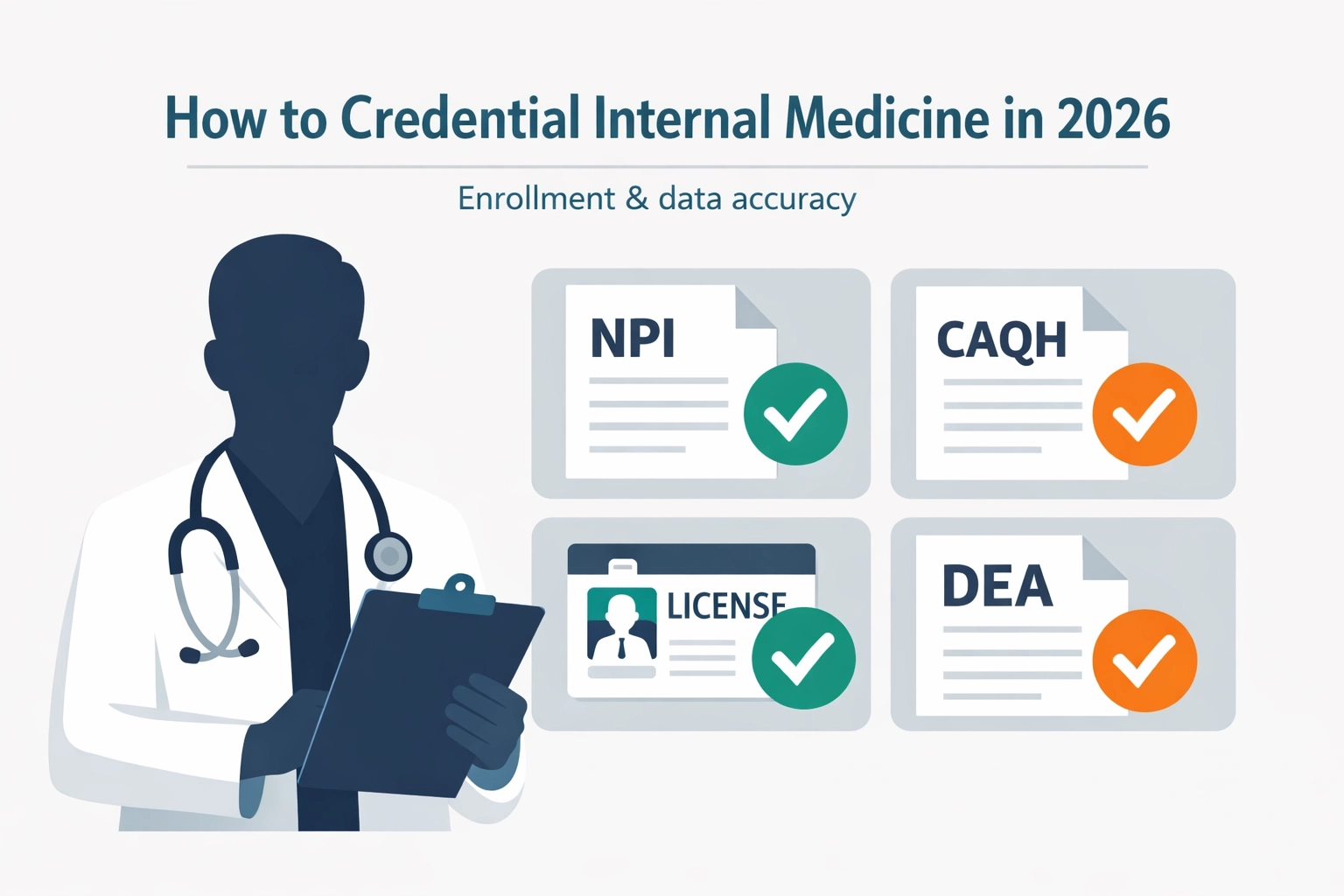
How to Credential Internal Medicine Providers in 2026

Q1muo1caidI

Navigating provider enrollment in 2026 requires more than administrative diligence. It demands a strategic, aggressive approach to data management and payer relations. Internal Medicine (IM) practices feel this pressure more than most. As the “quarterbacks” of the healthcare system, IM providers manage complex patient loads and high referral volume. Because of that, their status within insurance networks becomes the backbone of professional credibility and the primary driver of practice revenue. When your Internal Medicine providers are not fully credentialed and enrolled, your practice operates with a closed front door. In 2026, the margin for error has disappeared. Payers now use advanced AI auditing tools to detect even minor data discrepancies. As a result, applications are rejected instantly, and “silent” network terminations occur without warning. To protect your revenue cycle, you must master the specialized requirements of Internal Medicine credentialing. The Foundation: Foundational Data and NPPES Before an Internal Medicine physician can treat a single patient under a payer contract, their foundational data must be flawless. This begins with the National Plan and Provider Enumeration System (NPPES). In 2026, simply having an NPI is not enough. You must ensure that the provider’s taxonomy codes accurately map to Internal Medicine (207R00000X) or the correct sub‑specialty. Multi‑location practices often run into trouble here. A mismatch between the NPI registry and the physical location where services are rendered triggers payer fraud alerts. If your provider practices at a new satellite clinic but their NPI profile still lists a residency address, the application will stall. At The Veracity Group, we treat demographic updates as the first line of defense against claim denials. Internal Medicine Specific Requirements Internal Medicine is broad, but the credentialing process in 2026 has become hyper‑specific. To enroll a provider successfully, you must present a complete digital portfolio that includes: Unrestricted State License: Active in every state where the provider sees patients, including telehealth. 3‑Year Residency Completion Letter: Many payers now require a formal letter from the residency program director. ABIM Board Certification: Most commercial networks verify American Board of Internal Medicine (ABIM) status through real‑time API checks. If a provider is “In MOC” but not certified, enrollment stops. DEA and CDS Registrations: Required for IM providers managing chronic conditions or controlled substances. 10‑Year Work History: No gaps. Any gap longer than 30 days must be explained in a signed letter. If these documents are not submitted in a clean, digital format, the application drops to the bottom of the queue. That delay can add 60 to 90 days to your timeline. Mastering the CAQH ProView Standard For most commercial payers, CAQH ProView is the central repository for provider data. In 2026, the “set it and forget it” mindset is gone. Payers now require quarterly re‑attestations, and many use continuous data‑pull systems. If your provider’s CAQH profile contains an expired malpractice face sheet or outdated hospital affiliation, every linked payer receives a non‑compliance alert. This can trigger an immediate suspension of payment. Internal Medicine practices must treat CAQH as a living document. Consistent oversight is the silent driver of enrollment success. The 2026 Enrollment Workflow: A Step-by-Step Guide Credentialing an Internal Medicine provider in 2026 typically spans 90 to 150 days. Rushing this process without a proven workflow leads to costly mistakes. Step 1: Pre-Submission Audit (Weeks 1-2) Conduct a rigorous internal audit of all primary sources. Verify the provider against the OIG Exclusion List and the System for Award Management (SAM). Errors here are career‑ending. Step 2: Primary Source Verification (Weeks 3-8) This is where most delays occur. You must follow up with medical schools and residency programs to ensure they respond to payer inquiries. High‑volume IM programs often move slowly, so your team must stay persistent. Step 3: Payer Application Submission (Weeks 4-6) Once CAQH is pristine, submit payer applications. Each payer has unique requirements. Some demand EFT forms and W‑9s upfront. Others require signed participation agreements before they begin the review. Step 4: Monitoring and Payer Relations (Weeks 8-20) This is where The Veracity Group provides the most value. We maintain direct lines of communication with payer representatives to ensure applications don’t get stuck in “administrative limbo.” In 2026, the ability to escalate a stalled application is the difference between a provider generating revenue in three months or six. The High Cost of Delays The financial impact of a credentialing delay for an Internal Medicine provider is enormous. A typical IM physician generates roughly $2,500 in billable charges per day. A 60‑day delay equals $150,000 in lost revenue. Most payers will not backdate effective dates for providers who were not fully credentialed at the time of service. Out‑of‑network status also damages patient trust. When patients cannot find your provider in the directory or receive surprise bills, loyalty evaporates. Professional enrollment management is a direct investment in practice growth. Continuous Monitoring: The New Normal In 2026, the traditional two‑year re‑credentialing cycle has been replaced by continuous monitoring. Payers subscribe to services that alert them the moment a provider’s license is flagged or a malpractice suit is filed. Internal Medicine practices must stay proactive. If a provider’s board certification is nearing expiration, renewal must begin six months in advance. Waiting for a mailed notice is too late. Your practice must track all expirables, including: state licenses DEA certificates ABIM certifications malpractice insurance hospital privileges For practices managing multiple providers, this workload becomes overwhelming. That’s why many groups rely on enrollment specialists to manage the entire lifecycle. Why Partner with The Veracity Group? Credentialing is the passport to success for Internal Medicine providers. It is a complex, high‑stakes process where the rules change monthly. At The Veracity Group, we specialize in high‑volume, high‑complexity enrollment. We understand the nuances of Internal Medicine, from verifying ACGME training to navigating Medicare and Medicaid. We don’t just complete forms. We manage the provider’s entire professional identity. Whether you are adding a new associate or opening a new location, our team ensures your providers are plugged into the revenue cycle from day one. Administrative friction should never stall

How to Credential ENT/Otolaryngology Providers in 2026

J 3SRZMd21q

In the fast-paced world of 2026 healthcare, your ENT practice cannot afford the luxury of “slow and steady” when it comes to provider enrollment. As otolaryngology continues to bridge the gap between complex surgical interventions and high-volume office procedures, the administrative burden of getting providers on board with insurance panels has reached a critical tipping point. Delaying the enrollment of a single surgeon for just thirty days is a direct hit to your bottom line, potentially costing tens of thousands in lost procedural revenue and specialized ancillaries like audiology and allergy testing. Effective provider enrollment is the backbone of your professional credibility and the silent driver of your practice’s cash flow. Whether you are adding a fresh-out-of-residency associate or a seasoned specialist, the 2026 landscape demands a rigorous, proactive approach that leaves zero room for error. The 2026 Regulatory Landscape for ENT Enrollment The rules of the game changed significantly on January 1, 2026. Regulatory bodies and major payers have moved away from periodic reviews toward a model of continuous monitoring. If your practice is still treating enrollment as a one-time event every three years, you are already behind. 1. Accelerated NCQA Timelines The National Committee for Quality Assurance (NCQA) has officially tightened the screws. Credentialing windows have been slashed from 180 days down to 120 days for accredited organizations. For certified organizations, that window is an even tighter 90 days. This means the lead time you once relied on has evaporated. You must submit applications with precision, as there is no longer a buffer for “back-and-forth” corrections with payer reps. 2. CMS Fingerprinting and Risk Categorization Under the 2026 Centers for Medicare & Medicaid Services (CMS) guidelines, certain providers now face enhanced screening. While many otolaryngologists fall into moderate risk categories, those involved with high-volume DME (head and neck prosthetics or hearing aids) may find themselves subject to fingerprint-based background checks. This adds an extra layer of logistics to your provider enrollment workflow that must be accounted for in your onboarding timeline. 3. Primary Source Verification (PSV) 2.0 The days of insurance companies accepting aggregator database snapshots are over. In 2026, payers require direct, real-time confirmation from medical schools, residency programs, and the American Board of Otolaryngology – Head and Neck Surgery (ABOHNS). This shift to API-integrated verification means that any discrepancy in a provider’s history will trigger an immediate red flag, stalling the application before it even reaches a human reviewer. Description: A professional medical administrator reviewing complex digital documentation for an ENT specialist to ensure 2026 compliance. Specialty-Specific Documentation for Otolaryngology ENT is not a “general” specialty; your enrollment documentation must reflect that specificity. Payers are increasingly looking for detailed data points that prove the provider is qualified for the specific sub-codes they intend to bill. Surgical Logs and Board Certification: You must provide verified certification from the AAO-HNS or the equivalent board. For sub-specialists in pediatric otolaryngology or neurotology, ensure the specific certificates are attached to avoid being “downgraded” to general ENT status by the payer. DME Licensing: If your ENT practice dispenses hearing aids or specialized post-surgical equipment, your providers must be correctly linked to the practice’s DME license. Failure to do this correctly results in immediate claim denials for these high-margin items. Audiology Oversight: For practices employing audiologists, the supervising ENT’s enrollment status must be active and linked correctly to the audiology NPIs. This is a common point of failure that The Veracity Group sees during initial audits. Malpractice History: Payers now demand a full 10-year coverage history. Any gaps, even for a single month during a transition between fellowships, must be supported by a written, signed explanation. The CAQH and NPPES Foundation The CAQH ProView profile is the “passport to success” for ENT enrollment. In 2026, a “good enough” profile is a recipe for disaster. Your CAQH profile must be audit-ready at all times. Every ENT provider must have an active CAQH attestation that is updated quarterly: at a minimum. We have seen a surge in “silent disenrollment,” where payers drop providers from directories because their CAQH attestation lapsed by just 24 hours. This is especially dangerous given the current payer power plays and the 2026 audit surge we are seeing from giants like Aetna and UHC. Similarly, your NPPES data must perfectly align with your CAQH and state license data. Discrepancies in your “Doing Business As” (DBA) name or the physical suite number of your clinic will trigger automated rejections in the 2026 clearinghouse systems. When you are navigating the maze of CAQH and Medicare enrollment, consistency is your most valuable asset. Description: A realistic view of a high-tech ENT clinic office where staff are managing digital provider profiles. Multi-State Enrollment and Telehealth The Interstate Medical Licensure Compact (IMLC) has expanded to 40 states as of 2026. While this makes it easier to get a license, enrollment is still state-specific. If your ENT practice offers telehealth consultations for patients across state lines: common in specialized head and neck oncology: each provider must be enrolled in the specific Medicaid and commercial panels for the state where the patient resides. Multi-state enrollment is a logistical heavy lift. You must track varying state mandates, such as New York’s requirement for telehealth-specific credentials. For complex practices, trying to manage this in-house usually leads to missed deadlines and massive revenue leaks. Continuous Monitoring: The End of “Set It and Forget It” The most significant shift in 2026 is the requirement for continuous monitoring. Payers now perform monthly sanctions screening against the OIG exclusion list and state Medicaid exclusion lists. If a provider’s license expires on a Tuesday, they can be removed from a payer’s “active” list by Wednesday morning. Your practice must implement a system that monitors: License Expirations: Automated alerts 90, 60, and 30 days out. DEA Certificates: Ensuring address alignment with the primary practice location. Board Certification MOC: Tracking Maintenance of Certification requirements to ensure the specialist status remains valid. Hospital Privileges: Especially critical for ENTs who operate in Ambulatory Surgery Centers (ASCs). For

How to Credential Hematology providers in 2026

CCRYZrxjNpa

In the high-stakes world of modern medicine, hematology stands as one of the most complex specialties to manage from an administrative standpoint. As we move through 2026, the intersection of oncology, specialized laboratory diagnostics, and complex infusion therapies means that any delay in provider enrollment is not just a minor inconvenience: it is a significant threat to your practice’s financial health and patient access to life-saving care. Successfully navigating the enrollment process for a hematologist requires more than just a standard checklist. It demands an intricate understanding of board certifications, laboratory-specific credentials, and the shifting landscape of payer requirements. For your practice to remain profitable and compliant, you must treat the enrollment process as the backbone of your professional credibility. The 2026 Landscape for Hematology Specialists The regulatory environment in 2026 has become increasingly stringent. Payers are no longer content with basic verification; they are performing deeper dives into provider histories, looking for any gap that might justify a delay in reimbursement. For hematology, where treatments are often high-cost and long-term, being “out of network” for even a week can result in six-figure revenue leakage. Whether you are bringing on a clinical hematologist, a pediatric specialist, or a laboratory expert, the process starts with Primary Source Verification (PSV). You must confirm that every detail on the provider’s CV matches the records held by medical schools, residency programs, and licensing boards. In 2026, automated tools have sped this up, but the human element: the meticulous cross-referencing of data: remains the most critical step to avoid a rejection. Alt Tag: A professional medical administrator reviewing hematology provider credentials on a high-tech digital dashboard. Mandatory Qualifications for Hematology Providers To bill successfully for hematology services, your providers must meet specific criteria established by national boards and federal agencies. In the United States, this begins with the American Society of Hematology (ASH), which sets the gold standard for clinical excellence and professional development. Physician Requirements (ABIM Certification) For a physician to be recognized as a specialist in hematology, they must be ABIM-certified. The American Board of Internal Medicine requires the following for subspecialty certification: Internal Medicine Certification: The provider must already hold a valid ABIM certification in internal medicine. Fellowship Training: Completion of a requisite graduate medical education fellowship in hematology. Clinical Competence: Demonstrated ethical behavior and procedural skills within a clinical setting. Unrestricted License: A valid, unrestricted medical license is the passport to success in any enrollment application. Examination: Successful completion of the Hematology Certification Examination. Laboratory Professional Credentials (ASCP) Hematology is unique because of the heavy reliance on laboratory diagnostics. If your practice operates its own lab, your staff must hold specific credentials from the American Society for Clinical Pathology (ASCP). Scientist in Hematology (H): This requires a baccalaureate or master’s degree plus specific laboratory experience in blood smear evaluation and coagulation tests. Specialist in Hematology (SH): This is an advanced credential for those with significant post-baccalaureate experience in accredited facilities (CLIA or JCI). Ensuring your lab staff are correctly enrolled is just as vital as your physicians. Failure to link a certified laboratory professional to your CLIA number can lead to immediate claim denials for diagnostic tests. The Hematology Enrollment Roadmap To ensure a seamless transition for new providers, follow this structured roadmap. Speed is essential, but accuracy is the silent driver of a successful launch. 1. Secure the NPI and Update NPPES Every provider needs a National Provider Identifier (NPI). You must ensure that the provider’s NPI record in the NPPES system reflects their current specialty (Hematology) and their correct practice location. An outdated NPI record is one of the most common reasons for application rejection. 2. CAQH Profile Optimization The Council for Affordable Quality Healthcare (CAQH) is the central hub for provider data. In 2026, a “clean” CAQH profile is non-negotiable. You must upload current copies of the provider’s: State Medical License DEA Certificate Board Certifications Malpractice Insurance (Certificate of Insurance) Updated CV (with no gaps exceeding 30 days) For more detailed strategies on managing these profiles, see our guide on navigating the maze of CAQH and Medicare enrollment. 3. Payer-Specific Applications Once the foundational data is set, you must move into the payer-specific enrollment phase. This involves submitting applications to Medicare, Medicaid, and commercial payers (Aetna, Blue Cross Blue Shield, UnitedHealthcare, etc.). Each payer has its own unique set of requirements and timelines. In 2026, we are seeing a massive surge in audits, particularly from major carriers. It is vital to ensure that your enrollment data is consistent across all platforms. Inconsistency is a red flag that triggers manual reviews and delays. For an inside look at how payers are currently operating, read our analysis on Payer Power Plays and the 2026 audit surge. Alt Tag: An organized office setting showing folders labeled Medicare, Medicaid, and Private Payers next to a computer displaying hematology reports. Avoiding the “Silent Killers” of Revenue There are several pitfalls unique to hematology that can stall your enrollment process. If you don’t act proactively, these issues will make or break your revenue cycle. CLIA Certification Lapses: If your practice performs in-house blood work, your CLIA certification must be current and linked to your billing NPI. Hospital Privileging: Hematologists often work in hospital settings or cancer centers. You must secure hospital privileges simultaneously with payer enrollment. Without privileges, many payers will refuse to finalize the enrollment. Multi-State Medicaid: If your practice is near a state border, you likely treat patients from multiple states. Enrollment in multiple Medicaid programs is notoriously difficult. Our experts have detailed how to handle mastering multi-state Medicaid provider enrollment to keep your cross-border revenue flowing. The 15-Day Rule: Many states have implemented strict timelines for reporting changes in provider status. Failing to update a provider’s location or status within 15 days can lead to fines and temporary deactivation. Stay updated on these new state laws you can’t ignore. Why The Veracity Group is Your Strategic Partner At The Veracity Group, we understand that hematology practices face unique challenges. From

How to Credential Gynecology providers in 2026

79SgqNvePvC

Establishing a gynecology practice or onboarding a new OB/GYN provider in 2026 demands administrative precision. The provider enrollment landscape is tougher than ever, and it now requires a tight blend of clinical verification and operational discipline. For gynecology providers, enrollment is not a box to check. Instead, it is the silent engine of your revenue cycle and the foundation of your professional credibility. When a provider is not fully enrolled, the consequences hit fast. Claims are denied. Patients receive unexpected out‑of‑network bills. Cash flow slows to a crawl. As a result, you must understand the mandates of the American Board of Obstetrics and Gynecology (ABOG) and how they intersect with national databases and private payers. The Educational and Training Foundation Before you submit the first enrollment application, the provider’s clinical background must be airtight. Credentialing for a gynecologist begins with their academic and residency history. To qualify for enrollment in 2026, the physician must hold an MD or DO degree. Additionally, the provider must complete at least 48 months of graduate medical education in an ACGME‑accredited OB/GYN residency program. This training is the required foundation for American Board of Obstetrics and Gynecology (ABOG) board certification. Payers look for this specific residency duration because it confirms the provider has the experience needed to manage complex surgeries and long‑term gynecologic care. Mastering the ABOG Certification Pathway Board certification remains the gold standard for network eligibility and reimbursement. The ABOG pathway in 2026 includes several steps, and each one affects enrollment timing. The Qualifying Examination: This written exam tests core knowledge in obstetrics and gynecology. The Certifying Examination: This oral and practical exam requires active, unsupervised clinical practice during the year before the test. Surgical Skills Requirements: Providers who graduated in 2020 or later must complete either the Fundamentals of Laparoscopic Surgery (FLS) or the Essentials in Minimally Invasive Gynecologic Surgery (EMIGS). Without these credentials, the provider cannot meet ABOG standards, and enrollment stalls immediately. These steps form the backbone of payer confidence. They also determine how quickly your provider can enter high‑value networks. The Digital Passport: NPI and NPPES The National Provider Identifier (NPI) functions as the digital passport for every U.S. clinician. Most providers obtain an NPI early, but the data inside the NPPES (National Plan and Provider Enumeration System) must stay accurate. For gynecology providers, selecting the correct taxonomy code is essential. Using a generic primary care taxonomy creates claim mismatches and delays. Therefore, you must verify that the provider’s office address, phone number, and specialty designations stay updated in real time. Inaccurate NPPES data is one of the leading causes of enrollment delays and “ghost” directory listings that frustrate patients and attract regulatory attention. CAQH: The Central Nervous System of Enrollment If the NPI is the passport, CAQH is the central nervous system of your enrollment strategy. Most major commercial payers — including Aetna, UnitedHealthcare, and BlueCross BlueShield — pull data directly from CAQH ProView. A gynecology provider’s CAQH profile must include: active state medical licenses DEA registrations with the correct practice address a complete, gap‑free work history current malpractice insurance face sheets At The Veracity Group, we stress that a CAQH profile is never “done.” It requires quarterly re‑attestation and constant monitoring. Any lapse causes the provider to disappear from payer systems, which leads to sudden payment interruptions. This is preventable, but only with consistent oversight. You can learn more about optimizing this process in our guide on navigating the maze of CAQH and Medicare enrollment. Hospital Privileges and Clinical Engagement Gynecology is deeply tied to hospital‑based care. Whether the provider performs a hysterectomy or a routine colposcopy, they must hold unrestricted hospital privileges. During enrollment, payers often request a copy of the hospital appointment letter. If your provider works in a multi‑specialty group or a surgery center, the compliance risk increases. Privileges must match the services billed. Otherwise, payers flag inconsistencies and delay approval. This alignment step is simple, but skipping it creates costly setbacks. Navigating the 2026 Medicare and Medicaid Landscape Medicare enrollment through PECOS remains one of the most rigid processes in healthcare. For gynecology providers, it is often the longest lead‑time item. Medicare requires perfect accuracy. A single typo in a practice address or a mismatched EFT account triggers a “Return to Provider” status and adds weeks to your timeline. Medicaid adds another layer of complexity. Each state uses its own portal and requires unique disclosures about ownership and financial interests. If your practice serves multiple states, you must manage each Medicaid enrollment separately. Because of this, multi‑state Medicaid work demands a team that understands the nuances of each regulatory environment. Leveraging The Veracity Group for Specialty Success The administrative burden of gynecology enrollment drains internal resources. Every hour spent chasing a missing DEA certificate or troubleshooting a payer portal is an hour taken away from patient care and practice growth. The Veracity Group acts as your strategic partner. We handle the heavy lifting of provider enrollment and contracting. We do more than complete forms. We build a roadmap that anticipates roadblocks before they appear. In 2026, payers are tightening networks and increasing audits. Our team stays ahead of these shifts so your providers stay enrolled, compliant, and positioned for maximum reimbursement. Conclusion: Excellence is Not Optional In gynecology, clinical excellence must be matched by administrative excellence. Enrollment is the foundation of your financial stability. By following ABOG standards, maintaining a clean CAQH profile, and meeting all surgical and regulatory mandates, you protect your practice from costly delays. A provider who is not enrolled cannot contribute to your bottom line. Do not let paperwork become the bottleneck. Take control of your enrollment timeline and ensure your gynecology providers are ready to deliver care with full compliance and maximum efficiency. #Gynecology #OBGYN #ProviderEnrollment #MedicalCredentialing #HealthcareAdmin #ABOG #PhysicianOnboarding #MedicalBilling #HealthcareCompliance #TheVeracityGroup #PracticeManagement #MedicareEnrollment #CAQH #NPI #SurgicalSpecialty #DoctorLife #MedicalGroup #RevenueCycleManagement #Healthcare2026 #HealthSystems #ClinicalExcellence #InsuranceEnrollment #Medicaid #PhysicianCredentialing #HealthcareLeadership

How to Credential Gastroenterology providers in 2026

OsEpWJO7 U0

In the high-stakes world of modern healthcare, Gastroenterology (GI) stands as one of the most complex specialties to manage from an administrative standpoint. Between high-volume screenings and intricate surgical procedures, the revenue cycle of a GI practice hinges entirely on the precision of your provider enrollment. If your providers are not correctly loaded into payer systems, your claims for colonoscopies, endoscopies, and infusions will face immediate rejection. Securing your seat at the table with major insurance carriers requires more than just filling out forms; it demands a strategic mastery of the 2026 enrollment landscape. You must navigate a maze of board certifications, hospital privileges, and federal database requirements with zero margin for error. The Foundation: National Provider Identifier (NPI) and NPPES The journey begins at the National Plan and Provider Enumeration System (NPPES). For a Gastroenterologist, your NPI is your digital fingerprint. In 2026, payers are more aggressive than ever in auditing the accuracy of NPI data. You must ensure that the provider’s Type 1 (Individual) NPI is correctly linked to your practice’s Type 2 (Organization) NPI. Any discrepancy in the primary taxonomy code: typically 207RG0100X for Gastroenterology: will result in an automatic “provider not found” error during the claims adjudication process. You can verify and update these records directly through the NPPES official portal. Failure to maintain an active, accurate NPI record is the fastest way to trigger a “Payer Power Play” where your reimbursements are frozen indefinitely. Educational and Board Certification Standards Gastroenterology is a subspecialty of Internal Medicine, and payers require rigorous documentation of a provider’s training. To successfully enroll a GI specialist, you must provide evidence of a completed three-year ACGME-accredited fellowship. The American Board of Internal Medicine (ABIM) is the primary certifying body. Payers will verify that the physician has passed the 10-hour Gastroenterology Certification Examination and maintains clinical competence through the ABIM FasTrack® process. According to the American College of Gastroenterology (ACG), maintaining board eligibility or certification is a non-negotiable requirement for inclusion in top-tier provider networks. Mastering the CAQH ProView Profile The Council for Affordable Quality Healthcare (CAQH) is the central clearinghouse for provider data. For a GI specialist, the CAQH profile is the “backbone of professional credibility.” In 2026, manual paper applications are virtually extinct; if your CAQH profile is incomplete, your enrollment stops before it starts. Key elements for a GI profile include: Work History: A gapless 10-year history is mandatory. Any gap over 30 days must be explained in writing. Hospital Privileges: Because GI is procedure-heavy, you must list every facility where the provider has admitting or surgical privileges. Malpractice Insurance: Minimum coverage limits are strictly enforced (usually $1M/$3M). Specific Procedure Counts: Some payers now request documentation of procedure volumes (e.g., EGDs and colonoscopies) performed during the 36 months preceding the application. If you find the CAQH interface overwhelming, you are not alone. Many practices struggle with the quarterly re-attestation requirements. For a deeper dive into managing this platform, see our guide on navigating the maze of CAQH and Medicare enrollment. Payer-Specific Enrollment for GI Procedures Gastroenterology billing relies heavily on specific CPT codes that are frequently flagged for medical necessity reviews. These include: 45378: Diagnostic colonoscopy. 43235: Esophagogastroduodenoscopy (EGD). 91035: Gastroesophageal reflux test. To ensure these codes are reimbursed, you must complete the enrollment process for each specific payer. For Medicare, this means using the Provider Enrollment, Chain, and Ownership System (PECOS). Medicare’s rigorous 2026 standards require that the “Specialty” field specifically lists Gastroenterology to prevent the denial of subspecialty-specific codes. Facility Privileging and the ASC Shift A unique challenge in Gastroenterology is the prevalence of Ambulatory Surgery Centers (ASCs). Many GI providers perform the majority of their work in an ASC rather than a traditional hospital. When enrolling your provider, you must ensure they are correctly linked to the ASC’s NPI and Tax ID. If your provider is operating out of a surgery center, you must address specific compliance risks to avoid “The 2026 Audit Surge.” Misalignment between the provider’s enrollment and the facility’s contract is a leading cause of massive recoupment efforts by payers like Aetna and UnitedHealthcare. For more information on this specific risk, read our analysis on medical group enrollment for surgery centers. The High Cost of Enrollment Delays In 2026, the average “turnaround time” for a new Gastroenterology enrollment is 90 to 120 days. If you wait until a provider’s start date to begin the process, you are essentially looking at four months of zero revenue for that provider. Given the high overhead of a GI suite: including specialized scopes, sedation staff, and reprocessing equipment: a three-month delay can cost a practice upwards of $250,000 in lost gross charges. Furthermore, “directory accuracy” is now a legal mandate. If a patient finds your provider in an insurance directory but the enrollment isn’t active, your practice could face heavy fines under new federal transparency laws. Actionable Steps for Your GI Practice To stay ahead of the curve, your practice will implement the following checklist: Start Early: Initiate the enrollment process at least 120 days before a new hire’s start date. Audit Your Taxonomy: Confirm that all providers are listed under the correct GI subspecialty codes in NPPES. Verify Board Status: Ensure your providers have completed their MOC (Maintenance of Certification) to avoid being dropped from “Quality” tiers. Sync Your Locations: Every office and ASC location where a provider sees patients must be listed on their enrollment. The Veracity Group Advantage The complexities of Gastroenterology enrollment are too significant to leave to chance or overstretched internal staff. At The Veracity Group, we specialize in the meticulous detail required to get GI specialists fully enrolled and ready to bill on day one. From managing your CAQH profile to navigating the specific demands of Medicare PECOS, we act as your strategic partner in revenue protection. Our team understands the nuances of GI: from the importance of fellowship documentation to the specific requirements of multi-state Medicaid enrollment. We take the administrative burden off your plate so you can focus

How to Credential Endocrinology providers in 2026

33icOUjdw B

AIOSEO Title: How to Credential Endocrinology in 2026 Meta Description: Expert guide on how to credential endocrinology providers in 2026. Navigate CMS and private payer requirements with our step-by-step specialist workflow. For healthcare organizations and specialty practices, the successful enrollment of an endocrinologist is the silent driver of long-term financial stability. In the rapidly evolving landscape of 2026, the complexity of metabolic care: ranging from advanced diabetes technology to thyroid oncology: demands a precise, aggressive approach to provider enrollment. Failing to execute this process with clinical and administrative accuracy leads to immediate claim denials and significant revenue leakage. When you bring a new endocrinology specialist into your practice, you are not just hiring a physician; you are integrating a complex set of billable services that require specific recognition from payers. The process of credentialing an endocrinologist is your passport to success, ensuring that every insulin pump training session, thyroid ultrasound, and fine-needle aspiration is fully reimbursable from day one. The Board Certification Foundation The enrollment journey begins long before the first application is submitted to a payer. For endocrinology, payers look for specific milestones that validate a provider’s expertise. To be recognized as an endocrinology specialist, the physician must have completed a fellowship accredited by the Accreditation Council for Graduate Medical Education (ACGME). This training consists of a minimum of 24 months, including at least 12 months of concentrated clinical experience. During the enrollment process, payers will verify that the provider is either board-certified or board-eligible through the American Board of Internal Medicine (ABIM). Without this verification, your practice will struggle to secure the highest-tier reimbursement rates for specialized metabolic care. Mapping the Endocrinology Specialist Workflow Credentialing an endocrinologist in 2026 requires more than just a standard medical license. Because endocrinology is a subspecialty of internal medicine, the documentation trail is extensive. You must ensure the provider maintains a valid, unrestricted, and unchallenged medical license in the state where they practice. Furthermore, the provider must demonstrate competency in specific procedural skills that are often audited during the enrollment phase. These include: Thyroid aspiration biopsies Thyroid ultrasound interpretation Skeletal dual photon absorptiometry (DEXA) interpretation Management of insulin pumps and continuous glucose monitoring (CGM) systems If these competencies are not clearly documented and updated within the provider’s profile, payers may restrict the provider’s ability to bill for these high-value procedures. The CAQH ProView Hub: Your Backbone of Credibility The CAQH ProView profile is the centralized repository that nearly every private payer utilizes to verify provider data. For an endocrinologist, this profile is the backbone of professional credibility. It is not enough to simply create a profile; it must be meticulously maintained. In 2026, the 120-day re-attestation cycle is non-negotiable. If your endocrinologist’s CAQH profile lapses, it creates a domino effect of “out-of-network” designations across all commercial plans. You must verify that all fellowship certificates, hospital privileges, and professional liability insurance documents are current and accurately reflect the provider’s subspecialty in Endocrinology, Diabetes, and Metabolism. Medicare and PECOS Integration Enrolling an endocrinologist with Medicare via the Provider Enrollment, Chain, and Ownership System (PECOS) is a high-stakes endeavor. Because many endocrinology patients are in the Medicare demographic: particularly those with Type 2 Diabetes or osteoporosis: any delay in PECOS approval is a direct threat to your cash flow. When submitting the CMS-855I application, you must be precise with the effective date of billing. As we have noted in our provider enrollment guides, Medicare does not allow for significant backdating. If your provider begins seeing patients before the enrollment is finalized, those claims will be denied, and the loss will be permanent. The Veracity Group recommends starting the Medicare enrollment process at least 90 to 120 days before the provider’s start date to account for any CMS processing delays. Payer Power Plays and the 2026 Audit Surge We are currently seeing a significant shift in how private payers like Aetna and UnitedHealthcare (UHC) handle specialty enrollment. As detailed in our analysis of the 2026 audit surge, payers are increasing their scrutiny of specialty-specific modifiers and procedural billing. For endocrinology, this means that the credentialing process must be airtight. Payers are looking for a clear link between the provider’s specialized training and the services they bill. If you are enrolling a provider who will be managing a high volume of CGM data or interpreting complex endocrine labs, ensure their “Provider Type” and “Taxonomy Codes” (typically 207RE0101X for Endocrinology, Diabetes & Metabolism) are exactly aligned across all platforms. Managing the Multi-State Complexity If your practice utilizes telehealth to manage patients across state lines: a common practice in endocrinology for remote glucose monitoring: you face the hurdle of multi-state enrollment. Each state has its own Medicaid regulations and licensing requirements. Navigating the maze of state-specific enrollment is a full-time job. You must ensure that the provider is enrolled in every state’s Medicaid program where the patient resides, or you will face immediate clawbacks during post-payment audits. The administrative burden of tracking multiple license renewals and varying state laws is why many top-tier practices choose to partner with The Veracity Group to manage their specialty enrollment portfolios. The High Cost of Enrollment Delays In the world of endocrinology, an unenrolled provider is a liability. Every day a provider sits on the sidelines waiting for a “Welcome” letter from a payer is a day of lost revenue that cannot be recovered. Direct Revenue Loss: An endocrinologist can easily generate thousands of dollars in billable services per day. A 60-day delay in enrollment can result in a six-figure loss. Patient Attrition: If patients find out their specialist is “out-of-network,” they will move to a competing practice. Referral Breakdowns: Primary care physicians will stop referring patients if they receive complaints about billing issues or out-of-network costs. Why The Veracity Group is Your Strategic Ally Credentialing an endocrinologist is not a “set it and forget it” task. It is a continuous cycle of updates, attestations, and payer follow-ups. At The Veracity Group, we specialize in the high-touch, detailed work required to get